
“He hoped and prayed that there wasn’t an afterlife. Then he realized there was a contradiction involved here and merely hoped that there wasn’t an afterlife.”
– Douglas Adams
“He hoped and prayed that there wasn’t an afterlife. Then he realized there was a contradiction involved here and merely hoped that there wasn’t an afterlife.”
– Douglas Adams
Posted in Quotations
“A kleptomaniac is a person who helps himself because he can’t help himself.”
-Harry Morgan
Posted in Quotations
Alfred Hawthorn Hill, better known as Benny Hill, was a prolific English comic, actor & singer, best known for his television program, The Benny Hill Show. Since its debut in 1955 his television show has been sold to over 140 countries worldwide, with viewership in the billions.
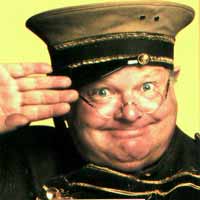
Alfred Hawthorn Hill (January 21, 1924 – April 20, 1992)
Posted in Because I Can, Humor, The Little Screen (Television)
Edgar Allan Poe was an American poet, short story writer, editor, critic and one of the leaders of the American Romantic Movement. Best known for his tales of the macabre, Poe was one of the early American practitioners of the short story and a progenitor of detective fiction and crime fiction. He is also credited with contributing to narrative forms of the emergent science fiction genre.
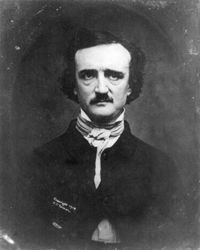
Edgar Allan Poe (January 19, 1809 – October 7, 1849)
Posted in Because I Can, Literary

Curly Howard (October 22, 1903 – January 18, 1952)
Jerome Lester “Jerry” Horwitz, better known by his stage name Curly Howard, was an American comedian, part of the “3 Stooges.”
Posted in Because I Can, Humor, The Little Screen (Television)
Alan Alexander Milne, also known as A. A. Milne, was a British author, best known for his books about the teddy bear, Winnie-the-Pooh, and for various children’s poems. Milne was a noted writer, primarily as a playwright, before the huge success of Pooh overshadowed all his previous work.
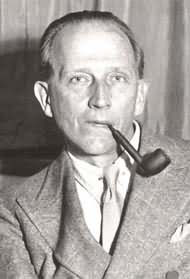
Alan Alexander Milne (January 18, 1882 – January 31, 1956)
Posted in Because I Can, Literary, The Little Screen (Television)
“After twelve years of therapy my psychiatrist said something that brought tears to my eyes. He said, ‘No hablo ingles.'”
Posted in Humor, Quotations

Robert Osbourne “Bob” Denver (January 9, 1935 – September 2, 2005)
Robert Denver was an American comedic actor best known for his role as Willy “Gilligan” Gilligan on the television series Gilligan’s Island.
In later life it was rumored that he hated being known as “Gilligan,” but he’ll always be Gilligan to most of us.
In tribute to a wonderful set of memories, my picture is subtle, “Gilligan”-esce, but with style.
Posted in Because I Can, The Little Screen (Television)
It’s a Wonderful Life is a 1946 Frank Capra film, produced by his own Liberty Films and released originally by RKO Radio Pictures. Dubbed by the American Film Institute one of the best films ever made, it placed #1 on AFI’s 100 Years… 100 Cheers, a list of the most inspirational American movies of all time. It ranks 11th on AFI’s 100 Years… 100 Movies, a list of the greatest American films. The film has also been selected for preservation in the United States National Film Registry.
The movie is the story of the life of everyman George Bailey, as told to his guardian angel Clarence Oddbody, who has been recruited to save him in his moment of need.
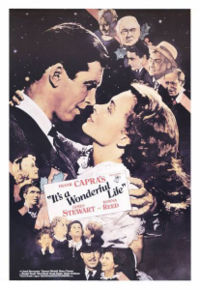
The film premiered on December 20, 1946 in the New Globe Theater on Governors Island.
Dear George: — Remember no man is a failure who has friends. Thanks for the wings! Love Clarence.
Posted in Because I Can, The Big Screen

Konikafa Mantis

White Mantis

Blue Mantis

Spiny Flower Mantis

Knit Mantis (Yes, it’s fake!)

FAKING IT A female orchid mantis does a near-perfect floral imitation, fanning out her petallike legs as she clings to a twig.
Orchid mantises have evolved into a fake flower that out-flowers the real thing. The insects don’t seem to be mimicking any real flower found so far, but have invented something even fancier.
Posted in Critters
JRR Tolkien is best known as the author of The Hobbit and The Lord of the Rings. He was a professor of Anglo-Saxon language at Oxford from 1925 to 1945, and of English language and literature, also at Oxford, from 1945 to 1959.
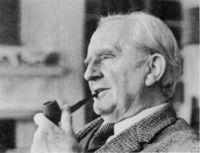
John Ronald Reuel Tolkien CBE (January 3, 1892 – September 2, 1973)
Posted in Because I Can, Literary, The Big Screen
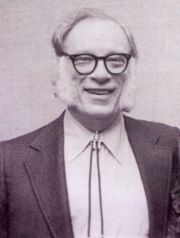
Isaac Asimov (c. January 2, 1920 – April 6, 1992)
Dr. Isaac Asimov was a Russian-born American Jewish author and biochemist, a highly successful and exceptionally prolific writer best known for his works of science fiction and for his popular science books. Asimov’s most famous work is the Foundation Series, which was part of one of his two major series, the Galactic Empire Series, later merged with his other famous story arc, the Robot series. He also wrote mysteries and fantasy, as well as a great amount of non-fiction. Asimov wrote or edited more than 500 volumes and an estimated 90,000 letters or postcards, and he has works in every major category of the Dewey Decimal System except Philosophy. Asimov was by consensus a master of the science-fiction genre and, along with Robert A. Heinlein and Arthur C. Clarke, was considered to be one of the “Big Three” science-fiction writers during his lifetime.
Most of Asimov’s popularized science books explain scientific concepts in a historical way, going back as far as possible to a time when the science in question was at its simplest stage. He often gives nationalities, birth dates and death dates for the scientists he mentions, as well as etymologies and pronunciation guides for technical terms.
The Three Laws of Robotics (often shortened to The Three Laws or Three Laws) are a set of rules devised by the science fiction author Isaac Asimov and later added to. The rules were introduced in his 1942 short story “Runaround”, although they were foreshadowed in a few earlier stories. The Three Laws are:
Posted in Because I Can, Literary


