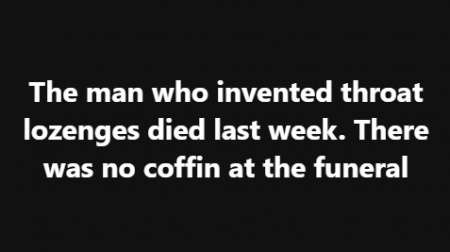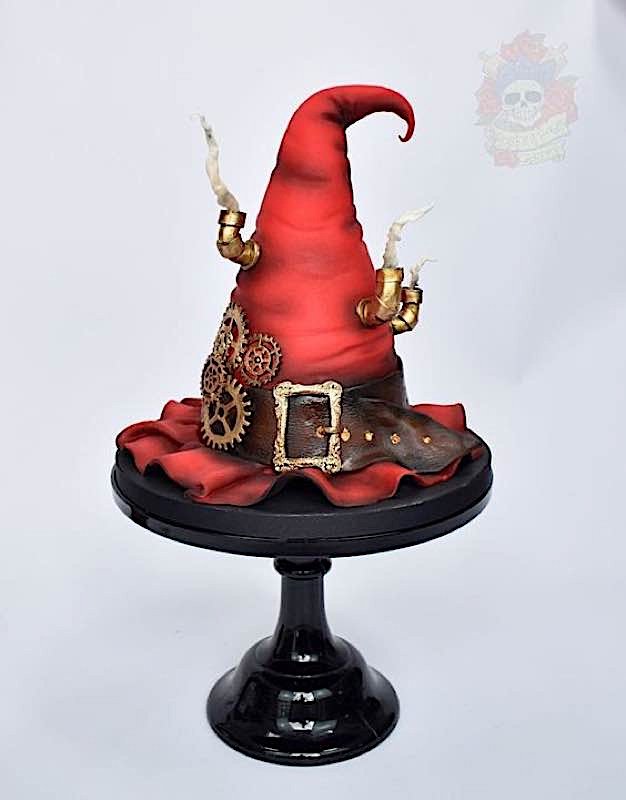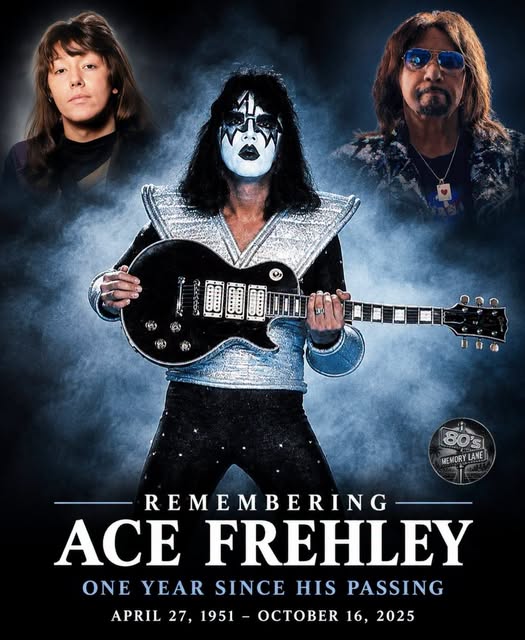
Hey! It fit the theme!
Hey! It fit the theme!
Posted in Because I Can, Humor, Planes Trains and Automobiles
October 23rd is Mole Day—you know, because 10/23 is like 1023.
THE EARLY HISTORY of chemistry has many interesting stories. Just consider the problems scientists had 200 years ago as they tried to figure out some of the most basic ideas of chemistry. It was clear that there were different substances—for instance, water is different than coal. But it wasn’t so clear what these substances were made of. You could take something like nitrogen gas (N2) and oxygen gas (O2) and combine them together to make another gas (in this case NO2). It thus seemed reasonable to suppose that stuff (molecular gas) was made of smaller stuff (atoms). But the evidence isn’t so easy to see. The primary difficulty is that humans can’t see molecules or atoms. All the scientific ideas have to be built on indirect evidence.
This is where Amedeo Avogadro comes into the picture (of course his real name is Lorenzo Romano Amedeo Carlo Avogadro di Quaregna e di Cerreto—but everyone just calls him Avogadro for obvious reasons). Avogadro developed the following idea:
Avogadro’s Law: If you have two gasses at the same temperature and pressure, they will occupy the same volume only if they contain the same number of molecules.
If you are thinking this is just a version of the Ideal Gas Law, you are correct—but let’s move on to a useful example. Suppose you take water (which is H2O) and run an electric curent through it—called electrolysis. This can break the water molecules into hydrogen gas and oxygen gas (which you could collect). If you had these two gases at the same temperature and pressure, the hydrogen gas would take up twice the volume compared to the oxygen gas. Why? Well, when you break up the water molecule, you get twice as much hydrogen as oxygen. Yes, hydrogen doesn’t just float around as a single atom. Instead it forms a bond with another hydrogen to make H2—but oxygen does the same thing (O2).
In the end, you would know that water is made of both hydrogen and oxygen and that there is twice as much hydrogen as oxygen. That’s a pretty big piece to the whole elements puzzle and you need an idea like Avogadro’s Law to figure it out.
But what about this number of Avogadro? Why is it important and why didn’t Amedeo know what it was? Let’s start with a definition. If I have 12 grams of carbon-12 (not any other isotopes of carbon) then it would have exactly Avogadro’s number of atoms in it. We can write this number as (approximately):
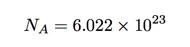
So we would call this number of carbon atoms, one mole (sort of like 12 eggs is one dozen).
Why is important? Avogadro’s number is sort of like a bridge. It bridges chemistry and atomic physics. In chemistry we measure things based on their bulk properties. Things like mass (total mass), pressure, volume, temperature. However, when we consider these things from an atomic perspective we look at individual atoms and the momentum, velocity of these particles. Avogadro’s number connects these two ideas and allows us to explore atomic-level things by measuring macroscopic level quantities. It’s a big deal.
But why didn’t Avogadro know this number? Because he didn’t directly come up with the idea. Chemists named the number after Avogadro to honor his contributions to chemistry.
If you had a carton with a dozen eggs, you could open up the package and count the number of eggs to find out that one dozen equals twelve. You can’t really do the same thing with a mole of carbon. Carbon atoms are too tiny to see and there are too many to count. We have to find another way to get a value for Avogadro’s number. There are quite a few ways to determine this magic number, but let me go over a simple method.
Start with two pieces of copper placed in a solution of copper-sulfate. When you run an electric current through the system, copper is removed from one plate and deposited on the other plate. This means that one of the plates gains mass and the other loses mass (should be by the same amount).
When the copper atom is removed from one plate, it acts as a charge carrier in the complete circuit (battery, wires, copper, solution). If I measure the current in this circuit and record the time, I can use the definition of current to find the total transfer of charge (which would be the transfer of copper ions).
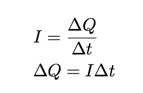
Let’s put this all together.
In my rough experiment, I had an electric current of 0.42 Amps for 10 minutes. This gives a total change in charge of 252 Coulombs. Dividing this by the charge of one ion (1.6 x 10⁻¹⁹ C) I get 5.575 x 10²¹ ions. The change in mass of one plate is 0.344 grams. That’s all I need. Now I can write:
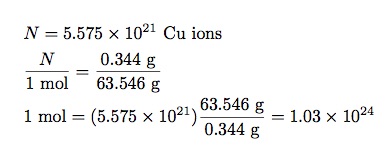
That’s not a terrible value for Avogadro’s number. Really, it’s not. If you take the accepted value of 6.022 x 10²³, then my estimate is just off by less than a factor of 2. I call that close enough. The idea works even if my method was a little bit sloppy. Still, my value is better than no value.
Posted in Anniversary, Because I Can
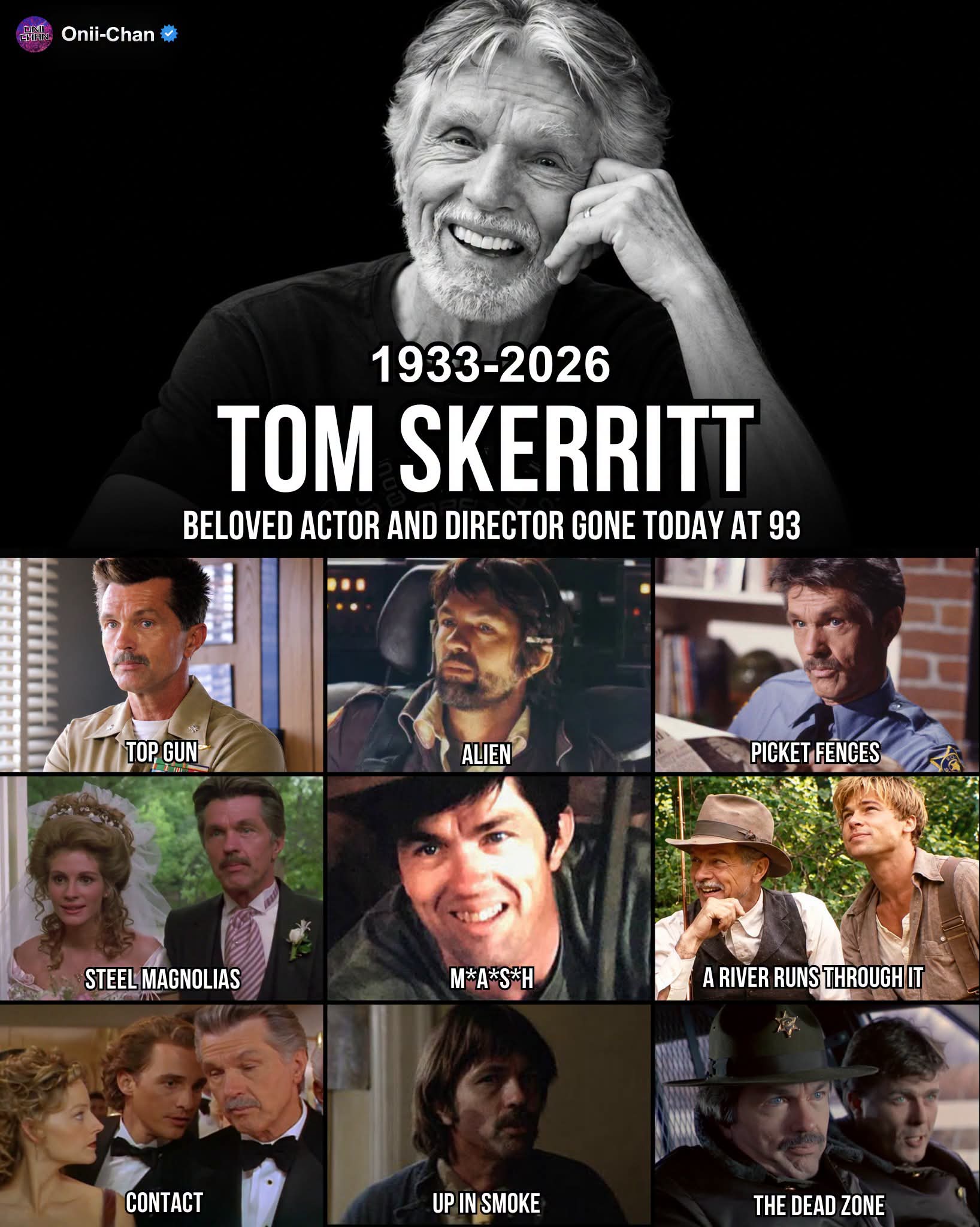
Thomas Roy Skerritt (August 25, 1933 – October 21, 2026) was an American actor and director who appeared in over 170 film and television productions between 1962 and 2025. The beginning of his film career coincided with the New Hollywood movement, with a breakthrough role as Duke Forrest in Robert Altman’s MAS*H (1970). He then starred in notable films like The Turning Point (1977), Up in Smoke (1978), Ice Castles (1978), Alien (1979), The Dead Zone (1983), Top Gun (1986), Steel Magnolias (1989), and A River Runs Through It (1992).
On television, Skerritt played the leading role of Sheriff Jimmy Brock on the family drama Picket Fences (1992–1996), earning a Primetime Emmy Award for Outstanding Lead Actor in a Drama Series, as well as two Golden Globe Award nominations. He also had a recurring role as Evan Drake on the sixth season of the sitcom Cheers (1987–1988).
Skerritt was also a three-time Screen Actors Guild Award nominee, a Genie Award nominee, an American Television Award nominee, and is both a Saturn Award and Western Heritage Award winner. In 2022, he received the International Press Academy’s honorary Mary Pickford Award for “Outstanding Artistic Contribution to the Entertainment Industry.”
Posted in Because I Can, Events, The Big Screen
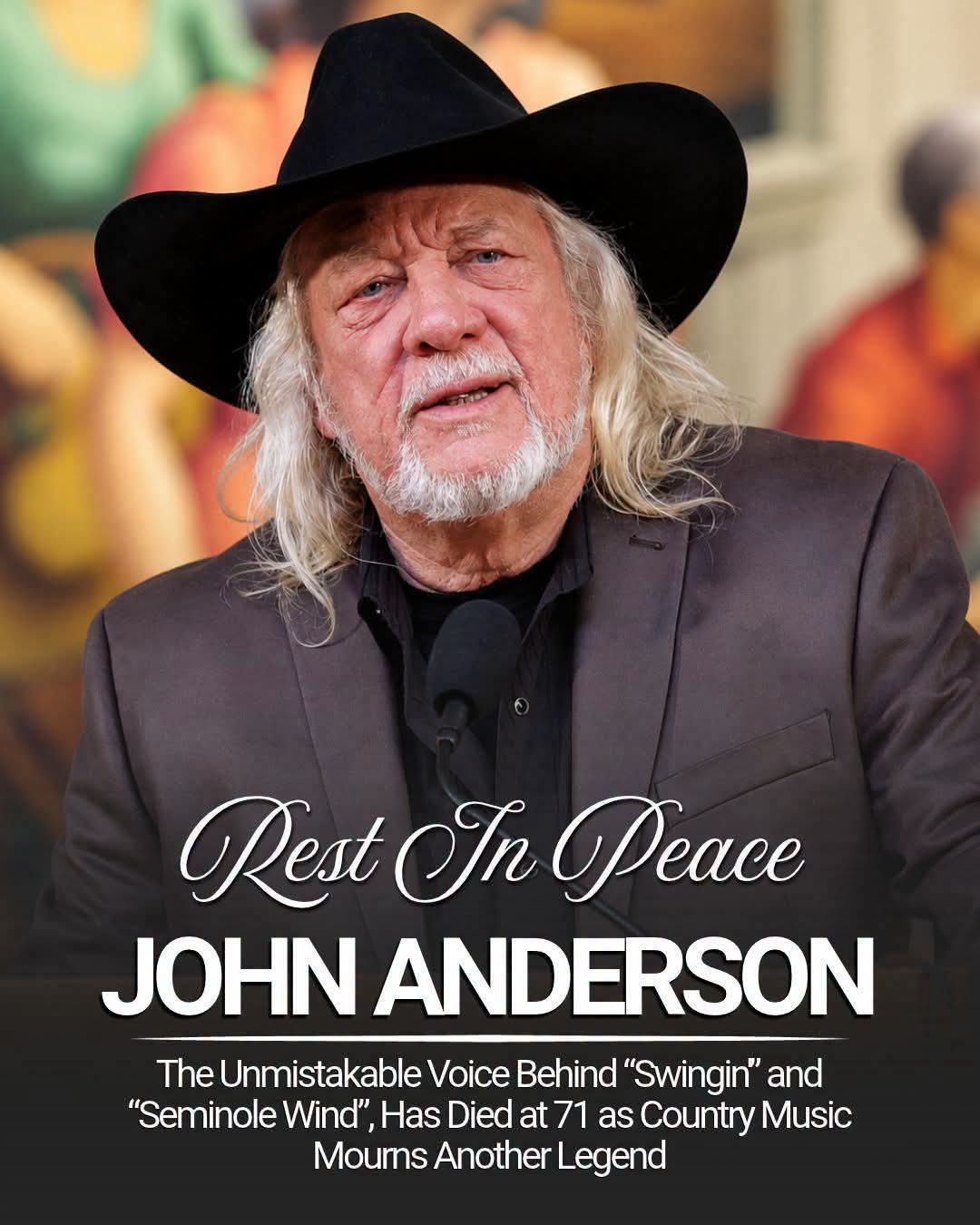
John David Anderson (December 13, 1954 – October 21, 2026) was an American country singer. Starting in 1977 with the release of his first single, “I’ve Got a Feelin’ (Somebody’s Been Stealin’)”, Anderson charted more than 40 singles on the Billboard country music charts, including five number ones: “Wild and Blue”, “Swingin'”, “Black Sheep”, “Straight Tequila Night”, and “Money in the Bank”. “Seminole Wind” charted at number two. He also recorded 22 studio albums on several labels. His final album, Years, was released on April 10, 2020, on the Easy Eye Sound label and was produced by Nashville veteran producer David Ferguson and Dan Auerbach of the Black Keys.
Anderson was inducted to the Nashville Songwriters Hall of Fame on October 5, 2014. He was elected into the Country Music Hall of Fame 10 years later.
Posted in Because I Can, Events, Music
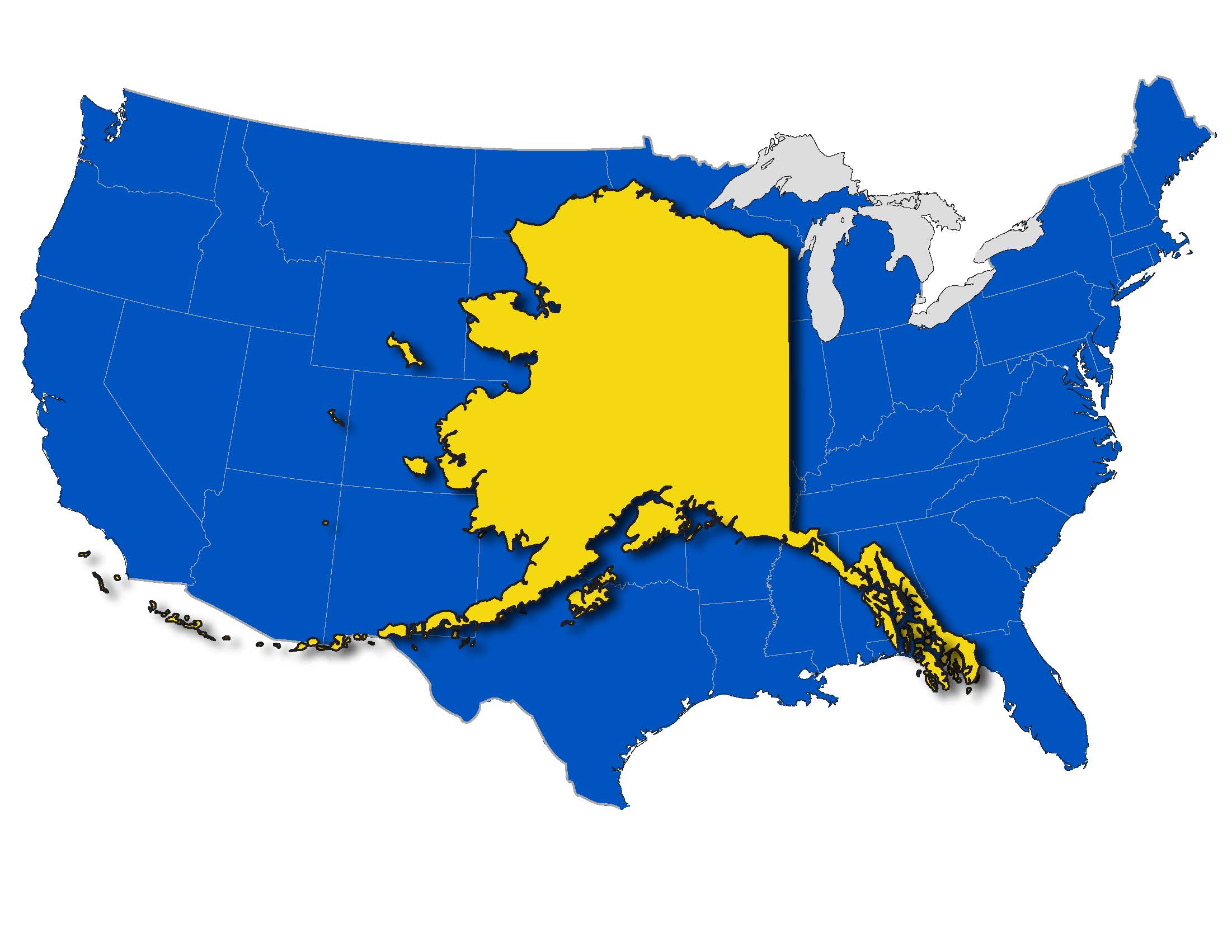
On this day, October 18th, in 1867, the U.S. formally takes possession of Alaska after purchasing the territory from Russia for $7.2 million, or less than two cents an acre. The Alaska purchase comprised 586,412 square miles, about twice the size of Texas
Posted in Anniversary, Events
Winnie-the-Pooh is a 1926 children’s book by English author A. A. Milne and English illustrator E. H. Shepard. The book is set in the fictional Hundred Acre Wood, with a collection of short stories following the adventures of an anthropomorphic teddy bear, Winnie-the-Pooh, and his friends Christopher Robin, Piglet, Eeyore, Owl, Rabbit, Kanga, and Roo. It is the first of two story collections by Milne about Winnie-the-Pooh, the second being The House at Pooh Corner (1928). Milne and Shepard collaborated previously for English humour magazine Punch, and in 1924 created When We Were Very Young, a poetry collection. Among the characters in the poetry book was a teddy bear Shepard modelled after his son’s toy. Following this, Shepard encouraged Milne to write about his son Christopher Robin Milne’s toys, and so they became the inspiration for the characters in Winnie-the-Pooh.
The book was published on 14 October 1926, and was both well-received by critics and a commercial success, selling 150,000 copies before the end of the year. Critical analysis of the book has held that it represents a rural Arcadia, separated from real-world issues or problems, and is without purposeful subtext. More recently, criticism has been levelled at the lack of positive female characters (i.e. that the only female character, Kanga, is depicted as a bad mother).
Winnie-the-Pooh has been translated into over fifty languages; a 1958 Latin translation, Winnie ille Pu, was the first foreign-language book to be featured on the New York Times Best Seller List, and the only book in Latin ever to have been featured. The stories and characters in the book have been adapted in other media, most notably into a franchise by The Walt Disney Company, beginning with Winnie the Pooh and the Honey Tree, released on 4 February 1966 as a double feature with The Ugly Dachshund. It remains protected under copyright in other countries, including the UK.
Posted in Anniversary, Because I Can, Literary, The Little Screen (Television)

U.S. Air Force Captain Chuck Yeager becomes the first person to fly faster than the speed of sound.
Yeager, born in Myra, West Virginia, in 1923, was a combat fighter during World War II and flew 64 missions over Europe. He shot down 13 German planes and was himself shot down over France, but he escaped capture with the assistance of the French Underground. After the war, he was among several volunteers chosen to test-fly the experimental X-1 rocket plane, built by the Bell Aircraft Company to explore the possibility of supersonic flight.
For years, many aviators believed that man was not meant to fly faster than the speed of sound, theorizing that transonic drag rise would tear any aircraft apart. All that changed on October 14, 1947, when Yeager flew the X-1 over Rogers Dry Lake in Southern California. The X-1 was lifted to an altitude of 25,000 feet by a B-29 aircraft and then released through the bomb bay, rocketing to 40,000 feet and exceeding 662 miles per hour (the sound barrier at that altitude). The rocket plane, nicknamed “Glamorous Glennis,” was designed with thin, unswept wings and a streamlined fuselage modeled after a .50-caliber bullet.
Because of the secrecy of the project, Bell and Yeager’s achievement was not announced until June 1948. Yeager continued to serve as a test pilot, and in 1953 he flew 1,650 miles per hour in an X-1A rocket plane. He retired from the U.S. Air Force in 1975 with the rank of brigadier general.
Posted in Anniversary, On This Day, Planes Trains and Automobiles
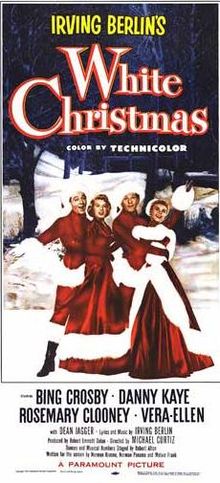
White Christmas is a 1954 movie starring Bing Crosby and Danny Kaye that featured the songs of Irving Berlin, including the titular White Christmas.