The first motion picture theater was called a nickelodeon because admission was a nickel.
It opened in McKeesport, PA on June 19,1905.
The first motion picture theater was called a nickelodeon because admission was a nickel.
It opened in McKeesport, PA on June 19,1905.
Posted in On This Day, The Big Screen
On June 16, 1884, the first roller coaster in America opens at Coney Island, in Brooklyn, New York. Known as a switchback railway, it was the brainchild of LaMarcus Thompson, traveled approximately six miles per hour and cost a nickel to ride. The new entertainment was an instant success and by the turn of the century there were hundreds of roller coasters around the country.
Coney Island, a name believed to have come from the Dutch Konijn Eilandt, or Rabbit Island, is a tract of land along the Atlantic Ocean discovered by explorer Henry Hudson in 1609. The first hotel opened at Coney Island in 1829 and by the post-Civil War years, the area was an established resort with theaters, restaurants and a race track. Between 1897 and 1904, three amusement parks sprang up at Coney Island–Dreamland, Luna Park and Steeplechase. By the 1920s, Coney Island was reachable by subway and summer crowds of a million people a day flocked there for rides, games, sideshows, the beach and the two-and-a-half-mile boardwalk, completed in 1923.
The hot dog is said to have been invented at Coney Island in 1867 by Charles Feltman. In 1916, a nickel hot dog stand called Nathan’s was opened by a former Feltman employee and went on to become a Coney Island institution and international franchise. Today, Nathan’s is famous not only for its hot dogs but its hot dog-eating contest, held each Fourth of July in Coney Island. In 2006, Takeru Kobayashi set a new record when he ate 53.75 hot dogs with buns in 12 minutes.
Roller coasters and amusement parks experienced a decline during the Great Depression and World War II, when Americans had less cash to spend on entertainment. Finally, in 1955, the opening of Disneyland in Anaheim, California, signaled the advent of the modern theme park and a rebirth of the roller coaster. Disneyland’s success sparked a wave of new parks and coasters. By the 1970s, parks were competing to create the most thrilling rides. In 2005, Six Flags Great Adventure in Jackson, New Jersey, introduced the Kingda Ka roller coaster, the world’s tallest (at 456 feet) and fastest (at 128 mph).
By the mid-1960s, the major amusement parks at Coney Island had shut down and the area acquired a seedy image. Nevertheless, Coney Island remains a tourist attraction and home to the Cyclone, a wooden coaster that made its debut there in 1927. Capable of speeds of 60 mph and with an 85-foot drop, the Cyclone is one of the country’s oldest coasters in operation today. Though a real-estate developer recently announced the building of a new .5 billion year-round resort at Coney Island that will include a 4,000-foot-long roller coaster, an indoor water park and a multi-level carousel, the Cyclone’s owners have said they plan to keep the historic coaster open for business.
Posted in On This Day
South Korean advertising agency Dstrict has created a 3d Art piece called “Wave.”
Posted in Gadgets
During the American Revolution, the Continental Congress adopts a resolution stating that “the flag of the United States be thirteen alternate stripes red and white” and that “the Union be thirteen stars, white in a blue field, representing a new Constellation.” The national flag, which became known as the “Stars and Stripes,” was based on the “Grand Union” flag, a banner carried by the Continental Army in 1776 that also consisted of 13 red and white stripes. According to legend, Philadelphia seamstress Betsy Ross designed the new canton for the Stars and Stripes, which consisted of a circle of 13 stars and a blue background, at the request of General George Washington. Historians have been unable to conclusively prove or disprove this legend.
With the entrance of new states into the United States after independence, new stripes and stars were added to represent new additions to the Union. In 1818, however, Congress enacted a law stipulating that the 13 original stripes be restored and that only stars be added to represent new states.
On June 14, 1877, the first Flag Day observance was held on the 100th anniversary of the adoption of the Stars and Stripes. As instructed by Congress, the U.S. flag was flown from all public buildings across the country. In the years after the first Flag Day, several states continued to observe the anniversary, and in 1949 Congress officially designated June 14 as Flag Day, a national day of observance.
Posted in On This Day, Patriotic
Posted in On This Day, The Big Screen
The famous tower clock known as Big Ben, located at the top of the 320-foot-high St. Stephen’s Tower, rings out over the Houses of Parliament in Westminster, London, for the first time on this day, May 31st, in 1859.
After a fire destroyed much of the Palace of Westminster–the headquarters of the British Parliament–in October 1834, a standout feature of the design for the new palace was a large clock atop a tower. The royal astronomer, Sir George Airy, wanted the clock to have pinpoint accuracy, including twice-a-day checks with the Royal Greenwich Observatory. While many clockmakers dismissed this goal as impossible, Airy counted on the help of Edmund Beckett Denison, a formidable barrister known for his expertise in horology, or the science of measuring time.
Denison’s design, built by the company E.J. Dent & Co., was completed in 1854; five years later, St. Stephen’s Tower itself was finished. Weighing in at more than 13 tons, its massive bell was dragged to the tower through the streets of London by a team of 16 horses, to the cheers of onlookers. Once it was installed, Big Ben struck its first chimes on May 31, 1859. Just two months later, however, the heavy striker designed by Denison cracked the bell. Three more years passed before a lighter hammer was added and the clock went into service again. The bell was rotated so that the hammer would strike another surface, but the crack was never repaired.
The name “Big Ben” originally just applied to the bell but later came to refer to the clock itself. Two main stories exist about how Big Ben got its name. Many claim it was named after the famously long-winded Sir Benjamin Hall, the London commissioner of works at the time it was built. Another famous story argues that the bell was named for the popular heavyweight boxer Benjamin Caunt, because it was the largest of its kind.
Even after an incendiary bomb destroyed the chamber of the House of Commons during the Second World War, St. Stephen’s Tower survived, and Big Ben continued to function. Its famously accurate timekeeping is regulated by a stack of coins placed on the clock’s huge pendulum, ensuring a steady movement of the clock hands at all times. At night, all four of the clock’s faces, each one 23 feet across, are illuminated. A light above Big Ben is also lit to let the public know when Parliament is in session.
Posted in Because I Can, On This Day
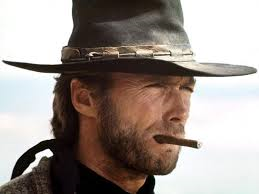
Clinton “Clint” Eastwood, Jr. (May 31, 1930 – )
Clint Eastwood is an American film actor, director, producer, composer, pianist, businessman, investor, and politician. Eastwood first came to prominence as a supporting cast member in the TV series Rawhide.
Posted in The Big Screen
CAPE CANAVERAL, Fla. (AP) — A rocket ship built by Elon Musk’s SpaceX company thundered away from Earth with two Americans on Saturday, ushering in a new era in commercial space travel and putting the United States back in the business of launching astronauts into orbit from U.S. soil for the first time in nearly a decade.
NASA’s Doug Hurley and Bob Behnken rode skyward aboard a white-and-black, bullet-shaped Dragon capsule on top of a Falcon 9 rocket, lifting off at 3:22 p.m. from the same launch pad used to send Apollo crews to the moon a half-century ago. Minutes later, they slipped safely into orbit.
Watch Live Coverage:
“Let’s light this candle,” Hurley said just before ignition, borrowing the words used by Alan Shepard on America’s first human spaceflight, in 1961.
Posted in Because I Can, Patriotic
On May 27, 1941, the British navy sinks the German battleship Bismarck in the North Atlantic near France. The German death toll was more than 2,000.
On February 14, 1939, the 823-foot Bismarck was launched at Hamburg. Nazi leader Adolf Hitler hoped that the state-of-the-art battleship would herald the rebirth of the German surface battle fleet. However, after the outbreak of war, Britain closely guarded ocean routes from Germany to the Atlantic Ocean, and only U-boats moved freely through the war zone.
In May 1941, the order was given for the Bismarck to break out into the Atlantic. Once in the safety of the open ocean, the battleship would be almost impossible to track down, all the while wreaking havoc on Allied convoys to Britain. Learning of its movement, Britain sent almost the entire British Home Fleet in pursuit. On May 24, the British battle cruiser Hood and battleship Prince of Wales intercepted it near Iceland. In a ferocious battle, the Hood exploded and sank, and all but three of the 1,421 crewmen were killed. The Bismarck escaped, but because it was leaking fuel it fled for occupied France. On May 26, it was sighted and crippled by British aircraft, and on May 27 three British warships descended on the Bismarck and finished it off.
Posted in On This Day
Hank Williams, Jr. is an American country and southern rock artist, son of country music pioneer Hank Williams and father of Hank III and Holly Williams.
Known by the nickname Bocephus (a name given to him by his father because he thought his son as a baby resembled a TV ventriloquist dummy named Bocephus), he was raised by his mother Audrey after his father’s death in 1953. He was destined for fame, being taught how to play piano by Jerry Lee Lewis and guitar by Johnny Cash. He began performing when eight years old.
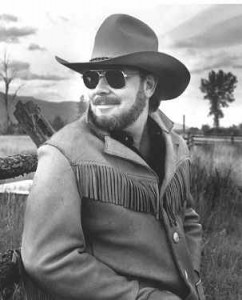
Hank Williams, Jr. (May 26, 1949 – )
Posted in Because I Can
May 25, 1977, Memorial Day weekend opens with an intergalactic bang as the first of George Lucas’ blockbuster Star Wars movies hits American theaters.
Posted in Because I Can, On This Day, The Big Screen

Today is Towel Day, a day of remembrance for Douglas Adams, author of the Hitchhikers’ Guide to the Galaxy. Observe it by carrying a towel all day.
Link
Posted in Because I Can
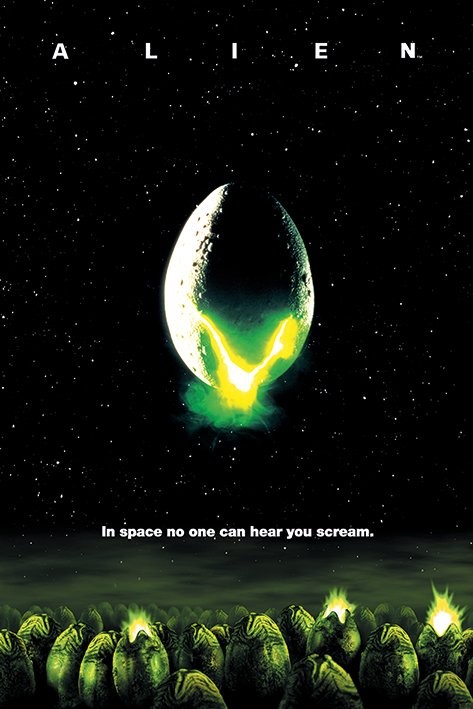
Alien was released on May 25, 1979 in the United States and September 6 in the United Kingdom. It was met with critical acclaim and box office success, winning the Academy Award for Best Visual Effects, three Saturn Awards (Best Science Fiction Film, Best Direction for Scott, and Best Supporting Actress for Cartwright), and a Hugo Award for Best Dramatic Presentation, along with numerous other nominations. It has been consistently praised in the years since its release, and is considered one of the greatest films of all time. In 2002, Alien was deemed “culturally, historically or aesthetically significant” by the Library of Congress and was selected for preservation in the United States National Film Registry. In 2008, it was ranked by the American Film Institute as the seventh-best film in the science fiction genre, and as the thirty-third greatest film of all time by Empire magazine.
The success of Alien spawned a media franchise of films, novels, comic books, video games, and toys. It also launched Weaver’s acting career, providing her with her first lead role. The story of her character‘s encounters with the Alien creatures became the thematic and narrative core of the sequels Aliens (1986), Alien 3(1992) and Alien Resurrection (1997). A crossover with the Predator franchise produced the Alien vs. Predator films, which includes Alien vs. Predator (2004) and Aliens vs. Predator: Requiem (2007). A prequel series includes Prometheus (2012) and Alien: Covenant (2017).
Posted in Because I Can, The Big Screen


Memorial Day is a United States federal holiday observed on the last Monday of May. Formerly known as Decoration Day, it commemorates U.S. men and women who died while in the military service. First enacted to honor Union soldiers of the American Civil War (it is celebrated near the day of reunification after the civil war), it was expanded after World War I to include American casualties of any war or military action.
It Has Always Been The Soldier

Posted in Because I Can, Patriotic

 June 6, 1944