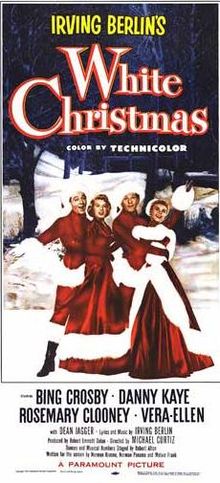
White Christmas is a 1954 movie starring Bing Crosby and Danny Kaye that featured the songs of Irving Berlin, including the titular White Christmas.
White Christmas is a 1954 movie starring Bing Crosby and Danny Kaye that featured the songs of Irving Berlin, including the titular White Christmas.

U.S. Air Force Captain Chuck Yeager becomes the first person to fly faster than the speed of sound.
Yeager, born in Myra, West Virginia, in 1923, was a combat fighter during World War II and flew 64 missions over Europe. He shot down 13 German planes and was himself shot down over France, but he escaped capture with the assistance of the French Underground. After the war, he was among several volunteers chosen to test-fly the experimental X-1 rocket plane, built by the Bell Aircraft Company to explore the possibility of supersonic flight.
For years, many aviators believed that man was not meant to fly faster than the speed of sound, theorizing that transonic drag rise would tear any aircraft apart. All that changed on October 14, 1947, when Yeager flew the X-1 over Rogers Dry Lake in Southern California. The X-1 was lifted to an altitude of 25,000 feet by a B-29 aircraft and then released through the bomb bay, rocketing to 40,000 feet and exceeding 662 miles per hour (the sound barrier at that altitude). The rocket plane, nicknamed “Glamorous Glennis,” was designed with thin, unswept wings and a streamlined fuselage modeled after a .50-caliber bullet.
Because of the secrecy of the project, Bell and Yeager’s achievement was not announced until June 1948. Yeager continued to serve as a test pilot, and in 1953 he flew 1,650 miles per hour in an X-1A rocket plane. He retired from the U.S. Air Force in 1975 with the rank of brigadier general.
Posted in Anniversary, On This Day, Planes Trains and Automobiles
On this day in 1866, the Reno gang carries out the first robbery of a moving train in the U.S., making off with over $10,000 from an Ohio & Mississippi train in Jackson County, Indiana. Prior to this innovation in crime, holdups had taken place only on trains sitting at stations or freight yards.
Posted in Anniversary, On This Day
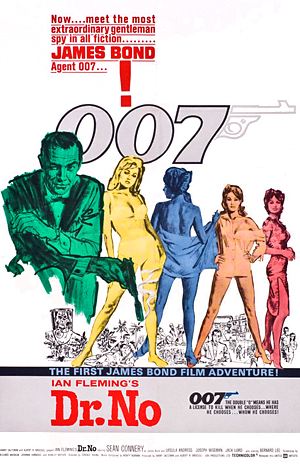
On October 5, 1962, the 1st James Bond film, Dr. No, premiered in London (it would arrive in the US the 8th of May of 1963).
Posted in Anniversary, Because I Can, On This Day, The Big Screen
Stephen (“Stevie”) Ray Vaughan, born in Dallas, Texas, was an American blues guitarist, known as one of the most influential electric blues musicians in history. He is often referred to by his initials, SRV.
Posted in Anniversary, Because I Can, Music, On This Day
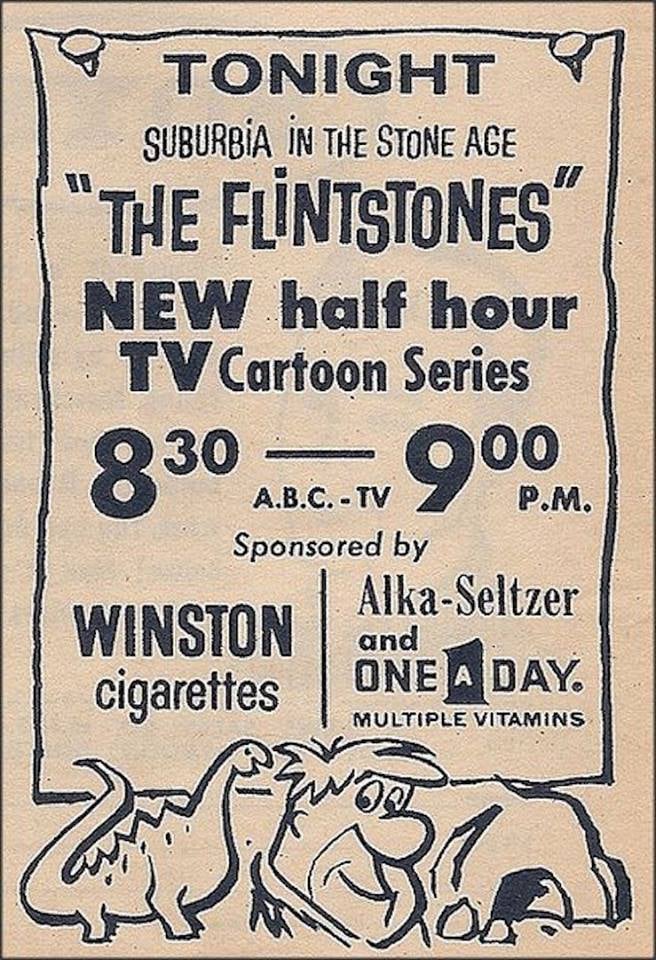
The Flintstones was an animated American television sitcom that ran from September 30, 1960 to April 1, 1966 on ABC. Produced by Hanna-Barbera Productions, The Flintstones is about a working class Stone Age man’s life with his family and his next door neighbor and best friend. It has since been re-released on both DVD and VHS.
Critics and fans alike agree that the show was an animated imitation of The Honeymooners with rock puns thrown in. William Hanna admitted that “At that time “The Honeymooners” was the most popular show on the air, and for my bill, it was the funniest show on the air. The characters, I thought, were terrific. Now, that influenced greatly what we did with “The Flintstones”… “The Honeymooners” was there, and we used that as a kind of basis for the concept.” However Joseph Barbera disavowed these claims in a separate interview, stating that “I don’t remember mentioning “The Honeymooners” when I sold the show, but if people want to compare “The Flintstones” to “The Honeymooners,” then great. It’s a total compliment. “The Honeymooners” was one of the greatest shows ever written.” Its popularity rested heavily on its juxtaposition of modern-day concerns in the Stone Age setting.
The USS Nautilus, the world’s first nuclear submarine, is commissioned by the U.S. Navy.
The Nautilus was constructed under the direction of U.S. Navy Captain Hyman G. Rickover, a brilliant Russian-born engineer who joined the U.S. atomic program in 1946. In 1947, he was put in charge of the navy’s nuclear-propulsion program and began work on an atomic submarine. Regarded as a fanatic by his detractors, Rickover succeeded in developing and delivering the world’s first nuclear submarine years ahead of schedule. In 1952, the Nautilus‘ keel was laid by President Harry S. Truman, and on January 21, 1954, first lady Mamie Eisenhower broke a bottle of champagne across its bow as it was launched into the Thames River at Groton, Connecticut. Commissioned on September 30, 1954, it first ran under nuclear power on the morning of January 17, 1955.
Posted in Anniversary, On This Day
On September 23, 1962, the Jetsons premiered on ABC.
The Jetsons is a prime-time animated American sitcom that was produced by Hanna-Barbera, originally airing from 1962–63 and again from 1985–87. It was Hanna-Barbera’s Space Age counterpart to The Flintstones, a half-hour family sitcom projecting contemporary American culture and lifestyle into another time period. While the Flintstones live in a world with machines powered by birds and dinosaurs, the Jetsons live in a futuristic utopia in the year 2062 of elaborate robotic contraptions, aliens, holograms, and whimsical inventions.
The original incarnation of the series aired Sunday nights on ABC from September 23, 1962, to March 3, 1963. It comprised 24 episodes, and was re-run on Saturday morning for decades. At the time of its debut, it was the first program ever to be broadcast in color on ABC-TV (as The Flintstones, while always produced in color, was broadcast in black-and-white for its first two seasons). Its continuing popularity led to further episodes being produced for syndication between 1985 and 1987.
The Hobbit is a novel written by J. R. R. Tolkien in the tradition of the fairy tale. It was first published on September 21, 1937. While it also stands in its own right, it is often seen as a prelude to Tolkien’s monumental fantasy novel The Lord of the Rings (published in 1954 and 1955).
The story, subtitled There and Back Again, follows the adventures of the hobbit Bilbo Baggins as he travels across the lands of Middle-earth with a band of dwarves and a wizard named Gandalf on a quest to restore a dwarven kingdom and a great treasure stolen by the dragon, Smaug.
Posted in Anniversary, Because I Can, Literary, On This Day

An emoticon is a facial expression pictorially represented by punctuation and letters, usually to express a writer’s mood. Emoticons are often used to alert a responder to the tenor or temper of a statement, and can change and improve interpretation of plain text. The word is a portmanteau word of the English words emotion and icon. In web forums, instant messengers and online games, text emoticons are often automatically replaced with small corresponding images, which came to be called emoticons as well. Certain complex character combinations can only be accomplished in a double-byte language, giving rise to especially complex forms, sometimes known by their romanized Japanese name of kaomoji.
The use of emoticons can be traced back to the 19th century, and they were commonly used in casual and/or humorous writing. Digital forms of emoticons on the Internet were included in a proposal by Scott Fahlman of Carnegie Mellon University in Pittsburgh, Pennsylvania, in a message on September 19, 1982.
Posted in Anniversary, Because I Can, Humor, Literary, On This Day
The Birth of Dr. Johnny Fever:
On this day, September 18, in 1978, CBS debuted WKRP in Cincinnati. WKRP in Cincinnati is an American sitcom television series about the misadventures of the staff of a struggling fictional AM radio station in Cincinnati, Ohio. It lasted for 4 seasons, and a total of 90 episodes.
Posted in Anniversary, Because I Can, Humor, On This Day, The Little Screen (Television)
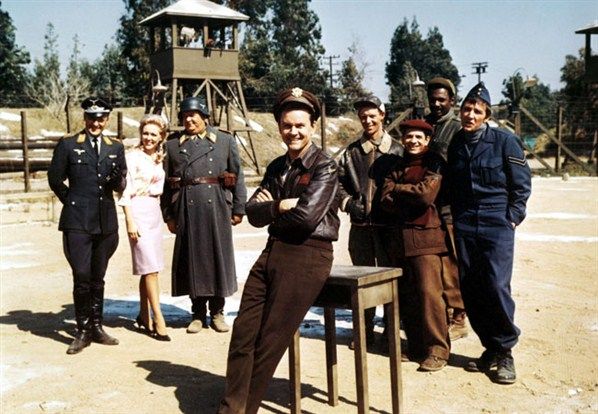
Hogan’s Heroes premiered on September 17, 1965, and quickly became the most popular new show of the year. In fact, for several seasons it ranked in TV’s top 20 programs …but it never escaped the controversy it premise engendered: Was it immoral to portray history’s most evil killers as bumbling -even lovable- buffoons week after week, just to make a buck?
It ran for 168 episodes from September 17, 1965, to July 4, 1971, on the CBS network. Bob Crane starred as Colonel Robert E. Hogan, coordinating an international crew of Allied prisoners running a Special Operations group from the camp. Werner Klemperer played Colonel Wilhelm Klink, the incompetent commandant of the camp, and John Banner was the inept sergeant-of-the-guard, Hans Schultz.
168 Episodes, America must have decided it was ok… 🙂
Posted in Anniversary, On This Day, The Little Screen (Television)
The series premiered on September 17, 1972, and ended February 28, 1983, with the finale becoming the most-watched television episode in U.S. television history.
Today, the hard drive is found everywhere–from the PCs we use daily to MP3 players and memory keys so small you can toss them in your pocket and forget you’re carrying around a hard drive. But when the hard drive was first introduced on September 13, 1956, it required a humongous housing and 50 24-inch platters to store 1/2400 as much data as can be fit on today’s largest capacity 1-inch hard drives.
Back then, the small team at IBM’s San Jose-based lab was seeking a way to replace tape with a storage mechanism that allowed for more-efficient random access to data. The question was, how to bring random-access storage to business computing?
Posted in Anniversary, Because I Can, On This Day
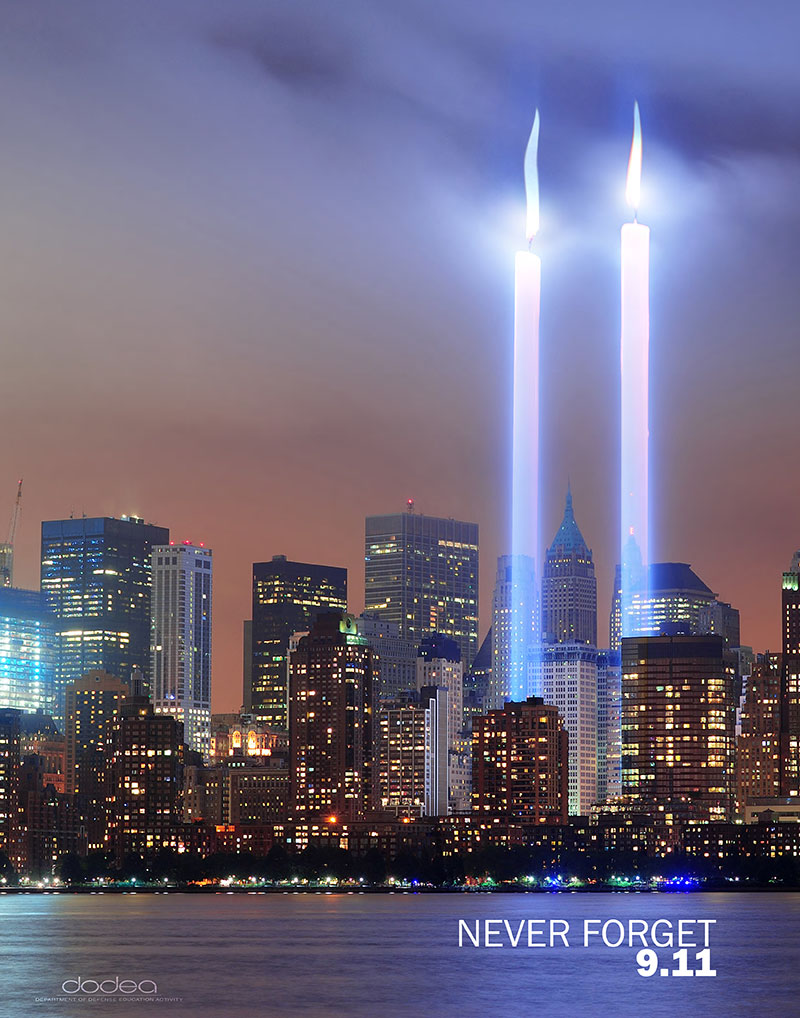
2,977 Lights over New York Harbor 🏙️ Terry Strada (family of Tom Strada): “For my husband, Tom, and for all the beautiful souls we lost on September 11, may these lights carry their memory upward and remind the world that even in our darkest hour, their light still shines. To illuminate the sky is to remind a new generation not only of all we lost, but of who we became in the aftermath, one nation united in grief, in love, and in resolve, rising together from the ashes.”
On Wednesday, September 9, a commemorative public art installation designed with voices of the 9/11 family, survivor, responder community was unveiled in the skies over New York Harbor. The free public act of reflection and unity is a sponsored project of the New York Foundation of the Arts.
2,977 lights rose over New York Harbor and rebuilt the Twin Towers at full architectural scale, one light for each life lost on 9/11, in a community gathering of remembrance.
“2,977 Lights Over New York Harbor” is given as a gift to the city of New York along with everyone whose life was, and continues to be affected by September 11. The production was made possible by Sky Elements Drone Shows, the New York Foundation for the Arts, and IDEKO who led federal and city permitting, safety and security operations.
Posted in Anniversary, Because I Can, On This Day, Patriotic