Category Archives: Because I Can

Abraham Lincoln Assassinated

On this day in 1865, John Wilkes Booth, an actor and Confederate sympathizer, fatally shoots President Abraham Lincoln at a play at Ford’s Theater in Washington, D.C. The attack came only five days after Confederate General Robert E. Lee surrendered his massive army at Appomattox Court House, Virginia, effectively ending the American Civil War.

Booth, a Maryland native born in 1838, who remained in the North during the war despite his Confederate sympathies, initially plotted to capture President Lincoln and take him to Richmond, the Confederate capital. However, on March 20, 1865, the day of the planned kidnapping, the president failed to appear at the spot where Booth and his six fellow conspirators lay in wait. Two weeks later, Richmond fell to Union forces. In April, with Confederate armies near collapse across the South, Booth hatched a desperate plan to save the Confederacy.

Learning that Lincoln was to attend a performance of “Our American Cousin” at Ford’s Theater on April 14, Booth masterminded the simultaneous assassination of Lincoln, Vice President Andrew Johnson and Secretary of State William H. Seward. By murdering the president and two of his possible successors, Booth and his conspirators hoped to throw the U.S. government into disarray.

On the evening of April 14, 1865, conspirator Lewis T. Powell burst into Secretary of State Seward’s home, seriously wounding him and three others, while George A. Atzerodt, assigned to Vice President Johnson, lost his nerve and fled. Meanwhile, just after 10 p.m., Booth entered Lincoln’s private theater box unnoticed and shot the president with a single bullet in the back of his head. Slashing an army officer who rushed at him, Booth leapt to the stage and shouted “Sic semper tyrannis! [Thus always to tyrants]–the South is avenged!” Although Booth broke his leg jumping from Lincoln’s box, he managed to escape Washington on horseback.

The president, mortally wounded, was carried to a lodging house opposite Ford’s Theater. About 7:22 a.m. the next morning, Lincoln, age 56, died–the first U.S. president to be assassinated. Booth, pursued by the army and other secret forces, was finally cornered in a barn near Bowling Green, Virginia, and died from a possibly self-inflicted bullet wound as the barn was burned to the ground. Of the eight other people eventually charged with the conspiracy, four were hanged and four were jailed.
Mercury 7

Mercury 7

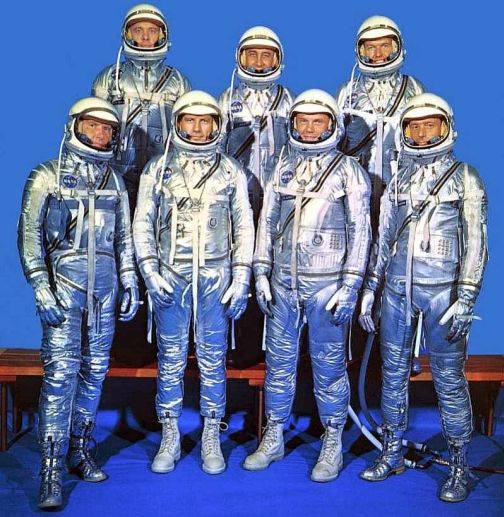
On this day in 1959, NASA announced The Mercury Seven: the seven men to make up their first astronaut class.

The Mercury Seven were chosen in Washington, DC from a body of 69 candidates. The name comes from Mercury, a Roman mythological god who is seen as a symbol of speed. Because of the small space inside the Mercury capsule, candidates could be no taller than 5 feet 11 inches and weigh no more than 180 pounds. The initial flights took off throughout the early 1960s, though some astronauts were active in later decades. Here are the guys:

Malcolm Scott Carpenter (1925 – 2013) was a US Navy piolot aviation cadet who flew missions during the Korean War. He was on board the MA-7 (Aurora 7) and was the first American astronaut to eat solid food in space. He successfully overcame an overexpenditure of fuel due to hardware problems on his one and only mission. Carpenter was forced to retire from spaceflight after sustaining a motorbike accident. After retiring from the Navy, he founded Sea Sciences Inc., a corporation for developing programs for utilizing ocean resources and improving environmental health.

Leroy Gordon (Gordo) Cooper Jr. (1927 – 2004) was very active in the Boy Scouts of America and achieved the second highest rank of Life Scout. Prior to joining NASA, Cooper also served in the US Air Force and Marine Corps. He was on board the MA-9 (Faith 7) and Gemini 5, and developed a personal survival knife for astronauts to carry. Cooper was the first American to sleep in orbit. Interestingly, he took photos of and reported UFO sightings to the Pentagon, but they swept the incident under the rug.

John Herschel Glenn Jr. (1921 – 2016) began his career as a US Marine Corps fighter pilot. He was on board the MA-6 (Friendship 7) and STS-95. Noticed for his heroics in space, Glenn became friendly with the Kennedys and a prominent public figure. After retiring from NASA, he ran as a Democrat and represented the state of Ohio in the United States Senate from 1974 to 1999.  Glenn returned to space on the Space Shuttle on October 29, 1998, as a Payload Specialist on Discovery‘s STS-95 mission, becoming, at age 77, the oldest person to go into space. According to The New York Times, Glenn “won his seat on the Shuttle flight by lobbying NASA for two years to fly as a human guinea pig for geriatric studies”, which were named as the main reasons for his participation in the mission.

Virgil Ivan (Gus) Grissom (1926 – 1967) was a US Air Force pilot before joining NASA. He was on board the MR-4 (Liberty Bell 7), Gemini 3, and Apollo 1. Grissom was tragically killed along with fellow astronauts Ed White and Roger Chaffee during a pre-launch test for the Apollo 1 mission. After death, his family was involved in a spacesuit controversy: NASA insisted Grissom got authorization to use his spacesuit for a show and tell at his son’s school and never returned it, but his family claimed the he had rescued the spacesuit from a scrap heap and that it rightfully belonged to them.

Walter Marty (Wally) Schirra Jr. (1923 – 2007)’s father was a pilot, and his mother performed wing walking stunts when he was on duty. Schirra served as an officer in the US Navy, and was later dispatched to South Korea as a pilot on loan to the US Air Force. On board the MA-8 (Sigma 7), Gemini 6A, and Apollo 7, he was the only person to fly in all of America’s first three space programs. Schirra gained notoriety for playing “Jingle Bells” on a harmonica he smuggled on board Gemini.

Alan Bartlett Shepard Jr. (1923 – 1998) began as a US Navy as test pilot. He was the first American in space, and flew on board the MR-3 (Freedom 7) and Apollo 14. It’s said that shortly before one launch, Shepard blurted out “Please, dear God, don’t let me fuck up.” This has since become known among aviators as “Shepard’s Prayer.” A successful businessman, Shepard was the first astronaut to become a millionaire while still in the program. His hometown of Derry, NH almost changed its name to “Spacetown” in honor of Schirra’s career.

Donald Kent (Deke) Slayton (1924 – 1993) was also a US Air Force pilot before joining NASA. He was grounded from space flight by a heart condition, but served as NASA’s Director of Flight Crew Operations. Slayton served as head of Astronaut selection. In 1972 he was granted medical clearance to fly as docking module pilot of the Apollo-Soyuz Test Project. At the time of the flight, he became the oldest person to fly into space.

RIP Don Rickles

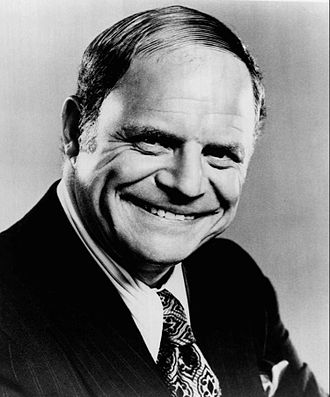
Don Rickles
(May 8, 1926 – April 6, 2017)

Donald Jay “Don” Rickles was an American stand-up comedian and actor. Best known as an insult comic, he also acted in both comedic and dramatic roles on film.
After toiling in relative obscurity for years as a more conventional stand-up comedian, Rickles unwittingly discovered his biggest laughs came when he turned the tables on his hecklers. His career then skyrocketed after he insulted the hot-tempered Sinatra, who normally did not take kindly to such treatment.
When the superstar singer and actor walked into a Miami Beach club in 1957 where Rickles was performing, the comedian greeted the “Chairman of the Board” from the stage: “Make yourself at home Frank. Hit somebody.” Sinatra roared — with laughter.
With Sinatra’s endorsement, Rickles began his comedic assault on people famous and not so famous — Jews, Asians, African Americans, the Irish, Puerto Ricans, red-headed women, short guys, you name it — with tremendous results. He referred to stupid people as “hockey pucks,” and in 1959, he signed for his first Las Vegas appearance, in the lounge of the Hotel Sahara.
In 1985, when Sinatra was asked to perform at Ronald Reagan’s second Inaugural Ball, he insisted that Rickles accompany him for a comedy routine. Rickles, naturally, did not spare the president (“Am I going too fast for you, Ronnie?” he asked) and considered that performance among the highlights of his career.
Rickles honed his reputation in numerous appearances on The Dean Martin Celebrity Roasts that ran on NBC from the mid-1970s to the mid-80s. The specials provided a perfect venue for Rickles to unleash his caustic brand of humor on such visiting dignitaries as Sinatra, Reagan, Bob Hope, Lucille Ball, Kirk Douglas, Sammy Davis Jr. and Mr. T.
Johnny Carson provided Rickles a late-night stage by making him one of The Tonight Show’s most-frequent guests. On one memorable moment in 1968, Rickles cozied up to a half-naked Carson during a sketch with two Japanese female masseuses and said, “I’m so lonely, Johnny!” Carson threw him in a bathtub. More recently, he was a regular guest on Late Show With David Letterman, in which the CBS host treated Rickles like royalty.
Rickles intermittently played in movies, highlighted by Kelly’s Heroes (1970), where he co-starred with Clint Eastwood as Sgt. Crapgame, an Army black-marketer who had no compunction about cutting favorable deals with the Nazis.
He also played opposite beach bunny Annette Funicello in such movies as Pajama Party (1964) and Beach Blanket Bingo (1965), appeared as a Vegas casino manager in Martin Scorsese’s Casino (1995) and voiced the cranky Mr. Potato Head in the Toy Story films.
Rickles and his wife, Barbara, often vacationed with deadpan comic Bob Newhart and his wife, Ginnie.
 
“He was called ‘The Merchant of Venom,’ but in truth, he was one of the kindest, caring and most sensitive human beings we have ever known,” the Newharts said in a statement. “We are devastated, and our world will never be the same. We were totally unprepared for this.”
 
Rickles died on April 6, 2017, of kidney failure, in his home in Los Angeles.


Why is Greenland an Island and Australia a Continent?

I disagree with the title… this is how to fix one…

https://youtu.be/67CphtIqL2Q

Aussie Twin Turbo Chevelle

Mid-America Truck Show!

2017 Mid-America Trucking Show  |MARCH 23-25, 2017 |  Louisville, KY at the Kentucky Exposition Center

Mid-America Truck Show

Official Site

Happy St. Patty’s Day!

Mid-America Truck Show!

2017 Mid-America Trucking Show  |MARCH 23-25, 2017 |  Louisville, KY at the Kentucky Exposition Center

Mid-America Truck Show

Official Site

They have the nerve to be SURPRISED?!

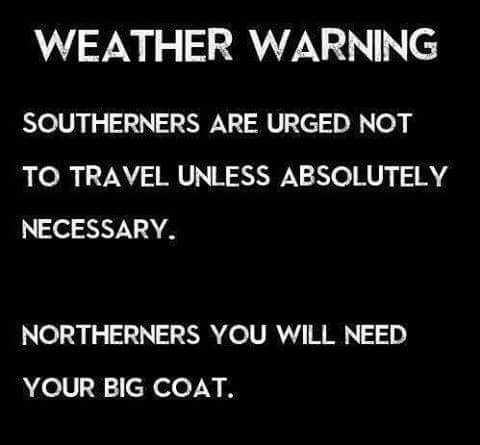
Weather Warning!

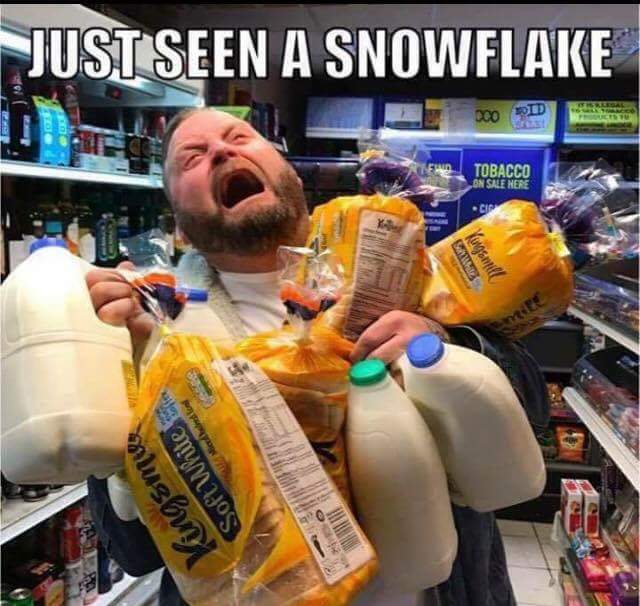
Snowflake?!

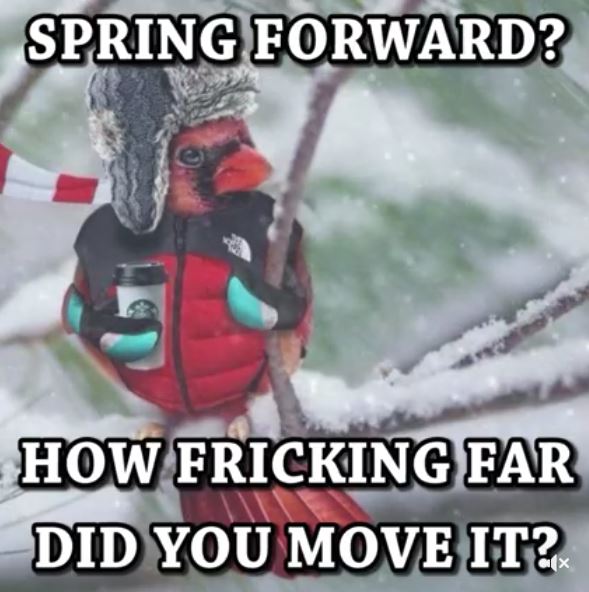
Spring Ahead?!

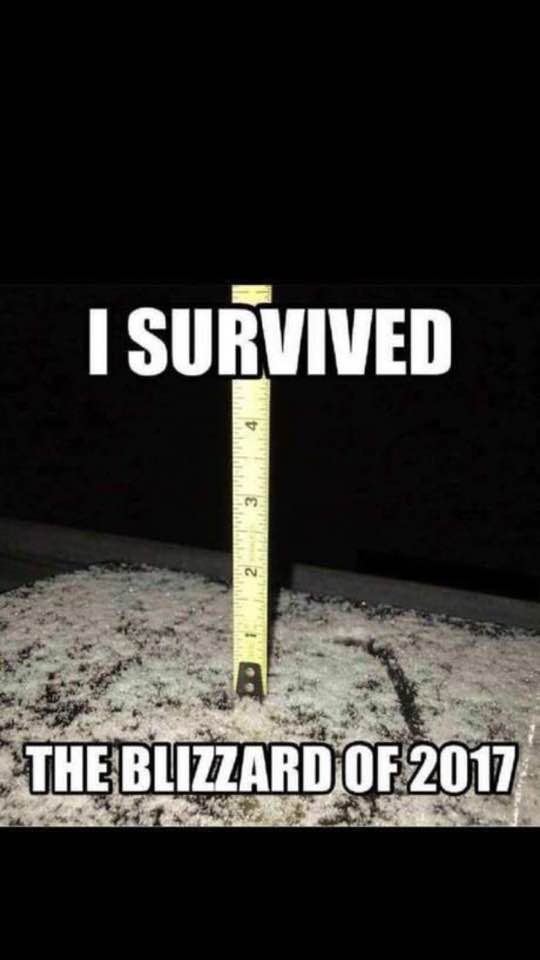
Blizzard!

Charles M. Schulz

“Don’t worry about the world coming to an end today. It’s already tomorrow in Australia.”

Mid-America Truck Show!

2017 Mid-America Trucking Show  |MARCH 23-25, 2017 |  Louisville, KY at the Kentucky Exposition Center

Mid-America Truck Show

Official Site

06:52:01!

Anniversary of the final episode of M*A*S*H

M*A*S*H

The series premiered on September 17, 1972, and ended on February 28, 1983, with the finale becoming the most-watched television episode in U.S. television history at the time.

“Goodbye, Farewell and Amen” was the final episode of M*A*S*H. Special television sets were placed in PX parking lots, auditoriums, and dayrooms of the US Army in Korea so that military personnel could watch that episode; this in spite of 14 hours’ time zone difference with the east coast of the US. The episode aired on February 28, 1983, and was 2½ hours long.

Wikipedia Link

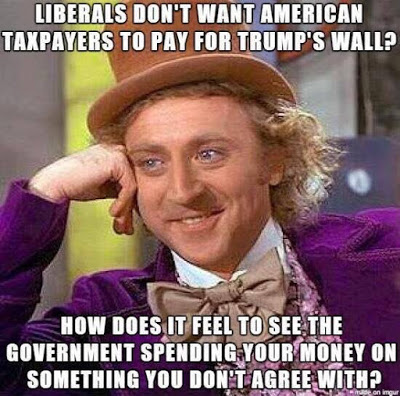
Trump’s Wall

Whiskey vs. Whisky: What’s the Difference?

Now that the days are getting shorter and chillier, it’s the perfect time to curl up with a good book and a nice warming glass of whisky – or should that be whiskey? Same thing, just different spelling, right? Well, that depends…

Before we get going, let’s define the liquor in general:
No matter how you spell it, whisky/ey is an umbrella term for a type of spirit distilled from a mash of fermented grains.

Now let’s look at some different types: 
Within the broad category of whisky/ey are many sub-categories, including bourbon, rye, Tennessee, Scotch, Irish, and Canadian style whiskies. The manufacture of each of these types of whisky/ey is guided and regulated by the government of the spirit’s country of origin. As a result, Canadian whisky, for example, is a whole different animal from Scotch whisky, Irish whiskey, and American-style whiskeys such as Tennessee, bourbon, and straight rye.

(Okay, so far, so good. Maybe at this point, you’d be happy to enjoy a glass of the stuff no matter how it’s spelled. But if you’ve ever wondered why the word often appears different ways in different contexts, read on…)


Now things start to get tricky:
American and Irish liquor producers (and copy editors) tend to favor the spelling WHISKEY, while Canadian, Scottish, and Japanese producers (and copy editors) tend to favor (or should I say, favour) WHISKY.

The controversy:
So we have two things going on here: copy editing style and actual liquor style. The big question is: Are WHISKEY and WHISKY just two different spellings of the same word, or are they two slightly different words describing two separate groups of spirits? What do you do if you’re a resident of Scotland writing about Irish whiskey or an American writing about Canadian whisky?

A solution:
Up until quite recently, The New York Times tackled the problem by spelling everything the American way (with an E), regardless of the spirit’s country of origin. From Kentucky bourbon to Islay malts, everything was “whiskey” to The NYTimes. But then, last February, the venerable newspaper made a decisive change.

After receiving a raft of complaints from some serious Scotch whisky drinkers, the paper re-tooled its approach to follow that of many specialized spirits publications, spelling each type of spirit according to the way favored by its country of origin. So, while American-produced varieties such as bourbon, rye, and Tennessee – as well as the Irish stuff – kept their previous NYTimes-styled “whiskey” spelling, the stuff from Scotland, Canada, and Japan now would be referred to as “whisky.” Makes a lot of sense, I think.

Whiskey/whisky nmemonics:
Here’s a quick way to remember how some of the world’s biggest producers spell their products:

  • Countries that have E’s in their names (UnitEd StatEs and IrEland) tend to spell it whiskEy (plural whiskeys)
  • Countries without E’s in their names (Canada, Scotland, and Japan) spell it whisky (plural whiskies)

Whew! Time for a drink.