I “borrowed” the introduction to a great post on MSN’s PowerWall (see below)… read it, then follow the link to the complete article.
The inevitable juror cameos have begun. Juror Number Three, now known as Jennifer Ford, spoke to Nightline. She came forward to give her explanation for the shocking acquittal that freed Casey Anthony of any criminal liability for the killing of her baby, Caylee Anthony.
No doubt she meant to justify the verdict. On that score, she failed. But she succeeded in showing us a great deal about the dynamics and thinking of this jury—significantly, this sequestered jury.
I’m going to start by saying that, for those who thought the jury came back awfully fast—less than eleven hours spent in deliberation, you should now wonder what took them that long. Because from the very first vote, this jury was already close to a unanimous verdict of acquittal – at least as to murder: ten to two for not guilty. That’s an impressive show of solidarity for a first vote. And it shows they were almost unanimously inclined to acquit right from jump.
It’s the fact that this jury was already in sync in a case that posed so many debatable issues is what’s so noteworthy. And it has everything to do with sequestration. This jury was sequestered for more than two months. When jurors are forced to spend day and night with each other, apart from their families and friends, they become a tribe unto themselves. Because they only have each other for company, and because most people prefer harmony to discord, there’s a natural desire to cooperate, to compromise in order to reach agreement. And they have no safe retreat. If they disagree with their fellow jurors, they can’t go home to a husband, a wife, a friend, where they can regroup and marshal their energies. Make no mistake about it, sequestration is no picnic and I have sympathy and respect for the jurors who put up with that incredible hardship.
But we can’t ignore the mental and emotional impact it has on the jurors—an impact that likely thwarts the whole point of drafting twelve individuals to decide a defendant’s fate. The point of having twelve jurors is to have an array of differing points of view. The belief is that people of different backgrounds and experience will naturally bring a variety of attitudes to bear, and thus produce a more balanced view of the evidence. What one juror doesn’t get, another one does, and each of them sees different aspects to each witness and piece of evidence. The idea is for them to share differing views and reach a greater understanding—not to have them shave off their square corners so they can all roll together.
Unfortunately—and psychological studies bear this out—a group that is kept together for any length of time becomes more and more alike, more in sync, as time goes on. (By the way, this phenomenon is also in play with regard to proximity to the defendant. The longer the jury is in contact with the defendant, the less sinister he or she appears. In this way, familiarity with Casey Anthony turned her from a potential murderer to an abused, perhaps disturbed, but certainly nonthreatening, child.) Add this phenomenon to the natural desire to avoid contentiousness and seek harmony and you can see how individuality begins to erode in a sequestered jury.
Now add to that the psychology of group dynamics—a subject well known to trial lawyers and jury consultants. In every group there will be leaders and followers. Listening to Juror Jennifer Ford, who was very likely a leader, it became abundantly clear that the leaders on the Anthony jury were cheerleaders for the defense.
Ms. Ford’s primary complaint was that the prosecution didn’t prove cause of death. As she put it: “How can you punish someone for something if you don’t know what they did?…[The prosecution] didn’t even paint a picture for me to consider.”
That was defense attorney Jose Baez’s strategy, through and through. And it has nothing to do with what’s legally required to prove a homicide.
The truth is, the prosecution doesn’t have to prove cause of death. It only need prove criminal agency—that the death was a homicide, as opposed to an accident. It’s nice to have a body, a murder weapon, a cause of death, but it’s certainly not essential. I’ve had cases where not only was there no murder weapon, there was no body. We had no evidence to establish cause of death. Still, those cases resulted in convictions—in fact that jury returned a verdict of first-degree murder in one of them.
And the Anthony prosecutors could have done it too, because the evidence was more than sufficient to prove a homicide: a baby disappeared and the last person seen with the child—the mother—lied repeatedly for a full month about her whereabouts; deliberately lied in a way that prevented anyone from searching for the child. The mother’s researching of chloroform on the computer matched up to the finding of chloroform traces in the trunk of the car. The same car trunk where a hair consistent with Caylee’s was found; a hair that was arguably from a decomposing body. The same car trunk from which the smell of a decomposing body emanated strongly. The child’s decomposed body was found bagged in the woods near the mother’s house. Significantly, the child’s mouth and nose had been duct taped. And while that child’s body lay decomposing in the woods, the mother euphorically and gleefully partied with her buddies knowing full well that not only was her child dead but she was actively preventing anyone from finding out. That evidence not only proved a homicide, it proved that Casey Anthony committed it.
How did the defense counter this compelling body of evidence? They put up a bit of a fight on the forensics. Especially as to whether the hair could be definitively said to have come from a corpse. Okay, fine, let that one go.
Then what about the duct tape? There’s no reason to put duct tape on the face of a child who’s already dead. The defense made a lame attempt to counter that by asserting that ‘some other dude’ put the duct tape on the baby’s face—but the testimony offered to prove that (Dr. Werner Spitz) was laughably weak, and thus didn’t even dent the prosecution’s case.
When all was said and done, the only things the defense really had going for it were the unproven allegations of molestation and the wholly unsubstantiated claim that the baby drowned in the swimming pool.
But if you listen to Juror Jennifer Ford’s interview, those unproven, unsubstantiated claims are exactly what the jury hung its collective hat on.
When she complained that they never knew exactly how the child died, she was asked: “So you believed it was an accident?”
Her answer: “I’m not saying that, I’m saying it’s a lot easier to get to that conclusion. I can walk from here to there and make it happen. But the chloroform I’m all over the place, I’m in a maze, I don’t know where I’m at.”
The child’s body was found in a plastic bag with duct tape over the mouth and nose, and left to decompose in the woods while Casey Anthony told everyone the baby was with Zanny the Nanny, and she found it “easier” to believe it was an accident? Frankly, I don’t see how you “walk from here to there” to make that happen.
So where did she get the idea that it was easier to believe this was an accident? Baez’s opening statement—where he claimed that he’d prove this was an accident. The only problem is, he didn’t. Usually, juries hold lawyers accountable for those flops. Not here.
Ms. Ford also claimed the prosecution never showed a motive. What did all those party pictures mean to her? The tattoo Casey Anthony got days after her baby died: “Bella Vida”?
To that, Ms. Ford said, “It looks very bad…but bad behavior is not enough to prove a crime.”
Sound familiar? It’s exactly what Jose Baez said: You can believe she’s a liar, a slut, a lying slut, but that doesn’t mean she killed her baby.
But where Baez’s non-evidence had the greatest impact was on the jury’s perception of George Anthony. Here, Ms. Ford’s answers are very telling. Her statements are somewhat contradictory, and show incredible antipathy for—and suspicion of—Casey’s father.
“He did not help the State’s case,” she said. “He was clearly dishonest. He was evasive. His story seemed to change.”
But there was an obvious explanation for the father’s behavior. George Anthony was a man undergoing an incredible conflict: he wanted to defend his daughter, yet, being a police officer, he surely knew the evidence against her was compelling. And on top of all that, his daughter’s defense strategy set him up as an incestuous child molester. Given all those circumstances, it’s not hard to see how he veered from one side to the other, his loyalties and love for his daughter and his granddaughter in conflict and sorely tested. The jury could have reasoned it that way too. But it didn’t.
When asked whether she believed George Anthony had some part in the demise of little Caylee, Ms. Ford said: “I don’t know if he had anything to do with it, but I think he was there.”
And where would the jury get the idea that George Anthony was “there”? Surely not in the evidence—there was not one shred of evidence to support that notion. Once again, that was speculation that was raised in Jose Baez’s opening statement but was nowhere in the evidence.
Then what did the jury think happened to Caylee? Now this is where the reasoning finally falls through the hole in the floor.
According to Ms. Ford, “Something happened, at some point she probably needed medical care or at least there could be some attempt…to save the child’s life that was never made. That bothered me.” But if it was just an accident, then why would the body wind up in a plastic bag in a swamp? “You’re covering up something…it’s either an accident or…nobody knows what it is.”
This is exactly what Jose Baez told them to believe. That since they couldn’t know how Caylee died, they couldn’t convict his client. That it was an accident—and he’d prove it. Didn’t matter that he never proved it, didn’t matter that the notion of accident had no basis in fact or logic, didn’t matter that only his client had motive to kill the child, didn’t matter that his client was the last to be seen with the child, put duct tape on the child’s mouth and nose, hid the fact of the child’s death, carried the child’s body around in her trunk, then stashed the body in a plastic bag and hid it in the woods. Never mind all that.
Juror Ford said she didn’t believe it was their duty to “connect all the dots,” and that the prosecution was required to answer every question about Caylee’s death, including why and how it was committed.
First of all, there is no such thing as a case in which the prosecution answers every question. It isn’t possible. Second of all, the prosecution doesn’t have to. The prosecution is only required to prove the elements of the crime – and that does not include motive nor does it include cause of death.
Moreover, it is most certainly the jury’s duty to “connect the dots.” The jury is required to consider all of the evidence and to draw the reasonable inferences that evidence suggests. Note I said reasonable – that doesn’t mean concocting scenarios out of thin air based on nothing but a lawyer’s opening statement.
And by the way, what about that duct tape? How did the jury get around that one? Here’s what Ms. Ford said:
“In our country unfortunately we have to prove it…it smells bad, looks bad, yeah I get that. But it’s someone else’s life and if I’m wrong, I can’t live with that.”
In other words: no answer. I said it early on in this case and I’ll say it again: that duct tape was the murder weapon. No innocent explanation—that is, any viable one—was ever produced. And the jury never found one either. Nevertheless, they bought the defense and acquitted Casey Anthony, who most surely killed that child.
That’s what I can’t live with.
Read more »

 For only the second time in 135 missions, the space shuttle will lift off with a commemorative emblem painted on its side. (above)


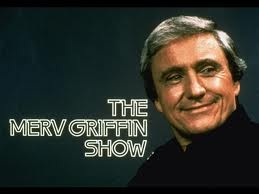 The answer is Merv Griffin. The question could be just about anything.