Category Archives: Events

Pair climb frozen Niagara Falls

Red Bull has created stunning video of Alberta, Canada adventurer Will Gadd’s historic ascent up a frozen portion of Niagara Falls. On January 27, 2015, he and fellow climber Sarah Hueniken became the first climb up the falls, though Gadd claims that in the end, it was Niagara that won.

That climb beat me up. I may have reached the top, but Niagara won the war. At the end of the day I was hypothermic. That waterfall did a lot more damage to me than I did to it!

According to National Geographic, the climb’s sponsor, Red Bull, had planned to keep the event secret until after the Super Bowl, but word of the feat got out early.

RIP Joe Cocker

John RobertJoeCockerOBE (May 20, 1944 – December 22, 2014) was an English rock and blues singer and musician who came to popularity in the 1960s. He was known for his gritty voice, spasmodic body movement in performance, and cover versions of popular songs, particularly those of The Beatles.

Cocker’s cover of The Beatles’ “With a Little Help from My Friends” reached number one in the UK in 1968. He performed the song live at Woodstock in 1969, and at the Party at the Palace concert for the Golden Jubilee of Elizabeth II in 2002. His version also became the theme song for the TV series The Wonder Years. His 1974 cover of “You Are So Beautiful“, reached number five in the US. Cocker was the recipient of several awards, including a 1983 Grammy Award for his US number one “Up Where We Belong”, a duet with Jennifer Warnes.

Joe Cocker died of lung cancer on December 22, 2014.


https://www.youtube.com/watch?v=bbMyksobL-U

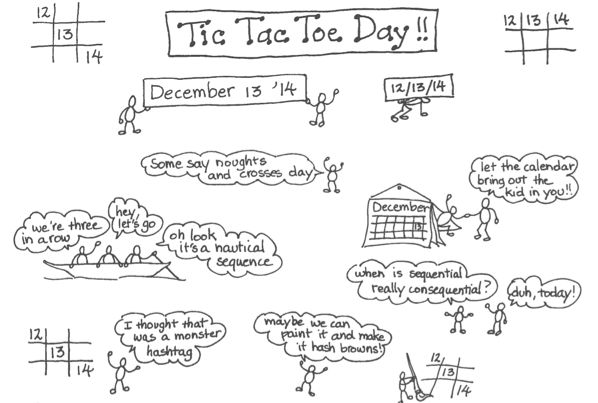
Tic Tac Toe day

Tic Tac Toe Day

70th Annual Gerry Rodeo

Gerry Rodeo

2014 Gerry Rodeo

70th Annual Rodeo July 30 – August 2, 2014

Wednesday thru Saturday Evening Performances   8:00 P.M.

Saturday Afternoon Performance   2:00 P.M.

Famous Beef Barbeque Dinners  Each Evening   5:00-7:30 P.M.

– See more at: http://www.gerryrodeo.org

The 70th annual Gerry Volunteer Fire Department’s PRCA rodeo promises to be bigger and better than ever as approximately 135 professional cowboys and cowgirls travel from across the nation to compete for $45,000 in prize money in the seven traditional competitive events of rodeo.  Add to this the antics of clown and barrel man “Hollywood” Harris, the return of Greg Simas, one of rodeo’s top announcers, and the more than 100 head of outstanding stock provided by Painted Pony Pro Rodeo and you’ll understand why this rodeo is now the longest consecutively running rodeo east of the Mississippi. Adding to the Gerry rodeo’s great reputation, the cowboys of the First Frontier Rodeo Circuit recently voted Gerry as their favorite rodeo among the 45 rodeos held in the Circuit.

Adding to the Gerry Rodeo’s great reputation, the cowboys of the First Frontier Rodeo Circuit, made up of the original 13 Colonies, recently voted Gerry as their favorite rodeo out of the 45 rodeos held in the Circuit last year.

Website

RIP Martin Luther King, Jr.

Just after 6 p.m. on April 4, 1968, Martin Luther King Jr. is fatally shot while standing on the balcony outside his second-story room at the Motel Lorraine in Memphis, Tennessee. The civil rights leader was in Memphis to support a sanitation workers’ strike and was on his way to dinner when a bullet struck him in the jaw and severed his spinal cord. King was pronounced dead after his arrival at a Memphis hospital. He was 39 years old.

In the months before his assassination, Martin Luther King became increasingly concerned with the problem of economic inequality in America. He planned an interracial “Poor People’s March” on Washington and in March 1968 had traveled to Memphis in support of poorly treated African-American sanitation workers. On March 28, a workers’ protest march led by King ended in violence and the death of an African-American teenager. King left the city but vowed to return in early April to lead another demonstration.

On April 3, back in Memphis, King gave his last sermon, saying, “We’ve got some difficult days ahead, but it really doesn’t matter with me now. Because I’ve been to the mountaintop. And I don’t mind. Like anybody, I would like to live a long life; longevity has its place. But I’m not concerned about that now. I just want to do God’s will. And he’s allowed me to go up to the mountain, and I’ve looked over, and I’ve seen the promised land. I may not get there with you, but I want you to know tonight that we as a people will get to the promised land.”

One day after speaking those words, Dr. King was shot and killed by a sniper. As word of the assassination spread, riots broke out in cities all across the United States and National Guard troops were deployed in Memphis and Washington, D.C. On April 9, King was laid to rest in his hometown of Atlanta, Georgia. Tens of thousands of people lined the streets to pay tribute to King’s casket as it passed by in a wooden farm cart drawn by a single mule.

The evening of King’s murder, a Remington .30-06 hunting rifle was found on the sidewalk beside a rooming house one block from the Lorraine Motel. During the next several weeks, the rifle, eyewitness reports, and fingerprints on the weapon all implicated a single suspect: escaped convict James Earl Ray. A two-bit criminal, Ray escaped a Missouri prison in April 1967 while serving a sentence for a holdup. In May 1968, a massive manhunt for Ray began. The FBI eventually determined that he had obtained a Canadian passport under a false identity, which at the time was relatively easy.

On June 8, Scotland Yard investigators arrested Ray at a London airport. He was trying to fly to Belgium, with the eventual goal, he later admitted, of reaching Rhodesia. Rhodesia, now called Zimbabwe, was at the time ruled by an oppressive and internationally condemned white minority government. Extradited to the United States, Ray stood before a Memphis judge in March 1969 and pleaded guilty to King’s murder in order to avoid the electric chair. He was sentenced to 99 years in prison.

Three days later, he attempted to withdraw his guilty plea, claiming he was innocent of King’s assassination and had been set up as a patsy in a larger conspiracy. He claimed that in 1967, a mysterious man named “Raoul” had approached him and recruited him into a gunrunning enterprise. On April 4, 1968, he said, he realized that he was to be the fall guy for the King assassination and fled to Canada. Ray’s motion was denied, as were his dozens of other requests for a trial during the next 29 years.

During the 1990s, the widow and children of Martin Luther King Jr. spoke publicly in support of Ray and his claims, calling him innocent and speculating about an assassination conspiracy involving the U.S. government and military. U.S. authorities were, in conspiracists’ minds, implicated circumstantially. FBI Director J. Edgar Hoover obsessed over King, who he thought was under communist influence. For the last six years of his life, King underwent constant wiretapping and harassment by the FBI. Before his death, Dr. King was also monitored by U.S. military intelligence, which may have been asked to watch King after he publicly denounced the Vietnam War in 1967. Furthermore, by calling for radical economic reforms in 1968, including guaranteed annual incomes for all, King was making few new friends in the Cold War-era U.S. government.

Over the years, the assassination has been reexamined by the House Select Committee on Assassinations, the Shelby County, Tennessee, district attorney’s office, and three times by the U.S. Justice Department. The investigations all ended with the same conclusion: James Earl Ray killed Martin Luther King. The House committee acknowledged that a low-level conspiracy might have existed, involving one or more accomplices to Ray, but uncovered no evidence to definitively prove this theory. In addition to the mountain of evidence against him–such as his fingerprints on the murder weapon and his admitted presence at the rooming house on April 4–Ray had a definite motive in assassinating King: hatred. According to his family and friends, he was an outspoken racist who informed them of his intent to kill Dr. Martin Luther King, Jr. He died in 1998.

Happy Valentine’s Day

Happy Valentines Day

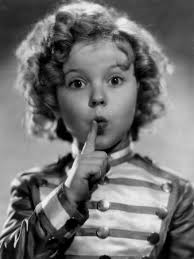
RIP Shirley Temple

My Word!  It comes with great sadness to announce that Shirley (Curly Top, Little Miss Marker, The Little Rebel and the Little Colonel) Temple has passed away at the young age of 85.

Shirley Temple Black (April 23, 1928 – February 10, 2014) in Curly Top (1935)

Shirley Temple Black (April 23, 1928 – February 10, 2014) in Curly Top (1935)

Shirley Temple was an American film and television actress, singer, dancer and public servant, most famous as a child star in the 1930s. As an adult, she entered politics and became a diplomat, serving as United States Ambassador to Ghana and later to Czechoslovakia, and as Chief of Protocol of the United States.

Temple began her film career in 1932 at the age of three. In 1934, she found international fame in Bright Eyes, a feature film designed specifically for her talents. She received a special Juvenile Academy Award in February 1935 for her outstanding contribution as a juvenile performer to motion pictures during 1934, and film hits such as Curly Top and Heidi followed year after year during the mid-to-late 1930s. Licensed merchandise that capitalized on her wholesome image included dolls, dishes, and clothing. Her box office popularity waned as she reached adolescence, and she left the film industry in her teens. She appeared in a few films of varying quality in her mid-to-late teens, and retired completely from films in 1950 at the age of 22. She was the top box-office draw four years in a row (1935–38) in a Motion Picture Herald poll.

Temple returned to show business in 1958 with a two-season television anthology series of fairy tale adaptations. She made guest appearances on television shows in the early 1960s and filmed a sitcom pilot that was never released. She sat on the boards of corporations and organizations including The Walt Disney Company, Del Monte Foods, and the National Wildlife Federation. She began her diplomatic career in 1969, with an appointment to represent the United States at a session of the United Nations General Assembly. In 1988, she published her autobiography, Child Star.

Temple was the recipient of awards and honors including Kennedy Center Honors and a Screen Actors Guild Life Achievement Award. She ranks 18th on the American Film Institute‘s list of the greatest female American screen legends of all time.

Thank you, Shirley for many evenings with my wife watching your works of art

Wikipedia Link

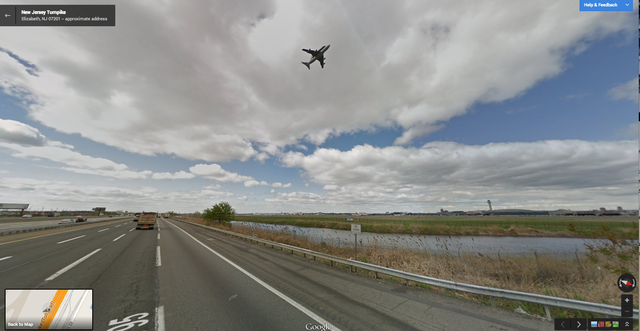
Google Street View captures Shuttle on 747

Google Street View Captures Shuttle

Space Shuttle Enterprise last flight towards New York was captured by Google Street View

The 15th Annual Ohio Pawpaw Festival

2013 Ohio PawPaw Festival

The 15th Annual Ohio Pawpaw Festival will take place September 13-15, 2013. We hope you come to join the crowds of happy folks  at scenic Lake Snowden in Albany, Ohio for 3 days of Pawpaw music, food, contests, art, history, education, sustainable living workshops and activities for the kids!

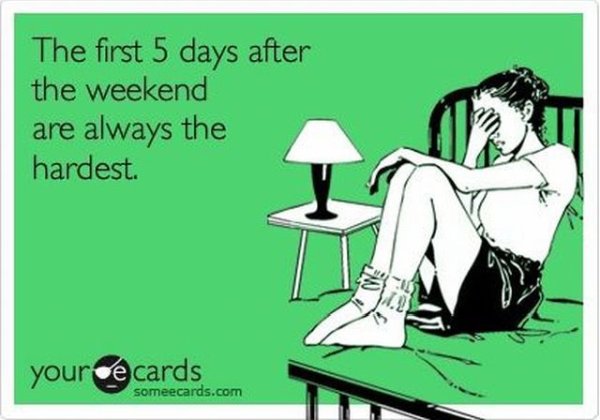
The First 5 Days

The First 5 Days

69th Annual Gerry Rodeo

Gerry Rodeo

2013 Gerry Rodeo

69th Annual Rodeo July 31 – August 3, 2013

  • Wednesday thru Saturday Performances  8:00 P.M.
  • Saturday Afternoon Performance  2:00 P.M.
  • Our Famous Beef BBQ Dinners each evening  5:00-7:30 P.M.

The 69th annual Gerry Volunteer Fire Department’s PRCA rodeo promises to be bigger and better than ever as approximately 130 professional cowboys and cowgirls will compete for more than $35,000 in the seven competitive events of rodeo. Add to that an afternoon show on Saturday, the specialty acts of clown and barrel man Dusty Barrett and his Roman Riding Ponies, the return of Greg Simas, one of rodeo’s top announcers to direct the action in the arena, and more than 100 head of outstanding stock provided by Painted Pony Pro Rodeo and you’ll understand why this rodeo is now the longest consecutively running rodeo east of the Mississippi.

Adding to the Gerry Rodeo’s great reputation, the cowboys of the First Frontier Rodeo Circuit, made up of the original 13 Colonies, recently voted Gerry as their favorite rodeo out of the 45 rodeos held in the Circuit last year.

Website

RIP Martin Luther King, Jr.

Just after 6 p.m. on April 4, 1968, Martin Luther King Jr. is fatally shot while standing on the balcony outside his second-story room at the Motel Lorraine in Memphis, Tennessee. The civil rights leader was in Memphis to support a sanitation workers’ strike and was on his way to dinner when a bullet struck him in the jaw and severed his spinal cord. King was pronounced dead after his arrival at a Memphis hospital. He was 39 years old.

In the months before his assassination, Martin Luther King became increasingly concerned with the problem of economic inequality in America. He planned an interracial “Poor People’s March” on Washington and in March 1968 had traveled to Memphis in support of poorly treated African-American sanitation workers. On March 28, a workers’ protest march led by King ended in violence and the death of an African-American teenager. King left the city but vowed to return in early April to lead another demonstration.

On April 3, back in Memphis, King gave his last sermon, saying, “We’ve got some difficult days ahead, but it really doesn’t matter with me now. Because I’ve been to the mountaintop. And I don’t mind. Like anybody, I would like to live a long life; longevity has its place. But I’m not concerned about that now. I just want to do God’s will. And he’s allowed me to go up to the mountain, and I’ve looked over, and I’ve seen the promised land. I may not get there with you, but I want you to know tonight that we as a people will get to the promised land.”

One day after speaking those words, Dr. King was shot and killed by a sniper. As word of the assassination spread, riots broke out in cities all across the United States and National Guard troops were deployed in Memphis and Washington, D.C. On April 9, King was laid to rest in his hometown of Atlanta, Georgia. Tens of thousands of people lined the streets to pay tribute to King’s casket as it passed by in a wooden farm cart drawn by a single mule.

The evening of King’s murder, a Remington .30-06 hunting rifle was found on the sidewalk beside a rooming house one block from the Lorraine Motel. During the next several weeks, the rifle, eyewitness reports, and fingerprints on the weapon all implicated a single suspect: escaped convict James Earl Ray. A two-bit criminal, Ray escaped a Missouri prison in April 1967 while serving a sentence for a holdup. In May 1968, a massive manhunt for Ray began. The FBI eventually determined that he had obtained a Canadian passport under a false identity, which at the time was relatively easy.

On June 8, Scotland Yard investigators arrested Ray at a London airport. He was trying to fly to Belgium, with the eventual goal, he later admitted, of reaching Rhodesia. Rhodesia, now called Zimbabwe, was at the time ruled by an oppressive and internationally condemned white minority government. Extradited to the United States, Ray stood before a Memphis judge in March 1969 and pleaded guilty to King’s murder in order to avoid the electric chair. He was sentenced to 99 years in prison.

Three days later, he attempted to withdraw his guilty plea, claiming he was innocent of King’s assassination and had been set up as a patsy in a larger conspiracy. He claimed that in 1967, a mysterious man named “Raoul” had approached him and recruited him into a gunrunning enterprise. On April 4, 1968, he said, he realized that he was to be the fall guy for the King assassination and fled to Canada. Ray’s motion was denied, as were his dozens of other requests for a trial during the next 29 years.

During the 1990s, the widow and children of Martin Luther King Jr. spoke publicly in support of Ray and his claims, calling him innocent and speculating about an assassination conspiracy involving the U.S. government and military. U.S. authorities were, in conspiracists’ minds, implicated circumstantially. FBI Director J. Edgar Hoover obsessed over King, who he thought was under communist influence. For the last six years of his life, King underwent constant wiretapping and harassment by the FBI. Before his death, Dr. King was also monitored by U.S. military intelligence, which may have been asked to watch King after he publicly denounced the Vietnam War in 1967. Furthermore, by calling for radical economic reforms in 1968, including guaranteed annual incomes for all, King was making few new friends in the Cold War-era U.S. government.

Over the years, the assassination has been reexamined by the House Select Committee on Assassinations, the Shelby County, Tennessee, district attorney’s office, and three times by the U.S. Justice Department. The investigations all ended with the same conclusion: James Earl Ray killed Martin Luther King. The House committee acknowledged that a low-level conspiracy might have existed, involving one or more accomplices to Ray, but uncovered no evidence to definitively prove this theory. In addition to the mountain of evidence against him–such as his fingerprints on the murder weapon and his admitted presence at the rooming house on April 4–Ray had a definite motive in assassinating King: hatred. According to his family and friends, he was an outspoken racist who informed them of his intent to kill Dr. Martin Luther King, Jr. He died in 1998.
RIP Martin Luther King, Jr.

Just after 6 p.m. on April 4, 1968, Martin Luther King Jr. is fatally shot while standing on the balcony outside his second-story room at the Motel Lorraine in Memphis, Tennessee. The civil rights leader was in Memphis to support a sanitation workers’ strike and was on his way to dinner when a bullet struck him in the jaw and severed his spinal cord. King was pronounced dead after his arrival at a Memphis hospital. He was 39 years old.

In the months before his assassination, Martin Luther King became increasingly concerned with the problem of economic inequality in America. He planned an interracial “Poor People’s March” on Washington and in March 1968 had traveled to Memphis in support of poorly treated African-American sanitation workers. On March 28, a workers’ protest march led by King ended in violence and the death of an African-American teenager. King left the city but vowed to return in early April to lead another demonstration.

On April 3, back in Memphis, King gave his last sermon, saying, “We’ve got some difficult days ahead, but it really doesn’t matter with me now. Because I’ve been to the mountaintop. And I don’t mind. Like anybody, I would like to live a long life; longevity has its place. But I’m not concerned about that now. I just want to do God’s will. And he’s allowed me to go up to the mountain, and I’ve looked over, and I’ve seen the promised land. I may not get there with you, but I want you to know tonight that we as a people will get to the promised land.”

One day after speaking those words, Dr. King was shot and killed by a sniper. As word of the assassination spread, riots broke out in cities all across the United States and National Guard troops were deployed in Memphis and Washington, D.C. On April 9, King was laid to rest in his hometown of Atlanta, Georgia. Tens of thousands of people lined the streets to pay tribute to King’s casket as it passed by in a wooden farm cart drawn by a single mule.

The evening of King’s murder, a Remington .30-06 hunting rifle was found on the sidewalk beside a rooming house one block from the Lorraine Motel. During the next several weeks, the rifle, eyewitness reports, and fingerprints on the weapon all implicated a single suspect: escaped convict James Earl Ray. A two-bit criminal, Ray escaped a Missouri prison in April 1967 while serving a sentence for a holdup. In May 1968, a massive manhunt for Ray began. The FBI eventually determined that he had obtained a Canadian passport under a false identity, which at the time was relatively easy.

On June 8, Scotland Yard investigators arrested Ray at a London airport. He was trying to fly to Belgium, with the eventual goal, he later admitted, of reaching Rhodesia. Rhodesia, now called Zimbabwe, was at the time ruled by an oppressive and internationally condemned white minority government. Extradited to the United States, Ray stood before a Memphis judge in March 1969 and pleaded guilty to King’s murder in order to avoid the electric chair. He was sentenced to 99 years in prison.

Three days later, he attempted to withdraw his guilty plea, claiming he was innocent of King’s assassination and had been set up as a patsy in a larger conspiracy. He claimed that in 1967, a mysterious man named “Raoul” had approached him and recruited him into a gunrunning enterprise. On April 4, 1968, he said, he realized that he was to be the fall guy for the King assassination and fled to Canada. Ray’s motion was denied, as were his dozens of other requests for a trial during the next 29 years.

During the 1990s, the widow and children of Martin Luther King Jr. spoke publicly in support of Ray and his claims, calling him innocent and speculating about an assassination conspiracy involving the U.S. government and military. U.S. authorities were, in conspiracists’ minds, implicated circumstantially. FBI Director J. Edgar Hoover obsessed over King, who he thought was under communist influence. For the last six years of his life, King underwent constant wiretapping and harassment by the FBI. Before his death, Dr. King was also monitored by U.S. military intelligence, which may have been asked to watch King after he publicly denounced the Vietnam War in 1967. Furthermore, by calling for radical economic reforms in 1968, including guaranteed annual incomes for all, King was making few new friends in the Cold War-era U.S. government.

Over the years, the assassination has been reexamined by the House Select Committee on Assassinations, the Shelby County, Tennessee, district attorney’s office, and three times by the U.S. Justice Department. The investigations all ended with the same conclusion: James Earl Ray killed Martin Luther King. The House committee acknowledged that a low-level conspiracy might have existed, involving one or more accomplices to Ray, but uncovered no evidence to definitively prove this theory. In addition to the mountain of evidence against him–such as his fingerprints on the murder weapon and his admitted presence at the rooming house on April 4–Ray had a definite motive in assassinating King: hatred. According to his family and friends, he was an outspoken racist who informed them of his intent to kill Dr. Martin Luther King, Jr. He died in 1998.