

Category Archives: Literary

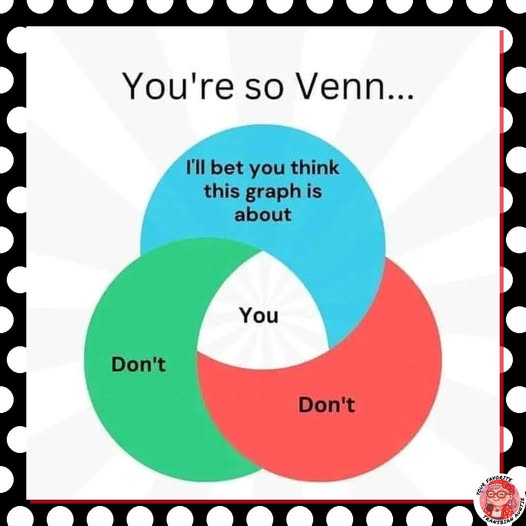
You’re So Venn

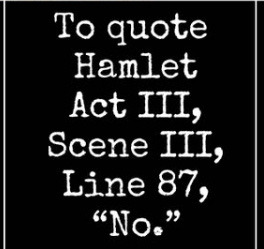
No. (Hamlet)

Next to Nothing

I’m so bored sitting at home that I decided to memorize six pages of the dictionary.

I learned Next to Nothing.

Edgar Allan Poe’s ‘The Raven’ read by Vincent Price

Released on

Wikipedia Link

“The Raven” is a narrative poem by American writer Edgar Allan Poe. First published in January 1845, the poem is often noted for its musicality, stylized language and supernatural atmosphere. It tells of a distraught lover who is paid a visit by a mysterious raven that repeatedly speaks a single word. The lover, often identified as a student, is lamenting the loss of his love, Lenore. Sitting on a bust of Pallas, the raven seems to further antagonize the protagonist with its repetition of the word “nevermore”. The poem makes use of folk, mythological, religious, and classical references.

Poe stated that he composed the poem in a logical and methodical manner, aiming to craft a piece that would resonate with both critical and popular audiences, as he elaborated in his follow-up essay in 1846, “The Philosophy of Composition”. The poem was inspired in part by a talking raven in the 1841 novel Barnaby Rudge by Charles Dickens. Poe based the complex rhythm and meter on Elizabeth Barrett’s poem “Lady Geraldine’s Courtship” and made use of internal rhyme as well as alliteration throughout.

“The Raven” was first attributed to Poe in print in the New York Evening Mirror on January 29, 1845. Its publication made Poe popular in his lifetime, although it did not bring him much financial success. The poem was soon reprinted, parodied, and illustrated. Critical opinion is divided as to the poem’s literary status, but it nevertheless remains one of the most famous poems ever written.

Autocorrect

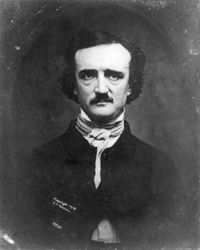
Edgar Allan Poe

Edgar Allan Poe was an American poet, short story writer, editor, critic and one of the leaders of the American Romantic Movement. Best known for his tales of the macabre, Poe was one of the early American practitioners of the short story and a progenitor of detective fiction and crime fiction. He is also credited with contributing to narrative forms of the emergent science fiction genre.

Edgar Allan Poe
Edgar Allan Poe (January 19, 1809 – October 7, 1849)

Wikipedia Link

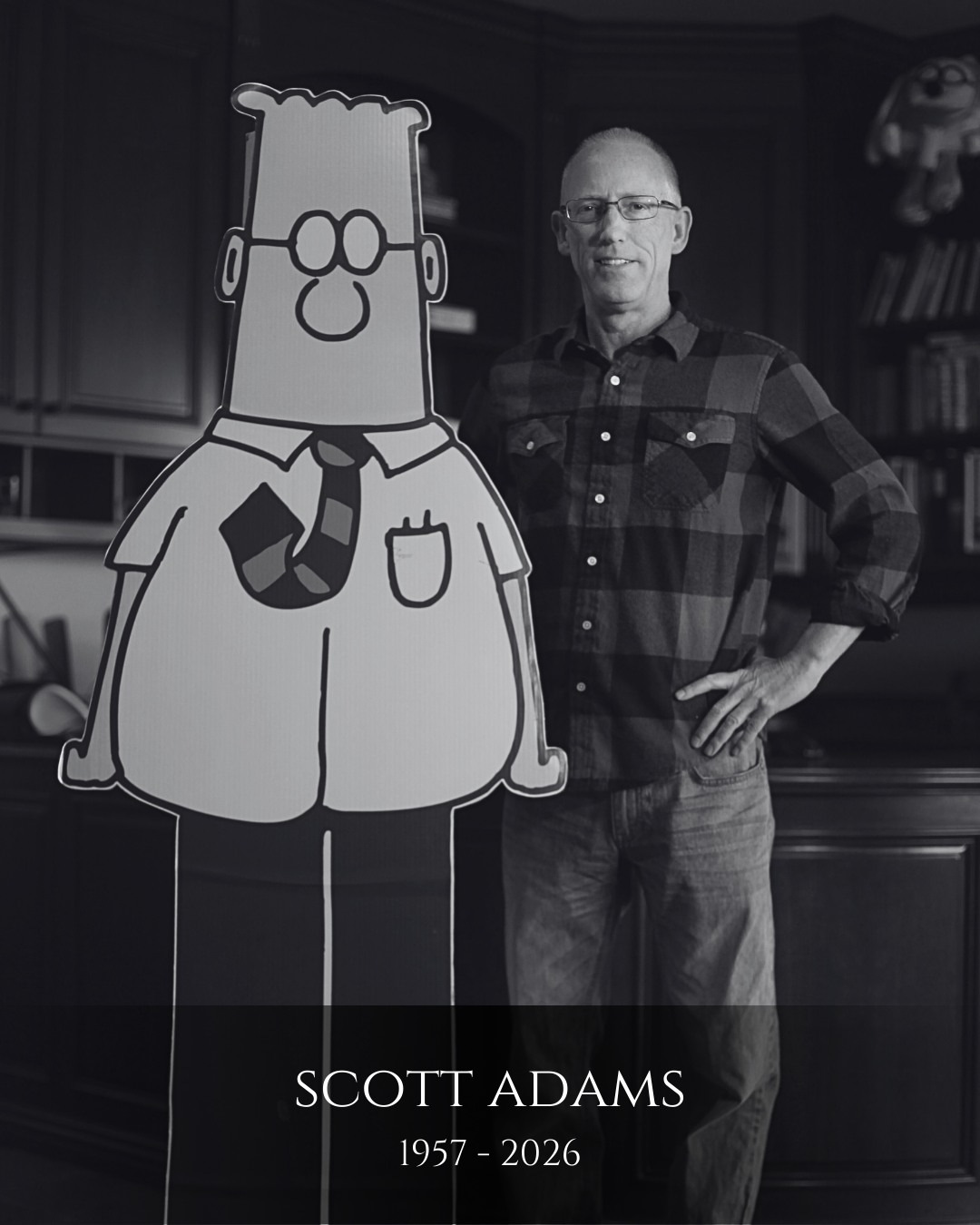
RIP Scott Adams

Scott Raymond Adams (June 8, 1957 – January 13, 2026) was an American author and cartoonist. He was best know as the creator of the Dilbert comic strip.

Wikipedia Article

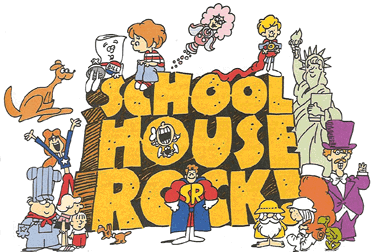
Anniversary of Schoolhouse Rock!

January 6, 1973 – March 31, 2009

You remember it… go get all nostalgic and learn more at Wikipedia.

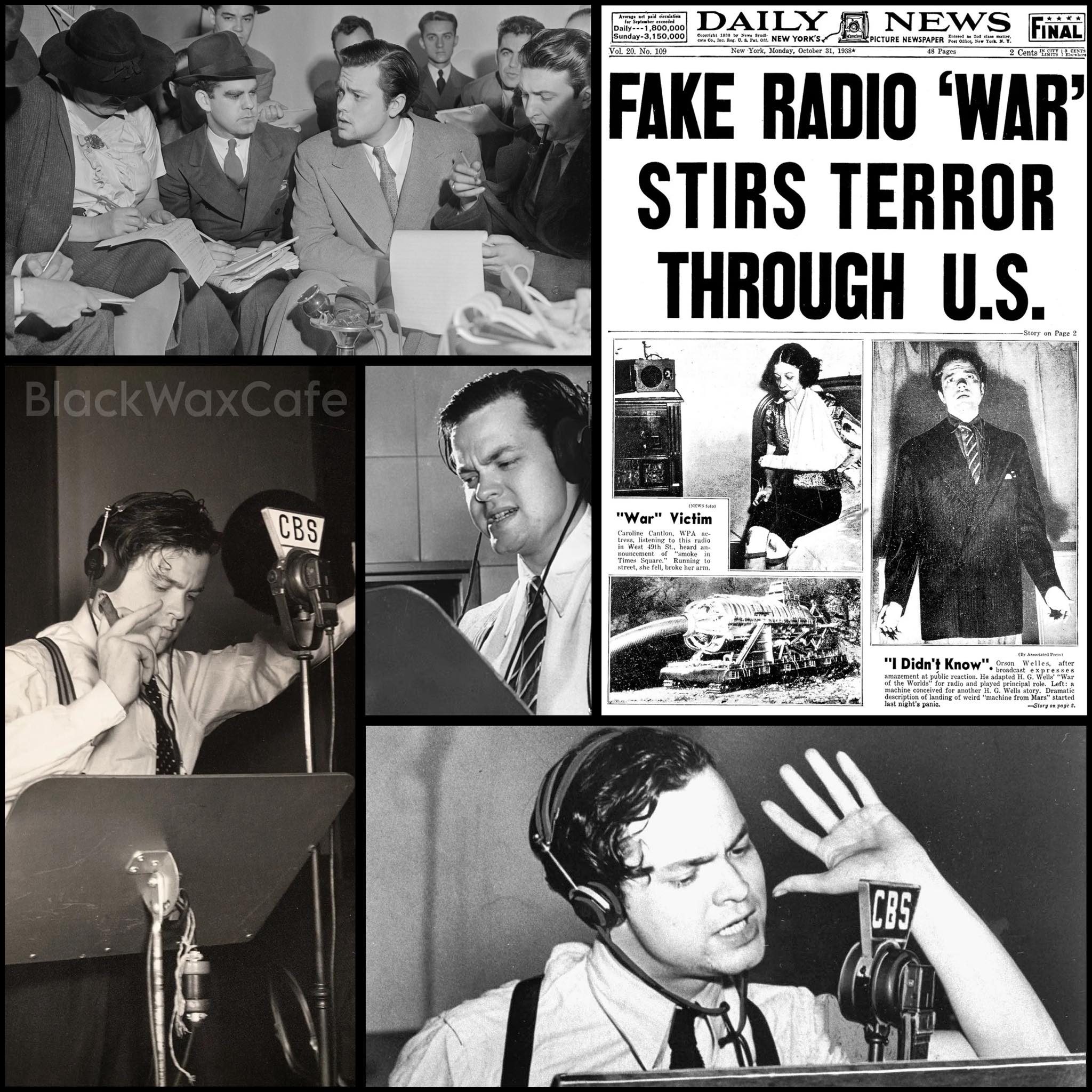
War of the Worlds

This day In Radio History, Oct 30, 1938 – Panic Over War of the Worlds

A radio broadcast of H. G. Wells “The War of the Worlds”, narrated by Orson Welles, allegedly causes a mass panic.


“The War of the Worlds” was a Halloween episode of the radio series The Mercury Theatre on the Air directed and narrated by Orson Welles as an adaptation of H. G. Wells’s novel The War of the Worlds (1898) that was performed and broadcast live at 8 pm ET on October 30, 1938 over the CBS Radio Network. The episode is famous for inciting a panic by convincing some members of the listening audience that a Martian invasion was taking place, though the scale of panic is disputed, as the program had relatively few listeners.

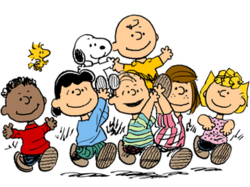
75th Anniversary of Peanuts

From Wikipedia (article here):

Peanuts (briefly subtitled featuring Good ol’ Charlie Brown) is a syndicated daily and Sunday American comic strip written and illustrated by Charles M. Schulz. The strip’s original run extended from 1950 to 2000, continuing in reruns afterward. Peanuts is among the most popular and influential in the history of comic strips, with 17,897 strips published in all,[1] making it “arguably the longest story ever told by one human being”.[2] At the time of Schulz’s death in 2000, Peanuts ran in over 2,600 newspapers, with a readership of roughly 355 million across 75 countries, and had been translated into 21 languages.[3] It helped to cement the four-panel gag strip[4] as the standard in the United States,[5] and together with its merchandise earned Schulz more than $1 billion.[1] Following successful TV and theatrical adaptations over the years, a movie adaptation was released by Blue Sky Studios in 2015.[6]

Peanuts focuses on a social circle of young children, where adults exist but are rarely seen or heard. The main character, Charlie Brown, is meek, nervous, and lacks self-confidence. He is unable to fly a kite, win a baseball game, or kick a football held by his irascible friend Lucy, who always pulls it away at the last instant.[7] Peanuts is a literate strip with philosophical, psychological, and sociological overtones, which was innovative in the 1950s.[4] Its humor is psychologically complex and driven by the characters’ interactions and relationships. The comic strip has been adapted in animation and theater.

Schulz drew every strip, through nearly 50 years, with no assistants, including the lettering and coloring process.[8][9]

Happy Birthday, “The Hobbit”

“In a hole in the ground there lived a hobbit.”

The Hobbit is a novel written by J. R. R. Tolkien in the tradition of the fairy tale. It was first published on September 21, 1937. While it also stands in its own right, it is often seen as a prelude to Tolkien’s monumental fantasy novel The Lord of the Rings (published in 1954 and 1955).

The story, subtitled There and Back Again, follows the adventures of the hobbit Bilbo Baggins as he travels across the lands of Middle-earth with a band of dwarves and a wizard named Gandalf on a quest to restore a dwarven kingdom and a great treasure stolen by the dragon, Smaug.

Happy Birthday, Emoticon :-)

emoticon smile

An emoticon is a facial expression pictorially represented by punctuation and letters, usually to express a writer’s mood. Emoticons are often used to alert a responder to the tenor or temper of a statement, and can change and improve interpretation of plain text. The word is a portmanteau word of the English words emotion and icon. In web forums, instant messengers and online games, text emoticons are often automatically replaced with small corresponding images, which came to be called emoticons as well. Certain complex character combinations can only be accomplished in a double-byte language, giving rise to especially complex forms, sometimes known by their romanized Japanese name of kaomoji.

The use of emoticons can be traced back to the 19th century, and they were commonly used in casual and/or humorous writing. Digital forms of emoticons on the Internet were included in a proposal by Scott Fahlman of Carnegie Mellon University in Pittsburgh, Pennsylvania, in a message on September 19, 1982.

Founding of the Library of Congress

The Library of Congress was established on April 24, 1800, when President John Adams signed an Act of Congress providing for the transfer of the seat of government from Philadelphia to the new capital city of Washington. Part of the legislation appropriated $5,000 “for the purchase of such books as may be necessary for the use of Congress …, and for fitting up a suitable apartment for containing them….” Books were ordered from London and the collection, consisting of 740 books and 30 maps, was housed in the new Capitol. Although the collection covered a variety of topics, the bulk of the materials were legal in nature, reflecting Congress’ role as a maker of laws.

Thomas Jefferson played an important role in the Library’s early formation, signing into law on January 26, 1802 the first law establishing the structure of the Library of Congress. The law established the presidentially appointed post of Librarian of Congress and a Joint Committee on the Library to regulate and oversee the Library, as well as giving the president and vice president the ability to borrow books. The Library of Congress was destroyed in August 1814, when invading British troops set fire to the Capitol building and the small library of 3,000 volumes within.

Within a month, former President Jefferson offered his personal library as a replacement. Jefferson had spent 50 years accumulating a wide variety of books, including ones in foreign languages and volumes of philosophy, science, literature, and other topics not normally viewed as part of a legislative library, such as cookbooks, writing that, “I do not know that it contains any branch of science which Congress would wish to exclude from their collection; there is, in fact, no subject to which a Member of Congress may not have occasion to refer.” In January 1815, Congress accepted Jefferson’s offer, appropriating $23,950 to purchase his 6,487 books.

Wikipedia Article

The Raven

“The Raven” is a narrative poem by American writer Edgar Allan Poe. First published in January 1845, the poem is often noted for its musicality, stylized language, and supernatural atmosphere. It tells of a distraught lover who is paid a mysterious visit by a talking raven. The lover, often identified as a student, is lamenting the loss of his love, Lenore. Sitting on a bust of Pallas, the raven seems to further antagonize the protagonist with its constant repetition of the word “Nevermore”. The poem makes use of folk, mythological, religious, and classical references.

Poe claimed to have written the poem logically and methodically, with the intention to create a poem that would appeal to both critical and popular tastes, as he explained in his 1846 follow-up essay, “The Philosophy of Composition”. The poem was inspired in part by a talking raven in the novel Barnaby Rudge: A Tale of the Riots of Eighty by Charles Dickens. Poe based the complex rhythm and meter on Elizabeth Barrett’s poem “Lady Geraldine’s Courtship”, and made use of internal rhyme as well as alliteration throughout.

“The Raven” was first attributed to Poe in print in the New York Evening Mirror on January 29, 1845. Its publication made Poe popular in his lifetime, although it did not bring him much financial success. The poem was soon reprinted, parodied, and illustrated. Critical opinion is divided as to the poem’s literary status, but it nevertheless remains one of the most famous poems ever written.

Wikipedia Article

Edgar Allan Poe

Edgar Allan Poe was an American poet, short story writer, editor, critic and one of the leaders of the American Romantic Movement. Best known for his tales of the macabre, Poe was one of the early American practitioners of the short story and a progenitor of detective fiction and crime fiction. He is also credited with contributing to narrative forms of the emergent science fiction genre.

Edgar Allan Poe
Edgar Allan Poe (January 19, 1809 – October 7, 1849)

Wikipedia Link

Happy Birthday, “The Hobbit”

“In a hole in the ground there lived a hobbit.”

The Hobbit is a novel written by J. R. R. Tolkien in the tradition of the fairy tale. It was first published on September 21, 1937. While it also stands in its own right, it is often seen as a prelude to Tolkien’s monumental fantasy novel The Lord of the Rings (published in 1954 and 1955).

The story, subtitled There and Back Again, follows the adventures of the hobbit Bilbo Baggins as he travels across the lands of Middle-earth with a band of dwarves and a wizard named Gandalf on a quest to restore a dwarven kingdom and a great treasure stolen by the dragon, Smaug.

Happy Birthday, Emoticon :-)

emoticon smile

An emoticon is a facial expression pictorially represented by punctuation and letters, usually to express a writer’s mood. Emoticons are often used to alert a responder to the tenor or temper of a statement, and can change and improve interpretation of plain text. The word is a portmanteau word of the English words emotion and icon. In web forums, instant messengers and online games, text emoticons are often automatically replaced with small corresponding images, which came to be called emoticons as well. Certain complex character combinations can only be accomplished in a double-byte language, giving rise to especially complex forms, sometimes known by their romanized Japanese name of kaomoji.

The use of emoticons can be traced back to the 19th century, and they were commonly used in casual and/or humorous writing. Digital forms of emoticons on the Internet were included in a proposal by Scott Fahlman of Carnegie Mellon University in Pittsburgh, Pennsylvania, in a message on September 19, 1982.

Tolkien’s Middle-Earth Explained

A guide to the Hundred Acre Wood

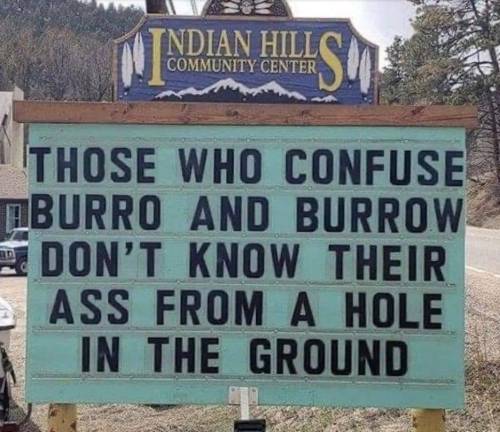
Burro vs Burrow