Bandstand in the 50s, New Year’s Rockin’ Eves for the past 30 years, Dick Clark has been around and seen (and introduced) it all… he has passed away as the “World’s Oldest Teenager” at the age of 82.
Bandstand in the 50s, New Year’s Rockin’ Eves for the past 30 years, Dick Clark has been around and seen (and introduced) it all… he has passed away as the “World’s Oldest Teenager” at the age of 82.
Posted in Because I Can, Music, News
The founder of Commodore, one of the driving forces in the early history of the personal computers, has died at the age of 83.
Tramiel, born as Jacek Trzmiel to a Jewish family in Poland, emigrated to the US after the Second World War after losing his parents in Hitler’s camps. Tramiel spent time at Auschwitz and at a German labor camp before it was liberated by the US Army in the closing stages of the war. He came to the US and joined the army before setting up his own business, Commodore Business Machines, selling typewriters.
The firm switched to making pocket calculators and ended up buying its own chip business, MOSS, to provide its parts, before making an early move into the personal computer market. Commodore reportedly turned down an offer from Steve Jobs to build the Apple II and produced the Commodore PET (Personal Electronic Transactor), in 1977.
The PET featured a 1MHz MOSS processor, between four and eight kilobytes of RAM, and had a built-in monochrome monitor with an integral cassette player to allow software to be loaded onto the machine. Later versions included a green-screen monitor, integral disc drives, and a full-sized keyboard.
The PET proved popular, and was followed up by the VIC-20 systems, the first PC to sell more than a million units, and the Commodore 64 (C64), which was the bestselling PC of its era.
In the mid-1980s, the C64 was the dominant personal computer in the industry, outselling IBM, Apple, and other contenders. It developed a huge following and was one of the first computers to be sold by retail chains rather than via specialist electronics shops. An estimated 17 million units were eventually sold.
The C64 was much loved, particularly by the gaming community for its ability to handle relatively complex graphics with ease. It proved so popular that a new version, designed to look like the original, is now being sold as a dual-core Atom system, with higher-end versions also available. There’s also a C64 emulator available for the iPhone, including some classic games.
“Jack Tramiel was an immense influence in the consumer electronics and computing industries. A name once uttered in the same vein as Steve Jobs is today, his journey from concentration camp survivor to captain of industry is the stuff of legends,” says Martin Goldberg, a writer working on a book about the Atari brand, speaking with Forbes.
“His legacy are the generations upon generations of computer scientists, engineers, and gamers who had their first exposure to high technology because of his affordable computers – ‘for the masses and not the classes’,” he said.
Commodore’s success proved hard for Tramiel, as he was blamed for kicking off a price war in the computing industry that saw many players either bankrupted or leaving the industry.
In 1984 Tramiel was forced out of the company he founded. Later that year he bought Atari’s struggling computer division and began shipping new systems, including the AtariST, its first 16-bit computer. The company went on to produce PC clones for the general market, and made a foray into the gaming sector with the Atari Lynx and Jaguar brands.
Tramiel stepped back from day-to-day operations at Atari and let his son Sam take over, although he returned to the helm briefly after his son had a heart attack. The company was eventually sold to Atari Inc. in 1996.
He is survived by his wife Helen and three sons.
Posted in Because I Can, News
Davy Jones, the little Brit’ who could, has saddled up on the “Last Train to Clarksville.”
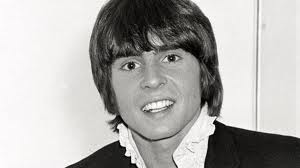
Davy Jones (December 30, 1945 – February 29, 2012)
His publicist, Helen Kensick, confirmed that Jones died of a heart attack near his home in Indiantown, Florida. Jones complained of breathing troubles early in the morning and was taken to a hospital where he was pronounced dead.
February 7, 2012:
The night before the Challenger space shuttle disaster, engineer Roger Boisjoly spent hours trying to get the mission called off. He was so certain that booster joints would fail in freezing weather and destroy the craft that he refused to watch it happen.
Posted in News

USS Abraham Lincoln and the USS John C. Stennis
These are the USS Abraham Lincoln and the USS John C. Stennis, two of the ten nuclear-powered Nimitz-class aircraft supercarriers in service with the United States Navy. TheLincolnjust arrived to theStrait of Hormuzas tension keeps mounting up in the area.
She has joined the USS Carl Vinson as the USS John Stennis leaves to the Pacific, according to the Pentagon. It’s nice that the Navy got to show off three carriers in the same area simultaneously, though. Not that Ahmadinejad and his cronies didn’t know that the US had ten of these, but it’s different to see the three of them right in your backyard than just knowing about them. I’m sure that made them a little bit uncomfortable.
Posted in Because I Can, News, Patriotic
Looks quiet and peaceful, doesn’t it… it also looks frickin’ HUGE!

Click for larger image
Posted in Because I Can, News
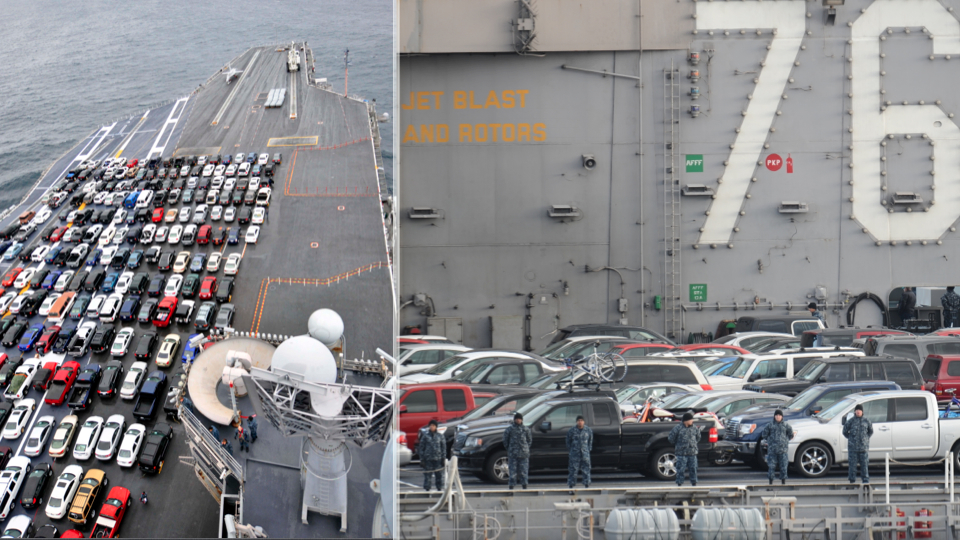
What you’re looking at is the deck of the U.S.S. Ronald Reagan covered in the vehicles of Navy Sailors heading to Naval Base Kitsap in Bremerton, Washington. At a cost of about $4.5 billion this is probably the world’s most expensive parking lot.
It may seem phenomenal, but this is actually a common occurrence for the Navy and a lot cheaper and easier than transporting the vehicles almost any other way. The weight of one E-2C Hawkeye is approximately 43,000 pounds, or about 12 cars, and a Nimitz-class carrier usually carries four of those.
The U.S.S. Ronald recently served in Asia and was en route to Kitsap for upgrades and repairs.
Posted in News
The final movement of Mahler’s Ninth Symphony is a slow rumination on mortality, with quiet sections played by strings alone.
During the New York Philharmonic’s performance Tuesday night, it was interrupted by an iPhone.
The jarring ringtone—the device’s “Marimba” sound, which simulates the mallet instrument—intruded in the middle of the movement, emanating from the first row at Avery Fisher Hall.
When the phone wasn’t immediately hushed, audience members shook their heads. It continued to chime, and music director Alan Gilbert turned his head sharply to the left, signaling his displeasure.
Minutes passed. Each time the orchestra reached a quiet section, the phone could be heard above the hushed, reverent notes.
Finally, Mr. Gilbert could take no more: He stopped the orchestra.
A Philharmonic spokeswoman said Wednesday the music director has never before halted a performance because of a cellphone or any other type of disruption.
As the offending noise continued in a loop, Mr. Gilbert turned in its direction and pointedly asked that the phone be turned off. The audience let out a collective gasp.
The ringtone—believed to be an alarm—played on.
The audience wasn’t pleased. A Wall Street Journal reporter seated in the 19th row heard jeers hurled from the balconies. One man screamed: “Enough!” Another yelled: “Throw him out!” The audience clapped and hollered in agreement—and still the tone continued to sound amid the din.
The Philharmonic, like many performing arts groups, plays an announcement at the beginning of concerts and at the end of each intermission asking the audience members to turn off their cellphones.
In an interview with The Wall Street Journal Wednesday, Mr. Gilbert said the ring tone yanked him out of a trance-like state during the symphony’s “most intense, most sublime, most emotional place.”
“It was kind of shocking because you get to a very faraway place emotionally and spiritually,” he said.
And even more surprising, he said, the man who owned the phone, recognized by orchestra members as a regular subscriber, didn’t immediately own up to it—or act to silence the device.
“I had to ask him many times,” Mr. Gilbert said. “It was bizarre. Maybe he was just so mortified that he just shut down and was paralyzed.”
Mr. Gilbert said he didn’t know the man’s name, but said he had heard that the orchestra’s customer relations department was planning to call him to ask why he didn’t act sooner.
Philharmonic officials declined to identify the subscriber.
In another apparent breach of protocol, no ushers came running to find the errant phone and neutralize it.
Avery Fisher Hall and its ushers are managed by Lincoln Center. The ushers stand at the back of the hall during performances, and policy dictates that when a cellphone rings, ushers discreetly ask the owner to turn it off, said Betsy Vorce, a Lincoln Center spokeswoman. She said officials are investigating why that didn’t happen.
After Mr. Gilbert took matters into his own hands, the man reached into his pocket and silenced the device. Mr. Gilbert asked him: “Is it off? It won’t come on again?”
The man nodded.
Satisfied, the conductor addressed the audience. Usually, Mr. Gilbert said, it is best to ignore disruptions, because the reaction itself can be even more disruptive. “This was so egregious that I couldn’t let it go by,” Mr. Gilbert told the audience, apologizing.
The audience applauded vigorously.
“We’ll try again,” he said on a more upbeat note.
He turned to the orchestra, told them the cue, and picked up from a vigorous fortissimo section. As Mahler’s Ninth Symphony reached its final, hushed note, the conductor held his arms suspended and the musicians froze for a long moment of exquisite silence.
The audience didn’t breathe.
Posted in Because I Can, Music, News
In his new book, “God, No!” atheist magician Penn Jillette tells how he was challenged by conservative radio host Glenn Beck to come up with an atheist’s version of The Ten Commandments.
“I wanted to see how many of the ideas that many people think are handed down from (G)od really make sense to someone who says, ‘I don’t know.'”
Here’s his list:
1. The highest ideals are human intelligence, creativity and love. Respect these above all.
2. Do not put things or even ideas above other human beings. (Let’s scream at each other about Kindle versus iPad, solar versus nuclear, Republican versus Libertarian, Garth Brooks versus Sun Ra — but when your house is on fire, I’ll be there to help.)
3. Say what you mean, even when talking to yourself. (What used to be an oath to (G)od is now quite simply respecting yourself.)
4. Put aside some time to rest and think. (If you’re religious, that might be the Sabbath; if you’re a Vegas magician, that’ll be the day with the lowest grosses.)
5. Be there for your family. Love your parents, your partner, and your children. (Love is deeper than honor, and parents matter, but so do spouse and children.)
6. Respect and protect all human life. (Many believe that “Thou shalt not kill” only refers to people in the same tribe. I say it’s all human life.)
7. Keep your promises. (If you can’t be sexually exclusive to your spouse, don’t make that deal.)
8. Don’t steal. (This includes magic tricks and jokes — you know who you are!)
9. Don’t lie. (You know, unless you’re doing magic tricks and it’s part of your job. Does that make it OK for politicians, too?)
10. Don’t waste too much time wishing, hoping, and being envious; it’ll make you bugnutty.
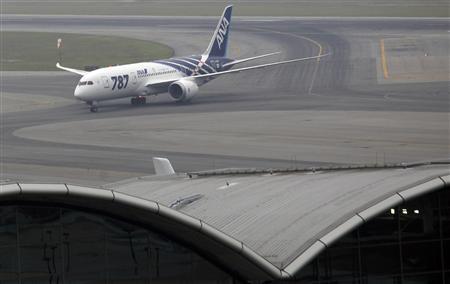
Boeing Dreamliner lands in Hong Kong after 1st commercial flight
The Boeing Co Dreamliner, the world’s first carbon-composite airliner, flew to Hong Kong from Tokyo carrying its first paying passengers today in a flight that could set a new benchmark in air travel.
Its takeoff into clear blue skies after a salute and shower by an airport fire truck came exactly 53 years after Boeing’s first ever jetliner, the 707, began commercial services in the Pan Am colors.
The Dreamliner does not fly any faster than that first aircraft, but it is not supposed to. Instead, it is designed to make the hours aloft more pleasant for passengers and cheaper to fly for owners battling for profit amid the rise of low cost carriers.
Posted in News, Planes Trains and Automobiles
A Russian spacecraft supplying six astronauts aboard the International Space Station failed to reach orbit on Wednesday and burned up in the atmosphere, its debris crashing in Siberia, Interfax news reported.
Posted in News
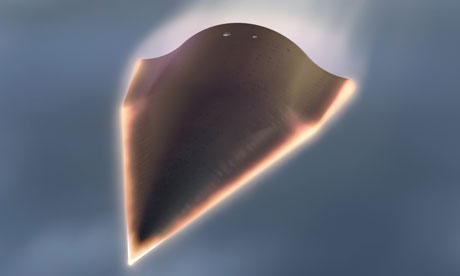
Artist’s rendition of the Falcon HTV-2, an unmanned, rocket-launched aircraft that flies at approximately 13,000 miles per hour. Photograph: AP/DARPA
By the time you finish reading this sentence, the Falcon HTV-2, the fastest plane ever built, could have flown 18 miles. It could travel from London to Sydney in less than an hour and cross the US mainland, from New York to Los Angeles, in 12 minutes.
Launched:
At 3pm BST on Thursday , the US Defence Advance Research Projects Agency launched the Falcon Hypersonic Technology Vehicle 2 on the back of a rocket from the Vandenberg Air Force Base in California. If all goes according to plan, engineers will launch the Falcon HTV-2 to the edge of space, before detaching the plane and guiding it on a hypersonic flight that will reach speeds of 13,000mph (about 20 times the speed of sound) on its return to Earth.
The plane has been tested in computer models and wind tunnels, but they can only simulate speeds up to Mach 15 (11,400mph). A real test is the only way to determine if the plane will remain flying at high speeds.
Thursday’s flight will also test the carbon composite materials designed to withstand the extreme temperatures the plane will experience on its skin and also the navigation systems that will control its trajectory as it moves at almost four miles per second.
The design and flight pattern of the plane has been tweaked since an aborted test flight in April last year. Nine minutes into that mission, which succeeded in flying for 139 seconds at Mach 22 (16,700mph), the onboard computer detected an anomaly and ordered the plane to ditch into the ocean for safety reasons.
Lost:
After separating from the rocket at the edge of space and beginning its return to Earth, the aircraft went silent during the gliding stage of the test flight, when it was due to perform a series of manoeuvres as it hurtled through the atmosphere.
Officials at the US Defence Advance Research Projects Agency (Darpa) announced they had lost communication with the speeding craft at 4.21pm BST, 36 minutes into the flight.
The plane was born from a Darpa plan called Prompt Global Strike, which sought to give military commanders the ability to strike targets anywhere in the world within an hour. Had the project worked, the Falcon HTV might have replaced intercontinental ballistic missiles.
The loss of the hypersonic aircraft is a serious setback for engineers trying to perfect the art of flying at such spectacular speeds.
Darpa only built two Falcon prototypes and has no plans to manufacture any more. This test flight was their last shot at success before the project is considered for closure.
Had the latest test flight gone to plan, the Falcon HTV-2 would have separated from its rocket high above the atmosphere and entered a steep dive before levelling out and performing a series of subtle manoeuvres to test its aerodynamic performance. At the end of the flight the plane would have rolled upside down and steered a graceful arc into the ocean.
Engineers had hoped the flight would provide crucial information on the plane’s performance, including the resilience of its carbon composite body and navigation systems supposed to keep it on course as it moved at almost four miles per second.
Posted in News, Planes Trains and Automobiles
Texas Gov. Rick Perry, probably a Republican presidential candidate soon, noted the shuttle’s demise will cost Houston’s manned space flight headquarters alone some 4,000 jobs “forcing NASA away from its original purpose of space exploration and ignoring its groundbreaking past and enormous future potential.”
In his strongly-worded Thursday message, Perry added:
Forty-two years ago yesterday, America captured the world’s imagination by putting a man on the moon, highlighting an era of excellence in space exploration.
Unfortunately, with the final landing of the Shuttle Atlantis and no indication of plans for future missions, this administration has set a significantly different milestone by shutting down our nation’s legacy of leadership in human spaceflight and exploration, leaving American astronauts with no alternative but to hitchhike into space.
Posted in Because I Can, News, Patriotic
 (Click for larger image)
We’ve all seen five-million-pound U.S. space shuttles launch, 135 times to be exact.
We’ve all seen them land back on Earth in Florida or California, 133 times to be exact.
But not until the very last space shuttle flight did we ever get to see what the giant craft’s return to the atmosphere looks like — from space.
Posted in Because I Can, News, Patriotic
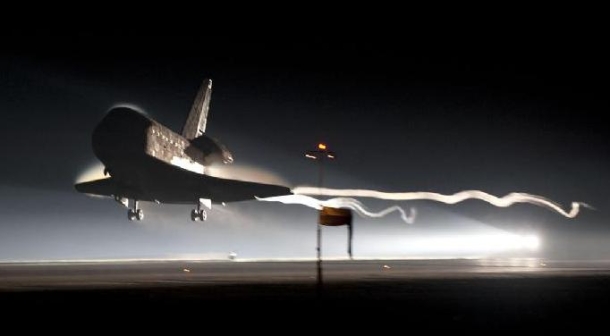
Atlantis returned to Earth this morning, marking the end of NASA’s 135th and final shuttle voyage, and closing the era of re-usable space vehicles.
Posted in Because I Can, News, Patriotic
“It may seem like a sort of an ending, and I suppose to a degree it is. The space shuttle has been with us at the heart and soul of the human spaceflight program for about 30 years, and it’s a little sad to see it go away,” commander Chris Ferguson said as the crew sat for a series of TV interviews Wednesday.
In the United States, millions of Americans have witnessed no other form of human space transport in their lifetime.
Commander Ferguson called on Americans back home to tune in to the final landing.
“Take a good look at it and make a memory,” he said, “because you’re never going to see anything like this again.”
http://www.google.com/hostednews/afp/article/ALeqM5jY348ma7RrPZF7RbTh1_xyVS-WxA?docId=CNG.4bea07f2d1bea1226be3abfc28759ac1.b51
Posted in Because I Can, News, Patriotic

Space shuttle Atlantis displayed its power and majesty one final time, rocketing into space from Kennedy Space Center at 11:26 a.m. ET Friday morning despite threatening weather — marking the final launch after 30 years for NASA’s storied fleet of shuttles.
Seven million pounds of thrust from the shuttle’s rocket booster carried the vehicle into orbit one last time, at speeds of up to 19,000 miles per hour, for an expected meeting with the International Space Station on Sunday.
It was a bittersweet moment for everyone involved.
“The sense of history, the legacy of what has happened here over three decades, is palpable,” a Mission Control spokesman said before the launch, noting that “30 years and three months ago, it was Columbia on the launch pad awaiting lift off.”
“America will continue the dream,” the launch director said as Atlantis lifted-off on its 33rd and last flight.
The crew — Commander Chris Ferguson, Pilot Doug Hurley, Mission Specialist Sandy Magnus and Mission Specialist Rex Walheim — had arrived at the launch pad’s White Room at 8:06 a.m. ET for the boarding process, undeterred by reports that there was only a 30 percent chance of favorable weather for blast off.
“For the final time, good luck, godspeed, and have a little fun up there,” launch director Mike Leinbach told the shuttle crew before lift off.
Posted in News
I “borrowed” the introduction to a great post on MSN’s PowerWall (see below)… read it, then follow the link to the complete article.
The inevitable juror cameos have begun. Juror Number Three, now known as Jennifer Ford, spoke to Nightline. She came forward to give her explanation for the shocking acquittal that freed Casey Anthony of any criminal liability for the killing of her baby, Caylee Anthony.
No doubt she meant to justify the verdict. On that score, she failed. But she succeeded in showing us a great deal about the dynamics and thinking of this jury—significantly, this sequestered jury.
I’m going to start by saying that, for those who thought the jury came back awfully fast—less than eleven hours spent in deliberation, you should now wonder what took them that long. Because from the very first vote, this jury was already close to a unanimous verdict of acquittal – at least as to murder: ten to two for not guilty. That’s an impressive show of solidarity for a first vote. And it shows they were almost unanimously inclined to acquit right from jump.
It’s the fact that this jury was already in sync in a case that posed so many debatable issues is what’s so noteworthy. And it has everything to do with sequestration. This jury was sequestered for more than two months. When jurors are forced to spend day and night with each other, apart from their families and friends, they become a tribe unto themselves. Because they only have each other for company, and because most people prefer harmony to discord, there’s a natural desire to cooperate, to compromise in order to reach agreement. And they have no safe retreat. If they disagree with their fellow jurors, they can’t go home to a husband, a wife, a friend, where they can regroup and marshal their energies. Make no mistake about it, sequestration is no picnic and I have sympathy and respect for the jurors who put up with that incredible hardship.
But we can’t ignore the mental and emotional impact it has on the jurors—an impact that likely thwarts the whole point of drafting twelve individuals to decide a defendant’s fate. The point of having twelve jurors is to have an array of differing points of view. The belief is that people of different backgrounds and experience will naturally bring a variety of attitudes to bear, and thus produce a more balanced view of the evidence. What one juror doesn’t get, another one does, and each of them sees different aspects to each witness and piece of evidence. The idea is for them to share differing views and reach a greater understanding—not to have them shave off their square corners so they can all roll together.
Unfortunately—and psychological studies bear this out—a group that is kept together for any length of time becomes more and more alike, more in sync, as time goes on. (By the way, this phenomenon is also in play with regard to proximity to the defendant. The longer the jury is in contact with the defendant, the less sinister he or she appears. In this way, familiarity with Casey Anthony turned her from a potential murderer to an abused, perhaps disturbed, but certainly nonthreatening, child.) Add this phenomenon to the natural desire to avoid contentiousness and seek harmony and you can see how individuality begins to erode in a sequestered jury.
Now add to that the psychology of group dynamics—a subject well known to trial lawyers and jury consultants. In every group there will be leaders and followers. Listening to Juror Jennifer Ford, who was very likely a leader, it became abundantly clear that the leaders on the Anthony jury were cheerleaders for the defense.
Ms. Ford’s primary complaint was that the prosecution didn’t prove cause of death. As she put it: “How can you punish someone for something if you don’t know what they did?…[The prosecution] didn’t even paint a picture for me to consider.”
That was defense attorney Jose Baez’s strategy, through and through. And it has nothing to do with what’s legally required to prove a homicide.
The truth is, the prosecution doesn’t have to prove cause of death. It only need prove criminal agency—that the death was a homicide, as opposed to an accident. It’s nice to have a body, a murder weapon, a cause of death, but it’s certainly not essential. I’ve had cases where not only was there no murder weapon, there was no body. We had no evidence to establish cause of death. Still, those cases resulted in convictions—in fact that jury returned a verdict of first-degree murder in one of them.
And the Anthony prosecutors could have done it too, because the evidence was more than sufficient to prove a homicide: a baby disappeared and the last person seen with the child—the mother—lied repeatedly for a full month about her whereabouts; deliberately lied in a way that prevented anyone from searching for the child. The mother’s researching of chloroform on the computer matched up to the finding of chloroform traces in the trunk of the car. The same car trunk where a hair consistent with Caylee’s was found; a hair that was arguably from a decomposing body. The same car trunk from which the smell of a decomposing body emanated strongly. The child’s decomposed body was found bagged in the woods near the mother’s house. Significantly, the child’s mouth and nose had been duct taped. And while that child’s body lay decomposing in the woods, the mother euphorically and gleefully partied with her buddies knowing full well that not only was her child dead but she was actively preventing anyone from finding out. That evidence not only proved a homicide, it proved that Casey Anthony committed it.
How did the defense counter this compelling body of evidence? They put up a bit of a fight on the forensics. Especially as to whether the hair could be definitively said to have come from a corpse. Okay, fine, let that one go.
Then what about the duct tape? There’s no reason to put duct tape on the face of a child who’s already dead. The defense made a lame attempt to counter that by asserting that ‘some other dude’ put the duct tape on the baby’s face—but the testimony offered to prove that (Dr. Werner Spitz) was laughably weak, and thus didn’t even dent the prosecution’s case.
When all was said and done, the only things the defense really had going for it were the unproven allegations of molestation and the wholly unsubstantiated claim that the baby drowned in the swimming pool.
But if you listen to Juror Jennifer Ford’s interview, those unproven, unsubstantiated claims are exactly what the jury hung its collective hat on.
When she complained that they never knew exactly how the child died, she was asked: “So you believed it was an accident?”
Her answer: “I’m not saying that, I’m saying it’s a lot easier to get to that conclusion. I can walk from here to there and make it happen. But the chloroform I’m all over the place, I’m in a maze, I don’t know where I’m at.”
The child’s body was found in a plastic bag with duct tape over the mouth and nose, and left to decompose in the woods while Casey Anthony told everyone the baby was with Zanny the Nanny, and she found it “easier” to believe it was an accident? Frankly, I don’t see how you “walk from here to there” to make that happen.
So where did she get the idea that it was easier to believe this was an accident? Baez’s opening statement—where he claimed that he’d prove this was an accident. The only problem is, he didn’t. Usually, juries hold lawyers accountable for those flops. Not here.
Ms. Ford also claimed the prosecution never showed a motive. What did all those party pictures mean to her? The tattoo Casey Anthony got days after her baby died: “Bella Vida”?
To that, Ms. Ford said, “It looks very bad…but bad behavior is not enough to prove a crime.”
Sound familiar? It’s exactly what Jose Baez said: You can believe she’s a liar, a slut, a lying slut, but that doesn’t mean she killed her baby.
But where Baez’s non-evidence had the greatest impact was on the jury’s perception of George Anthony. Here, Ms. Ford’s answers are very telling. Her statements are somewhat contradictory, and show incredible antipathy for—and suspicion of—Casey’s father.
“He did not help the State’s case,” she said. “He was clearly dishonest. He was evasive. His story seemed to change.”
But there was an obvious explanation for the father’s behavior. George Anthony was a man undergoing an incredible conflict: he wanted to defend his daughter, yet, being a police officer, he surely knew the evidence against her was compelling. And on top of all that, his daughter’s defense strategy set him up as an incestuous child molester. Given all those circumstances, it’s not hard to see how he veered from one side to the other, his loyalties and love for his daughter and his granddaughter in conflict and sorely tested. The jury could have reasoned it that way too. But it didn’t.
When asked whether she believed George Anthony had some part in the demise of little Caylee, Ms. Ford said: “I don’t know if he had anything to do with it, but I think he was there.”
And where would the jury get the idea that George Anthony was “there”? Surely not in the evidence—there was not one shred of evidence to support that notion. Once again, that was speculation that was raised in Jose Baez’s opening statement but was nowhere in the evidence.
Then what did the jury think happened to Caylee? Now this is where the reasoning finally falls through the hole in the floor.
According to Ms. Ford, “Something happened, at some point she probably needed medical care or at least there could be some attempt…to save the child’s life that was never made. That bothered me.” But if it was just an accident, then why would the body wind up in a plastic bag in a swamp? “You’re covering up something…it’s either an accident or…nobody knows what it is.”
This is exactly what Jose Baez told them to believe. That since they couldn’t know how Caylee died, they couldn’t convict his client. That it was an accident—and he’d prove it. Didn’t matter that he never proved it, didn’t matter that the notion of accident had no basis in fact or logic, didn’t matter that only his client had motive to kill the child, didn’t matter that his client was the last to be seen with the child, put duct tape on the child’s mouth and nose, hid the fact of the child’s death, carried the child’s body around in her trunk, then stashed the body in a plastic bag and hid it in the woods. Never mind all that.
Juror Ford said she didn’t believe it was their duty to “connect all the dots,” and that the prosecution was required to answer every question about Caylee’s death, including why and how it was committed.
First of all, there is no such thing as a case in which the prosecution answers every question. It isn’t possible. Second of all, the prosecution doesn’t have to. The prosecution is only required to prove the elements of the crime – and that does not include motive nor does it include cause of death.
Moreover, it is most certainly the jury’s duty to “connect the dots.” The jury is required to consider all of the evidence and to draw the reasonable inferences that evidence suggests. Note I said reasonable – that doesn’t mean concocting scenarios out of thin air based on nothing but a lawyer’s opening statement.
And by the way, what about that duct tape? How did the jury get around that one? Here’s what Ms. Ford said:
“In our country unfortunately we have to prove it…it smells bad, looks bad, yeah I get that. But it’s someone else’s life and if I’m wrong, I can’t live with that.”
In other words: no answer. I said it early on in this case and I’ll say it again: that duct tape was the murder weapon. No innocent explanation—that is, any viable one—was ever produced. And the jury never found one either. Nevertheless, they bought the defense and acquitted Casey Anthony, who most surely killed that child.
That’s what I can’t live with.
Posted in Because I Can, News
Peter Michael Falk was an American actor, best known for his role as Lieutenant Columbo in the television series Columbo. He appeared in numerous films and television guest roles and was nominated for an Academy Award twice (for 1960’s Murder, Inc. and 1961’s Pocketful of Miracles), and won the Emmy Award on five occasions (four for Columbo) and the Golden Globe award once.
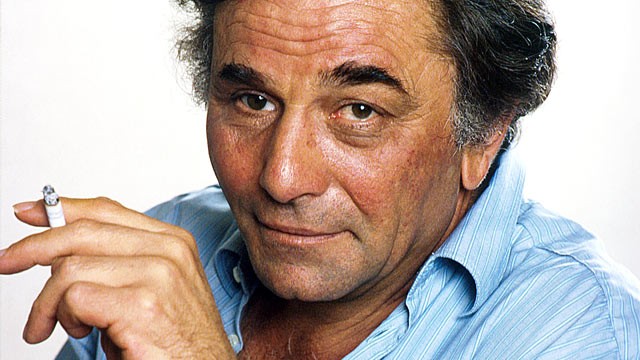
Peter Michael Falk (September 16, 1927 – June 23, 2011)
Posted in News