Posted onMay 15, 2025byJames|Comments Off on First fault rupture ever caught on film!
On March 28th, 2025, a magnitude 7.9 earthquake struck Myanmar, causing a rupture in about 460 kilometers (290 miles) of the Sagaing fault line that runs through most of the country, causing shaking of at least intensity X on the Modified Mercalli scale. As heavy shaking was felt throughout much of Myanmar as well as other neighboring countries, the fault line moved side-to-side by as much 6 meters (20 feet) in some places, a movement which was captured by the camera in this video. This is the first (and currently only) known instance of a fault line motion being captured on camera.
On May 15, 1941, the jet-propelled Gloster-Whittle E 28/39 aircraft flies successfully over Cranwell, England, in the first test of an Allied aircraft using jet propulsion. The aircraft’s turbojet engine, which produced a powerful thrust of hot air, was devised by Frank Whittle, an English aviation engineer and pilot generally regarded as the father of the jet engine.
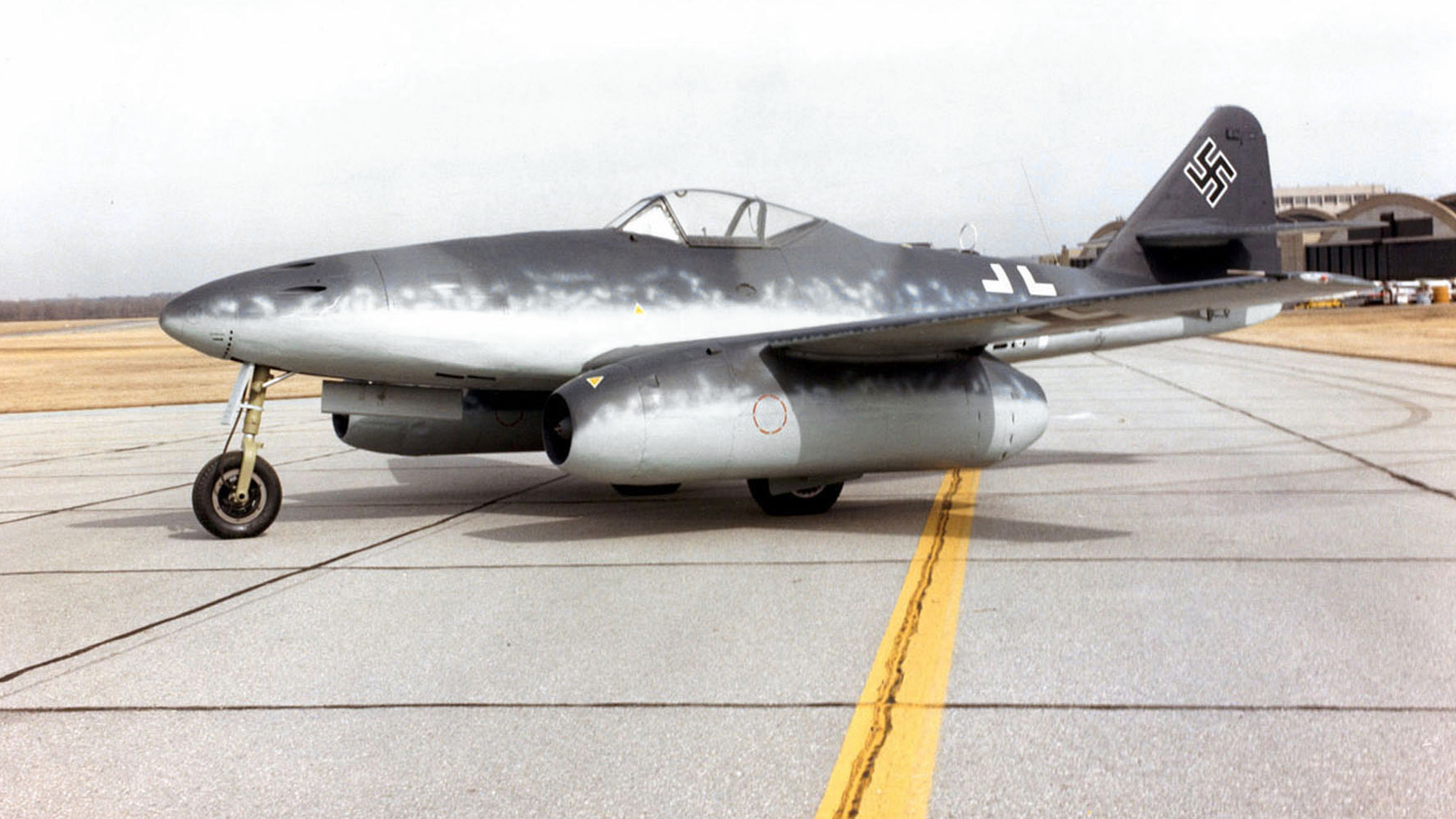
DAYTON, Ohio — Messerschmitt Me 262A at the National Museum of the United States Air Force.
Whittle, born in Coventry in 1907, was the son of a mechanic. At the age of 16, he joined the Royal Air Force (RAF) as an aircraft apprentice at Cranwell and in 1926 passed a medical exam to become a pilot and joined the RAF College. He won a reputation as a daredevil flier and in 1928 wrote a senior thesis entitled Future Developments in Aircraft Design, which discussed the possibilities of rocket propulsion.
From the first Wright brothers flight in 1903 to the first jet flight in 1939, most airplanes were propeller driven. In 1910, the French inventor Henri Coanda built a jet-propelled bi-plane, but it crashed on its maiden flight and never flew again. Coanda’s aircraft attracted little notice, and engineers stuck with propeller technology; even though they realized early on that propellers would never overcome certain inherent limitations, especially in regard to speed.
After graduating from the RAF college, Whittle was posted to a fighter squadron, and in his spare time he worked out the essentials of the modern turbojet engine. A flying instructor, impressed with his propulsion ideas, introduced him to the Air Ministry and a private turbine engineering firm, but both ridiculed Whittle’s ideas as impractical. In 1930, he patented his jet engine concept and in 1936 formed the company Power Jets Ltd. to build and test his invention. In 1937, he tested his first jet engine on the ground. He still received only limited funding and support, and on August 27, 1939, the German Heinkel He 178, designed by Hans Joachim Pabst von Ohain, made the first jet flight in history. The German prototype jet was developed independently of Whittle’s efforts.
One week after the flight of the He 178, World War II broke out in Europe, and Whittle’s project got a further lease of life. The Air Ministry commissioned a new jet engine from Power Jets and asked the Gloster Aircraft Company to build an experimental aircraft to accommodate it, specified as E 28/39. On May 15, 1941, the jet-propelled Gloster-Whittle E 28/39 flew, beating out a jet prototype being developed by the same British turbine company that earlier balked at his ideas. In its initial tests, Whittle’s aircraft–flown by the test pilot Gerry Sayer–achieved a top speed of 370 mph at 25,000 feet, faster than the Spitfire or any other conventional propeller-driven machine.
As the Gloster Aircraft Company worked on an operational turbojet aircraft for combat, Whittle aided the Americans in their successful development of a jet prototype. With Whittle’s blessing, the British government took over Power Jets Ltd. in 1944. By this time, Britain’s Gloster Meteor jet aircraft were in service with the RAF, going up against Germany’s jet-powered Messerschmitt Me 262s in the skies over Europe.
Whittle retired from the RAF in 1948 with the rank of air commodore. That year, he was awarded 100,000 pounds by the Royal Commission on Awards to Inventors and was knighted. His book Jet: The Story of a Pioneer was published in 1953. In 1977, he became a research professor at the United States Naval Academy in Annapolis, Maryland. He died in Columbia, Maryland, in 1996.
Posted onMay 15, 2025byJames|Comments Off on Peace Officers Memorial Day
Flags at half-staff today to honor fallen officers
Flags are to fly at half-staff today for Peace Officers Memorial Day. Gov. Rendell has ordered Pennsylvania flags at state facilities to be flown at half-staff, and President Obama directed the same for U.S. flags. “On this day, we pay tribute to the local, state, and federal law enforcement officers who provide a vital public service and, too often, pay the ultimate sacrifice to safeguard the rights and freedoms of our citizens,” Rendell said in a statement. “We honor them for their character, leadership, and courage.”
In 1962, President John F. Kennedy and Congress designated May 15 as Peace Officers Memorial Day. The calendar week in which May 15 falls is National Police Week.
Posted onMay 14, 2025byJames|Comments Off on Happy Birthday, George Lucas
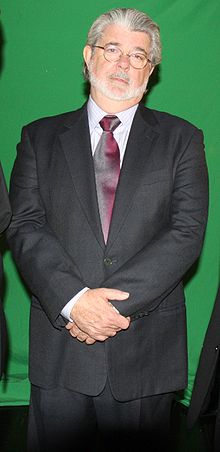
George Walton Lucas, Jr. (May 14, 1944 – )
George Lucas is an Academy Award-nominated American film producer, screenwriter, director and chairman of Lucasfilm Ltd. He is best known for being the creator of the epic Sci-Fi franchise Star Wars and the archaeologist-adventurer character Indiana Jones.
Posted onMay 10, 2025byJames|Comments Off on Transcontinental Railroad
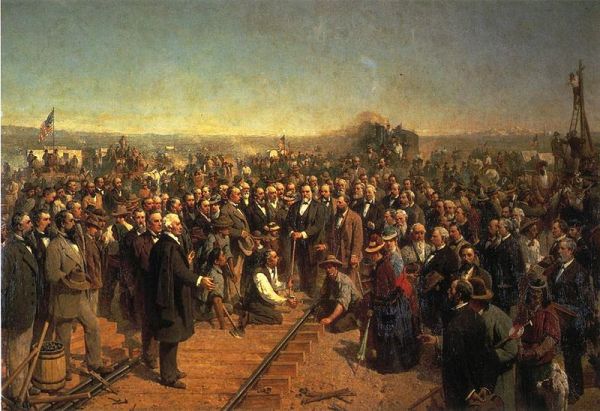
On May 10, 1869, the ceremonial spike (actually more than one) was driven into the meeting point of the Union Pacific Railroad and the Central Pacific Railroad. That’s when it became the transcontinental railroad, and traveling across the country no longer meant months in a wagon or on a ship sailing around South America.
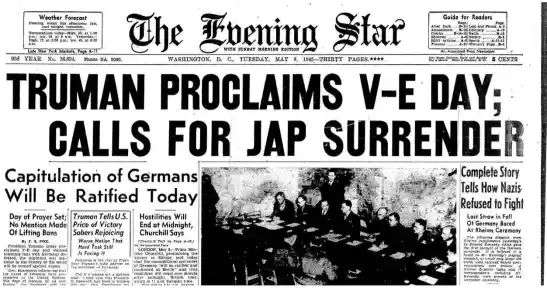
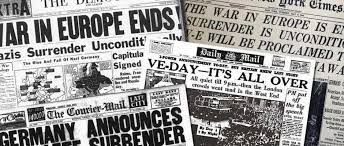
Posted onMay 8, 2025byJames|Comments Off on 80th Anniversary of V-E Day
Victory in Europe Day is the day celebrating the formal acceptance by the Allies of World War II of Germany’s unconditional surrender of its armed forces on Tuesday, 8 May 1945; it marked the official surrender of all German military operations.
Why was VE Day not the end of WWII?
Did V-E Day end World War II? Even though the Germans had surrendered, the Japanese had not, and so the war in the Pacific theater was still ongoing and would continue into the summer of 1945. The war, which broke out in 1939, had been costly in Europe, decimating cities and leaving much of the continent in ruins.
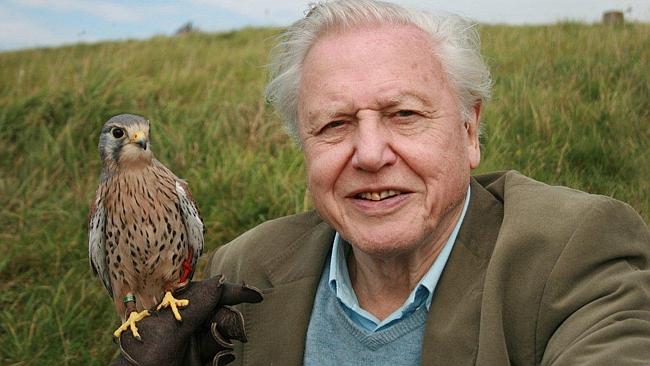
Sir David Frederick Attenborough is an English broadcaster and naturalist.
He is best known for writing and presenting the nine Life series, in conjunction with the BBC Natural History Unit, which collectively form a comprehensive survey of animal and plant life on the planet. He is also a former senior manager at the BBC, having served as controller of BBC Two and director of programming for BBC Television in the 1960s and 1970s. He is the only person to have won BAFTAs for programs in each of black and white, colour, HD, and 3D.
Attenborough is widely considered a national treasure in Britain, although he himself does not like the term. In 2002 he was named among the 100 Greatest Britons following a UK-wide vote. He is the younger brother of director, producer and actor Richard Attenborough.
On the afternoon of May 7, 1915, the British ocean liner Lusitania is torpedoed without warning by a German submarine off the south coast of Ireland. Within 20 minutes, the vessel sank into the Celtic Sea. Of 1,959 passengers and crew, 1,198 people were drowned, including 128 Americans. The attack aroused considerable indignation in the United States, but Germany defended the action, noting that it had issued warnings of its intent to attack all ships, neutral or otherwise, that entered the war zone around Britain.
Posted onMay 6, 2025byJames|Comments Off on The Hindenburg Disaster
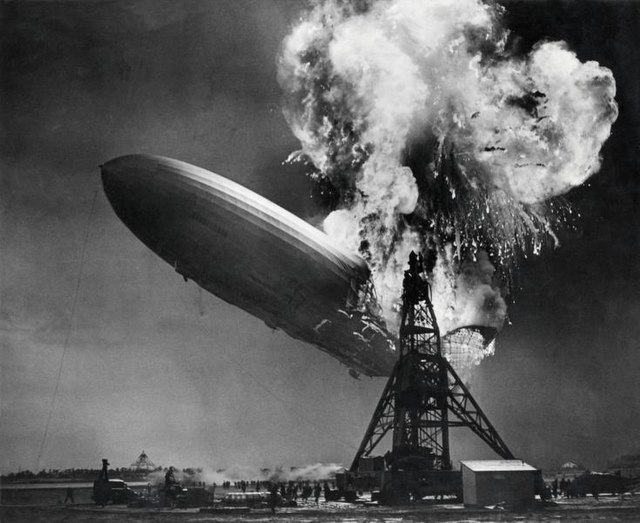
On May 6,1937, the airship Hindenburg, the largest dirigible ever built and the pride of Nazi Germany, bursts into flames upon touching its mooring mast in Lakehurst, New Jersey, killing 36 passengers and crewmembers.