56th Annual Street Rod Nationals
Kentucky Exposition Center, Louisville, Kentucky
July 31st, August 1st – 3rd, 2025
Kentucky Exposition Center, Louisville, Kentucky
July 31st, August 1st – 3rd, 2025
Posted in Anniversary, Because I Can, Events, Planes Trains and Automobiles
Posted in Anniversary, Because I Can, Critters, Events, Food
Ahead of SmackDown, Triple H introduces a 10 bell salute for Hulk Hogan:
Posted in Because I Can
On July 25, 1946, Martin and Lewis took the stage at Atlantic City’s Club 500 to create one of the most celebrated unions in comedy history.
*Note – The video (part 1) says they were “born July 26, 1946”, but several other references say July 25, 1946. “The world may never know.”
Posted in Anniversary, Humor, On This Day, The Big Screen, The Little Screen (Television)
Posted in Anniversary, Because I Can, Humor, The Little Screen (Television)
“Back in Black” is a song by Australian rock band AC/DC. It was released as the second US single from their seventh album of the same name in 1980. Notable for its opening guitar riff, the song was written as a tribute to the band’s former singer Bon Scott, who died suddenly in February 1980.
Posted in Because I Can, Music
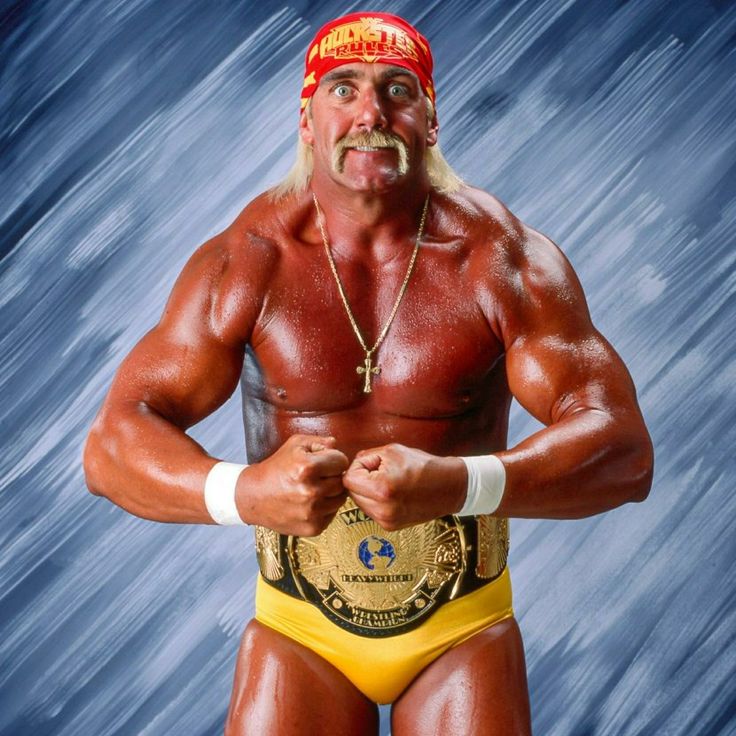
Terry Gene Bollea, better known by his ring name Hulk Hogan, was an American professional wrestler. He was best known for his work with WWE and World Championship Wrestling. Known for his flamboyance and massive physique, and his trademark blond horseshoe moustache and bandanas, Hogan was widely regarded as the most recognized wrestling star worldwide, the most popular wrestler of the 1980s and one of the greatest professional wrestlers of all time.
Hogan passed away due to cardiac arrest at his home in Clearwater on July 24, 2025, at the age of 71.
Posted in Because I Can, News, Sports
Kentucky Exposition Center, Louisville, Kentucky
July 31st, August 1st – 3rd, 2025
Posted in Anniversary, Because I Can, Events, Planes Trains and Automobiles
Posted in Anniversary, Because I Can, Critters, Events, Food
Posted in Because I Can, Events, Planes Trains and Automobiles, Sports
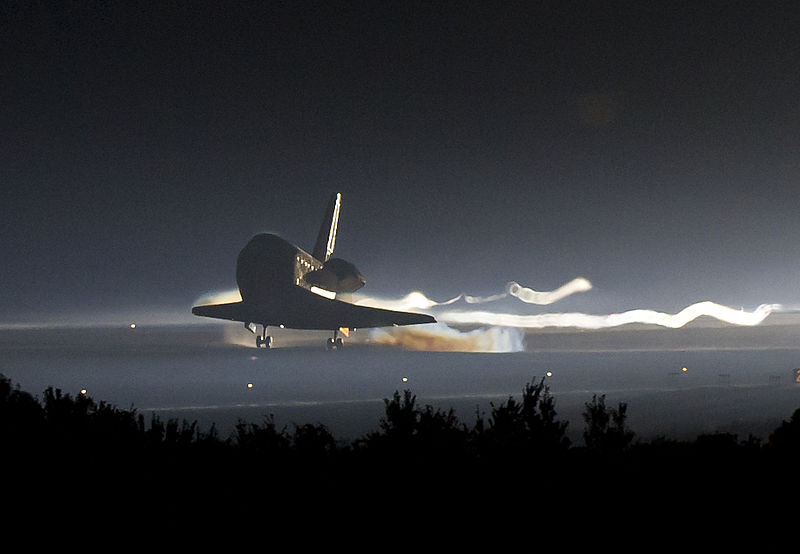
Space shuttle Atlantis lands for the STS-135 mission marking the final mission of the Space Shuttle Program at NASA’s Kennedy Space Center in Florida. Time of landing was 5:57 a.m. (EDT) on July 21, 2011.
The “just at dawn” landing was one of the most memorable landings ever, as shown in this picture:
Posted in Anniversary, Because I Can, Patriotic, Planes Trains and Automobiles
At 10:56 p.m. EDT July 20, 1969, American astronaut Neil Armstrong, 240,000 miles from Earth, speaks these words to more than a billion people listening at home: “That’s one small step for man, one giant leap for mankind.” Stepping off the lunar landing module Eagle, Armstrong became the first human to walk on the surface of the moon.
The American effort to send astronauts to the moon has its origins in a famous appeal President John F. Kennedy made to a special joint session of Congress on May 25, 1961: “I believe this nation should commit itself to achieving the goal, before this decade is out, of landing a man on the moon and returning him safely to Earth.” At the time, the United States was still trailing the Soviet Union in space developments, and Cold War-era America welcomed Kennedy’s bold proposal.
In 1966, after five years of work by an international team of scientists and engineers, the National Aeronautics and Space Administration (NASA) conducted the first unmanned Apollo mission, testing the structural integrity of the proposed launch vehicle and spacecraft combination. Then, on January 27, 1967, tragedy struck at Kennedy Space Center in Cape Canaveral, Florida, when a fire broke out during a manned launch-pad test of the Apollo spacecraft and Saturn rocket. Three astronauts were killed in the fire.
Despite the setback, NASA and its thousands of employees forged ahead, and in October 1968, Apollo 7, the first manned Apollo mission, orbited Earth and successfully tested many of the sophisticated systems needed to conduct a moon journey and landing. In December of the same year, Apollo 8 took three astronauts to the dark side of the moon and back, and in March 1969 Apollo 9 tested the lunar module for the first time while in Earth orbit. Then in May, the three astronauts of Apollo 10 took the first complete Apollo spacecraft around the moon in a dry run for the scheduled July landing mission.
At 9:32 a.m. on July 16, with the world watching, Apollo 11 took off from Kennedy Space Center with astronauts Neil Armstrong, Edwin Aldrin Jr., and Michael Collins aboard. Armstrong, a 38-year-old civilian research pilot, was the commander of the mission. After traveling 240,000 miles in 76 hours, Apollo 11 entered into a lunar orbit on July 19. The next day, at 1:46 p.m., the lunar module Eagle, manned by Armstrong and Aldrin, separated from the command module, where Collins remained. Two hours later, the Eagle began its descent to the lunar surface, and at 4:18 p.m. the craft touched down on the southwestern edge of the Sea of Tranquility. Armstrong immediately radioed to Mission Control in Houston, Texas, a famous message: “The Eagle has landed.”
At 10:39 p.m., five hours ahead of the original schedule, Armstrong opened the hatch of the lunar module. As he made his way down the lunar module’s ladder, a television camera attached to the craft recorded his progress and beamed the signal back to Earth, where hundreds of millions watched in great anticipation. At 10:56 p.m., Armstrong spoke his famous quote, which he later contended was slightly garbled by his microphone and meant to be “that’s one small step for a man, one giant leap for mankind.” He then planted his left foot on the gray, powdery surface, took a cautious step forward, and humanity had walked on the moon.
“Buzz” Aldrin joined him on the moon’s surface at 11:11 p.m., and together they took photographs of the terrain, planted a U.S. flag, ran a few simple scientific tests, and spoke with President Richard M. Nixon via Houston. By 1:11 a.m. on July 21, both astronauts were back in the lunar module and the hatch was closed. The two men slept that night on the surface of the moon, and at 1:54 p.m. the Eagle began its ascent back to the command module. Among the items left on the surface of the moon was a plaque that read: “Here men from the planet Earth first set foot on the moon–July 1969 A.D–We came in peace for all mankind.”
At 5:35 p.m., Armstrong and Aldrin successfully docked and rejoined Collins, and at 12:56 a.m. on July 22 Apollo 11 began its journey home, safely splashing down in the Pacific Ocean at 12:51 p.m. on July 24.
There would be five more successful lunar landing missions, and one unplanned lunar swing-by, Apollo 13. The last men to walk on the moon, astronauts Eugene Cernan and Harrison Schmitt of the Apollo 17 mission, left the lunar surface on December 14, 1972. The Apollo program was a costly and labor intensive endeavor, involving an estimated 400,000 engineers, technicians, and scientists, and costing $24 billion (close to $100 billion in today’s dollars). The expense was justified by Kennedy’s 1961 mandate to beat the Soviets to the moon, and after the feat was accomplished ongoing missions lost their viability.
Posted in Anniversary, Patriotic
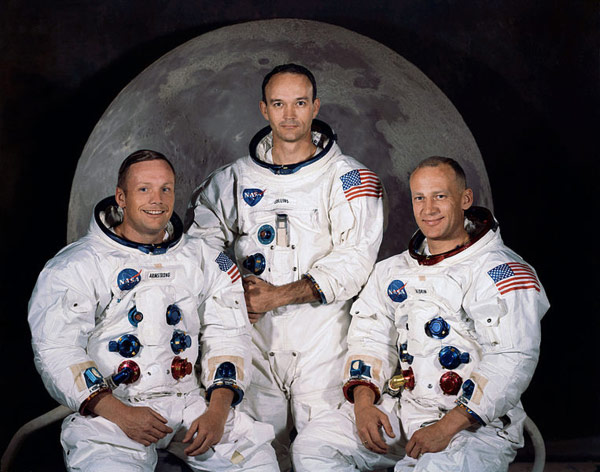
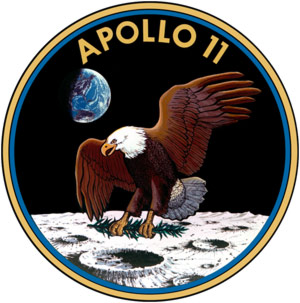
On this day in 1969, humans walked on the moon for the first time. The Apollo 11 spaceflight brought Americans Neil Armstrong and Buzz Aldrin to the lunar surface on July 20, 1969, at 20:18 UTC.
Michael Collins, the mission’s third member, remained in lunar orbit. All three men returned safely to Earth after an 8-day mission that began with a Saturn V rocket launch from Kennedy Space Center in Merritt Island, Florida on July 16.
This was the fifth manned mission of NASA’s Apollo program, which ran from 1963 to 1972 and included 6 missions that landed on the moon. These were the first and last times human beings set foot on another world.
NASA has a collection of restored HD videos well worth watching on this historic day.
Posted in Anniversary, On This Day, Patriotic