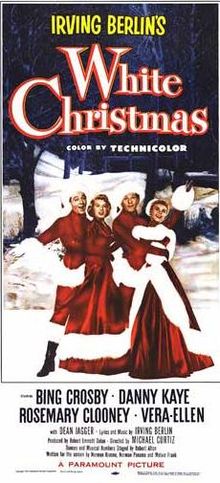
White Christmas is a 1954 movie starring Bing Crosby and Danny Kaye that featured the songs of Irving Berlin, including the titular White Christmas.
White Christmas is a 1954 movie starring Bing Crosby and Danny Kaye that featured the songs of Irving Berlin, including the titular White Christmas.

U.S. Air Force Captain Chuck Yeager becomes the first person to fly faster than the speed of sound.
Yeager, born in Myra, West Virginia, in 1923, was a combat fighter during World War II and flew 64 missions over Europe. He shot down 13 German planes and was himself shot down over France, but he escaped capture with the assistance of the French Underground. After the war, he was among several volunteers chosen to test-fly the experimental X-1 rocket plane, built by the Bell Aircraft Company to explore the possibility of supersonic flight.
For years, many aviators believed that man was not meant to fly faster than the speed of sound, theorizing that transonic drag rise would tear any aircraft apart. All that changed on October 14, 1947, when Yeager flew the X-1 over Rogers Dry Lake in Southern California. The X-1 was lifted to an altitude of 25,000 feet by a B-29 aircraft and then released through the bomb bay, rocketing to 40,000 feet and exceeding 662 miles per hour (the sound barrier at that altitude). The rocket plane, nicknamed “Glamorous Glennis,” was designed with thin, unswept wings and a streamlined fuselage modeled after a .50-caliber bullet.
Because of the secrecy of the project, Bell and Yeager’s achievement was not announced until June 1948. Yeager continued to serve as a test pilot, and in 1953 he flew 1,650 miles per hour in an X-1A rocket plane. He retired from the U.S. Air Force in 1975 with the rank of brigadier general.
Posted in Anniversary, On This Day, Planes Trains and Automobiles
From American Bandstand. October 13, 1964. Bobby “Boris” Pickett.
Posted in Anniversary, Because I Can, Humor, Music
On Friday the 13th in February in 1987, the legendary Vincent Price showed up as a guest on the Late Show starring Joan Rivers. While on the show, Price performed his classic segment from Michael Jackson’s “Thriller”.
Posted in Anniversary, Because I Can, Music, The Little Screen (Television)
On this day in 1866, the Reno gang carries out the first robbery of a moving train in the U.S., making off with over $10,000 from an Ohio & Mississippi train in Jackson County, Indiana. Prior to this innovation in crime, holdups had taken place only on trains sitting at stations or freight yards.
Posted in Anniversary, On This Day
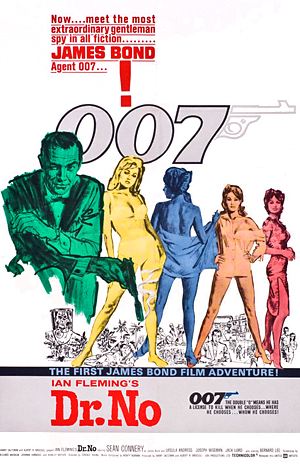
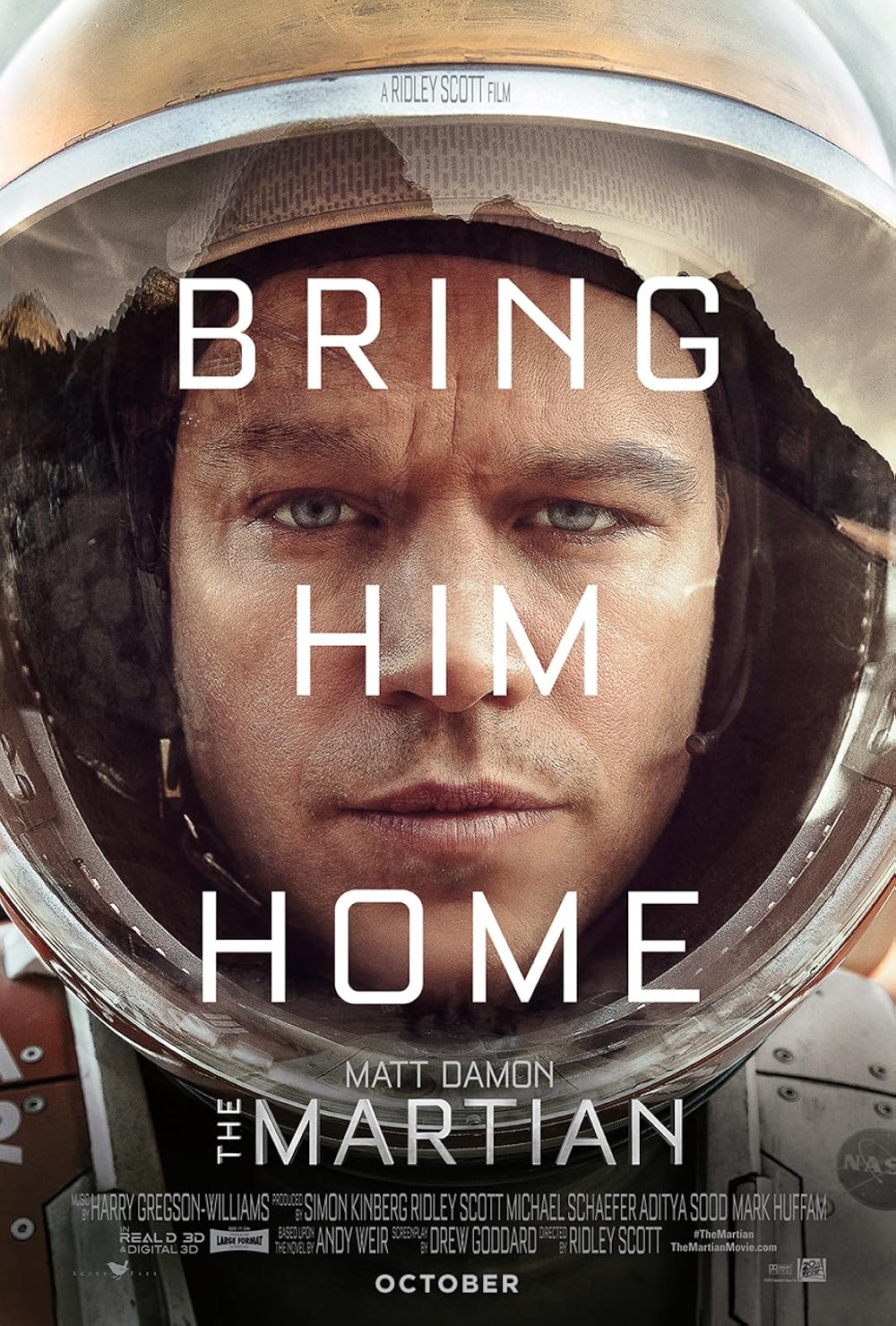
On October 5, 1962, the 1st James Bond film, Dr. No, premiered in London (it would arrive in the US the 8th of May of 1963).
Posted in Anniversary, Because I Can, On This Day, The Big Screen
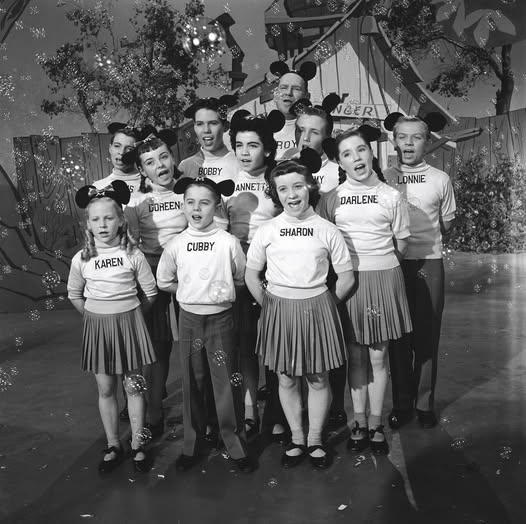
70 years ago today, October 3, 1955, The Mickey Mouse Club premiered. It was an American variety television show that aired intermittently from 1955 to 1996 and returned to social media in 2017. Created by the late Walt Disney and produced by Walt Disney Productions, the program was first televised for four seasons, from 1955 to 1959, by ABC. This original run featured a regular, but ever-changing cast of mostly teen performers. ABC broadcast reruns weekday afternoons during the 1958–1959 season, airing right after American Bandstand. The show was revived three times after its initial 1955–1959 run on ABC, first from 1977 to 1979 for first-run syndication as The New Mickey Mouse Club, then from 1989 to 1996 as The All-New Mickey Mouse Club (also known to fans as MMC from 1993 to 1996) airing exclusively on cable television’s The Disney Channel, and again in 2017 with the moniker Club Mickey Mouse airing exclusively on internet social media. It ended in 2018.
The character of Mickey Mouse appeared in every show, not only in vintage cartoons originally made for theatrical release, but also in the opening, interstitial, and closing segments made especially for the show. In both the vintage cartoons and new animated segments, Mickey was voiced by his creator Walt Disney (Disney had previously voiced the character theatrically from 1928 to 1947 before being replaced by sound effects artist Jimmy MacDonald).
Posted in Anniversary, Humor, The Little Screen (Television)
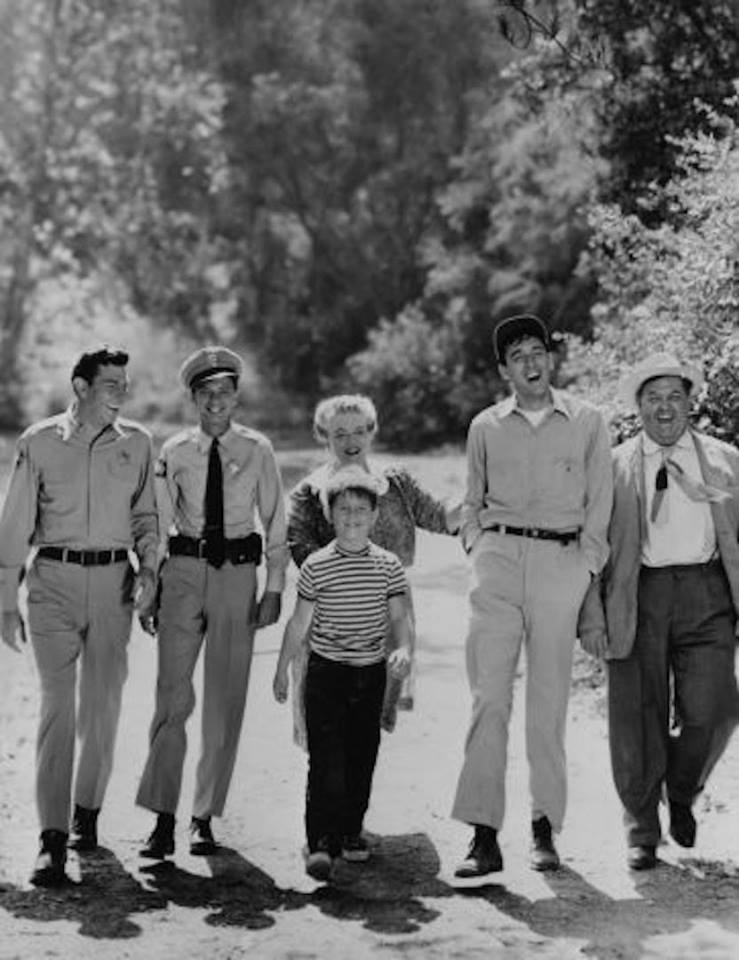
The Andy Griffith Show is an American sitcom television series that was aired on CBS from October 3, 1960, to April 1, 1968, with a total of 249 half-hour episodes spanning eight seasons—159 in black and white and 90 in color.
Posted in Anniversary, Humor, On This Day, The Little Screen (Television)
Captain Kangaroo ran from October 3, 1955 – December 8, 1984.
From Wikipedia:
Captain Kangaroo was an American children’s television series that aired weekday mornings on the American television network CBS for 29 years, from 1955 to 1984, making it the longest-running nationally broadcast children’s television program of its day. In 1986, the American Program Service (now American Public Television, Boston) integrated some newly produced segments into reruns of past episodes, distributing the newer version of the series to PBS and independent public stations until 1993.
The show was conceived by Bob Keeshan, who also played the title character “Captain Kangaroo”, and who based the show on “the warm relationship between grandparents and children”. Keeshan had portrayed the original Clarabell the Clown on NBC’s The Howdy Doody Show during the network’s early years.
Captain Kangaroo had a loose structure, built around life in the “Treasure House” where the Captain (the name “kangaroo” came from the big pockets in his coat) would tell stories, meet guests, and indulge in silly stunts with regular characters, both humans and puppets. Keeshan performed as the Captain more than 9,000 times over the nearly 30-year run of the show.
Posted in Anniversary, Because I Can, The Little Screen (Television)
Posted in Anniversary, Because I Can, The Big Screen
From Wikipedia (article here):
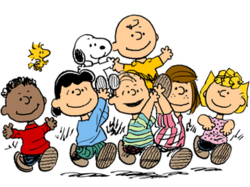
Peanuts (briefly subtitled featuring Good ol’ Charlie Brown) is a syndicated daily and Sunday American comic strip written and illustrated by Charles M. Schulz. The strip’s original run extended from 1950 to 2000, continuing in reruns afterward. Peanuts is among the most popular and influential in the history of comic strips, with 17,897 strips published in all,[1] making it “arguably the longest story ever told by one human being”.[2] At the time of Schulz’s death in 2000, Peanuts ran in over 2,600 newspapers, with a readership of roughly 355 million across 75 countries, and had been translated into 21 languages.[3] It helped to cement the four-panel gag strip[4] as the standard in the United States,[5] and together with its merchandise earned Schulz more than $1 billion.[1] Following successful TV and theatrical adaptations over the years, a movie adaptation was released by Blue Sky Studios in 2015.[6]
Peanuts focuses on a social circle of young children, where adults exist but are rarely seen or heard. The main character, Charlie Brown, is meek, nervous, and lacks self-confidence. He is unable to fly a kite, win a baseball game, or kick a football held by his irascible friend Lucy, who always pulls it away at the last instant.[7] Peanuts is a literate strip with philosophical, psychological, and sociological overtones, which was innovative in the 1950s.[4] Its humor is psychologically complex and driven by the characters’ interactions and relationships. The comic strip has been adapted in animation and theater.
Schulz drew every strip, through nearly 50 years, with no assistants, including the lettering and coloring process.[8][9]
Posted in Anniversary, Because I Can, Humor, Literary, The Little Screen (Television)
Posted in Because I Can, Sports, The Little Screen (Television)
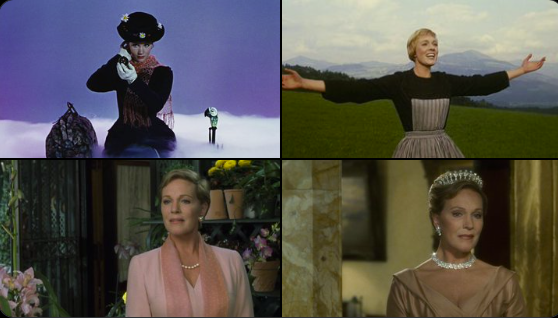
Dame Julie Andrews (born Julia Elizabeth Wells; 1 October 1935) is an English actress, singer, and author. She has garnered numerous accolades throughout her career spanning over eight decades, including an Academy Award, a British Academy Film Award, three Emmy Awards, three Grammy Awards, and seven Golden Globe Awards as well as nominations for three Tony Awards. One of the biggest box office draws of the 1960s, Andrews has been honored with the Kennedy Center Honors in 2001, the Screen Actors Guild Life Achievement Award in 2007, and the AFI Life Achievement Award in 2022. She was made a Dame (DBE) by Queen Elizabeth II in the 2000 New Year Honors.
Posted in Anniversary, Music, The Big Screen, The Little Screen (Television)