Author Archives: James

Lincoln delivers Gettysburg Address

On November 19, 1863, at the dedication of a military cemetery at Gettysburg, Pennsylvania, during the American Civil War, President Abraham Lincoln delivers one of the most memorable speeches in American history. In just 272 words, Lincoln brilliantly and movingly reminded a war-weary public why the Union had to fight, and win, the Civil War.

The Battle of Gettysburg, fought some four months earlier, was the single bloodiest battle of the Civil War. Over the course of three days, more than 45,000 men were killed, injured, captured or went missing. The battle also proved to be the turning point of the war: General Robert E. Lee’s defeat and retreat from Gettysburg marked the last Confederate invasion of Northern territory and the beginning of the Southern army’s ultimate decline.

Charged by Pennsylvania’s governor, Andrew Curtin, to care for the Gettysburg dead, an attorney named David Wills bought 17 acres of pasture to turn into a cemetery for the more than 7,500 who fell in battle. Wills invited Edward Everett, one of the most famous orators of the day, to deliver a speech at the cemetery’s dedication. Almost as an afterthought, Wills also sent a letter to Lincoln—just two weeks before the ceremony—requesting “a few appropriate remarks” to consecrate the grounds.

At the dedication, the crowd listened for two hours to Everett before Lincoln spoke. Lincoln’s address lasted just two or three minutes. The speech reflected his redefined belief that the Civil War was not just a fight to save the Union, but a struggle for freedom and equality for all, an idea Lincoln had not championed in the years leading up to the war. This was his stirring conclusion: “The world will little note, nor long remember what we say here, but it can never forget what they did here. It is for us the living, rather, to be dedicated here to the unfinished work which they who fought here have thus far so nobly advanced. It is rather for us to be here dedicated to the great task remaining before us—that from these honored dead we take increased devotion to that cause for which they gave the last full measure of devotion—that we here highly resolve that these dead shall not have died in vain—that this nation, under God, shall have a new birth of freedom—and that government of the people, by the people, for the people, shall not perish from the earth.”

Reception of Lincoln’s Gettysburg Address was initially mixed, divided strictly along partisan lines. Nevertheless, the “little speech,” as he later called it, is thought by many today to be the most eloquent articulation of the democratic vision ever written.
This is what can happen…

Two drivers, two photographers, and one race marshal have been hospitalized after a terrifying crash sent Sophia Flörsch flying, with her front wheels dangling off her car, up and over another driver, through the track’s crash fencing, and then into a photographer’s stand on the outside of the corner. This is what can happen at Macau, the tightest street course in the world.

Real speed:

https://twitter.com/twitter/statuses/1064066021953363969

Slow speed:

https://youtu.be/fHZWJkcBz8U

If I fits, I Sits

https://twitter.com/twitter/statuses/1056166876634603522

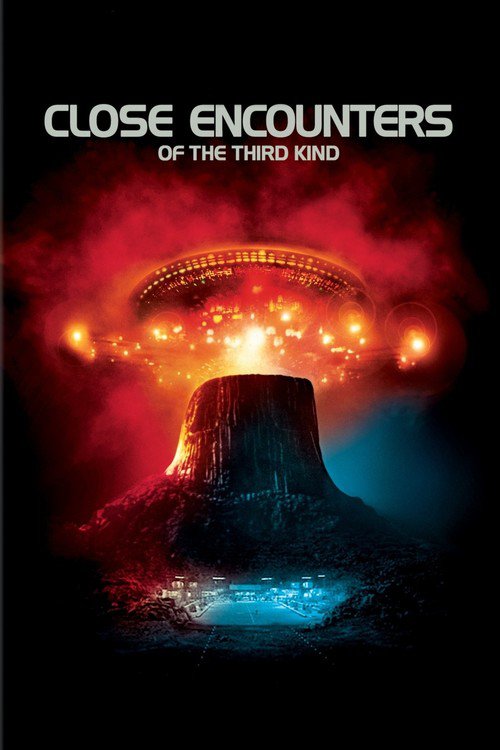
Anniversary of Close Encounters of the Third Kind

November 16, 1977

Close Encounters of the Third Kind is a 1977 American science fiction film written and directed by Steven Spielberg, and starring Richard DreyfussMelinda DillonTeri GarrBob BalabanCary Guffey, and François Truffaut. It tells the story of Roy Neary, an everyday blue-collar worker in Indiana, whose life changes after an encounter with an unidentified flying object (UFO).

Close Encounters was a long-cherished project for Spielberg. In late 1973, he developed a deal with Columbia Pictures for a science fiction film. Though Spielberg received sole credit for the script, he was assisted by Paul SchraderJohn HillDavid GilerHal BarwoodMatthew Robbins, and Jerry Belson, all of whom contributed to the screenplay in varying degrees. The title is derived from Ufologist J. Allen Hynek‘s classification of close encounters with aliens, in which the third kind denotes human observations of aliens or “animate beings.” Douglas Trumbull served as the visual effects supervisor, while Carlo Rambaldi designed the aliens.

Made on a production budget of $20 million, Close Encounters was released in a limited number of cities on November 16, 1977[3] and November 23, 1977[4]before expanding into wide release the following month. It was a critical and financial success, eventually grossing over $300 million worldwide. The film received numerous awards and nominations at the 50th Academy Awards32nd British Academy Film Awards, the 35th Golden Globe Awards, the 5th Saturn Awards, and has been widely acclaimed by the American Film Institute.

In December 2007, it was deemed “culturally, historically, or aesthetically significant” by the United States Library of Congress and selected for preservation in the National Film Registry.[5] A Special Edition of the film, featuring additional scenes, was released theatrically in 1980. A third cut of the film was issued on VHS and LaserDisc in 1998 (and later DVD and Blu-ray). The film was remastered in 4K and re-released in theatres on September 1, 2017 for its 40th anniversary

RIP Roy Clark

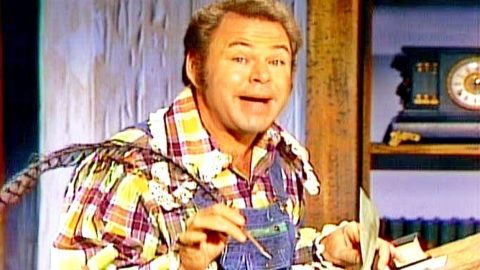
Roy Linwood Clark (April 15, 1933 – November 15, 2018)

Roy Clark, the legendary guitarist and singer, Country Music Hall of Fame and Grand Ole Opry member, Grammy, ACM and CMA award winner and co-host of the “Hee Haw” television series, died today at the age of 85 due to complications from pneumonia at home in Tulsa, Okla.

He can get back to Pickin’ and a Grinnin’ with Buck Owens now.

Timelapse of storms

Photographer Mike Olbinski has become a synonym for breathtaking timelapse movies of different kinds of storms. The latest installment of his Monsoon series has just been published and it took an incredible amount of effort, money, and photos to put it together. Mike spent three months chasing storms for this movie – and he compressed the best shots in only eight minutes of pure nature’s spectacle.

Massive Aggregations of Octopus Brooding

RIP Stan Lee

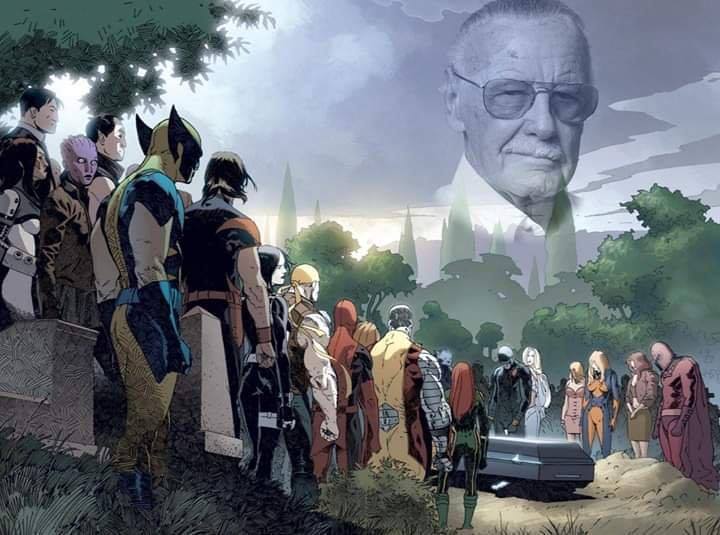
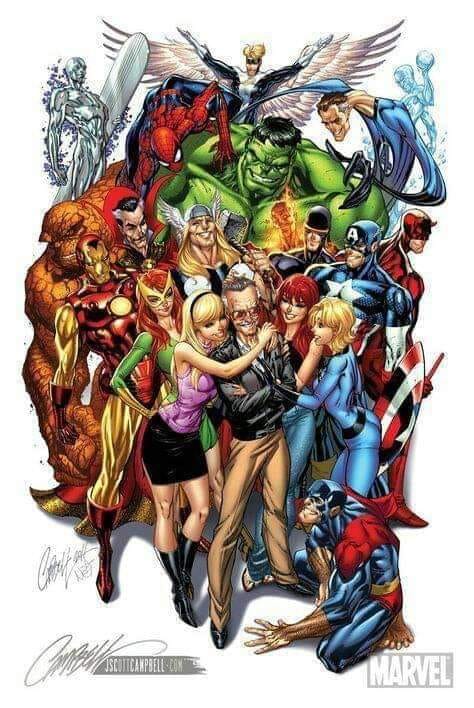
Stan Lee, the legendary writer, editor and publisher of Marvel Comics whose fantabulous but flawed creations made him a real-life superhero to comic book lovers everywhere, has died. He was 95. 

Lee, who began in the business in 1939 and created or co-created Black Panther, Spider-Man, the X-Men, the Mighty Thor, Iron Man, the Fantastic Four, the Incredible Hulk, Daredevil and Ant-Man, among countless other characters, died early Monday morning at Cedars-Sinai Medical Center in Los Angeles.

Toy Story 4 Teaser Trailer

RIP Douglas Rain (RIP HAL)

Douglas Rain, voice of the computer HAL 9000 in the movie 2001: A Space Odyssey, died on Sunday morning. He was 90 years old.

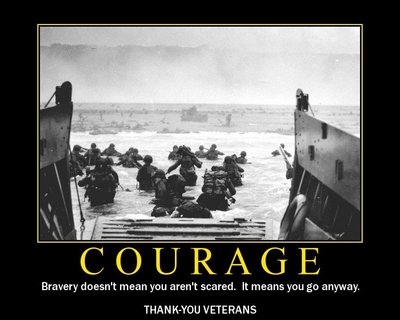
Veteran

A veteran is someone who, at one point in his life, wrote a blank check made payable to his country for an amount of ‘up to and including my life.’

Veteran’s Day

Veteran's Day

The Wreck of the Edmund Fitzgerald

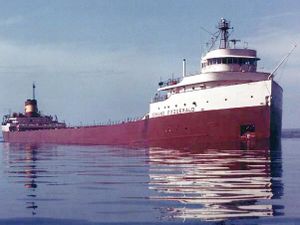
Edmund FitzgeraldThe SS Edmund Fitzgerald, May 1975.

SS Edmund Fitzgerald was a cargo ship that sank suddenly during a gale storm on November 10, 1975, while on Lake Superior. The ship went down without a distress signal in 530 feet (162 m) of water at 46°59.9′N 85°6.6′W, in Canadian waters about 17 miles (15 nm; 27 km) from the entrance to Whitefish Bay. All 29 members of the crew perished. Gordon Lightfoot‘s hit song, The Wreck of the Edmund Fitzgerald, helped make the incident the most famous marine disaster in the history of Great Lakes shipping.

November 9th

Inconvenience

Keep Calm

Busing in Democrats

White moose in Sweden

Hans Nilsson has spent three years trying to spot an elusive white moose in the town of Eda, in western Sweden. Last week he got lucky and crossed paths with the ghost-colored herbivore two days in a row.

When Nilsson saw the moose the first time, he was amazed. On the second day, he was ready.

Read more over on the Washington Post.

Daylight Savings Time Ends

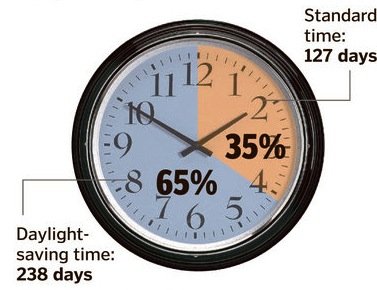
Daylight Savings Time Graph

Clocks turn back an hour at 2 a.m. on Sunday, marking the beginning of standard time for the next few months.

This means that this weekend will be an hour longer than normal, but it will get dark an hour earlier in the evenings.

Standard time will be used through March 8, when clocks will “spring” forward an hour to begin Daylight Saving Time.

Ironically, standard time is no longer the norm. About two-thirds of the days during the year now operate on Daylight Saving Time.

Daylight Saving Time now begins on the second Sunday of March each year and ends on the first Sunday of November.

DST has roots tracing to 1918 in the United States, though not all places always observed it. Currently, it is not used in Hawaii and most of Arizona.

Baby rhino thinks he’s a lamb