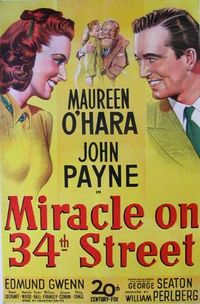
Miracle on 34th Street (also titled The Big Heart in the UK) is a 1947 film which tells the story of a gentle old man, working as a Santa Claus at Macy’s department store in New York City, who contends that he is the real deal.

Miracle on 34th Street (also titled The Big Heart in the UK) is a 1947 film which tells the story of a gentle old man, working as a Santa Claus at Macy’s department store in New York City, who contends that he is the real deal.

Posted in Because I Can, On This Day, The Big Screen
In a truly heartwarming display of affection, a smiling deli clerk was amused by a stray cat who wandered into his store, stood up on hind legs (while leaning against the glass of the counter) and meowed for a bit of attention. The clerk quite humorously presented different cuts of meat for the feline’s approval. After pointing out which cut was the best, the cat was rewarded with a healthy piece of meat.
This cat walked into a deli and made their way over to the counter. After standing up on their hind legs, they watched as an employee showed them various cuts of meat before they were fed a small piece.

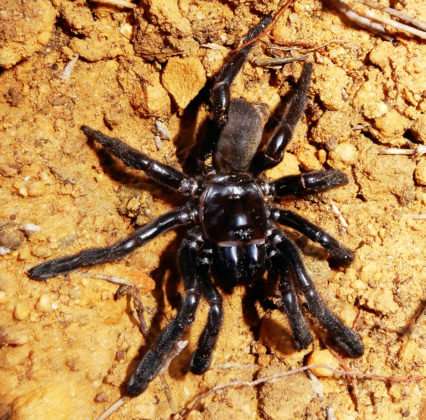
This female trapdoor spider, named Number 16, was the world’s oldest known spider. A lifelong resident of the Australian outback, she has just died at age 43.
From Curtin University:
The research, published in the Pacific Conservation Biology Journal, suggests the 43-year-old Giaus Villosus trapdoor matriarch, who recently died during a long-term population study, had outlived the previous world record holder, a 28-year old tarantula found in Mexico.
Lead author PhD student Leanda Mason from the School of Molecular and Life Sciences at Curtin University said the ongoing research has led to new discoveries about the longevity of the trapdoor spider.
“To our knowledge this is the oldest spider ever recorded, and her significant life has allowed us to further investigate the trapdoor spider’s behaviour and population dynamics,” Ms Mason said.
“The research project was first initiated by Barbara York Main in 1974, who monitored the long-term spider population for over 42 years in the Central Wheatbelt region of Western Australia.
“Through Barbara’s detailed research, we were able to determine that the extensive life span of the trapdoor spider is due to their life-history traits, including how they live in uncleared, native bushland, their sedentary nature and low metabolisms.”
Posted in Critters
For those of you who learned math, grammar, history and civic on the ABC Saturday morning program “Schoolhouse Rock!”, you can thank Bob Dorough. Bob passed away April 23, 2018 at the age of 94. I guess he was ready.
My personal favorite:
https://youtu.be/n3pb73onvK8
Thanks, Bob!
Posted in Because I Can, News
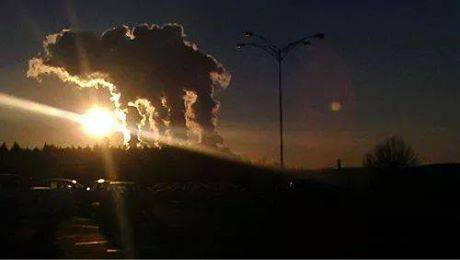
On April 26, 1986, the world’s worst nuclear power plant accident occurs at the Chernobyl nuclear power station in the Soviet Union. Thirty-two people died and dozens more suffered radiation burns in the opening days of the crisis, but only after Swedish authorities reported the fallout did Soviet authorities reluctantly admit that an accident had occurred.
The Chernobyl station was situated at the settlement of Pripyat, about 65 miles north of Kiev in the Ukraine. Built in the late 1970s on the banks of the Pripyat River, Chernobyl had four reactors, each capable of producing 1,000 megawatts of electric power. On the evening of April 25, 1986, a group of engineers began an electrical-engineering experiment on the Number 4 reactor. The engineers, who had little knowledge of reactor physics, wanted to see if the reactor’s turbine could run emergency water pumps on inertial power.
As part of their poorly designed experiment, the engineers disconnected the reactor’s emergency safety systems and its power-regulating system. Next, they compounded this recklessness with a series of mistakes: They ran the reactor at a power level so low that the reaction became unstable, and then removed too many of the reactor’s control rods in an attempt to power it up again. The reactor’s output rose to more than 200 megawatts but was proving increasingly difficult to control. Nevertheless, at 1:23 a.m. on April 26, the engineers continued with their experiment and shut down the turbine engine to see if its inertial spinning would power the reactor’s water pumps. In fact, it did not adequately power the water pumps, and without cooling water the power level in the reactor surged.
To prevent meltdown, the operators reinserted all the 200-some control rods into the reactor at once. The control rods were meant to reduce the reaction but had a design flaw: graphite tips. So, before the control rod’s five meters of absorbent material could penetrate the core, 200 graphite tips simultaneously entered, thus facilitating the reaction and causing an explosion that blew off the heavy steel and concrete lid of the reactor. It was not a nuclear explosion, as nuclear power plants are incapable of producing such a reaction, but was chemical, driven by the ignition of gases and steam that were generated by the runaway reaction. In the explosion and ensuing fire, more than 50 tons of radioactive material were released into the atmosphere, where it was carried by air currents.
On April 27, Soviet authorities began an evacuation of the 30,000 inhabitants of Pripyat. A cover-up was attempted, but on April 28 Swedish radiation monitoring stations, more than 800 miles to the northwest of Chernobyl, reported radiation levels 40 percent higher than normal. Later that day, the Soviet news agency acknowledged that a major nuclear accident had occurred at Chernobyl.
In the opening days of the crisis, 32 people died at Chernobyl and dozens more suffered radiation burns. The radiation that escaped into the atmosphere, which was several times that produced by the atomic bombs dropped on Hiroshima and Nagasaki, was spread by the wind over Northern and Eastern Europe, contaminating millions of acres of forest and farmland. An estimated 5,000 Soviet citizens eventually died from cancer and other radiation-induced illnesses caused by their exposure to the Chernobyl radiation, and millions more had their health adversely affected. In 2000, the last working reactors at Chernobyl were shut down and the plant was officially closed.

Posted in Because I Can, On This Day
If you had a 450 horsepower 2018 Ford Raptor and a rainsoaked Nürburgring all to yourself, would you try to set a competitive lap time nobody’d remember or hang the tail out and have the time of your life? I think Vaughn Gittin Jr. made the right call here.
Posted in Because I Can, Planes Trains and Automobiles
The Library of Congress was established on April 24, 1800, when President John Adams signed an Act of Congress providing for the transfer of the seat of government from Philadelphia to the new capital city of Washington. Part of the legislation appropriated $5,000 “for the purchase of such books as may be necessary for the use of Congress …, and for fitting up a suitable apartment for containing them….” Books were ordered from London and the collection, consisting of 740 books and 30 maps, was housed in the new Capitol. Although the collection covered a variety of topics, the bulk of the materials were legal in nature, reflecting Congress’ role as a maker of laws.
Thomas Jefferson played an important role in the Library’s early formation, signing into law on January 26, 1802 the first law establishing the structure of the Library of Congress. The law established the presidentially appointed post of Librarian of Congress and a Joint Committee on the Library to regulate and oversee the Library, as well as giving the president and vice president the ability to borrow books. The Library of Congress was destroyed in August 1814, when invading British troops set fire to the Capitol building and the small library of 3,000 volumes within.
Within a month, former President Jefferson offered his personal library as a replacement. Jefferson had spent 50 years accumulating a wide variety of books, including ones in foreign languages and volumes of philosophy, science, literature, and other topics not normally viewed as part of a legislative library, such as cookbooks, writing that, “I do not know that it contains any branch of science which Congress would wish to exclude from their collection; there is, in fact, no subject to which a Member of Congress may not have occasion to refer.” In January 1815, Congress accepted Jefferson’s offer, appropriating $23,950 to purchase his 6,487 books.