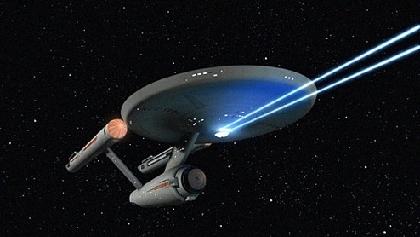
On September 8, 1966, “The Man Trap” was first released upon the world. This, the first episode of one of the most famous TV Shows in history, Star Trek.
On September 8, 1966, “The Man Trap” was first released upon the world. This, the first episode of one of the most famous TV Shows in history, Star Trek.
On September 7, 1813, the United States gets its nickname, Uncle Sam. The name is linked to Samuel Wilson, a meat packer from Troy, New York, who supplied barrels of beef to the United States Army during the War of 1812. Wilson (1766-1854) stamped the barrels with “U.S.” for United States, but soldiers began referring to the grub as “Uncle Sam’s.” The local newspaper picked up on the story and Uncle Sam eventually gained widespread acceptance as the nickname for the U.S. federal government.
In the late 1860s and 1870s, political cartoonist Thomas Nast (1840-1902) began popularizing the image of Uncle Sam. Nast continued to evolve the image, eventually giving Sam the white beard and stars-and-stripes suit that are associated with the character today. The German-born Nast was also credited with creating the modern image of Santa Claus as well as coming up with the donkey as a symbol for the Democratic Party and the elephant as a symbol for the Republicans. Nast also famously lampooned the corruption of New York City’s Tammany Hall in his editorial cartoons and was, in part, responsible for the downfall of Tammany leader William Tweed.
Perhaps the most famous image of Uncle Sam was created by artist James Montgomery Flagg (1877-1960). In Flagg’s version, Uncle Sam wears a tall top hat and blue jacket and is pointing straight ahead at the viewer. During World War I, this portrait of Sam with the words “I Want You For The U.S. Army” was used as a recruiting poster. The image, which became immensely popular, was first used on the cover of Leslie’s Weekly in July 1916 with the title “What Are You Doing for Preparedness?” The poster was widely distributed and has subsequently been re-used numerous times with different captions.
In September 1961, the U.S. Congress recognized Samuel Wilson as “the progenitor of America’s national symbol of Uncle Sam.” Wilson died at age 88 in 1854, and was buried next to his wife Betsey Mann in the Oakwood Cemetery in Troy, New York, the town that calls itself “The Home of Uncle Sam.”
Posted in Because I Can, On This Day, Patriotic
Posted in Because I Can, On This Day
The SR-71 holds the “Speed Over a Recognized Course” record for flying from New York to London distance 3,508 miles (5,646 km), 1,435.587 miles per hour (2,310.353 km/h), and an elapsed time of 1 hour 54 minutes and 56.4 seconds, set on September 1, 1974 while flown by U.S. Air Force Pilot Maj. James V. Sullivan and Maj. Noel F. Widdifield, reconnaissance systems officer (RSO). This equates to an average velocity of about Mach 2.68, including deceleration for in-flight refueling. Peak speeds during this flight were probably closer to the declassified top speed of Mach 3.2+. For comparison, the best commercial Concorde flight time was 2 hours 52 minutes, and the Boeing 747 averages 6 hours 15 minutes.
Posted in Because I Can, Planes Trains and Automobiles
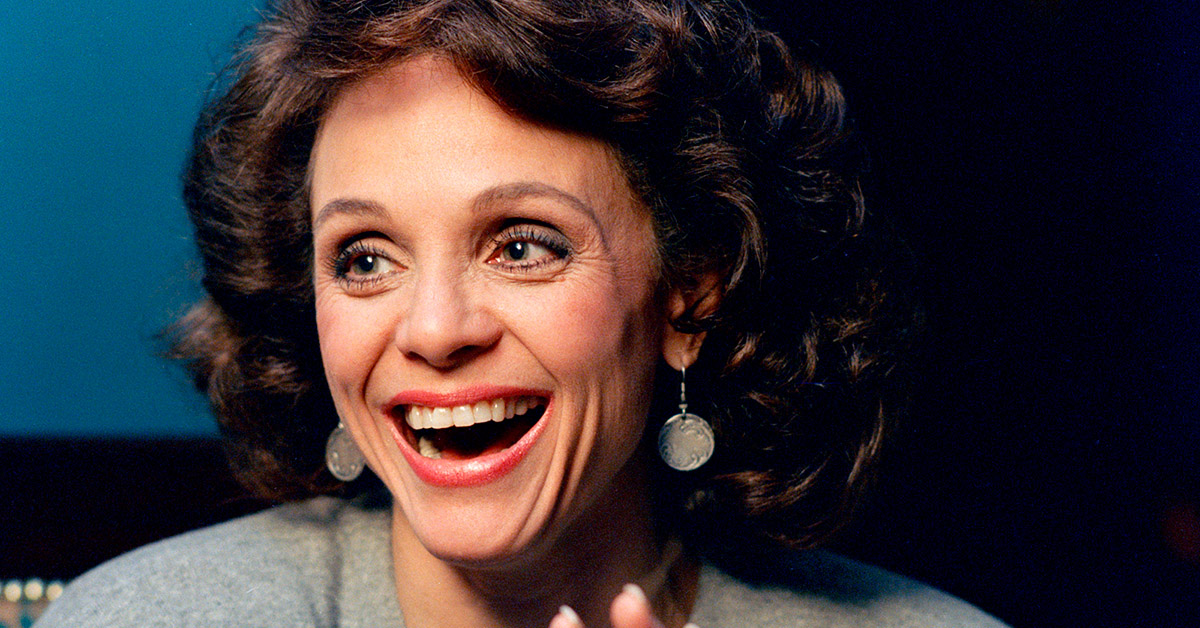
Valerie Harper was an American actress. She began her career as a dancer on Broadway, making her debut in the musical Take Me Along in 1959. Harper is best remembered for her role as Rhoda Morgenstern on The Mary Tyler Moore Show (1970–77) and its spin-off Rhoda (1974–78). For her work on Mary Tyler Moore, she thrice received the Primetime Emmy Award for Outstanding Supporting Actress in a Comedy Series, and later received the award for Outstanding Lead Actress in a Comedy Series for her work on Rhoda.
Posted in Events, News, The Little Screen (Television)

From Wikipedia:
The Wizard of Oz is a 1939 American musical fantasy film produced by Metro-Goldwyn-Mayer and distributed by Warner Bros. Family Entertainment. Widely considered to be one of the greatest films in cinema history, it is the best-known and most commercially successful adaptation of L. Frank Baum’s 1900 children’s book The Wonderful Wizard of Oz. Directed primarily by Victor Fleming (who left the production to take over the troubled Gone with the Wind), the film stars Judy Garland as Dorothy Gale alongside Ray Bolger, Jack Haley, and Bert Lahr.
Characterized by its legendary use of Technicolor (although not being the first to use it), fantasy storytelling, musical score, and memorable characters, the film has become an American pop culture icon. It was nominated for six Academy Awards, including Best Picture, but lost to Gone with the Wind, also directed by Fleming. It did win in two other categories: Best Original Song for “Over the Rainbow” and Best Original Score by Herbert Stothart. While the film was considered a critical success upon release in August 1939, it failed to make a profit for MGM until the 1949 re-release, earning only $3,017,000 on a $2,777,000 budget, not including promotional costs, which made it MGM’s most expensive production at that time.
The 1956 television broadcast premiere of the film on the CBS network reintroduced the film to the public; according to the Library of Congress, it is the most seen film in movie history. It was among the first 25 films that inaugurated the National Film Registry list in 1989. It is also one of the few films on UNESCO’s Memory of the World Register. The film is among the top ten in the BFI (British Film Institute) list of 50 films to be seen by the age of 14.
The Wizard of Oz is the source of many quotes referenced in contemporary popular culture. Noel Langley, Florence Ryerson, and Edgar Allan Woolf received credit for the screenplay, but others made uncredited contributions. The songs were written by Edgar “Yip” Harburg (lyrics) and Harold Arlen (music). The musical score and the incidental music were composed by Stothart.