Author Archives: James

Founding of the Library of Congress

The Library of Congress was established on April 24, 1800, when President John Adams signed an Act of Congress providing for the transfer of the seat of government from Philadelphia to the new capital city of Washington. Part of the legislation appropriated $5,000 “for the purchase of such books as may be necessary for the use of Congress …, and for fitting up a suitable apartment for containing them….” Books were ordered from London and the collection, consisting of 740 books and 30 maps, was housed in the new Capitol. Although the collection covered a variety of topics, the bulk of the materials were legal in nature, reflecting Congress’ role as a maker of laws.

Thomas Jefferson played an important role in the Library’s early formation, signing into law on January 26, 1802 the first law establishing the structure of the Library of Congress. The law established the presidentially appointed post of Librarian of Congress and a Joint Committee on the Library to regulate and oversee the Library, as well as giving the president and vice president the ability to borrow books. The Library of Congress was destroyed in August 1814, when invading British troops set fire to the Capitol building and the small library of 3,000 volumes within.

Within a month, former President Jefferson offered his personal library as a replacement. Jefferson had spent 50 years accumulating a wide variety of books, including ones in foreign languages and volumes of philosophy, science, literature, and other topics not normally viewed as part of a legislative library, such as cookbooks, writing that, “I do not know that it contains any branch of science which Congress would wish to exclude from their collection; there is, in fact, no subject to which a Member of Congress may not have occasion to refer.” In January 1815, Congress accepted Jefferson’s offer, appropriating $23,950 to purchase his 6,487 books.


Wikipedia Article

Retired

Iceland vs Greenland

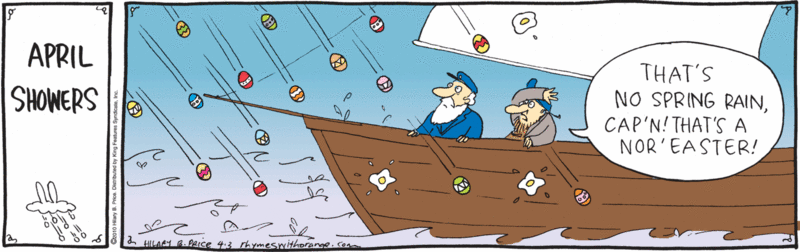
Happy Easter

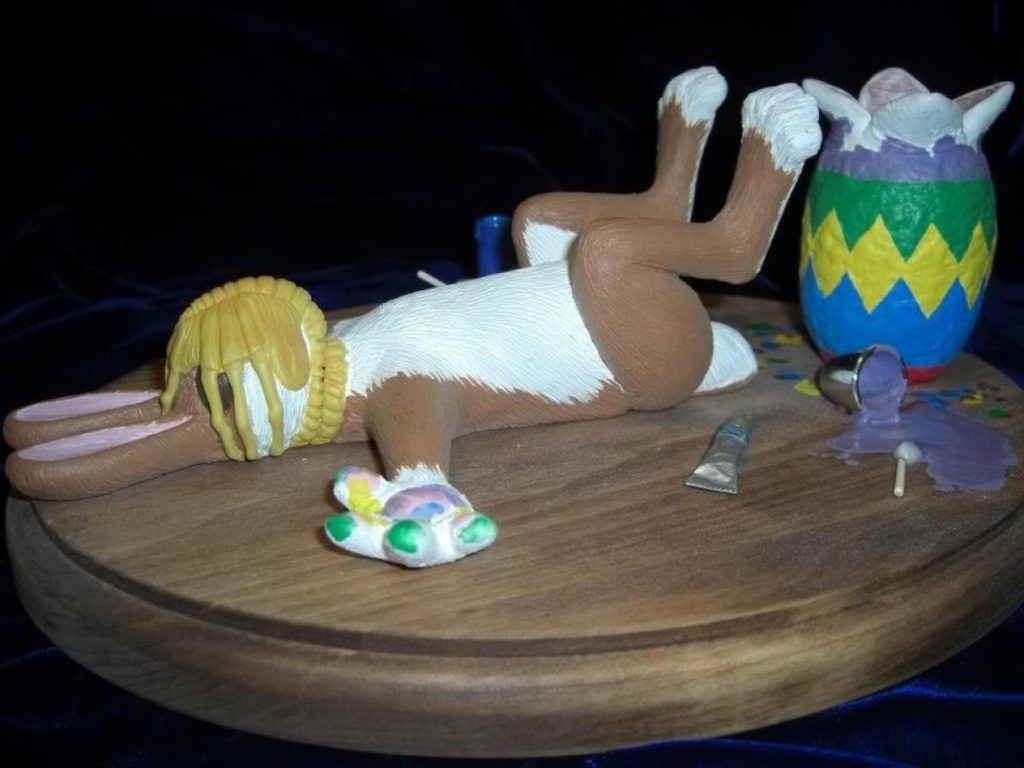
Happy Keester!

Happy Keester

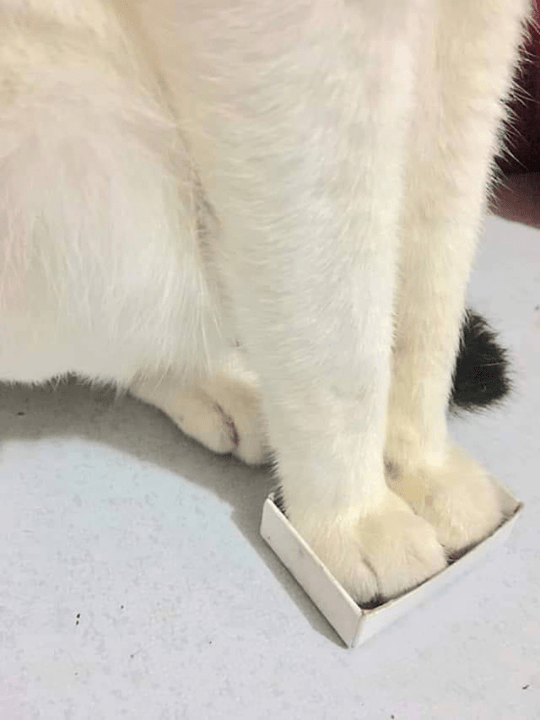
If I Fits

Hi Score 58

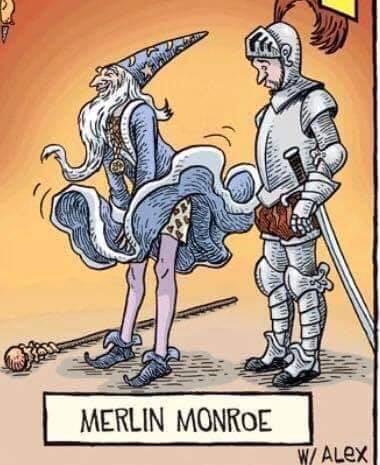
Merlin Monroe

House mouse caught in the act!

Houston, We’ve Had A Problem…

April 17th, 1970 the capsule from the Apollo 13 mission splashed down in the Pacific Ocean, and the whole world breathed a sigh of relief.

Quote


Apollo 13 launched from Cape Canaveral on April 11, intended to be the third manned lunar landing. The crew — James A. Lovell Jr., John L. Swigert Jr. and Fred W. Haise Jr. — experienced a slight vibration shortly after launch, but things were going normally until 55 hours, 55 minutes into the flight.

Oxygen tank No. 2 exploded, causing No. 1 to fail and start leaking rapidly. Warning lights started blinking. The astronaut’s supplies of air, water, light and electricity were imperiled … 200,000 miles from Earth.


Birth of the Mustang (and the Pony Car)

April 17, 1964: Ford Mustang Starts Galloping

1964: Ford introduces the Mustang at the New York World’s Fair. It becomes an instant hit and an icon that alters the automotive landscape, giving rise to one of the most successful — and most uniquely American — automobile genres: the pony car.

The Ford Mustang was born of the simple idea that putting a back seat in a sports car would be a great idea.

The idea came to Lee Iacocca and Donald Frey in the early 1960s as the country was being overrun by European sports cars. Everywhere you looked you saw Alfa Romeos and MGs and Triumphs that dripped oil. Even French cars that would draw peals of laughter today were popular back then.

The two Ford execs saw a vast market literally rolling before their eyes, and, according to legend, the notion of a sports car with a back seat was one of those “ah-hah” moments. If Ford could dilute the European ethos just a bit by making the cars a bit more practical and a lot more affordable, Iacocca figured, the company would sell a few thousand.

He was right, but boy was he wrong. Ford didn’t sell thousands of them. It sold millions of them.

They sold 22,000 on the first day.

The Mustang was more than a success. It was a phenomenon. Ford sold 1 million in the first 18 months, making the Mustang its most successful launch since the Model A.

The pony car is easy to define. It was small by Detroit standards, with sporty styling. It had a back seat for your kids and a usable trunk for your stuff. And the rear wheels were driven by an engine — ideally a big V-8 — mounted up front where God and Henry Ford intended.

Pony cars may not have had the finesse of a European sports car, but they made up for it with brute force. A small-block V-8 can make up for a multitude of handling deficiencies.

The Mustang was successful like the Beatles were popular. Ford figured it would sell around 100,000 in the first 12 months of production. It sold 10 times that number in the first 18.

That success was not lost on the rest of Detroit, and everyone was cranking out pony cars by 1967. General Motors introduced the Chevrolet Camaro and its kissing cousin, the Pontiac Firebird. Ford offered the more upscale Mercury Cougar. Chrysler released the Challenger. Even AMC — google it, we’ll wait — got into the act with the Javelin.

Everyone had a favorite, and even now loyalists occasionally come to blows over which one was best. Countless bets have been made and races staged in displays of testosterone and bravado that would make Dr. Freud sit down for a cigar and a good long think.

And that was just in the parking lots and streets. Things really got wild when the automakers got in on the act, bringing in drivers like Dan Gurney and George Follmer and Mark Donohue to show who built the best car. The contest grew so heated it gave rise to a pony-car–specific racing series called Trans Am. (The car was named after the series, not the other way around.)

We’re inclined to give the award to the Mustang, if only because Steve McQueen drove a ’68 fastback in the most famous chase scene in cinematic history, that amazing dash through the streets of San Francisco in Bullitt.

The Mustang also gets the nod for sheer longevity. Oh sure, you can get a new Camaro that looks like a vintage Camaro, or a new Dodge Challenger that looks like a vintage Dodge Challenger.

But the Mustang is the only pony car to remain in continuous production since its introduction 45 years ago.

Ford has sold more than 9 million worldwide.

Last Cat Built

The Taxman Cometh

The Taxman Cometh

Anniversary of the sinking of the Titanic

Titanic

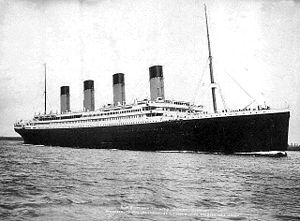
RMS Titanic departing Southampton on 10 April 1912

On April 15th, 1912, RMS Titanic struck an iceberg on her maiden voyage from Southampton, England to New York City and sank, taking over 1500 lives with her.

Wikipedia Link

Abraham Lincoln Assassinated

On this day in 1865, John Wilkes Booth, an actor and Confederate sympathizer, fatally shoots President Abraham Lincoln at a play at Ford’s Theater in Washington, D.C. The attack came only five days after Confederate General Robert E. Lee surrendered his massive army at Appomattox Court House, Virginia, effectively ending the American Civil War.

Booth, a Maryland native born in 1838, who remained in the North during the war despite his Confederate sympathies, initially plotted to capture President Lincoln and take him to Richmond, the Confederate capital. However, on March 20, 1865, the day of the planned kidnapping, the president failed to appear at the spot where Booth and his six fellow conspirators lay in wait. Two weeks later, Richmond fell to Union forces. In April, with Confederate armies near collapse across the South, Booth hatched a desperate plan to save the Confederacy.

Learning that Lincoln was to attend a performance of “Our American Cousin” at Ford’s Theater on April 14, Booth masterminded the simultaneous assassination of Lincoln, Vice President Andrew Johnson and Secretary of State William H. Seward. By murdering the president and two of his possible successors, Booth and his conspirators hoped to throw the U.S. government into disarray.

On the evening of April 14, 1865, conspirator Lewis T. Powell burst into Secretary of State Seward’s home, seriously wounding him and three others, while George A. Atzerodt, assigned to Vice President Johnson, lost his nerve and fled. Meanwhile, just after 10 p.m., Booth entered Lincoln’s private theater box unnoticed and shot the president with a single bullet in the back of his head. Slashing an army officer who rushed at him, Booth leapt to the stage and shouted “Sic semper tyrannis! [Thus always to tyrants]–the South is avenged!” Although Booth broke his leg jumping from Lincoln’s box, he managed to escape Washington on horseback.

The president, mortally wounded, was carried to a lodging house opposite Ford’s Theater. About 7:22 a.m. the next morning, Lincoln, age 56, died–the first U.S. president to be assassinated. Booth, pursued by the army and other secret forces, was finally cornered in a barn near Bowling Green, Virginia, and died from a possibly self-inflicted bullet wound as the barn was burned to the ground. Of the eight other people eventually charged with the conspiracy, four were hanged and four were jailed.

Office Supply Company makes a Paper Dragon

Read the story over here.

(Update 12/19/23, sorry, video was removed from YouTube.)

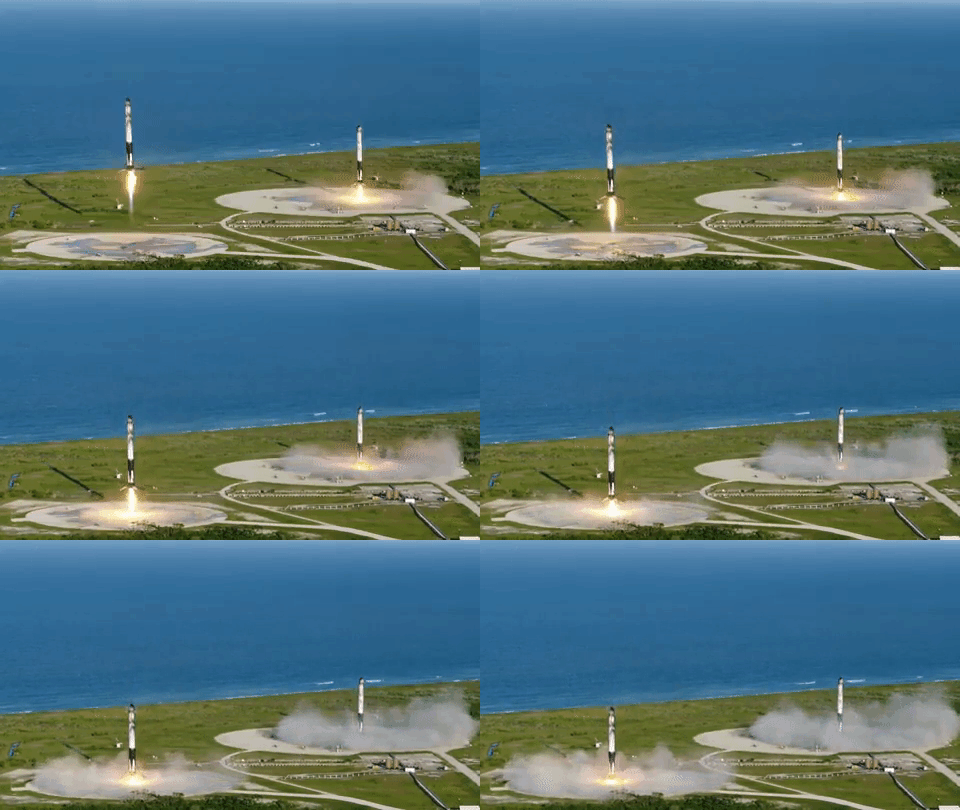
SpaceX lands all 3 Falcon Heavy Boosters!

Degree vs License

4U2PN2

Anniversary of Apollo 13

Apollo 13 was the seventh manned mission in the American Apollo space program and the third intended to land on the Moon. The craft was launched on April 11, 1970, at 13:13 CST from the Kennedy Space Center, Florida, but the lunar landing was aborted after an oxygen tank exploded two days later, crippling the Service Module (SM) upon which the Command Module (CM) depended. Despite great hardship caused by limited power, loss of cabin heat, shortage of potable water, and the critical need to jury-rig the carbon dioxide removal system, the crew returned safely to Earth on April 17.

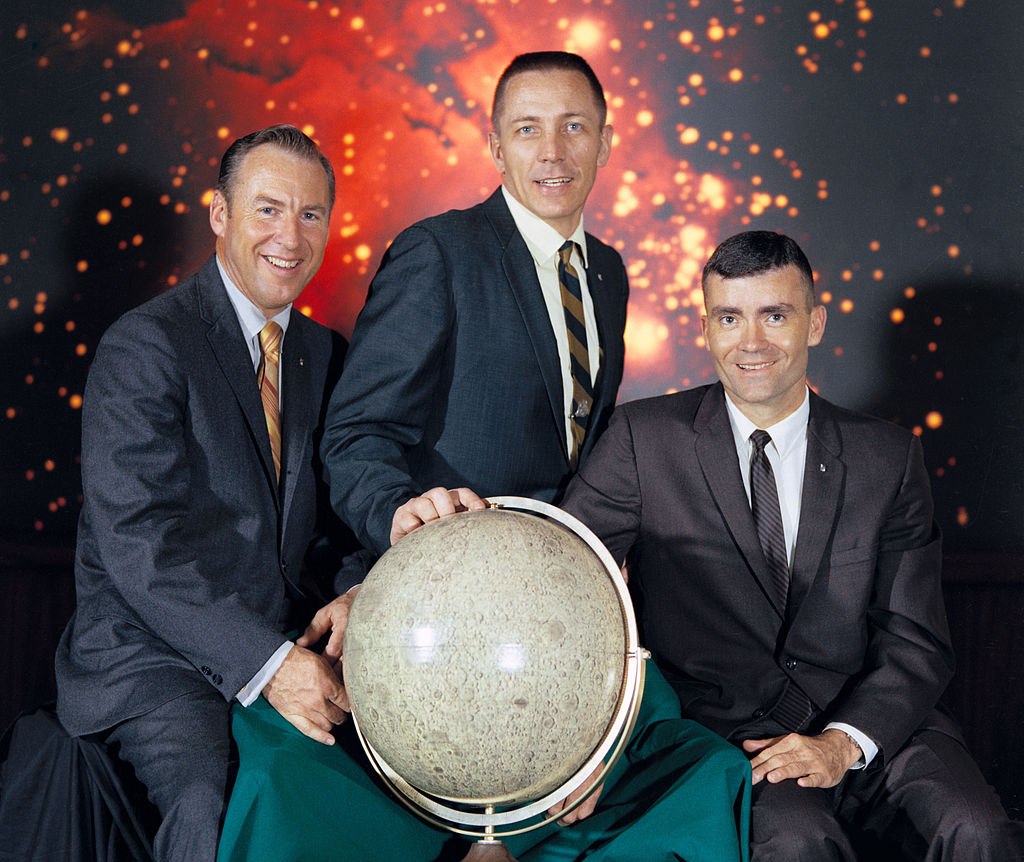
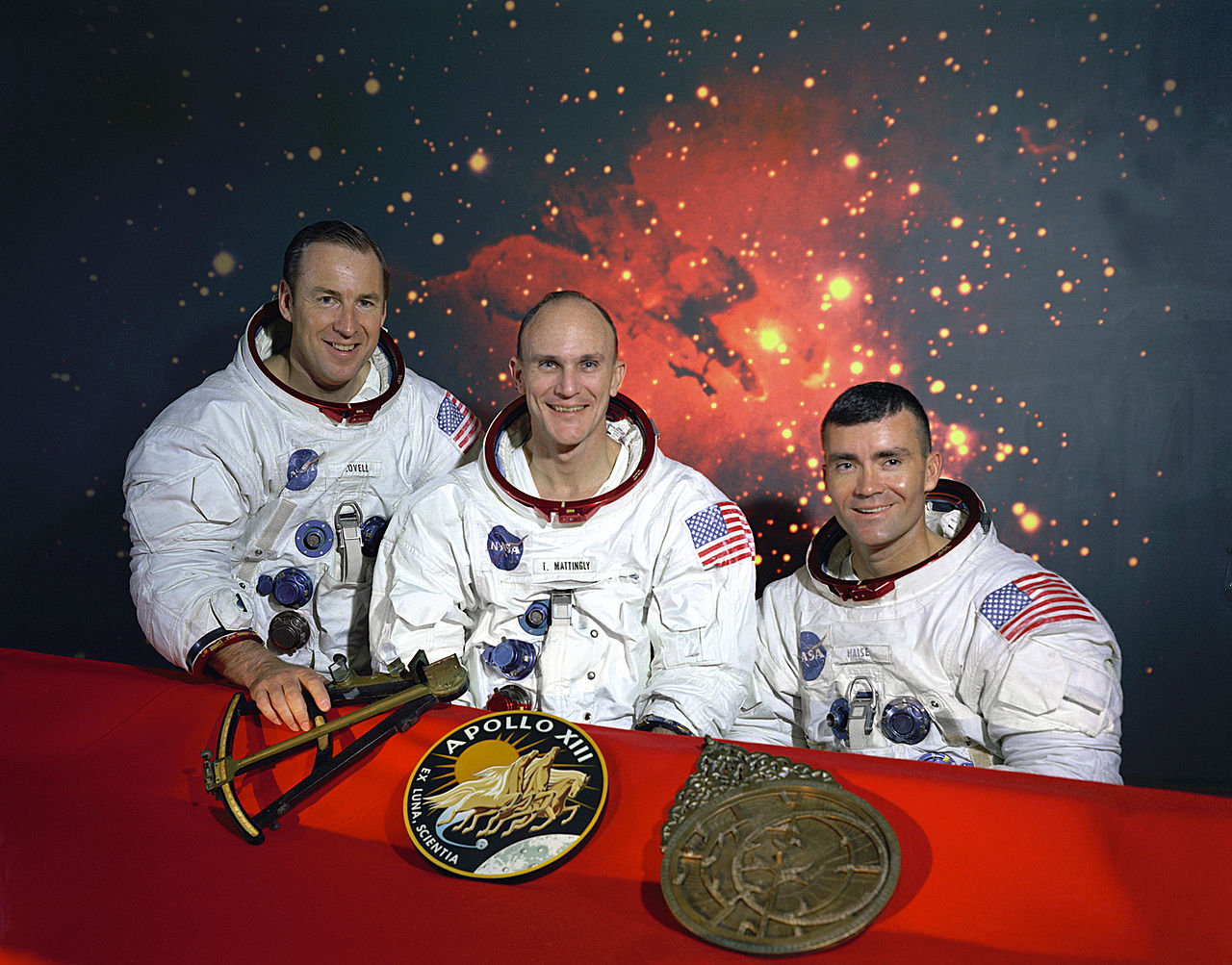
The flight was commanded by James A. Lovell with John L. “Jack” Swigert as Command Module Pilot and Fred W. Haise as Lunar Module Pilot. Swigert was a late replacement for the original CM pilot Ken Mattingly, who was grounded by the flight surgeon after exposure to German measles.

Apollo 13: Lovell, Swigert, Haise

Apollo 13: Lovell, Swigert, Haise

Original crew photo. Left to right: Lovell, Mattingly, Haise

Original crew photo. Left to right: Lovell, Mattingly, Haise

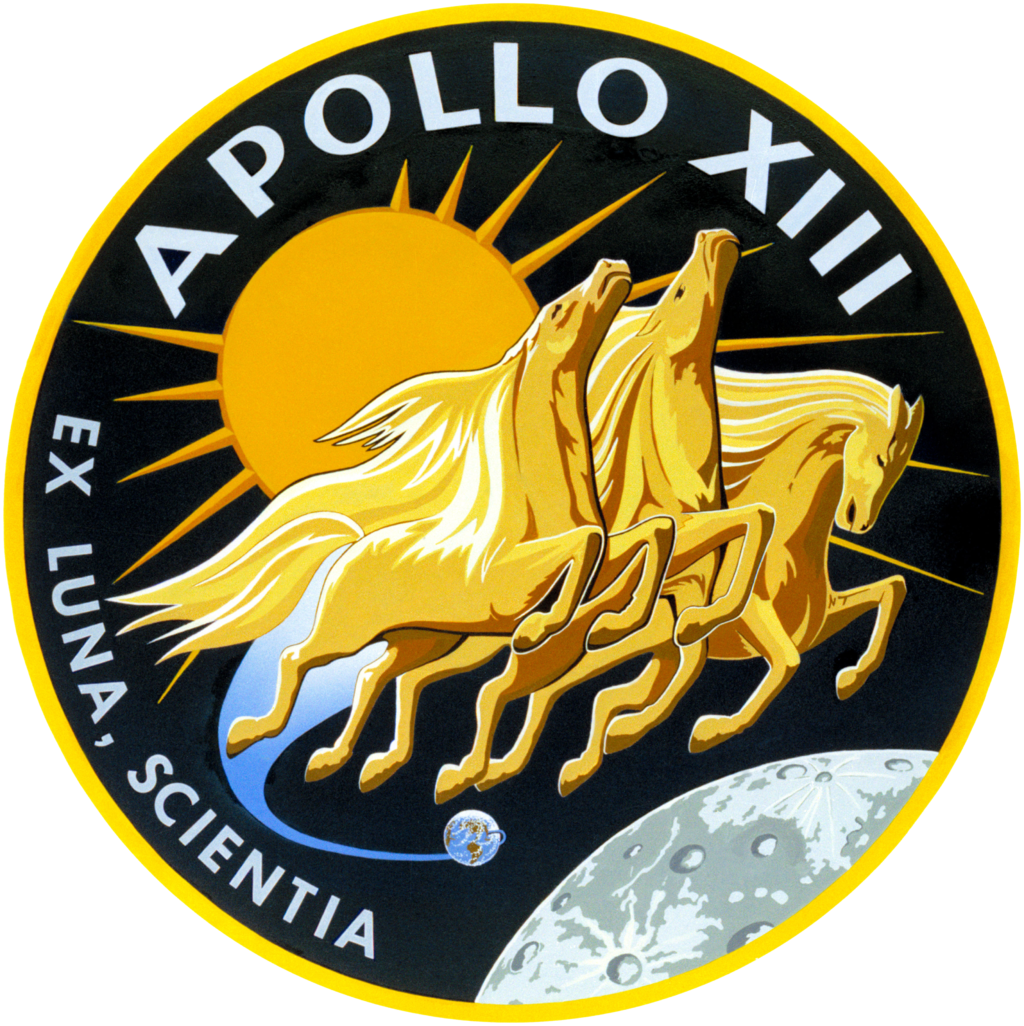
This is the insignia of the Apollo 13 lunar landing mission.

This is the insignia of the Apollo 13 lunar landing mission.