Author Archives: James

Lincoln delivers Gettysburg Address

On November 19, 1863, at the dedication of a military cemetery at Gettysburg, Pennsylvania, during the American Civil War, President Abraham Lincoln delivers one of the most memorable speeches in American history. In just 272 words, Lincoln brilliantly and movingly reminded a war-weary public why the Union had to fight, and win, the Civil War.

The Battle of Gettysburg, fought some four months earlier, was the single bloodiest battle of the Civil War. Over the course of three days, more than 45,000 men were killed, injured, captured or went missing. The battle also proved to be the turning point of the war: General Robert E. Lee’s defeat and retreat from Gettysburg marked the last Confederate invasion of Northern territory and the beginning of the Southern army’s ultimate decline.

Charged by Pennsylvania’s governor, Andrew Curtin, to care for the Gettysburg dead, an attorney named David Wills bought 17 acres of pasture to turn into a cemetery for the more than 7,500 who fell in battle. Wills invited Edward Everett, one of the most famous orators of the day, to deliver a speech at the cemetery’s dedication. Almost as an afterthought, Wills also sent a letter to Lincoln—just two weeks before the ceremony—requesting “a few appropriate remarks” to consecrate the grounds.

At the dedication, the crowd listened for two hours to Everett before Lincoln spoke. Lincoln’s address lasted just two or three minutes. The speech reflected his redefined belief that the Civil War was not just a fight to save the Union, but a struggle for freedom and equality for all, an idea Lincoln had not championed in the years leading up to the war. This was his stirring conclusion: “The world will little note, nor long remember what we say here, but it can never forget what they did here. It is for us the living, rather, to be dedicated here to the unfinished work which they who fought here have thus far so nobly advanced. It is rather for us to be here dedicated to the great task remaining before us—that from these honored dead we take increased devotion to that cause for which they gave the last full measure of devotion—that we here highly resolve that these dead shall not have died in vain—that this nation, under God, shall have a new birth of freedom—and that government of the people, by the people, for the people, shall not perish from the earth.”

Reception of Lincoln’s Gettysburg Address was initially mixed, divided strictly along partisan lines. Nevertheless, the “little speech,” as he later called it, is thought by many today to be the most eloquent articulation of the democratic vision ever written.


Ranch

ranch

I don’t fits

i_dont_fits

You’re never going to sleep again!

https://youtu.be/ia5G5IWndV0

Caution

caution

Political Burgers

political_burgers

Elephant comes to rescue her friend

A concerned baby elephant named Kham Lha at the Elephant Nature Park in Chiang Mai, Thailand, rushed into the river where she sweetly but mistakenly believed that Darrick Thompson, her favorite human, was in danger. The tiny pachyderm very gently offered her trunk for Thompson to hold and put her body over his to protect him from the rushing current.

This video show the bond between Darrick and elephant Kham Lha at Elephant Nature Park when she think Darrick in trouble, so she rushed to the river and try to save him. This is can show us that, when we treat animal with love, they always paid love back to us.

Infinity

infinity

Swedish Fish Oreos Review

I found them.
They are horrible.
I regret nothing.

Wile E. Coyote

Sorry

sorry

Events

events

Farewell, Agent Solo

robert_vaughn

Robert Francis Vaughn (November 22, 1932 – November 11, 2016)

Robert Vaughn, who starred as the  suave spy Napoleon Solo on the NBC series The Man from U.N.C.L.E. from 1964-68, died today of acute leukemia.  He was 83.

Wikipedia Link

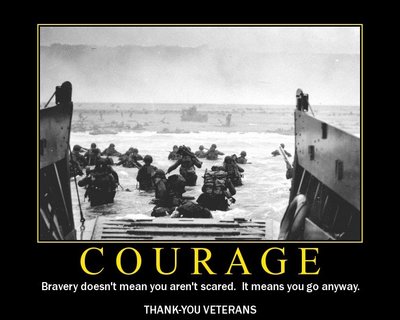
Veteran

A veteran is someone who, at one point in his life, wrote a blank check made payable to his country for an amount of ‘up to and including my life.’

Veteran’s Day

Veteran's Day

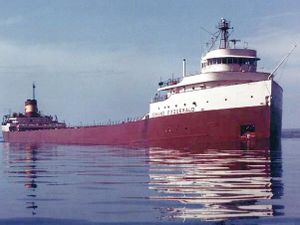
The Wreck of the Edmund Fitzgerald

Edmund FitzgeraldThe SS Edmund Fitzgerald, May 1975.
SS Edmund Fitzgerald was a cargo ship that sank suddenly during a gale storm on November 10, 1975, while on Lake Superior. The ship went down without a distress signal in 530 feet (162 m) of water at 46°59.9′N 85°6.6′W, in Canadian waters about 17 miles (15 nm; 27 km) from the entrance to Whitefish Bay. All 29 members of the crew perished. Gordon Lightfoot‘s hit song, The Wreck of the Edmund Fitzgerald, helped make the incident the most famous marine disaster in the history of Great Lakes shipping.

Daylight Savings Time Ends

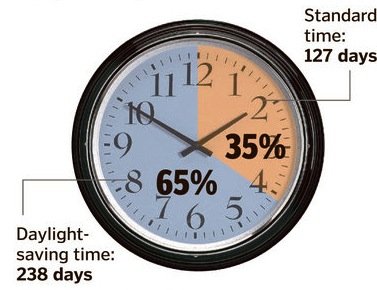
Daylight Savings Time Graph

Clocks turn back an hour at 2 a.m. on Sunday, marking the beginning of standard time for the next few months.

This means that this weekend will be an hour longer than normal, but it will get dark an hour earlier in the evenings.

Standard time will be used through March 8, when clocks will “spring” forward an hour to begin Daylight Saving Time.

Ironically, standard time is no longer the norm. About two-thirds of the days during the year now operate on Daylight Saving Time.

Daylight Saving Time now begins on the second Sunday of March each year and ends on the first Sunday of November.

DST has roots tracing to 1918 in the United States, though not all places always observed it. Currently, it is not used in Hawaii and most of Arizona.

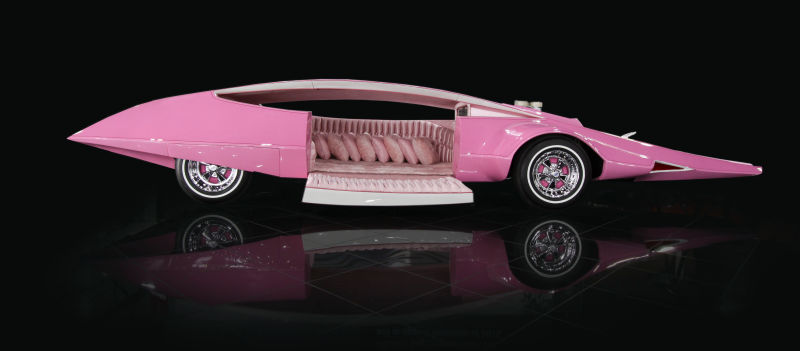
Pink Panther Mobile restored

Oooops

https://youtu.be/sO_OFfoxmgU

Happy Polar Bear