






- Beef on Weck
- Being a Mother
- Chili Cook-off
- Communication (Gazebo)
- CREAMI Vanilla Ice Cream
- Daddy
- Everyone has an Angel
- Family
- Gonna be a Bear
- Harrison Bergeron
- Mute and Alone
- Privacy Policy
- Rikki-tikki-tavi
- Scientists Study Grizzly Bears
- Ship vs. Lighthouse
- Slim To None
- Snowvember (Buffalo 2014)
- Somebody…
- The Present
- The Soldier
- The Star
- Winter
- 11foot8.com
- 365 Tomorrows
- 7 into 28
- A Tale of Two Brains
- Alien to Covenant – History of Alien
- Am I Unique
- AMARC
- American Muscle Car Museum
- Andre Rieu
- Antipodes Map
- Ark in Space
- Azure Status
- Bill Cosby – Revenge
- Blizzard of '77
- Broken Chains
- CDC – Flu
- Christmas Forever AZ
- Coldest City on Earth
- Creations for Charity (Lego)
- Cruise.com
- Curb Watching
- D&D Beyond
- D&D Beyond to FG Character Converter
- Daily Fuel Gauge Report
- Dinosaur Earth
- DMs Guild
- Dofo
- Dr. Demento
- DriveThru RPG
- Dungeon in a Box
- Dyson’s Dodecahedron
- Fantasy Name Generator
- Farmer's Donkey
- Fast Character
- Flight Aware
- Flight Radar 24
- Flixable
- Gaming Table
- Genius
- Geo Guesser!
- Hack The Menu
- Hackers for Charity
- Hadzy
- Have I been Pwned
- HexRoll
- How to remove a tick (properly)
- Identity Theft Resource Center
- Leak Lookup
- Line Rider – Hall of the Mountain King
- Make My Drive Fun
- Mapologies
- Marine Traffic
- MathPapa
- MechWarrior Online
- Medieval Murder Maps
- Meteor Shower Calendar
- Mini Building Materials
- Monterey Bay Aquarium
- MyAbandonware
- Nah! I just might be in there!
- National Do Not Call Registry
- No More Ransom
- NOAA – Louisville
- Nobody Live
- Norse Cyber Attack Map
- OCEARCH.org
- Omega Game Shrine
- Out of the Woods Forestry
- Overt
- PC Gaming Wiki
- Percheron
- Periodic Stats
- Periodic Videos (TED)
- Permethin Fact Sheet
- Pigeon Key Foundation
- Project 44
- pTable
- Pumpkin Pile
- Random Restaurant Generator
- Rankin/Bass – Wikipedia
- ReelGood
- RockAuto
- Roll20 Enhancement Suite
- Schimpff's
- Scuba Shooters
- Sinking of the Titanic
- Smoky Mountain Fall Foliage Map
- Speedsums
- SR-71 Speed Check
- Steam Status
- Still Tasty
- StreamSquid
- Sunken Ships of the Second World War
- Super Slice!
- Swedish Fish
- Tank America
- Taste Dive
- TBSP (TaBleSPoon)
- The Louvre
- The Oz Museum
- The Strong National Museum of Play
- They Can Talk
- This Beat Goes on/Switchin' to Glide
- Tick Removal (CDC)
- Trappistine Candy
- Vacation Rentals By Owner
- Vehicle Privacy Report
- VPNFilter Check
- War Puppets Rise to Heaven
- Weather Back Home
- WebGL Water
- Whalers on the Moon
- What's New on Netflix
- Who's On First
- Why are Jacks called Jacks?
- Wild Spirit
- Window Swap
- WKRP Turkey Drop
- Wordcount
- World's Hottest Chocolate Bar
- WWII Portraits of Honor
- March 2026
- February 2026
- January 2026
- December 2025
- November 2025
- October 2025
- September 2025
- August 2025
- July 2025
- June 2025
- May 2025
- April 2025
- March 2025
- February 2025
- January 2025
- December 2024
- November 2024
- October 2024
- September 2024
- August 2024
- July 2024
- June 2024
- May 2024
- April 2024
- March 2024
- February 2024
- January 2024
- December 2023
- November 2023
- October 2023
- September 2023
- August 2023
- July 2023
- June 2023
- May 2023
- April 2023
- March 2023
- February 2023
- January 2023
- December 2022
- November 2022
- October 2022
- September 2022
- August 2022
- July 2022
- June 2022
- May 2022
- April 2022
- March 2022
- February 2022
- January 2022
- December 2021
- November 2021
- October 2021
- September 2021
- August 2021
- July 2021
- June 2021
- May 2021
- April 2021
- March 2021
- February 2021
- January 2021
- December 2020
- November 2020
- October 2020
- September 2020
- August 2020
- July 2020
- June 2020
- May 2020
- April 2020
- March 2020
- February 2020
- January 2020
- December 2019
- November 2019
- October 2019
- September 2019
- August 2019
- July 2019
- June 2019
- May 2019
- April 2019
- March 2019
- February 2019
- January 2019
- December 2018
- November 2018
- October 2018
- September 2018
- August 2018
- July 2018
- June 2018
- May 2018
- April 2018
- March 2018
- February 2018
- January 2018
- December 2017
- November 2017
- October 2017
- September 2017
- August 2017
- July 2017
- June 2017
- May 2017
- April 2017
- March 2017
- February 2017
- January 2017
- December 2016
- November 2016
- October 2016
- September 2016
- August 2016
- July 2016
- June 2016
- May 2016
- April 2016
- March 2016
- February 2016
- January 2016
- December 2015
- November 2015
- October 2015
- September 2015
- August 2015
- July 2015
- June 2015
- May 2015
- April 2015
- March 2015
- February 2015
- January 2015
- December 2014
- November 2014
- October 2014
- September 2014
- August 2014
- July 2014
- June 2014
- May 2014
- April 2014
- March 2014
- February 2014
- January 2014
- December 2013
- November 2013
- October 2013
- September 2013
- August 2013
- July 2013
- June 2013
- May 2013
- April 2013
- March 2013
- February 2013
- January 2013
- December 2012
- November 2012
- October 2012
- September 2012
- August 2012
- July 2012
- June 2012
- May 2012
- April 2012
- March 2012
- February 2012
- January 2012
- December 2011
- November 2011
- October 2011
- September 2011
- August 2011
- July 2011
- June 2011
- May 2011
- April 2011
Author Archives: James
54th Annual Street Rod Nationals

54th Annual Street Rod Nationals
August 3rd, 4th, 5th & 6th, 2023
Kentucky Exposition Center
Louisville, Kentucky
Posted in Because I Can, Events, Planes Trains and Automobiles
Anniversary of the TRS-80
It was with minimal expectations that, on August 3, 1977, Tandy Corporation teamed up with Radio Shack to release the TRS-80, one of the first personal computers available to consumer markets. While Don French — a buyer for the Tandy Radio Shack consumer electronic chain — had convinced some Tandy executives of the need to release a personal computer, most felt it was unlikely to gross substantial profits. This bulky item with complex operating procedures would never sell, they thought, more than 1,000 units in its first month… As it turned out, the TRS-80 surpassed even the most cautious sales estimates by tenfold within its first month on the market; the burgeoning prospects of a new era in personal electronics and computing could no longer be denied. It had no hard drive and four kilobytes of memory, according to the article. Radio Shack’s $600 PC was preceded by the MITS Altair, as well as PCs from both Apple and IBM, but “the TRS-80 was one of the first products that came fully assembled and ready to use, bridging the gap in accessibility between hobbyists — who took interest in the actual building of the computer — and the average American consumer, who wanted to know what this new, cutting-edge technology had in store for them.”
Posted in Gadgets
78th ANNUAL GERRY RODEO
Posted in Because I Can, Critters, Events, Food
54th Annual Street Rod Nationals
54th Annual Street Rod Nationals
August 3rd, 4th, 5th & 6th, 2023
Kentucky Exposition Center
Louisville, Kentucky
Posted in Because I Can, Events, Planes Trains and Automobiles
78th ANNUAL GERRY RODEO
Posted in Because I Can, Critters, Events, Food
Happy Birthday Martin and Lewis
On July 25, 1946, Martin and Lewis took the stage at Atlantic City’s Club 500 to create one of the most celebrated unions in comedy history.
*Note – The video (part 1) says they were “born July 26, 1946”, but several other references say July 25, 1946. “The world may never know.”
Posted in Humor, On This Day, The Big Screen, The Little Screen (Television)
Anniversary of STS-135 landing
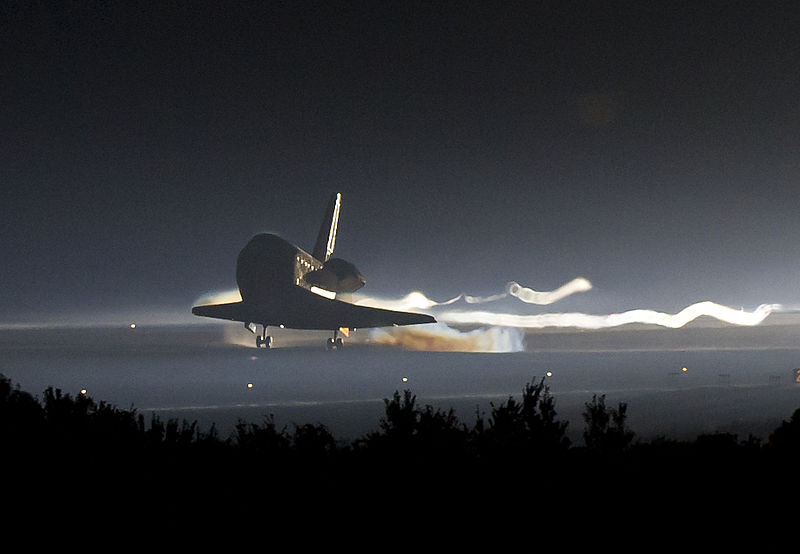
Space shuttle Atlantis lands for the STS-135 mission marking the final mission of the Space Shuttle Program at NASA’s Kennedy Space Center in Florida. Time of landing was 5:57 a.m. (EDT) on July 21, 2011.
The “just at dawn” landing was one of the most memorable landings ever, as shown in this picture:
Posted in Because I Can, Patriotic, Planes Trains and Automobiles
Armstrong walks on the moon
At 10:56 p.m. EDT July 20, 1969, American astronaut Neil Armstrong, 240,000 miles from Earth, speaks these words to more than a billion people listening at home: “That’s one small step for man, one giant leap for mankind.” Stepping off the lunar landing module Eagle, Armstrong became the first human to walk on the surface of the moon.
The American effort to send astronauts to the moon has its origins in a famous appeal President John F. Kennedy made to a special joint session of Congress on May 25, 1961: “I believe this nation should commit itself to achieving the goal, before this decade is out, of landing a man on the moon and returning him safely to Earth.” At the time, the United States was still trailing the Soviet Union in space developments, and Cold War-era America welcomed Kennedy’s bold proposal.
In 1966, after five years of work by an international team of scientists and engineers, the National Aeronautics and Space Administration (NASA) conducted the first unmanned Apollo mission, testing the structural integrity of the proposed launch vehicle and spacecraft combination. Then, on January 27, 1967, tragedy struck at Kennedy Space Center in Cape Canaveral, Florida, when a fire broke out during a manned launch-pad test of the Apollo spacecraft and Saturn rocket. Three astronauts were killed in the fire.
Despite the setback, NASA and its thousands of employees forged ahead, and in October 1968, Apollo 7, the first manned Apollo mission, orbited Earth and successfully tested many of the sophisticated systems needed to conduct a moon journey and landing. In December of the same year, Apollo 8 took three astronauts to the dark side of the moon and back, and in March 1969 Apollo 9 tested the lunar module for the first time while in Earth orbit. Then in May, the three astronauts of Apollo 10 took the first complete Apollo spacecraft around the moon in a dry run for the scheduled July landing mission.
At 9:32 a.m. on July 16, with the world watching, Apollo 11 took off from Kennedy Space Center with astronauts Neil Armstrong, Edwin Aldrin Jr., and Michael Collins aboard. Armstrong, a 38-year-old civilian research pilot, was the commander of the mission. After traveling 240,000 miles in 76 hours, Apollo 11 entered into a lunar orbit on July 19. The next day, at 1:46 p.m., the lunar module Eagle, manned by Armstrong and Aldrin, separated from the command module, where Collins remained. Two hours later, the Eagle began its descent to the lunar surface, and at 4:18 p.m. the craft touched down on the southwestern edge of the Sea of Tranquility. Armstrong immediately radioed to Mission Control in Houston, Texas, a famous message: “The Eagle has landed.”
At 10:39 p.m., five hours ahead of the original schedule, Armstrong opened the hatch of the lunar module. As he made his way down the lunar module’s ladder, a television camera attached to the craft recorded his progress and beamed the signal back to Earth, where hundreds of millions watched in great anticipation. At 10:56 p.m., Armstrong spoke his famous quote, which he later contended was slightly garbled by his microphone and meant to be “that’s one small step for a man, one giant leap for mankind.” He then planted his left foot on the gray, powdery surface, took a cautious step forward, and humanity had walked on the moon.
“Buzz” Aldrin joined him on the moon’s surface at 11:11 p.m., and together they took photographs of the terrain, planted a U.S. flag, ran a few simple scientific tests, and spoke with President Richard M. Nixon via Houston. By 1:11 a.m. on July 21, both astronauts were back in the lunar module and the hatch was closed. The two men slept that night on the surface of the moon, and at 1:54 p.m. the Eagle began its ascent back to the command module. Among the items left on the surface of the moon was a plaque that read: “Here men from the planet Earth first set foot on the moon–July 1969 A.D–We came in peace for all mankind.”
At 5:35 p.m., Armstrong and Aldrin successfully docked and rejoined Collins, and at 12:56 a.m. on July 22 Apollo 11 began its journey home, safely splashing down in the Pacific Ocean at 12:51 p.m. on July 24.
There would be five more successful lunar landing missions, and one unplanned lunar swing-by, Apollo 13. The last men to walk on the moon, astronauts Eugene Cernan and Harrison Schmitt of the Apollo 17 mission, left the lunar surface on December 14, 1972. The Apollo program was a costly and labor intensive endeavor, involving an estimated 400,000 engineers, technicians, and scientists, and costing $24 billion (close to $100 billion in today’s dollars). The expense was justified by Kennedy’s 1961 mandate to beat the Soviets to the moon, and after the feat was accomplished ongoing missions lost their viability.
Posted in Patriotic
