Category Archives: Anniversary

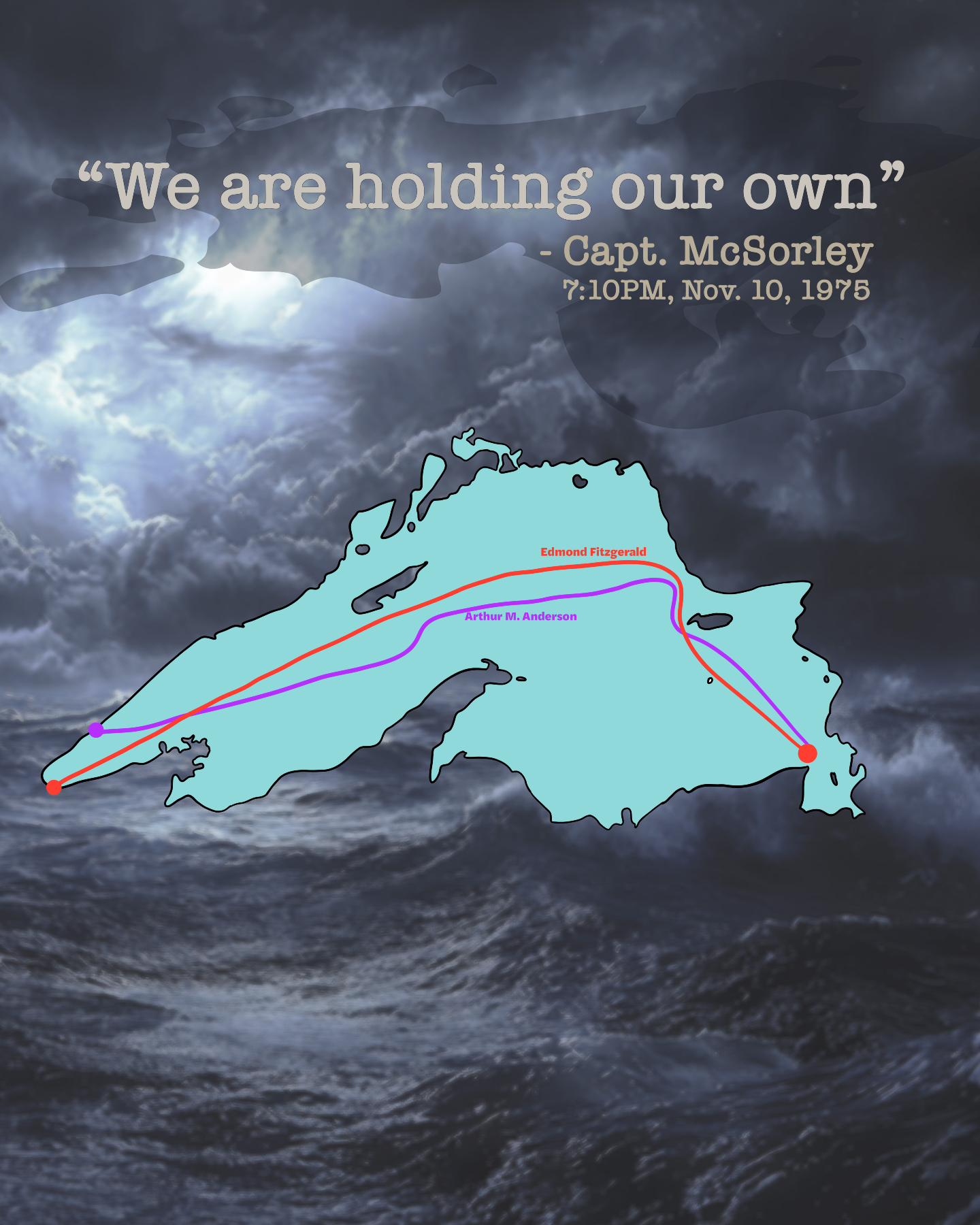
50th Anniversary of the Wreck of the Edmund Fitzgerald

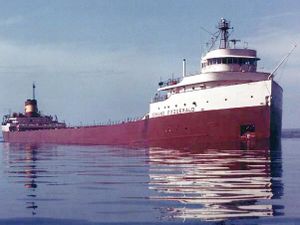
Edmund Fitzgerald

The SS Edmund Fitzgerald, May 1975.

SS Edmund Fitzgerald was a cargo ship that sank suddenly during a gale storm on November 10, 1975, while on Lake Superior. The ship went down without a distress signal in 530 feet (162 m) of water at 46°59.9′N 85°6.6′W, in Canadian waters about 17 miles (15 nm; 27 km) from the entrance to Whitefish Bay. All 29 members of the crew perished. Gordon Lightfoot‘s hit song, The Wreck of the Edmund Fitzgerald, helped make the incident the most famous marine disaster in the history of Great Lakes shipping.

Read more »

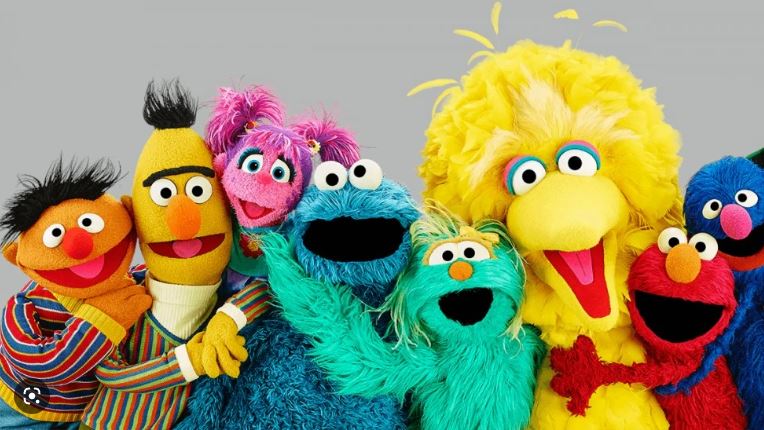
Anniversary of “Sesame Street” Debut

On November 10, 1969, “Sesame Street,” a pioneering TV show that would teach generations of young children the alphabet and how to count, makes its broadcast debut. “Sesame Street,” with its memorable theme song (“Can you tell me how to get/How to get to Sesame Street”), went on to become the most widely viewed children’s program in the world. It has aired in more than 120 countries.

Wikipedia Article

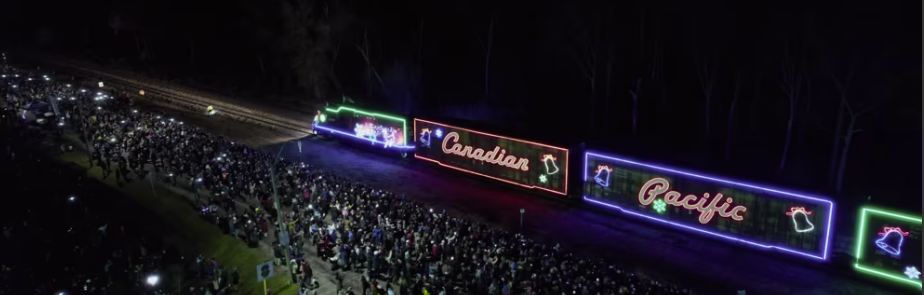
Canadian Pacific Holiday Train

From Wikipedia:

Starting in 1999, CP runs a Holiday Train along its main line during the months of November and December. The Holiday Train celebrates the holiday season and collects donations for community food banks and hunger issues. The Holiday Train also provides publicity for CP and a few of its customers. Each train has a box car stage for entertainers who are travelling along with the train.

The train is a freight train, but also pulls vintage passenger cars which are used as lodging/transportation for the crew and entertainers. Only entertainers and CP employees are allowed to board the train aside from a coach car that takes employees and their families from one stop to the next. All donations collected in a community remain in that community for distribution.

There are two Holiday Trains that cover 150 stops in Canada and the United States Northeast and Midwest. Each train is roughly 1,000 feet (300 m) in length with brightly decorated railway cars, including a modified box car that has been turned into a travelling stage for performers. They are each decorated with hundred of thousands of LED Christmas lights. In 2013 to celebrate the program’s 15th year, three signature events were held in Hamilton, Ontario, Calgary, Alberta, and Cottage Grove, Minnesota, to further raise awareness for hunger issues.

The 2025 CPKC Holiday Train will tour Canada and the U.S. Nov. 19 through Dec. 21, raising money, food and awareness to support food banks across our network. Professional musicians play free concerts from the brightly decorated train’s stage. CPKC donates to the local food bank at each stop and encourages all attendees to make a monetary or heart-healthy food donation.

Since its inaugural journey in 1999, the CPKC Holiday Train has raised more than $26 million and collected approximately 5.4 million pounds of food for community food banks in Canada and the U.S.

Link

2025 Canadian Schedule
2025 American Schedule

Daylight Savings Time Ends

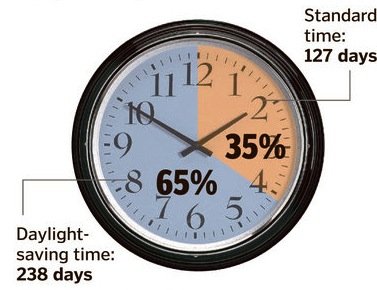
Daylight Savings Time Graph

Clocks turn back an hour at 2 a.m. on Sunday, marking the beginning of standard time for the next few months.

This means that this weekend will be an hour longer than normal, but it will get dark an hour earlier in the evenings.

Standard time will be used through March 12, when clocks will “spring” forward an hour to begin Daylight Saving Time.

Ironically, standard time is no longer the norm. About two-thirds of the days during the year now operate on Daylight Saving Time.

Daylight Saving Time now begins on the second Sunday of March each year and ends on the first Sunday of November.

DST has roots tracing to 1918 in the United States, though not all places always observed it. Currently, it is not used in Hawaii and most of Arizona.

Second Week of Deer Camp

Happy Halloween

War of the Worlds

This day In Radio History, Oct 30, 1938 – Panic Over War of the Worlds

A radio broadcast of H. G. Wells “The War of the Worlds”, narrated by Orson Welles, allegedly causes a mass panic.


“The War of the Worlds” was a Halloween episode of the radio series The Mercury Theatre on the Air directed and narrated by Orson Welles as an adaptation of H. G. Wells’s novel The War of the Worlds (1898) that was performed and broadcast live at 8 pm ET on October 30, 1938 over the CBS Radio Network. The episode is famous for inciting a panic by convincing some members of the listening audience that a Martian invasion was taking place, though the scale of panic is disputed, as the program had relatively few listeners.

Today…

In 1886, the ticker-tape parade is invented in New York City when office workers spontaneously throw ticket tape into the streets as the Statue of Liberty is dedicated.

In 1929, the New York Stock Exchange crashes in what will be called the Crash of ’29 or Black Tuesday, ending the Great Bull Market of the 1920s and beginning the Great Depression.

In 1960, in Louisville, Kentucky, Cassius Clay (who later takes the name Muhammad Ali) wins his first professional fight.

In 1969, the first-ever computer-to-computer link is established on ARPANET, the precursor to the Internet.

In 1998, Space Shuttle Discovery blasts-off with 77-year old John Glenn on board, making him the oldest person to go into space. He became the first American to orbit Earth on February 20, 1962.

Explore the Spooky Deep Sea

Mole Day

October 23rd is Mole Day—you know, because 10/23 is like 1023.

THE EARLY HISTORY of chemistry has many interesting stories. Just consider the problems scientists had 200 years ago as they tried to figure out some of the most basic ideas of chemistry. It was clear that there were different substances—for instance, water is different than coal. But it wasn’t so clear what these substances were made of. You could take something like nitrogen gas (N2) and oxygen gas (O2) and combine them together to make another gas (in this case NO2). It thus seemed reasonable to suppose that stuff (molecular gas) was made of smaller stuff (atoms). But the evidence isn’t so easy to see. The primary difficulty is that humans can’t see molecules or atoms. All the scientific ideas have to be built on indirect evidence.

This is where Amedeo Avogadro comes into the picture (of course his real name is Lorenzo Romano Amedeo Carlo Avogadro di Quaregna e di Cerreto—but everyone just calls him Avogadro for obvious reasons). Avogadro developed the following idea:

Avogadro’s Law: If you have two gasses at the same temperature and pressure, they will occupy the same volume only if they contain the same number of molecules.

If you are thinking this is just a version of the Ideal Gas Law, you are correct—but let’s move on to a useful example. Suppose you take water (which is H2O) and run an electric curent through it—called electrolysis. This can break the water molecules into hydrogen gas and oxygen gas (which you could collect). If you had these two gases at the same temperature and pressure, the hydrogen gas would take up twice the volume compared to the oxygen gas. Why? Well, when you break up the water molecule, you get twice as much hydrogen as oxygen. Yes, hydrogen doesn’t just float around as a single atom. Instead it forms a bond with another hydrogen to make H2—but oxygen does the same thing (O2).

In the end, you would know that water is made of both hydrogen and oxygen and that there is twice as much hydrogen as oxygen. That’s a pretty big piece to the whole elements puzzle and you need an idea like Avogadro’s Law to figure it out.

Avogadro’s Number

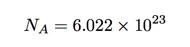
But what about this number of Avogadro? Why is it important and why didn’t Amedeo know what it was? Let’s start with a definition. If I have 12 grams of carbon-12 (not any other isotopes of carbon) then it would have exactly Avogadro’s number of atoms in it. We can write this number as (approximately):

avagadro

So we would call this number of carbon atoms, one mole (sort of like 12 eggs is one dozen).

Why is important? Avogadro’s number is sort of like a bridge. It bridges chemistry and atomic physics. In chemistry we measure things based on their bulk properties. Things like mass (total mass), pressure, volume, temperature. However, when we consider these things from an atomic perspective we look at individual atoms and the momentum, velocity of these particles. Avogadro’s number connects these two ideas and allows us to explore atomic-level things by measuring macroscopic level quantities. It’s a big deal.

But why didn’t Avogadro know this number? Because he didn’t directly come up with the idea. Chemists named the number after Avogadro to honor his contributions to chemistry.

Determining a Value for Avogadro’s Number

If you had a carton with a dozen eggs, you could open up the package and count the number of eggs to find out that one dozen equals twelve. You can’t really do the same thing with a mole of carbon. Carbon atoms are too tiny to see and there are too many to count. We have to find another way to get a value for Avogadro’s number. There are quite a few ways to determine this magic number, but let me go over a simple method.

Start with two pieces of copper placed in a solution of copper-sulfate. When you run an electric current through the system, copper is removed from one plate and deposited on the other plate. This means that one of the plates gains mass and the other loses mass (should be by the same amount).

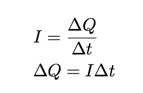
When the copper atom is removed from one plate, it acts as a charge carrier in the complete circuit (battery, wires, copper, solution). If I measure the current in this circuit and record the time, I can use the definition of current to find the total transfer of charge (which would be the transfer of copper ions).

avagadro2

Let’s put this all together.

  • Run current through the copper and copper sulfate.
  • Positive copper ions are transferred from one plate to the other making a change in mass (which I can measure).
  • I can measure the current and time and calculate the total transfer of charge from one plate to another.
  • Since a copper ion has a positive charge of 1 e (charge of an electron), I can get the number of ions transferred.
  • Knowing that 1 mole of copper is 63.546 grams, I should be able to get a relationship between the change in mass and the number of moles—which will give me Avogadro’s number.

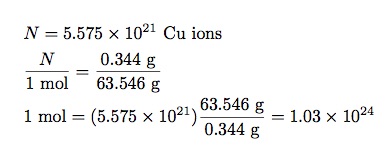
In my rough experiment, I had an electric current of 0.42 Amps for 10 minutes. This gives a total change in charge of 252 Coulombs. Dividing this by the charge of one ion (1.6 x 10⁻¹⁹ C) I get 5.575 x 10²¹ ions. The change in mass of one plate is 0.344 grams. That’s all I need. Now I can write:

avagadro3

That’s not a terrible value for Avogadro’s number. Really, it’s not. If you take the accepted value of 6.022 x 10²³, then my estimate is just off by less than a factor of 2. I call that close enough. The idea works even if my method was a little bit sloppy. Still, my value is better than no value.

Anniversary of the Alaska Purchase

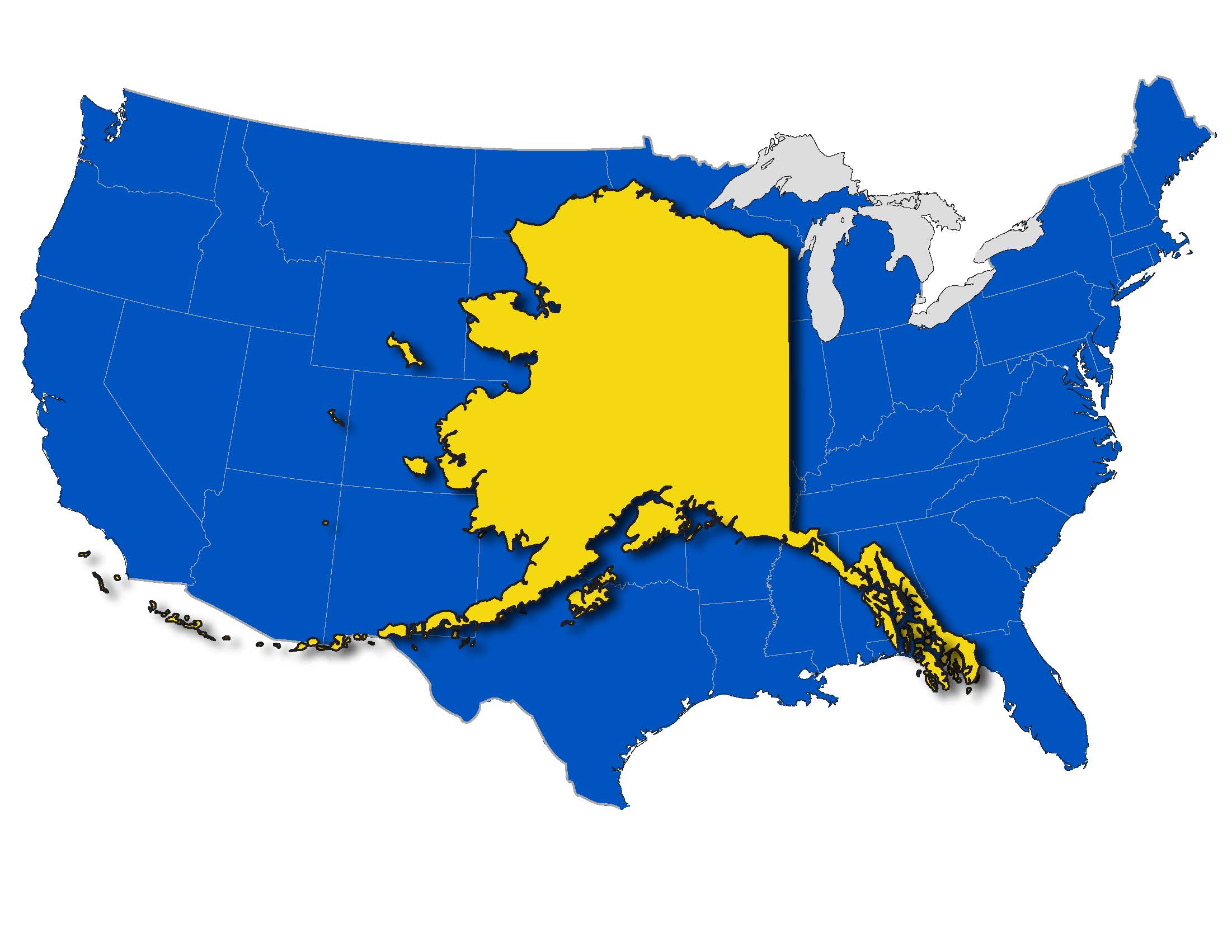
On this day, October 18th, in 1867, the U.S. formally takes possession of Alaska after purchasing the territory from Russia for $7.2 million, or less than two cents an acre. The Alaska purchase comprised 586,412 square miles, about twice the size of Texas

Stay in Your Lane!

The Headless Horseman

The 1949 original by Bing Crosby.
Thurl Ravencroft’s version.
Geoff Castellucci’s version.

Anniversary of Yeager Breaking the Sound Barrier

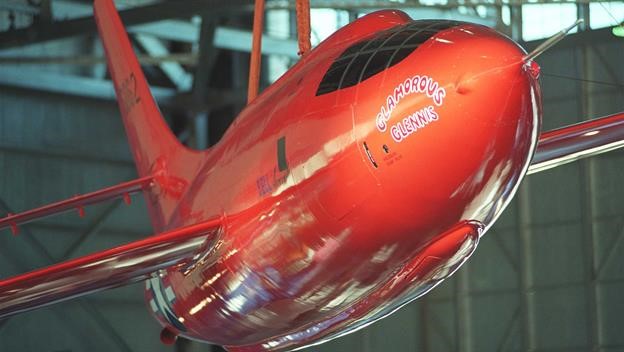
yeager_glamorous_glennis

U.S. Air Force Captain Chuck Yeager becomes the first person to fly faster than the speed of sound.

Yeager, born in Myra, West Virginia, in 1923, was a combat fighter during World War II and flew 64 missions over Europe. He shot down 13 German planes and was himself shot down over France, but he escaped capture with the assistance of the French Underground. After the war, he was among several volunteers chosen to test-fly the experimental X-1 rocket plane, built by the Bell Aircraft Company to explore the possibility of supersonic flight.

For years, many aviators believed that man was not meant to fly faster than the speed of sound, theorizing that transonic drag rise would tear any aircraft apart. All that changed on October 14, 1947, when Yeager flew the X-1 over Rogers Dry Lake in Southern California. The X-1 was lifted to an altitude of 25,000 feet by a B-29 aircraft and then released through the bomb bay, rocketing to 40,000 feet and exceeding 662 miles per hour (the sound barrier at that altitude). The rocket plane, nicknamed “Glamorous Glennis,” was designed with thin, unswept wings and a streamlined fuselage modeled after a .50-caliber bullet.

Because of the secrecy of the project, Bell and Yeager’s achievement was not announced until June 1948. Yeager continued to serve as a test pilot, and in 1953 he flew 1,650 miles per hour in an X-1A rocket plane. He retired from the U.S. Air Force in 1975 with the rank of brigadier general.

Anniversary of White Christmas

White Christmas
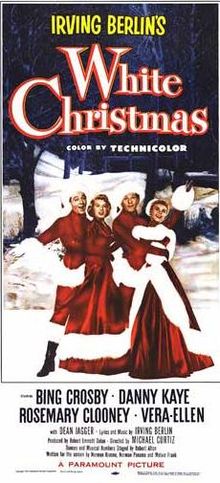
The film was released in theaters October 14, 1954.

White Christmas is a 1954 movie starring Bing Crosby and Danny Kaye that featured the songs of Irving Berlin, including the titular White Christmas.

Wikipedia Link

The Monster Mash

From American Bandstand. October 13, 1964. Bobby “Boris” Pickett.

Halloween Humor

Happy Halloween!

Jack-O-Lanterns

BEST Pumpkin Ever!

Is it October Yet?