Category Archives: Because I Can

The Wreck of the Edmund Fitzgerald

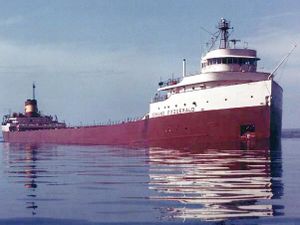
Edmund FitzgeraldThe SS Edmund Fitzgerald, May 1975.

SS Edmund Fitzgerald was a cargo ship that sank suddenly during a gale storm on November 10, 1975, while on Lake Superior. The ship went down without a distress signal in 530 feet (162 m) of water at 46°59.9′N 85°6.6′W, in Canadian waters about 17 miles (15 nm; 27 km) from the entrance to Whitefish Bay. All 29 members of the crew perished. Gordon Lightfoot‘s hit song, The Wreck of the Edmund Fitzgerald, helped make the incident the most famous marine disaster in the history of Great Lakes shipping.

Daylight Savings Time Ends

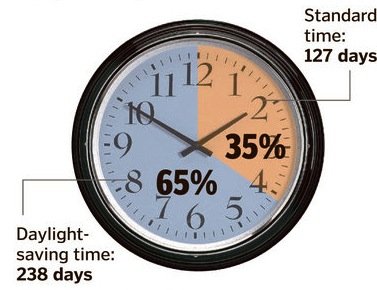
Daylight Savings Time Graph

Clocks turn back an hour at 2 a.m. on Sunday, marking the beginning of standard time for the next few months.

This means that this weekend will be an hour longer than normal, but it will get dark an hour earlier in the evenings.

Standard time will be used through March 8, when clocks will “spring” forward an hour to begin Daylight Saving Time.

Ironically, standard time is no longer the norm. About two-thirds of the days during the year now operate on Daylight Saving Time.

Daylight Saving Time now begins on the second Sunday of March each year and ends on the first Sunday of November.

DST has roots tracing to 1918 in the United States, though not all places always observed it. Currently, it is not used in Hawaii and most of Arizona.

4-year-old makes an unlikely friend at the grocery store

mr-dan

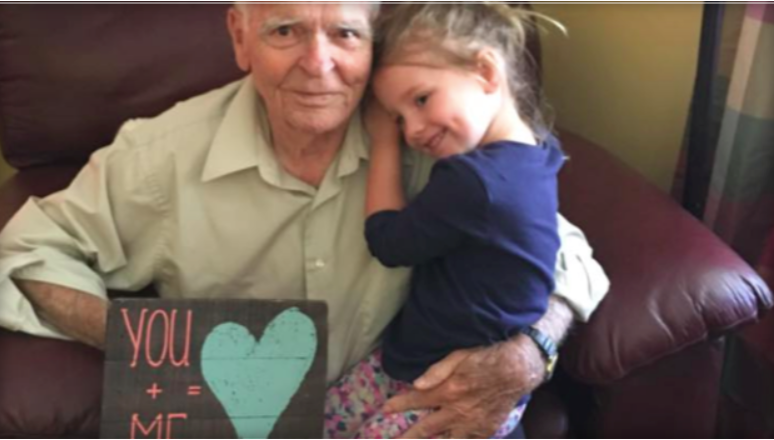
Tara Wood of Augusta, Georgia, was with two of her kids on a routine trip to the grocery store. It was Norah, her 4-year-old’s, birthday.

That’s when they ran across Dan Peterson, known as Mr. Dan. 

“As Mr. Dan walked by, she (Norah) smiled and waved. ‘Hi old person! It’s my birthday!’” said Wood. “He stopped in his tracks, smiled, and said, ‘Well hello, little lady! How old are you today?’ They chatted for a couple of minutes, and we went our separate ways.”

<Read the rest of the story>

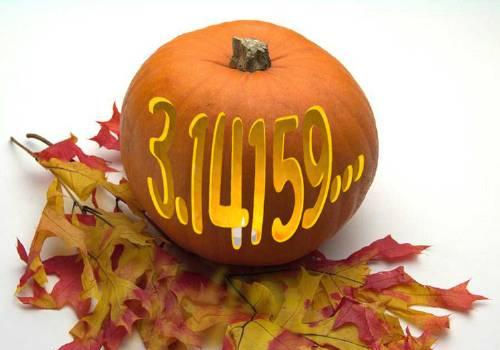
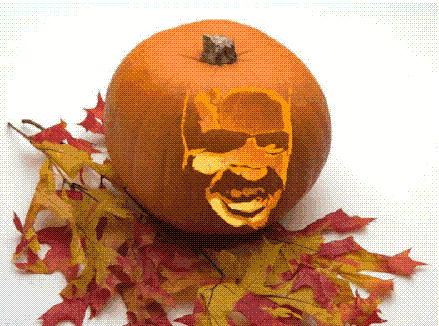
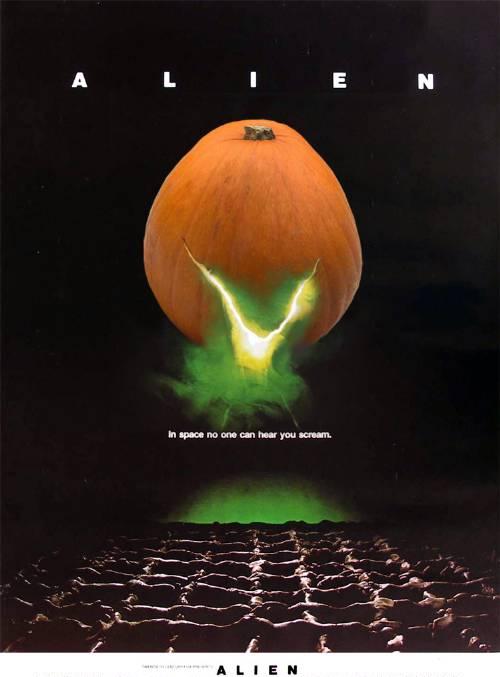
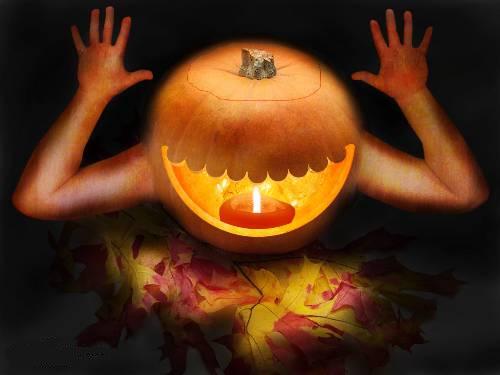
Jack-O-Lanterns

Today…

In 1886, the ticker-tape parade is invented in New York City when office workers spontaneously throw ticket tape into the streets as the Statue of Liberty is dedicated.

In 1929, the New York Stock Exchange crashes in what will be called the Crash of ’29 or Black Tuesday, ending the Great Bull Market of the 1920s and beginning the Great Depression.

In 1960, in Louisville, Kentucky, Cassius Clay (who later takes the name Muhammad Ali) wins his first professional fight.

In 1969, the first-ever computer-to-computer link is established on ARPANET, the precursor to the Internet.

In 1998, Space Shuttle Discovery blasts-off with 77-year old John Glenn on board, making him the oldest person to go into space. He became the first American to orbit Earth on February 20, 1962.

Happy Birthday, Charlie Daniels

Charles Edward Daniels is an American country music, Southern rock, and jazz singer, fiddler, and guitarist.

Charlie Daniels

Charles Daniels (October 28, 1936 – )

Wikipedia Link

RIP Rex Stout

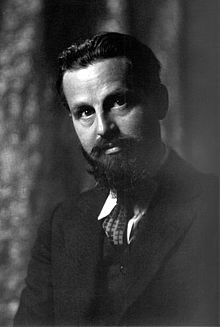
Rex Stout

Rex Stout (December 1, 1886 – October 27, 1975)

Rex Todhunter Stout was an American writer noted for his detective fiction. Stout is best known as the creator of the larger-than-life fictional detective Nero Wolfe, described by reviewer Will Cuppy as “that Falstaff of detectives.”  Wolfe’s assistant Archie Goodwin recorded the cases of the detective genius from 1934 (Fer-de-Lance) to 1975 (A Family Affair).

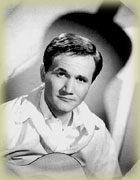
RIP Roger Miller

Roger Miller

Roger Miller (January 2, 1936 – October 25, 1992)

Roger Dean Miller was an American singer, songwriter, musician and actor, best known for his honky-tonk-influenced novelty songs. His most recognized tunes included the chart-topping country music and pop music hits King of the Road, Dang Me, and England Swings, all of which came from the Nashville sound era of the mid-1960s.

Wikipedia Link

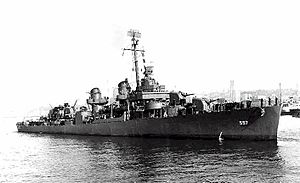
Anniversary of the sinking of the USS Johnston

USS Johnston (DD-557)

USS Johnston (DD-557) was a World War II-era Fletcher-class destroyer in the service of the United States Navy. She was the first Navy ship named after Lieutenant John V. Johnston. The ship was most famous for its bold action in the Battle off Samar. The small “tincan” destroyer armed with nothing larger than 5 inch (127mm) guns and torpedoes would lead the attack of a handful of light ships which had inadvertently been left unprotected in the path of a massive Japanese fleet led by battleships and cruisers. The sacrifices of Johnston and her little escort carrier task unit “Taffy 3” helped stop Admiral Kurita’s powerful Center Force from attacking vulnerable U.S. landing forces, and inflicted greater losses than they suffered.

Wikipedia Link

RIP Don Messick

On October 24, 1997, the animation industry lost a treasure. Don Messick‘s entertainment career spanned seven decades, with forty years of voice work in animation. Messick performed in over 100 animated programs, providing voices for some of the most beloved cartoon characters on television, including Astro and Rudy on “The Jetsons,” Bamm Bamm on “The Flintstones,” Boo Boo and Ranger Smith on “Yogi Bear and Friends,” Dr. Benton Quest and Bandit on “The Adventures of Jonny Quest,” Ricochet Rabbit on “Magilla Gorilla,” Papa Smurf on “The Smurfs,” and his most famous role, Scooby Doo, in countless formats.

Thank you, Don, for one of my most cherished memories of childhood. Scooby Doo was my hero. – James

Mole Day

October 23rd is Mole Day—you know, because 10/23 is like 1023.

THE EARLY HISTORY of chemistry has many interesting stories. Just consider the problems scientists had 200 years ago as they tried to figure out some of the most basic ideas of chemistry. It was clear that there were different substances—for instance, water is different than coal. But it wasn’t so clear what these substances were made of. You could take something like nitrogen gas (N2) and oxygen gas (O2) and combine them together to make another gas (in this case NO2). It thus seemed reasonable to suppose that stuff (molecular gas) was made of smaller stuff (atoms). But the evidence isn’t so easy to see. The primary difficulty is that humans can’t see molecules or atoms. All the scientific ideas have to be built on indirect evidence.

This is where Amedeo Avogadro comes into the picture (of course his real name is Lorenzo Romano Amedeo Carlo Avogadro di Quaregna e di Cerreto—but everyone just calls him Avogadro for obvious reasons). Avogadro developed the following idea:

Avogadro’s Law: If you have two gasses at the same temperature and pressure, they will occupy the same volume only if they contain the same number of molecules.

If you are thinking this is just a version of the Ideal Gas Law, you are correct—but let’s move on to a useful example. Suppose you take water (which is H2O) and run an electric curent through it—called electrolysis. This can break the water molecules into hydrogen gas and oxygen gas (which you could collect). If you had these two gases at the same temperature and pressure, the hydrogen gas would take up twice the volume compared to the oxygen gas. Why? Well, when you break up the water molecule, you get twice as much hydrogen as oxygen. Yes, hydrogen doesn’t just float around as a single atom. Instead it forms a bond with another hydrogen to make H2—but oxygen does the same thing (O2).

In the end, you would know that water is made of both hydrogen and oxygen and that there is twice as much hydrogen as oxygen. That’s a pretty big piece to the whole elements puzzle and you need an idea like Avogadro’s Law to figure it out.

Avogadro’s Number

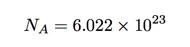
But what about this number of Avogadro? Why is it important and why didn’t Amedeo know what it was? Let’s start with a definition. If I have 12 grams of carbon-12 (not any other isotopes of carbon) then it would have exactly Avogadro’s number of atoms in it. We can write this number as (approximately):
avagadro

So we would call this number of carbon atoms, one mole (sort of like 12 eggs is one dozen).

Why is important? Avogadro’s number is sort of like a bridge. It bridges chemistry and atomic physics. In chemistry we measure things based on their bulk properties. Things like mass (total mass), pressure, volume, temperature. However, when we consider these things from an atomic perspective we look at individual atoms and the momentum, velocity of these particles. Avogadro’s number connects these two ideas and allows us to explore atomic-level things by measuring macroscopic level quantities. It’s a big deal.

But why didn’t Avogadro know this number? Because he didn’t directly come up with the idea. Chemists named the number after Avogadro to honor his contributions to chemistry.

Determining a Value for Avogadro’s Number

If you had a carton with a dozen eggs, you could open up the package and count the number of eggs to find out that one dozen equals twelve. You can’t really do the same thing with a mole of carbon. Carbon atoms are too tiny to see and there are too many to count. We have to find another way to get a value for Avogadro’s number. There are quite a few ways to determine this magic number, but let me go over a simple method.

Start with two pieces of copper placed in a solution of copper-sulfate. When you run an electric current through the system, copper is removed from one plate and deposited on the other plate. This means that one of the plates gains mass and the other loses mass (should be by the same amount).

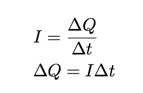
When the copper atom is removed from one plate, it acts as a charge carrier in the complete circuit (battery, wires, copper, solution). If I measure the current in this circuit and record the time, I can use the definition of current to find the total transfer of charge (which would be the transfer of copper ions).
avagadro2

Let’s put this all together.

  • Run current through the copper and copper sulfate.
  • Positive copper ions are transferred from one plate to the other making a change in mass (which I can measure).
  • I can measure the current and time and calculate the total transfer of charge from one plate to another.
  • Since a copper ion has a positive charge of 1 e (charge of an electron), I can get the number of ions transferred.
  • Knowing that 1 mole of copper is 63.546 grams, I should be able to get a relationship between the change in mass and the number of moles—which will give me Avogadro’s number.

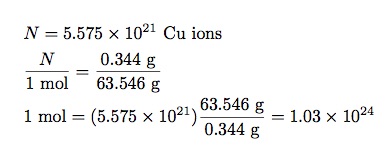
In my rough experiment, I had an electric current of 0.42 Amps for 10 minutes. This gives a total change in charge of 252 Coulombs. Dividing this by the charge of one ion (1.6 x 10⁻¹⁹ C) I get 5.575 x 10²¹ ions. The change in mass of one plate is 0.344 grams. That’s all I need. Now I can write:
avagadro3

That’s not a terrible value for Avogadro’s number. Really, it’s not. If you take the accepted value of 6.022 x 10²³, then my estimate is just off by less than a factor of 2. I call that close enough. The idea works even if my method was a little bit sloppy. Still, my value is better than no value.

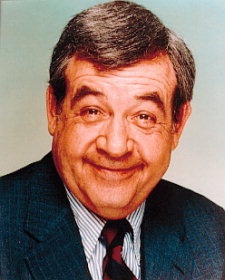
RIP, Mr. Cunningham…

Tom Bosley

Tom Bosley (October 1, 1927 – October 19, 2010)

Thomas Edward “Tom” Bosley was an American actor, best known for his starring and supporting roles on the television shows Happy Days; Murder, She Wrote and Father Dowling Mysteries, as well as the title role in the Pulitzer Prize-winning Fiorello!

Wikipedia Link

Happy Birthday, Robert Jordan

Robert Jordan was the pen name of James Oliver Rigney, Jr. (October 17, 1948 – September 16, 2007), under which he was best known as the author of the bestselling The Wheel of Time fantasy series. He also wrote under the names Reagan O’Neal and Jackson O’Reily.

Happy Birthday, Atari 2600!

Atari 2600

October 14, 1977

Wikipedia Link

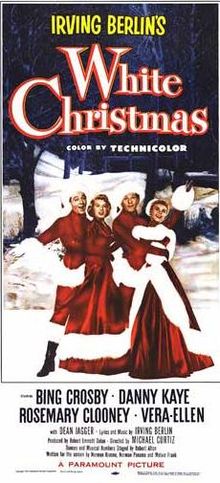
White Christmas

White Christmas

The film was released in theaters October 14, 1954.

White Christmas is a 1954 movie starring Bing Crosby and Danny Kaye that featured the songs of Irving Berlin, including the titular White Christmas.

Wikipedia Link

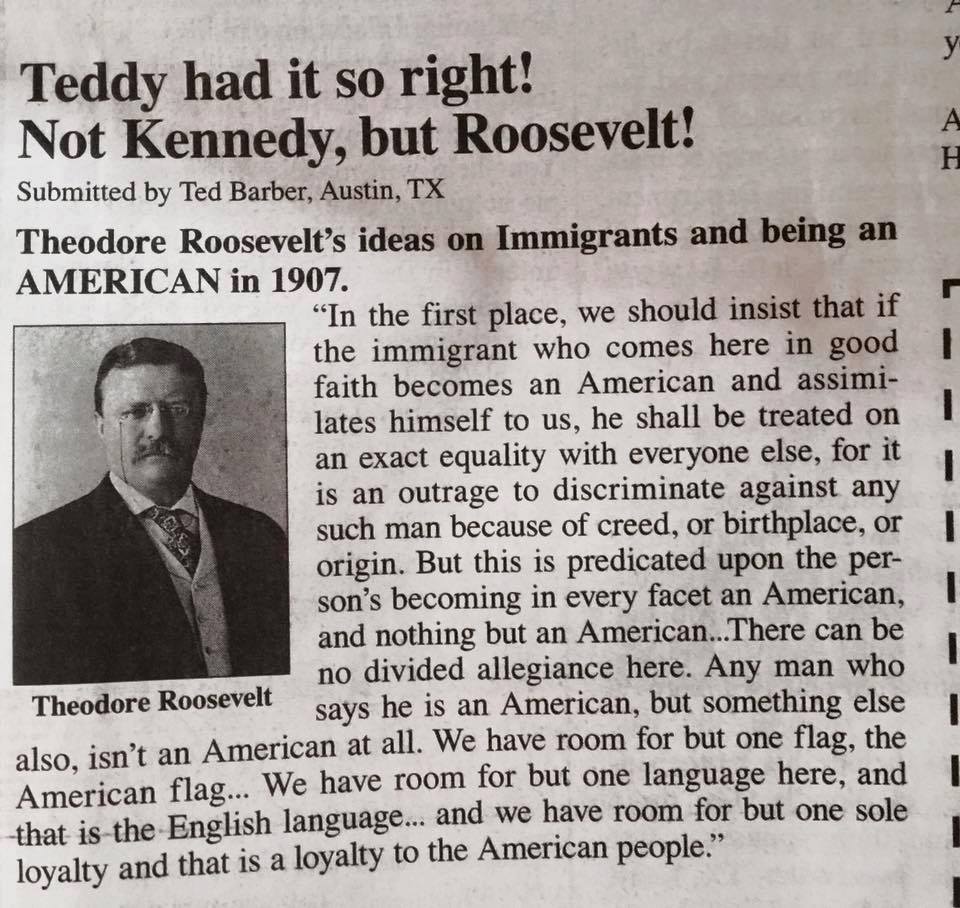
Teddy was right!

teddy

Say NO

say_no

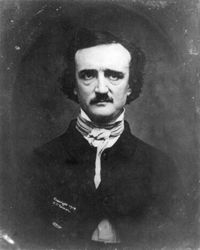
RIP Edgar Allan Poe

Edgar Allan Poe was an American poet, short story writer, editor, critic and one of the leaders of the American Romantic Movement. Best known for his tales of the macabre, Poe was one of the early American practitioners of the short story and a progenitor of detective fiction and crime fiction. He is also credited with contributing to narrative forms of the emergent science fiction genre.

Edgar Allan Poe

Edgar Allan Poe (January 19, 1809 – October 7, 1849)

 Wikipedia Link

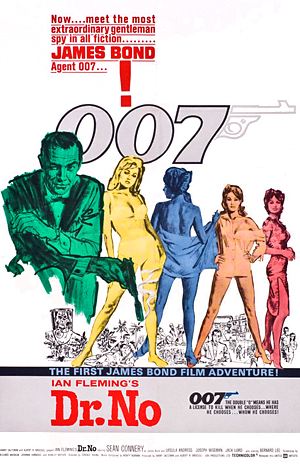
Anniversary of Dr. No

On October 5, 1962, the 1st James Bond film, Dr. No, premiered in London (it would arrive in the US the 8th of May of 1963).

Dr. No poster

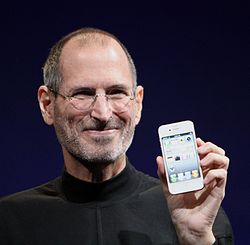
RIP Steve Jobs

Steve Jobs

Steve Jobs (February 24, 1955 – October 5, 2011)

In the late 1970s, Jobs, with Apple co-founder Steve Wozniak, Mike Markkula and others designed, developed, and marketed one of the first commercially successful lines of personal computers, the Apple II series.

From such humble beginings, a legend was born… Jobs was the driving force behind the Macintosh (seeing potential in the mouse-driven GUI); founded NeXT after leaving Apple; aquired a little Lucasfilm’s computer graphics division (which became Pixar), and returned to Apple and become CEO.  When Pixar was aquired by Disney, he became Disney’s largest individual shareholder ever.

What a story… Wikipedia Link