Odds of Being Killed by an Animal
Odds of Being Killed by an Animal
Posted in Because I Can, Critters
The 964-foot-long MSC Magnifica isn’t just a luxurious, $550 million cruise ship. It’s the world’s first 4,500 passenger musical instrument, and it rocked a slow, loooouuud rendition of The White Stripes’ “Seven Nation Army”.
Posted in Because I Can, Music, Planes Trains and Automobiles
This truck. Just look at it. Read its name, chew on it: the Ford F-150 RTR Muscle Truck Concept. Look at all its black trim. My God. I think I need chest hair just to steer it.
This Muscle Truck has a 5.0-liter V8 (five-oh!), pushing out 600 horsepower. It has RTR long-travel coilover suspension and 33-inch tires!





Posted in Because I Can, Planes Trains and Automobiles

Johnny Bohmer has been breaking records in his 2,700 horsepower BADD GT for a while now, first taking it to 250 mph before going up to 275 mph and, then, 283.232 mph, which still stands as the Guinness World Record. On Friday, Bohmer beat that, going 292 mph at the Kennedy Space Center in Florida, though coming back down to zero turned out to be the hardest part.
Bohmer’s original plan was to try and top 300 mph, but he lost some boost pressure once he got into 6th gear, so he had to settle for 292. More harrowing was stopping since, as you can see in the video below, his parachute ripped into two pieces as it deployed.
What happened next? A hard brake, which Bohmer told me, put cracks into the rear rotors.
“When I stopped I thought the car was on fire,” he said. The car was not on fire. But the wheels were very, very hot, and Bohmer said he was just happy he was on a long enough track, or things really could have gone south.
While 292 mph is faster than 283.232, Bohmer did not break the Guinness World Record for a street-legal car because the Guinness people weren’t on hand to certify it. He says they’re pretty serious, too, requiring the car to have air-conditioning that can cool to 60 degrees and the ability to drive for 15 minutes prior to the record attempt, in addition to the normal things, like valid license plates, insurance, and so on, all of which the BADD GT complies with.
Posted in Because I Can, Planes Trains and Automobiles
In 1886, the ticker-tape parade is invented in New York City when office workers spontaneously throw ticket tape into the streets as the Statue of Liberty is dedicated.
In 1929, the New York Stock Exchange crashes in what will be called the Crash of ’29 or Black Tuesday, ending the Great Bull Market of the 1920s and beginning the Great Depression.
In 1960, in Louisville, Kentucky, Cassius Clay (who later takes the name Muhammad Ali) wins his first professional fight.
In 1969, the first-ever computer-to-computer link is established on ARPANET, the precursor to the Internet.
In 1998, Space Shuttle Discovery blasts-off with 77-year old John Glenn on board, making him the oldest person to go into space. He became the first American to orbit Earth on February 20, 1962.
Posted in Because I Can, On This Day

Josh Sundquist, a Paralympian, motivational speaker and author who lost one of his legs to cancer when he was young, is known for his fabulous Halloween costumes that specifically address his missing limb. In the past, Sundquist has dressed up as an IHOP Restaurant sign, a foosball player, a one-legged lampshade, a half-eaten gingerbread man and a really clever flamingo, just to name a few. For 2017, Sunquist brilliantly dressed up as Tigger from the beloved classic children’s series Winnie the Pooh and bounced around on his “tail” in a room full of trampolines at Big Air Buena Park. Sundquist’s wife Ashley dressed up as the eponymous bear and best friend.
Please go read the rest of the story on LaughingSquid.com…
Posted in Because I Can, Humor
Charles Edward Daniels is an American country music, Southern rock, and jazz singer, fiddler, and guitarist.
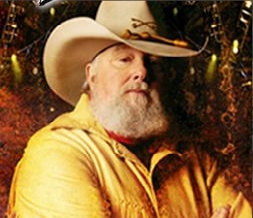
Charles Daniels (October 28, 1936 – )
Posted in Because I Can, Music, On This Day
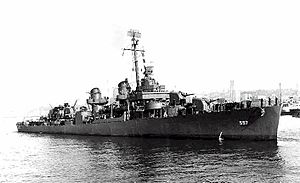
USS Johnston (DD-557) was a World War II-era Fletcher-class destroyer in the service of the United States Navy. She was the first Navy ship named after Lieutenant John V. Johnston. The ship was most famous for its bold action in the Battle off Samar. The small “tincan” destroyer armed with nothing larger than 5 inch (127mm) guns and torpedoes would lead the attack of a handful of light ships which had inadvertently been left unprotected in the path of a massive Japanese fleet led by battleships and cruisers. The sacrifices of Johnston and her little escort carrier task unit “Taffy 3” helped stop Admiral Kurita’s powerful Center Force from attacking vulnerable U.S. landing forces, and inflicted greater losses than they suffered.
Posted in Because I Can, On This Day, Patriotic, Planes Trains and Automobiles
Posted in Because I Can
Denny’s has been famous for decades for their 24-hour promise all 365 days of the year—if you want breakfast food late at night on a Sunday, Denny’s has you covered. But the problem with this policy took a few years to show itself: When almost all the Denny’s locations closed for Christmas Day in 1988, many stores realized that they didn’t have any keys, or even locks, since they never used them. All told, 700 of the 1221 restaurants needed to get new locks installed for the holiday.
Posted in Because I Can, Food
I love Mental Floss!
From heartbroken brides to spectral oenophiles, America is a melting pot of otherworldly entities who have staked a spiritual claim in every crack and cranny of the country—as well as in the local community’s consciousness. No matter what city or state you hail from, you no doubt grew up hearing terrifying tales of one ghost or another with whom you shared a zip code. We all did. Here are the spookiest ghost stories from all 50 states.
Posted in Because I Can
October 23rd is Mole Day—you know, because 10/23 is like 1023.
THE EARLY HISTORY of chemistry has many interesting stories. Just consider the problems scientists had 200 years ago as they tried to figure out some of the most basic ideas of chemistry. It was clear that there were different substances—for instance, water is different than coal. But it wasn’t so clear what these substances were made of. You could take something like nitrogen gas (N2) and oxygen gas (O2) and combine them together to make another gas (in this case NO2). It thus seemed reasonable to suppose that stuff (molecular gas) was made of smaller stuff (atoms). But the evidence isn’t so easy to see. The primary difficulty is that humans can’t see molecules or atoms. All the scientific ideas have to be built on indirect evidence.
This is where Amedeo Avogadro comes into the picture (of course his real name is Lorenzo Romano Amedeo Carlo Avogadro di Quaregna e di Cerreto—but everyone just calls him Avogadro for obvious reasons). Avogadro developed the following idea:
Avogadro’s Law: If you have two gasses at the same temperature and pressure, they will occupy the same volume only if they contain the same number of molecules.
If you are thinking this is just a version of the Ideal Gas Law, you are correct—but let’s move on to a useful example. Suppose you take water (which is H2O) and run an electric curent through it—called electrolysis. This can break the water molecules into hydrogen gas and oxygen gas (which you could collect). If you had these two gases at the same temperature and pressure, the hydrogen gas would take up twice the volume compared to the oxygen gas. Why? Well, when you break up the water molecule, you get twice as much hydrogen as oxygen. Yes, hydrogen doesn’t just float around as a single atom. Instead it forms a bond with another hydrogen to make H2—but oxygen does the same thing (O2).
In the end, you would know that water is made of both hydrogen and oxygen and that there is twice as much hydrogen as oxygen. That’s a pretty big piece to the whole elements puzzle and you need an idea like Avogadro’s Law to figure it out.
But what about this number of Avogadro? Why is it important and why didn’t Amedeo know what it was? Let’s start with a definition. If I have 12 grams of carbon-12 (not any other isotopes of carbon) then it would have exactly Avogadro’s number of atoms in it. We can write this number as (approximately):
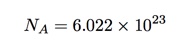
So we would call this number of carbon atoms, one mole (sort of like 12 eggs is one dozen).
Why is important? Avogadro’s number is sort of like a bridge. It bridges chemistry and atomic physics. In chemistry we measure things based on their bulk properties. Things like mass (total mass), pressure, volume, temperature. However, when we consider these things from an atomic perspective we look at individual atoms and the momentum, velocity of these particles. Avogadro’s number connects these two ideas and allows us to explore atomic-level things by measuring macroscopic level quantities. It’s a big deal.
But why didn’t Avogadro know this number? Because he didn’t directly come up with the idea. Chemists named the number after Avogadro to honor his contributions to chemistry.
If you had a carton with a dozen eggs, you could open up the package and count the number of eggs to find out that one dozen equals twelve. You can’t really do the same thing with a mole of carbon. Carbon atoms are too tiny to see and there are too many to count. We have to find another way to get a value for Avogadro’s number. There are quite a few ways to determine this magic number, but let me go over a simple method.
Start with two pieces of copper placed in a solution of copper-sulfate. When you run an electric current through the system, copper is removed from one plate and deposited on the other plate. This means that one of the plates gains mass and the other loses mass (should be by the same amount).
When the copper atom is removed from one plate, it acts as a charge carrier in the complete circuit (battery, wires, copper, solution). If I measure the current in this circuit and record the time, I can use the definition of current to find the total transfer of charge (which would be the transfer of copper ions).
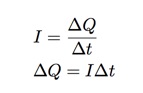
Let’s put this all together.
In my rough experiment, I had an electric current of 0.42 Amps for 10 minutes. This gives a total change in charge of 252 Coulombs. Dividing this by the charge of one ion (1.6 x 10⁻¹⁹ C) I get 5.575 x 10²¹ ions. The change in mass of one plate is 0.344 grams. That’s all I need. Now I can write:
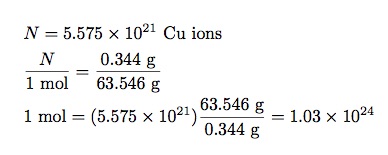
That’s not a terrible value for Avogadro’s number. Really, it’s not. If you take the accepted value of 6.022 x 10²³, then my estimate is just off by less than a factor of 2. I call that close enough. The idea works even if my method was a little bit sloppy. Still, my value is better than no value.
Posted in Because I Can
Your jack-o’-lantern looks so good, bright and orange next to your front door, harbinger of the season, home to a flickering tea light at night. Or does it? Has it started, maybe, to shrivel and shrink? Is it perhaps a tiny bit stinky? Even if it’s still looking good, what assurance do you have that it will make it to Halloween?
Whether you carved a pumpkin a week ago or are only just getting your knives out now, there’s plenty you can do to prevent them from rotting, according to Apartment Therapy.
First, if you haven’t carved your pumpkin or aren’t going to, give that baby a bleach bath. Find a tub or bucket big enough to hold your pumpkin, and mix one to two tablespoons of bleach for each gallon of water. Dunk that pump’ and soak it for ten minutes. If you’re going to carve, let the pumpkin dry completely first.
To protect an already-carved pumpkin, make a bleach spray (with the same proportions) and use it on the outside and carved surfaces of your pumpkin. (Let it dry upside-down so bleach water doesn’t pool inside.) Re-spray every few days.
Posted in Because I Can
What do you do when your highly-successful reality show goes out with a bang? If you’re Discovery-owned Science Channel, you quickly reboot it and find new hosts to replace the iconic ones. If you’re a fan of the original and willing to give the new guys a chance to prove themselves to be as awesome as Adam and Jamie are, then you’re in luck. The new version of Mythbusters, a much-loved show that reveled in DIY gadgetry and science, is set to air its first of 14 episodes on November 15th.
Posted in Because I Can, The Little Screen (Television)
Lake Minnewanka in Alberta was once home to a bustling resort, but today its eerie landscape can only be seen by scuba divers

Read more here.
Posted in Because I Can
The Wara Art Festival in Japan’s Niigata Prefecture is a showcase for art, but it’s also a harvest festival. Giant sculptures are constructed of rice straw leftover for this year’s rice harvest.
The Wara Art Festival all started in 2006 when the local district reached out to Musashino Art University to seek guidance on transforming their abundant amount of rice straw into art. And in 2008, the very first Wara Art Festival was held. Since then, every year the school sends art students up to Niigata to assist in creating sculptures made out of rice straw. The festivities have ended but the sculptures are on display through October 31, 2017.
In this video, watch students from Musashino Art University build one of the sculptures for 2017.
Posted in Because I Can, Events

The film was released in theaters October 14, 1954.
White Christmas is a 1954 movie starring Bing Crosby and Danny Kaye that featured the songs of Irving Berlin, including the titular White Christmas.
Posted in Because I Can, On This Day, The Little Screen (Television)