Category Archives: Because I Can

Happy Birthday, Bocephus!

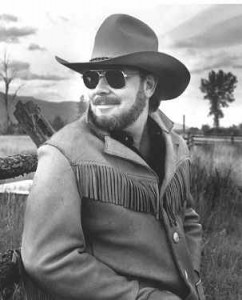
Hank Williams, Jr. is an American country and southern rock artist, son of country music pioneer Hank Williams and father of Hank III and Holly Williams.

Known by the nickname Bocephus (a name given to him by his father because he thought his son as a baby resembled a TV ventriloquist dummy named Bocephus), he was raised by his mother Audrey after his father’s death in 1953. He was destined for fame, being taught how to play piano by Jerry Lee Lewis and guitar by Johnny Cash. He began performing when eight years old.

Hank Williams, Jr.

Hank Williams, Jr. (May 26, 1949 – )

Wikipedia Link

Memorial Day

Flag at Half Mast

Memorial Day

Memorial Day is a United States federal holiday observed on the last Monday of May. Formerly known as Decoration Day, it commemorates U.S. men and women who died while in the military service. First enacted to honor Union soldiers of the American Civil War (it is celebrated near the day of reunification after the civil war), it was expanded after World War I to include American casualties of any war or military action.

It Has Always Been The Soldier

Towel Day

Towel Day

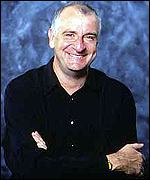
Today is Towel Day, a day of remembrance for Douglas Adams, author of the Hitchhikers’ Guide to the Galaxy. Observe it by carrying a towel all day.

Anniversary of Star Wars

Star Wars

May 25, 1977, Memorial Day weekend opens with an intergalactic bang as the first of George Lucas’ blockbuster Star Wars movies hits American theaters.

Wikipedia Link

Apollo 13 Crew immortalized

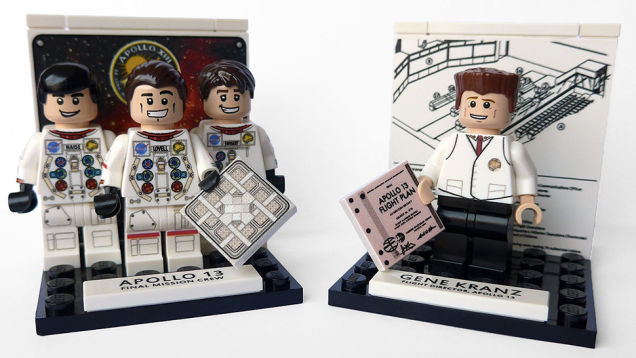
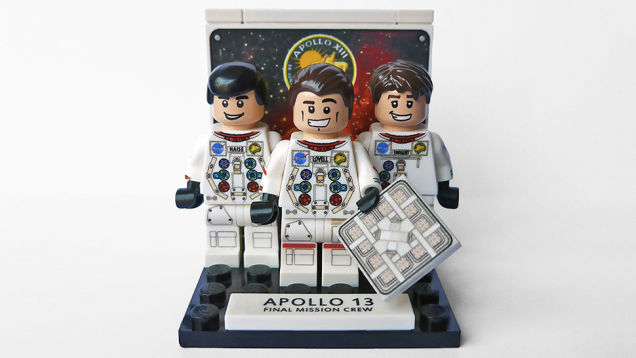
Apollo 13 Minifigs

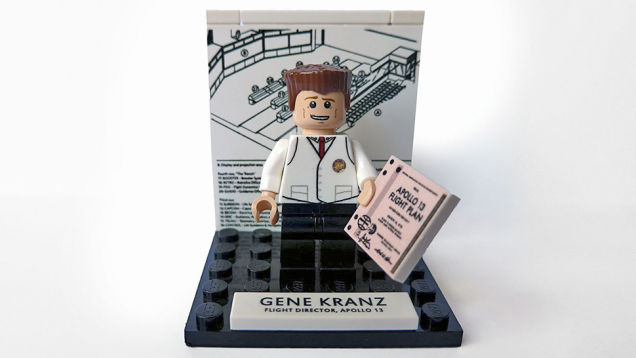
April 10, 2015 was actually the 45th anniversary of the Apollo 13 near-disaster, and to commemorate the occasion UK-based Minifigs.me created tiny Lego versions of the three astronauts involved: James Lovell, Fred Haise, Jack Swigert. But also flight director Gene Kranz who played an important role in getting Apollo 13 home safely.

apollo_13_lego_crew

The astronauts are available in a set of three for about $57, or they can be purchased individually for about $20 each. A little pricey, but remember these aren’t officially from Lego. These are custom-made minifigs with highly-accurate spacesuits and likenesses as close to the real astronauts as possible.

apollo_13_lego_kranz

The $24 Gene Kranz figure also comes with his iconic flattop haircut, and a tiny version of the Apollo 13 flight plan.

Measure Twic

measure_twic

Do NOT Open

do_not_open

Apology Form

apology

Click for larger version

So Long, and Thanks for All the Fish!

Douglas Adams

Douglas Noël Adams (March 11, 1952 – May 11, 2001)

Douglas Adams was an English author, comic radio dramatist, and musician. He is best known as author of the Hitchhiker’s Guide to the Galaxy series. Hitchhiker’s began on radio, and developed into a “trilogy” of five books (which sold more than fifteen million copies during his lifetime) as well as a television series, a towel, a live theater show, a drink, a comic book series, a computer game and a feature film that was completed after Adams’ death. He was known to some fans as Bop Ad (after his illegible signature), or by his initials “DNA”.

So Long, and Thanks for All the Fish is the fourth book of the Hitchhiker’s Guide to the Galaxy “trilogy”. Its title is the message left by the dolphins when they departed Planet Earth just before it was demolished to make way for a hyperspace bypass, as described in The Hitchhiker’s Guide to the Galaxy. The phrase has since been adopted by some science fiction fans as a humorous way to say “goodbye.”

Wikipedia Link

Happy Mother’s Day

Happy Mother's Day

Being a Mother

Somebody…

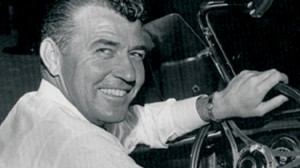
RIP Carroll Shelby

Carroll Shelby

Carroll Hall Shelby (January 11, 1923 – May 10, 2012)

Carroll Shelby was an American automotive designer and racing driver. He was most well known for making the AC Motors-based Shelby American Cobra and later the Mustang-based performance cars for Ford Motor Company known as Mustang Cobras which he has done since 1965. His company, Shelby American Inc., founded in 1962, currently sells modified Ford vehicles, as well as performance parts.

The one-time chicken farmer had more than a half-dozen successful careers during his long life. Among them: champion race car driver, racing team owner, automobile manufacturer, automotive consultant, safari tour operator, raconteur, chili entrepreneur and philanthropist.

“He’s an icon in the medical world and an icon in the automotive world,” his longtime friend, Dick Messer, executive director of Los Angeles’ Petersen Automotive Museum, once said of Shelby.

“His legacy is the diversity of his life,” Messer said. “He’s incredibly innovative. His life has always been the reinvention of Carroll Shelby.”

Shelby first made his name behind the wheel of a car, winning France’s grueling 24 Hours of Le Mans sports car race with teammate Ray Salvadori in 1959. He already was suffering serious heart problems and ran the race “with nitroglycerin pills under his tongue,” Messer once noted.

He had turned to the race-car circuit in the 1950s after his chicken ranch failed. He won dozens of races in various classes throughout the 1950s and was twice named Sports Illustrated’s Driver of the Year.

Soon after his win at Le Mans, he gave up racing and turned his attention to designing high-powered “muscle cars” that eventually became the Shelby Cobra and the Mustang Shelby GT500.

The Cobra, which used Ford engines and a British sport car chassis, was the fastest production model ever made when it was displayed at the New York Auto Show in 1962.

A year later, Cobras were winning races over Corvettes, and in 1964 the Rip Chords had a Top 5 hit on the Billboard pop chart with “Hey, Little Cobra.” (“Spring, little Cobra, getting ready to strike, spring, little Cobra, with all of your might. Hey, little Cobra, don’t you know you’re gonna shut ’em down?”)

In 2007, an 800-horsepower model of the Cobra made in 1966, once Shelby’s personal car, sold for $5.5 million at auction, a record for an American car.

“It’s a special car. It would do just over three seconds to 60 (mph), 40 years ago,” Shelby told the crowd before the sale, held in Scottsdale, Ariz.

It was Lee Iacocca, then head of Ford Motor Co., who had assigned Shelby the task of designing a fastback model of Ford’s Mustang that could compete against the Corvette for young male buyers.

Turning a vehicle he had once dismissed as “a secretary car” into a rumbling, high-performance model was “the hardest thing I’ve done in my life,” Shelby recalled in a 2000 interview with The Associated Press.

That car and the Shelby Cobra made his name a household word in the 1960s.

Read more »

Scythe vs. Weedwhacker

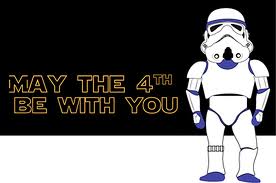
May the 4th Be With You

May the 4th

RIP Wally Shirra

Walter Marty Schirra, Jr. (March 12, 1923 – May 3, 2007) was one of the original Mercury 7 astronauts chosen for the Project Mercury, America’s first effort to put men in space. He was the only man to fly in all of America’s first three space programs (Mercury, Gemini and Apollo).

He logged a total of 295 hours and 15 minutes in space.

Wikipedia Link

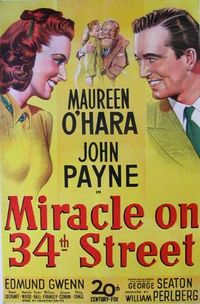
Anniversary of Miracle on 34th Street

Miracle on 34th Street (also titled The Big Heart in the UK) is a 1947 film which tells the story of a gentle old man, working as a Santa Claus at Macy’s department store in New York City, who contends that he is the real deal.

Miracle on 34th Street

Wikipedia Link

The film was released in theaters May 2, 1947.


Awesome Aviation Picture

awesome _aviation_picture
One of Europe’s top aviation photographers, Frank Crebas, was along for the ride in a F-16BM as Dutch F-16s intercepted a pair of B-52H Stratofortresses during Exercise Polar Growl. The result was this amazing image of an F-16 over a B-52 with its shadow perfectly aligned on the big bomber’s spine.

In Remembrance – Nuclear Disaster at Chernobyl

NUCLEAR DISASTER AT CHERNOBYL:

On April 26, 1986, the world’s worst nuclear power plant accident occurs at the Chernobyl nuclear power station in the Soviet Union. Thirty-two people died and dozens more suffered radiation burns in the opening days of the crisis, but only after Swedish authorities reported the fallout did Soviet authorities reluctantly admit that an accident had occurred.

The Chernobyl station was situated at the settlement of Pripyat, about 65 miles north of Kiev in the Ukraine. Built in the late 1970s on the banks of the Pripyat River, Chernobyl had four reactors, each capable of producing 1,000 megawatts of electric power. On the evening of April 25, 1986, a group of engineers began an electrical-engineering experiment on the Number 4 reactor. The engineers, who had little knowledge of reactor physics, wanted to see if the reactor’s turbine could run emergency water pumps on inertial power.

As part of their poorly designed experiment, the engineers disconnected the reactor’s emergency safety systems and its power-regulating system. Next, they compounded this recklessness with a series of mistakes: They ran the reactor at a power level so low that the reaction became unstable, and then removed too many of the reactor’s control rods in an attempt to power it up again. The reactor’s output rose to more than 200 megawatts but was proving increasingly difficult to control. Nevertheless, at 1:23 a.m. on April 26, the engineers continued with their experiment and shut down the turbine engine to see if its inertial spinning would power the reactor’s water pumps. In fact, it did not adequately power the water pumps, and without cooling water the power level in the reactor surged.

To prevent meltdown, the operators reinserted all the 200-some control rods into the reactor at once. The control rods were meant to reduce the reaction but had a design flaw: graphite tips. So, before the control rod’s five meters of absorbent material could penetrate the core, 200 graphite tips simultaneously entered, thus facilitating the reaction and causing an explosion that blew off the heavy steel and concrete lid of the reactor. It was not a nuclear explosion, as nuclear power plants are incapable of producing such a reaction, but was chemical, driven by the ignition of gases and steam that were generated by the runaway reaction. In the explosion and ensuing fire, more than 50 tons of radioactive material were released into the atmosphere, where it was carried by air currents.

On April 27, Soviet authorities began an evacuation of the 30,000 inhabitants of Pripyat. A cover-up was attempted, but on April 28 Swedish radiation monitoring stations, more than 800 miles to the northwest of Chernobyl, reported radiation levels 40 percent higher than normal. Later that day, the Soviet news agency acknowledged that a major nuclear accident had occurred at Chernobyl.

In the opening days of the crisis, 32 people died at Chernobyl and dozens more suffered radiation burns. The radiation that escaped into the atmosphere, which was several times that produced by the atomic bombs dropped on Hiroshima and Nagasaki, was spread by the wind over Northern and Eastern Europe, contaminating millions of acres of forest and farmland. An estimated 5,000 Soviet citizens eventually died from cancer and other radiation-induced illnesses caused by their exposure to the Chernobyl radiation, and millions more had their health adversely affected. In 2000, the last working reactors at Chernobyl were shut down and the plant was officially closed.

Linkage

linkage

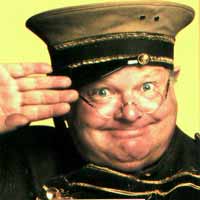
RIP Benny Hill

Alfred Hawthorn Hill, better known as Benny Hill, was a prolific English comic, actor & singer, best known for his television program, The Benny Hill Show. Since its debut in 1955 his television show has been sold to over 140 countries worldwide, with viewership in the billions.

Benny Hill

Alfred Hawthorn Hill (January 21, 1924 – April 20, 1992)

Wikipedia Link

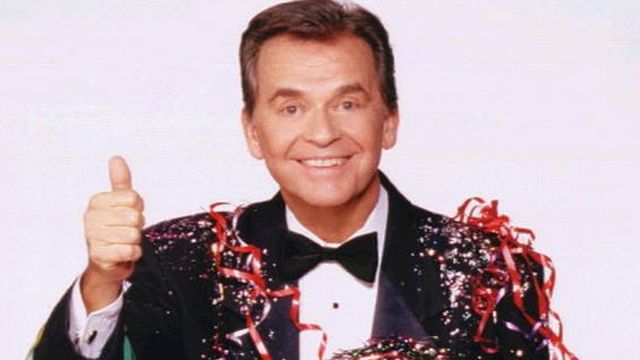
RIP Dick Clark… America’s Oldest Teenager.

Bandstand in the 50s, New Year’s Rockin’ Eves for the past 30 years, Dick Clark has been around and seen (and introduced) it all… he passed away as the “World’s Oldest Teenager” at the age of 82.

Dick Clark

Richard Wagstaff “Dick” Clark (November 30, 1929 – April 18, 2012)


Dick Clark was an American radio and television personality, best known for hosting American television’s longest-running variety show, American Bandstand, from 1957 to 1987. He also hosted the game show Pyramid and Dick Clark’s New Year’s Rockin’ Eve, which transmitted Times Square’s New Year’s Eve celebrations worldwide.

As host of American Bandstand, with his strong communication skills, Clark was a “primary force in legitimizing rock and roll,” not only to teenagers, but also to America’s adult population. The show gave many new music artists their first exposure to national audiences, including Ike and Tina Turner, Smokey Robinson and the Miracles, Stevie Wonder, Talking Heads and Simon & Garfunkel. His shows were among the first where blacks and whites performed on the same stage and the live audience seating was desegregated. Singer Paul Anka claimed that Bandstand was responsible for creating a “youth culture.” Due to his youthful appearance, Clark was often referred to as “America’s oldest teenager”.

As a successful businessperson, he served as chairman and chief executive officer of Dick Clark Productions, part of which he sold off in his later years. He also founded the American Bandstand Diner, a restaurant chain modeled after the Hard Rock Cafe. In 1973, he created and produced the annual American Music Awards show, similar to the Grammy Awards.

Clark suffered a massive stroke in December 2004. With speech ability still impaired, Clark returned to his New Year’s Rockin’ Eve show on December 31, 2005/January 1, 2006. Subsequently, he appeared at the Emmy Awards on August 27, 2006, and every New Year’s Rockin’ Eve show through the 2011/2012 show. Clark died on April 18, 2012, after suffering a heart attack following a medical procedure.

Wikipedia Link