Category Archives: Because I Can

Congress adopts the Stars and Stripes

During the American Revolution, the Continental Congress adopts a resolution stating that “the flag of the United States be thirteen alternate stripes red and white” and that “the Union be thirteen stars, white in a blue field, representing a new Constellation.” The national flag, which became known as the “Stars and Stripes,” was based on the “Grand Union” flag, a banner carried by the Continental Army in 1776 that also consisted of 13 red and white stripes. According to legend, Philadelphia seamstress Betsy Ross designed the new canton for the Stars and Stripes, which consisted of a circle of 13 stars and a blue background, at the request of General George Washington. Historians have been unable to conclusively prove or disprove this legend.

With the entrance of new states into the United States after independence, new stripes and stars were added to represent new additions to the Union. In 1818, however, Congress enacted a law stipulating that the 13 original stripes be restored and that only stars be added to represent new states.

On June 14, 1877, the first Flag Day observance was held on the 100th anniversary of the adoption of the Stars and Stripes. As instructed by Congress, the U.S. flag was flown from all public buildings across the country. In the years after the first Flag Day, several states continued to observe the anniversary, and in 1949 Congress officially designated June 14 as Flag Day, a national day of observance.

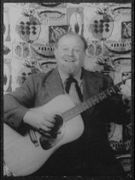
Happy Birthday, Burle Ives

Burl Icle Ivanhoe Ives was an acclaimed American folk music singer, author and actor.

Possibly his most remembered role today is as narrator Sam the Snowman in the Rankin-Bass animated television special, Rudolph the Red-Nosed Reindeer (1964).

Ives’ “A Holly Jolly Christmas” is a very popular tune during the Christmas season, as it’s frequently played on the radio and was featured in the Rudolph the Red-Nosed Reindeer special.

Burl Ives

Burl Icle Ivanhoe Ives (June 14, 1909 – April 14, 1995)

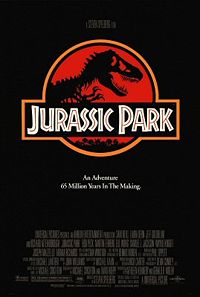
Anniversary of Jurassic Park

Jurassic Park Poster

June 11, 1993

Wikipedia Link

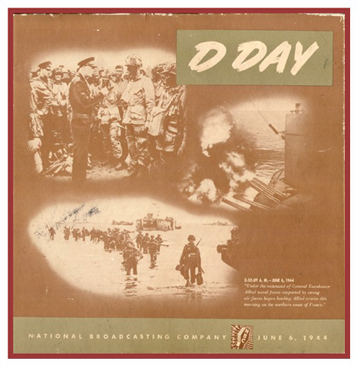
D-Day

D DayJune 6, 1944
Flag at Half Mast

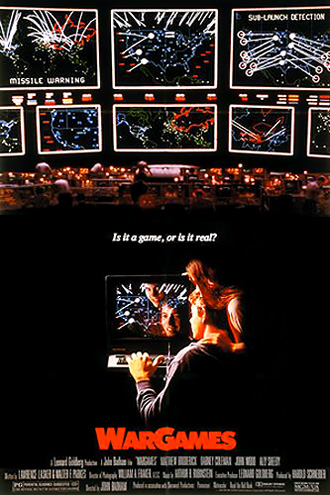
Anniversary of WarGames

In 1983,

A Computerized Voice Asked You…

Would You Like To Play A Game?

Wikipedia Link

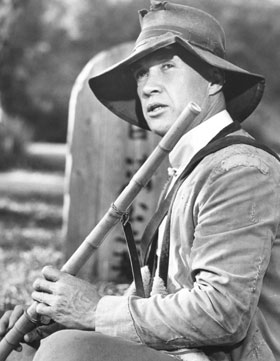
RIP David Carradine

David Carradine

David Carradine in “Kung Fu”

David Carradine (December 8, 1936 – June 3, 2009), born John Arthur Carradine, was an American character actor, best known for his role as Kwai Chang Caine in the 1970s television series, Kung Fu and its 1990s sequel series, Kung Fu: The Legend Continues. He was a member of a productive acting family dynasty that began with his father, John Carradine. His acting career, which included major and minor roles on stage, television and cinema, spanned over four decades. A prolific “B” movie actor, he appeared in more than 100 feature films and was nominated four times for a Golden Globe Award. The last nomination was for his title role in Quentin Tarantino’s Kill Bill.

Wikipedia Link

Happy Birthday, Big Ben

The famous tower clock known as Big Ben, located at the top of the 320-foot-high St. Stephen’s Tower, rings out over the Houses of Parliament in Westminster, London, for the first time on this day, May 31st,  in 1859.

After a fire destroyed much of the Palace of Westminster–the headquarters of the British Parliament–in October 1834, a standout feature of the design for the new palace was a large clock atop a tower. The royal astronomer, Sir George Airy, wanted the clock to have pinpoint accuracy, including twice-a-day checks with the Royal Greenwich Observatory. While many clockmakers dismissed this goal as impossible, Airy counted on the help of Edmund Beckett Denison, a formidable barrister known for his expertise in horology, or the science of measuring time.

Denison’s design, built by the company E.J. Dent & Co., was completed in 1854; five years later, St. Stephen’s Tower itself was finished. Weighing in at more than 13 tons, its massive bell was dragged to the tower through the streets of London by a team of 16 horses, to the cheers of onlookers. Once it was installed, Big Ben struck its first chimes on May 31, 1859. Just two months later, however, the heavy striker designed by Denison cracked the bell. Three more years passed before a lighter hammer was added and the clock went into service again. The bell was rotated so that the hammer would strike another surface, but the crack was never repaired.

The name “Big Ben” originally just applied to the bell but later came to refer to the clock itself. Two main stories exist about how Big Ben got its name. Many claim it was named after the famously long-winded Sir Benjamin Hall, the London commissioner of works at the time it was built. Another famous story argues that the bell was named for the popular heavyweight boxer Benjamin Caunt, because it was the largest of its kind.

Even after an incendiary bomb destroyed the chamber of the House of Commons during the Second World War, St. Stephen’s Tower survived, and Big Ben continued to function. Its famously accurate timekeeping is regulated by a stack of coins placed on the clock’s huge pendulum, ensuring a steady movement of the clock hands at all times. At night, all four of the clock’s faces, each one 23 feet across, are illuminated. A light above Big Ben is also lit to let the public know when Parliament is in session.

I’d Buy A Lottery Ticket

Lottery

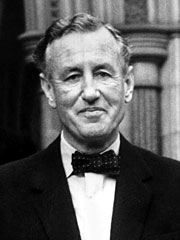
Happy Birthday, Ian Fleming!


Ian Fleming

Ian Lancaster Fleming (May 28, 1908 – August 12, 1964)

Ian Lancaster Fleming  was an English author and journalist, best remembered for writing the James Bond series of novels as well as the children’s story, Chitty Chitty Bang Bang.

Wikipedia Link

Veteran

A veteran is someone who, at one point in his life, wrote a blank check made payable to his country for an amount of ‘up to and including my life.’

Memorial Day

Flag at Half Mast

Memorial Day

Memorial Day is a United States federal holiday observed on the last Monday of May. Formerly known as Decoration Day, it commemorates U.S. men and women who died while in the military service. First enacted to honor Union soldiers of the American Civil War (it is celebrated near the day of reunification after the civil war), it was expanded after World War I to include American casualties of any war or military action.

It Has Always Been The Soldier

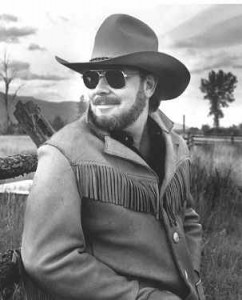
Happy Birthday, Bocephus!

Hank Williams, Jr. is an American country and southern rock artist, son of country music pioneer Hank Williams and father of Hank III and Holly Williams.

Known by the nickname Bocephus (a name given to him by his father because he thought his son as a baby resembled a TV ventriloquist dummy named Bocephus), he was raised by his mother Audrey after his father’s death in 1953. He was destined for fame, being taught how to play piano by Jerry Lee Lewis and guitar by Johnny Cash. He began performing when eight years old.

Hank Williams, Jr.

Hank Williams, Jr. (May 26, 1949 – )

Wikipedia Link

Anniversary of Star Wars

Star Wars

May 25, 1977, Memorial Day weekend opens with an intergalactic bang as the first of George Lucas’ blockbuster Star Wars movies hits American theaters.

Wikipedia Link

Towel Day

Towel Day

Today is Towel Day, a day of remembrance for Douglas Adams, author of the Hitchhikers’ Guide to the Galaxy. Observe it by carrying a towel all day.

Link

Happy Mother’s Day

Happy Mother's Day

Being a Mother

Somebody…

So Long, and Thanks for All the Fish!

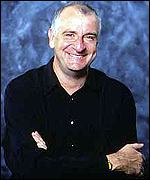
Douglas Adams

Douglas Noël Adams (March 11, 1952 – May 11, 2001)

Douglas Adams was an English author, comic radio dramatist, and musician. He is best known as author of the Hitchhiker’s Guide to the Galaxy series. Hitchhiker’s began on radio, and developed into a “trilogy” of five books (which sold more than fifteen million copies during his lifetime) as well as a television series, a towel, a live theater show, a drink, a comic book series, a computer game and a feature film that was completed after Adams’ death. He was known to some fans as Bop Ad (after his illegible signature), or by his initials “DNA”.

So Long, and Thanks for All the Fish is the fourth book of the Hitchhiker’s Guide to the Galaxy “trilogy”. Its title is the message left by the dolphins when they departed Planet Earth just before it was demolished to make way for a hyperspace bypass, as described in The Hitchhiker’s Guide to the Galaxy. The phrase has since been adopted by some science fiction fans as a humorous way to say “goodbye.”

Wikipedia Link

RIP Carroll Shelby

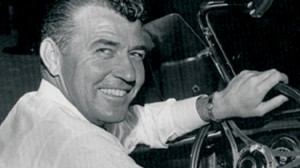
Carroll Shelby

Carroll Hall Shelby (January 11, 1923 – May 10, 2012)

Carroll Shelby was an American automotive designer and racing driver. He was most well known for making the AC Motors-based Shelby American Cobra and later the Mustang-based performance cars for Ford Motor Company known as Mustang Cobras which he has done since 1965. His company, Shelby American Inc., founded in 1962, currently sells modified Ford vehicles, as well as performance parts.

The one-time chicken farmer had more than a half-dozen successful careers during his long life. Among them: champion race car driver, racing team owner, automobile manufacturer, automotive consultant, safari tour operator, raconteur, chili entrepreneur and philanthropist.

“He’s an icon in the medical world and an icon in the automotive world,” his longtime friend, Dick Messer, executive director of Los Angeles’ Petersen Automotive Museum, once said of Shelby.

“His legacy is the diversity of his life,” Messer said. “He’s incredibly innovative. His life has always been the reinvention of Carroll Shelby.”

Shelby first made his name behind the wheel of a car, winning France’s grueling 24 Hours of Le Mans sports car race with teammate Ray Salvadori in 1959. He already was suffering serious heart problems and ran the race “with nitroglycerin pills under his tongue,” Messer once noted.

He had turned to the race-car circuit in the 1950s after his chicken ranch failed. He won dozens of races in various classes throughout the 1950s and was twice named Sports Illustrated’s Driver of the Year.

Soon after his win at Le Mans, he gave up racing and turned his attention to designing high-powered “muscle cars” that eventually became the Shelby Cobra and the Mustang Shelby GT500.

The Cobra, which used Ford engines and a British sport car chassis, was the fastest production model ever made when it was displayed at the New York Auto Show in 1962.

A year later, Cobras were winning races over Corvettes, and in 1964 the Rip Chords had a Top 5 hit on the Billboard pop chart with “Hey, Little Cobra.” (“Spring, little Cobra, getting ready to strike, spring, little Cobra, with all of your might. Hey, little Cobra, don’t you know you’re gonna shut ’em down?”)

In 2007, an 800-horsepower model of the Cobra made in 1966, once Shelby’s personal car, sold for $5.5 million at auction, a record for an American car.

“It’s a special car. It would do just over three seconds to 60 (mph), 40 years ago,” Shelby told the crowd before the sale, held in Scottsdale, Ariz.

It was Lee Iacocca, then head of Ford Motor Co., who had assigned Shelby the task of designing a fastback model of Ford’s Mustang that could compete against the Corvette for young male buyers.

Turning a vehicle he had once dismissed as “a secretary car” into a rumbling, high-performance model was “the hardest thing I’ve done in my life,” Shelby recalled in a 2000 interview with The Associated Press.

That car and the Shelby Cobra made his name a household word in the 1960s.

Read more »

May the 4th Be With You

May the 4th

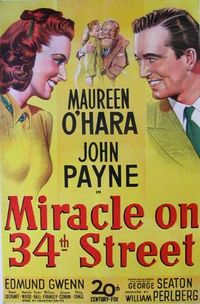
Anniversary of Miracle on 34th Street

Miracle on 34th Street (also titled The Big Heart in the UK) is a 1947 film which tells the story of a gentle old man, working as a Santa Claus at Macy’s department store in New York City, who contends that he is the real deal.

Miracle on 34th Street

Wikipedia Link

The film was released in theaters May 2, 1947.


In Remembrance – Nuclear Disaster at Chernobyl

NUCLEAR DISASTER AT CHERNOBYL:

On April 26, 1986, the world’s worst nuclear power plant accident occurs at the Chernobyl nuclear power station in the Soviet Union. Thirty-two people died and dozens more suffered radiation burns in the opening days of the crisis, but only after Swedish authorities reported the fallout did Soviet authorities reluctantly admit that an accident had occurred.

The Chernobyl station was situated at the settlement of Pripyat, about 65 miles north of Kiev in the Ukraine. Built in the late 1970s on the banks of the Pripyat River, Chernobyl had four reactors, each capable of producing 1,000 megawatts of electric power. On the evening of April 25, 1986, a group of engineers began an electrical-engineering experiment on the Number 4 reactor. The engineers, who had little knowledge of reactor physics, wanted to see if the reactor’s turbine could run emergency water pumps on inertial power.

As part of their poorly designed experiment, the engineers disconnected the reactor’s emergency safety systems and its power-regulating system. Next, they compounded this recklessness with a series of mistakes: They ran the reactor at a power level so low that the reaction became unstable, and then removed too many of the reactor’s control rods in an attempt to power it up again. The reactor’s output rose to more than 200 megawatts but was proving increasingly difficult to control. Nevertheless, at 1:23 a.m. on April 26, the engineers continued with their experiment and shut down the turbine engine to see if its inertial spinning would power the reactor’s water pumps. In fact, it did not adequately power the water pumps, and without cooling water the power level in the reactor surged.

To prevent meltdown, the operators reinserted all the 200-some control rods into the reactor at once. The control rods were meant to reduce the reaction but had a design flaw: graphite tips. So, before the control rod’s five meters of absorbent material could penetrate the core, 200 graphite tips simultaneously entered, thus facilitating the reaction and causing an explosion that blew off the heavy steel and concrete lid of the reactor. It was not a nuclear explosion, as nuclear power plants are incapable of producing such a reaction, but was chemical, driven by the ignition of gases and steam that were generated by the runaway reaction. In the explosion and ensuing fire, more than 50 tons of radioactive material were released into the atmosphere, where it was carried by air currents.

On April 27, Soviet authorities began an evacuation of the 30,000 inhabitants of Pripyat. A cover-up was attempted, but on April 28 Swedish radiation monitoring stations, more than 800 miles to the northwest of Chernobyl, reported radiation levels 40 percent higher than normal. Later that day, the Soviet news agency acknowledged that a major nuclear accident had occurred at Chernobyl.

In the opening days of the crisis, 32 people died at Chernobyl and dozens more suffered radiation burns. The radiation that escaped into the atmosphere, which was several times that produced by the atomic bombs dropped on Hiroshima and Nagasaki, was spread by the wind over Northern and Eastern Europe, contaminating millions of acres of forest and farmland. An estimated 5,000 Soviet citizens eventually died from cancer and other radiation-induced illnesses caused by their exposure to the Chernobyl radiation, and millions more had their health adversely affected. In 2000, the last working reactors at Chernobyl were shut down and the plant was officially closed.