Today is Towel Day, a day of remembrance for Douglas Adams, author of the Hitchhikers’ Guide to the Galaxy. Observe it by carrying a towel all day.
Link
Today is Towel Day, a day of remembrance for Douglas Adams, author of the Hitchhikers’ Guide to the Galaxy. Observe it by carrying a towel all day.
Link
Posted in Because I Can
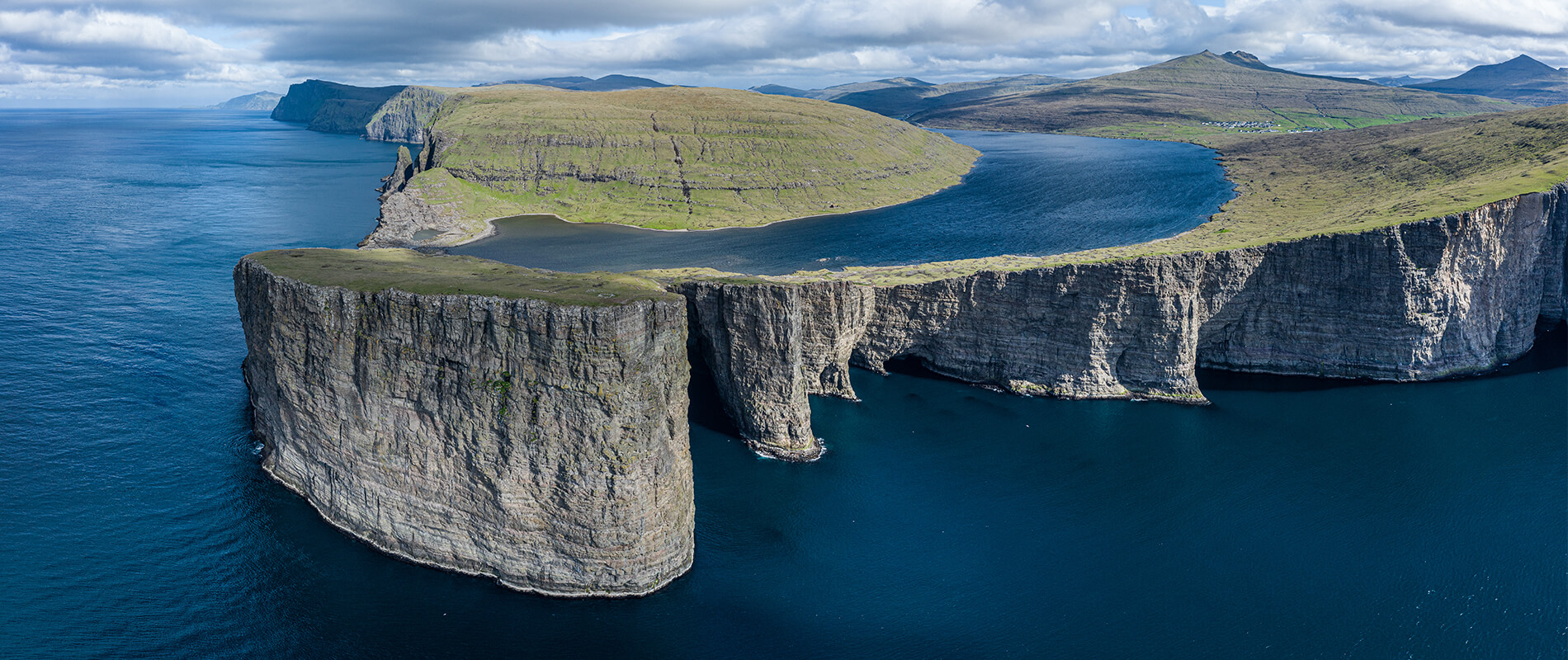
Sorvagsvatn, also called Leitisvatn, is located in the northern part of Vagar, an island located in the Danish archipelago of the Faroe Islands. The lake is known for the singularity of its position, close to a precipice on the Atlantic which from its rocky plateau appears to overlook the ocean. In reality, it is a magnificent optical illusion. Its elongated shape and the wonderful plays of light, influencing perspective, help to deceive the human eye, giving the impression of a surreal inclination.
Posted in Because I Can
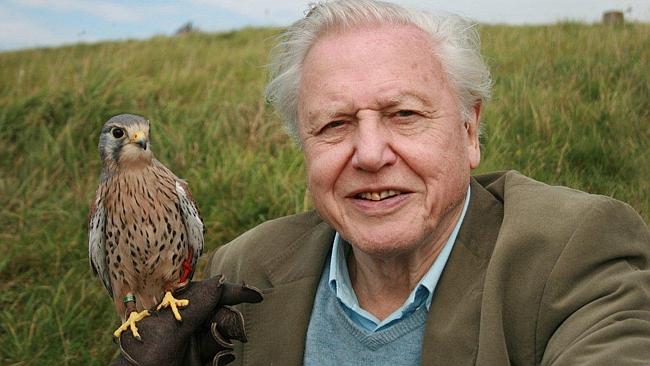
Sir David Frederick Attenborough is an English broadcaster and naturalist.
He is best known for writing and presenting the nine Life series, in conjunction with the BBC Natural History Unit, which collectively form a comprehensive survey of animal and plant life on the planet. He is also a former senior manager at the BBC, having served as controller of BBC Two and director of programming for BBC Television in the 1960s and 1970s. He is the only person to have won BAFTAs for programs in each of black and white, colour, HD, and 3D.
Attenborough is widely considered a national treasure in Britain, although he himself does not like the term. In 2002 he was named among the 100 Greatest Britons following a UK-wide vote. He is the younger brother of director, producer and actor Richard Attenborough.
Posted in Because I Can, Critters
From Cape Canaveral, Florida, Navy Commander Alan Bartlett Shepard Jr. is launched into space aboard the Freedom 7 space capsule, becoming the first American astronaut to travel into space. The suborbital flight, which lasted 15 minutes and reached a height of 116 miles into the atmosphere, was a major triumph for the National Aeronautics and Space Administration (NASA).
NASA was established in 1958 to keep U.S. space efforts abreast of recent Soviet achievements, such as the launching of the world’s first artificial satellite–Sputnik 1–in 1957. In the late 1950s and early 1960s, the two superpowers raced to become the first country to put a man in space and return him to Earth. On April 12, 1961, the Soviet space program won the race when cosmonaut Yuri Gagarin was launched into space, put in orbit around the planet, and safely returned to Earth. One month later, Shepard’s suborbital flight restored faith in the U.S. space program.
NASA continued to trail the Soviets closely until the late 1960s and the successes of the Apollo lunar program. In July 1969, the Americans took a giant leap forward with Apollo 11, a three-stage spacecraft that took U.S. astronauts to the surface of the moon and returned them to Earth. On February 5, 1971, Alan Shepard, the first American in space, became the fifth astronaut to walk on the moon as part of the Apollo 14 lunar landing mission.
Posted in Because I Can, Patriotic
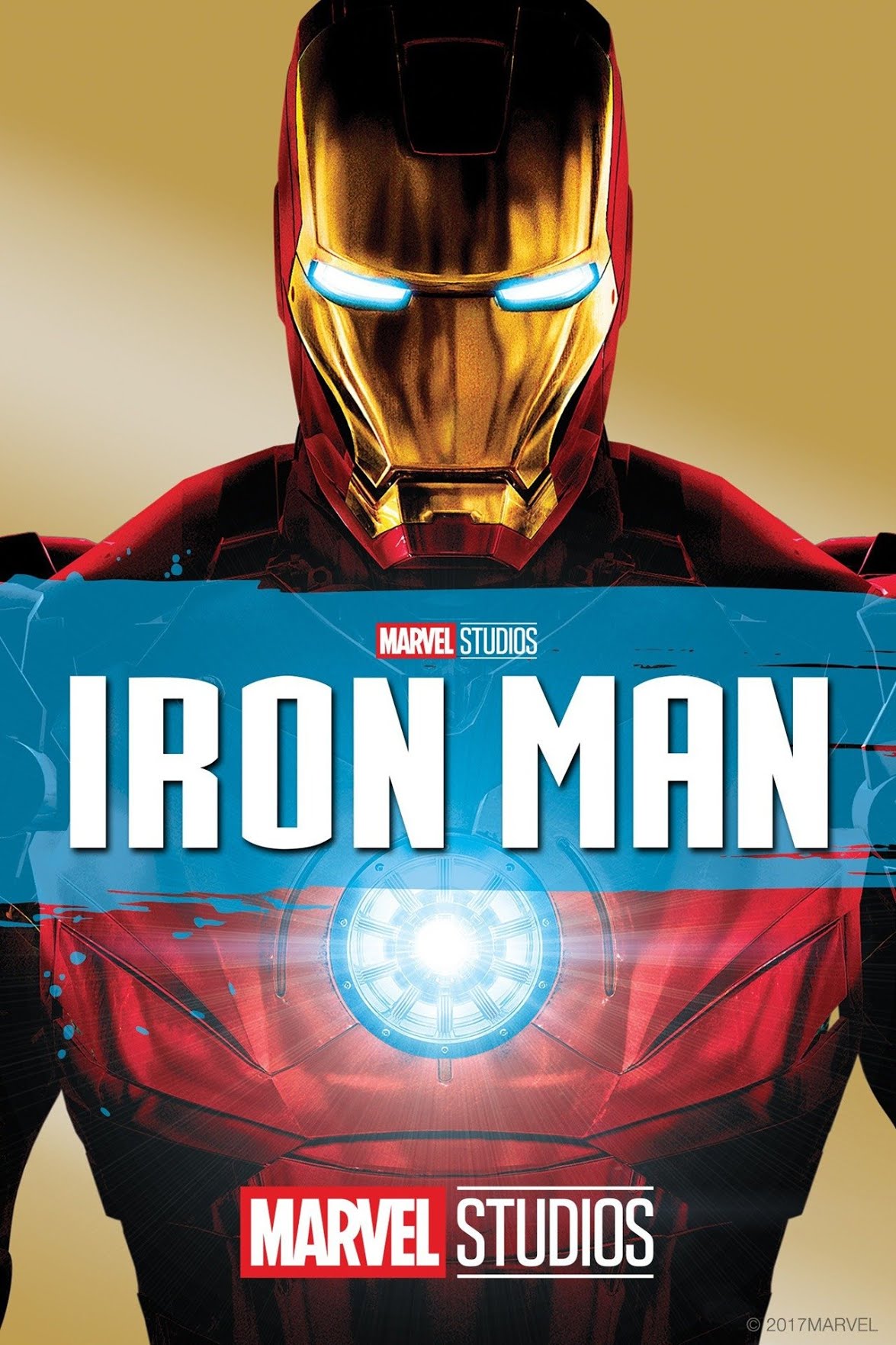
Fifteen years ago, on May 2, 2008, Iron Man hit theaters, nearly single-handedly saving Marvel from bankruptcy. The rest, as they say, is history!
Posted in Because I Can, The Big Screen
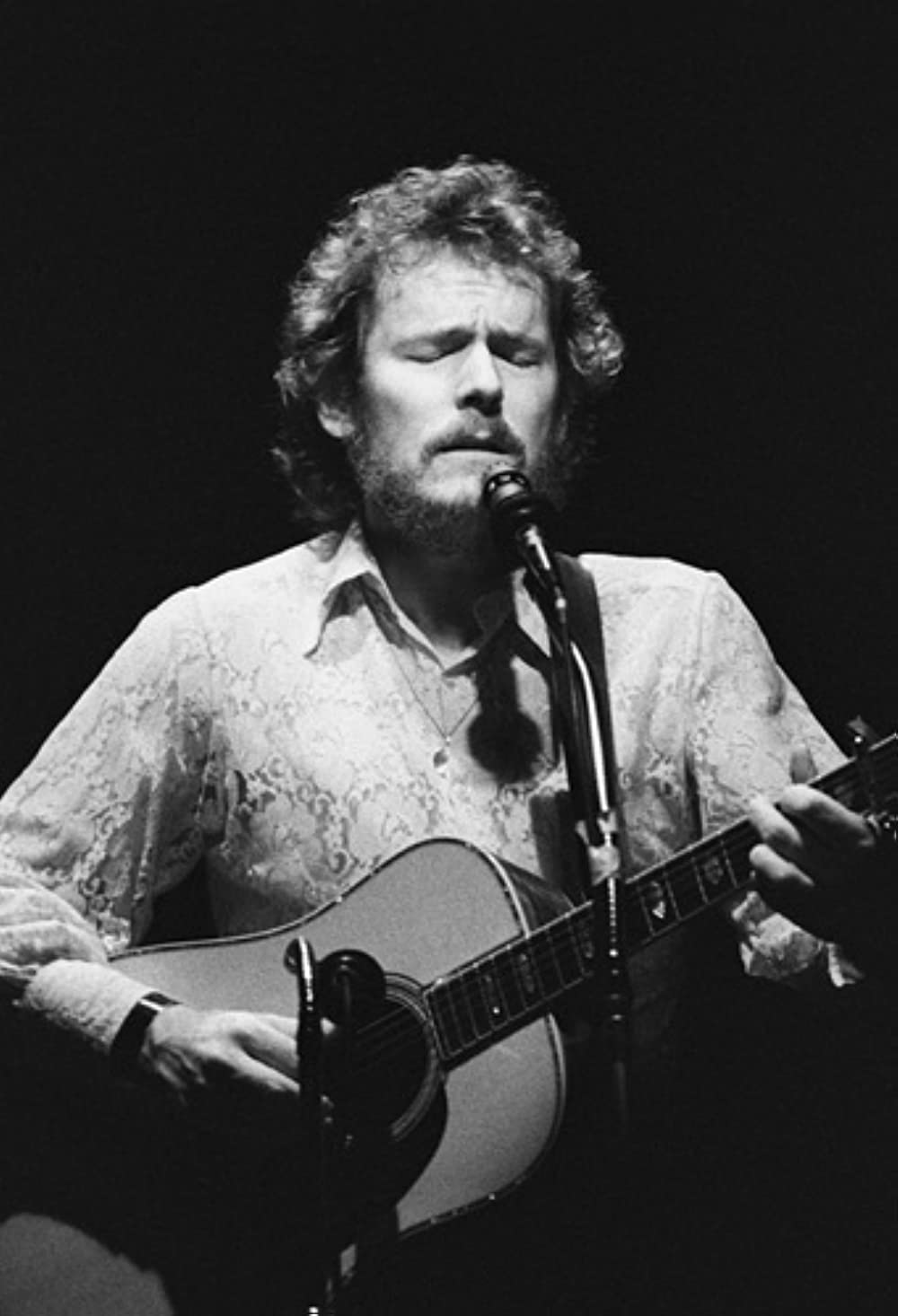
Gordon Meredith Lightfoot Jr. CC OOnt (November 17, 1938 – May 1, 2023)
Gordon Lightfoot was a Canadian singer-songwriter and guitarist who achieved international success in folk, folk-rock, and country music. He is credited with helping to define the folk-pop sound of the 1960s and 1970s. He has been referred to as Canada’s greatest songwriter and was known internationally as a folk-rock legend. Lightfoot’s biographer Nicholas Jennings said, “His name is synonymous with timeless songs about trains and shipwrecks, rivers and highways, lovers and loneliness.”
Lightfoot’s songs, including “For Lovin’ Me”, “Early Morning Rain”, “Steel Rail Blues”, “Ribbon of Darkness”—a number one hit on the U.S. country chart with Marty Robbins’s cover in 1965—and “Black Day in July”, about the 1967 Detroit riot, brought him wide recognition in the 1960s. Canadian chart success with his own recordings began in 1962 with the No. 3 hit “(Remember Me) I’m the One”, followed by recognition and charting abroad in the 1970s. He topped the US Hot 100 or AC chart with the hits “If You Could Read My Mind” (1970), “Sundown” (1974); “Carefree Highway” (1974), “Rainy Day People” (1975), and “The Wreck of the Edmund Fitzgerald” (1976), and had many other hits that appeared in the top 40.
Several of Lightfoot’s albums achieved gold and multi-platinum status internationally. His songs have been recorded by artists such as Elvis Presley, Johnny Cash, Hank Williams Jr., Jerry Lee Lewis, Neil Young, Bob Dylan, Judy Collins, Harry Belafonte, the Grateful Dead, Olivia Newton-John, and Jim Croce. The Guess Who recorded a song called “Lightfoot” on their 1968 album Wheatfield Soul; the lyrics contain many Lightfoot song titles.
“The Wreck of the Edmund Fitzgerald” on Wikipedia
Read the fantastic history of Gordon Lightfoot over on Wikipedia here.
Posted in Because I Can, Music, News
On April 26, 1986, the world’s worst nuclear power plant accident occurs at the Chernobyl nuclear power station in the Soviet Union. Thirty-two people died and dozens more suffered radiation burns in the opening days of the crisis, but only after Swedish authorities reported the fallout did Soviet authorities reluctantly admit that an accident had occurred.
The Chernobyl station was situated at the settlement of Pripyat, about 65 miles north of Kiev in the Ukraine. Built in the late 1970s on the banks of the Pripyat River, Chernobyl had four reactors, each capable of producing 1,000 megawatts of electric power. On the evening of April 25, 1986, a group of engineers began an electrical-engineering experiment on the Number 4 reactor. The engineers, who had little knowledge of reactor physics, wanted to see if the reactor’s turbine could run emergency water pumps on inertial power.
As part of their poorly designed experiment, the engineers disconnected the reactor’s emergency safety systems and its power-regulating system. Next, they compounded this recklessness with a series of mistakes: They ran the reactor at a power level so low that the reaction became unstable, and then removed too many of the reactor’s control rods in an attempt to power it up again. The reactor’s output rose to more than 200 megawatts but was proving increasingly difficult to control. Nevertheless, at 1:23 a.m. on April 26, the engineers continued with their experiment and shut down the turbine engine to see if its inertial spinning would power the reactor’s water pumps. In fact, it did not adequately power the water pumps, and without cooling water the power level in the reactor surged.
To prevent meltdown, the operators reinserted all the 200-some control rods into the reactor at once. The control rods were meant to reduce the reaction but had a design flaw: graphite tips. So, before the control rod’s five meters of absorbent material could penetrate the core, 200 graphite tips simultaneously entered, thus facilitating the reaction and causing an explosion that blew off the heavy steel and concrete lid of the reactor. It was not a nuclear explosion, as nuclear power plants are incapable of producing such a reaction, but was chemical, driven by the ignition of gases and steam that were generated by the runaway reaction. In the explosion and ensuing fire, more than 50 tons of radioactive material were released into the atmosphere, where it was carried by air currents.
On April 27, Soviet authorities began an evacuation of the 30,000 inhabitants of Pripyat. A cover-up was attempted, but on April 28 Swedish radiation monitoring stations, more than 800 miles to the northwest of Chernobyl, reported radiation levels 40 percent higher than normal. Later that day, the Soviet news agency acknowledged that a major nuclear accident had occurred at Chernobyl.
In the opening days of the crisis, 32 people died at Chernobyl and dozens more suffered radiation burns. The radiation that escaped into the atmosphere, which was several times that produced by the atomic bombs dropped on Hiroshima and Nagasaki, was spread by the wind over Northern and Eastern Europe, contaminating millions of acres of forest and farmland. An estimated 5,000 Soviet citizens eventually died from cancer and other radiation-induced illnesses caused by their exposure to the Chernobyl radiation, and millions more had their health adversely affected. In 2000, the last working reactors at Chernobyl were shut down and the plant was officially closed.
Posted in Because I Can, On This Day
April 17, 1964: Ford introduces the Mustang at the New York World’s Fair. It becomes an instant hit and an icon that alters the automotive landscape, giving rise to one of the most successful — and most uniquely American — automobile genres: the pony car.
The Ford Mustang was born of the simple idea that putting a back seat in a sports car would be a great idea.
The idea came to Lee Iacocca and Donald Frey in the early 1960s as the country was being overrun by European sports cars. Everywhere you looked you saw Alfa Romeos and MGs and Triumphs that dripped oil. Even French cars that would draw peals of laughter today were popular back then.
The two Ford execs saw a vast market literally rolling before their eyes, and, according to legend, the notion of a sports car with a back seat was one of those “ah-hah” moments. If Ford could dilute the European ethos just a bit by making the cars a bit more practical and a lot more affordable, Iacocca figured, the company would sell a few thousand.
He was right, but boy was he wrong. Ford didn’t sell thousands of them. It sold millions of them.
The Mustang was more than a success. It was a phenomenon. Ford sold 1 million in the first 18 months, making the Mustang its most successful launch since the Model A.
The pony car is easy to define. It was small by Detroit standards, with sporty styling. It had a back seat for your kids and a usable trunk for your stuff. And the rear wheels were driven by an engine — ideally a big V-8 — mounted up front where God and Henry Ford intended.
Pony cars may not have had the finesse of a European sports car, but they made up for it with brute force. A small-block V-8 can make up for a multitude of handling deficiencies.
The Mustang was successful like the Beatles were popular. Ford figured it would sell around 100,000 in the first 12 months of production. It sold 10 times that number in the first 18.
That success was not lost on the rest of Detroit, and everyone was cranking out pony cars by 1967. General Motors introduced the Chevrolet Camaro and its kissing cousin, the Pontiac Firebird. Ford offered the more upscale Mercury Cougar. Chrysler released the Challenger. Even AMC — google it, we’ll wait — got into the act with the Javelin.
Everyone had a favorite, and even now loyalists occasionally come to blows over which one was best. Countless bets have been made and races staged in displays of testosterone and bravado that would make Dr. Freud sit down for a cigar and a good long think.
And that was just in the parking lots and streets. Things really got wild when the automakers got in on the act, bringing in drivers like Dan Gurney and George Follmer and Mark Donohue to show who built the best car. The contest grew so heated it gave rise to a pony-car–specific racing series called Trans Am. (The car was named after the series, not the other way around.)
We’re inclined to give the award to the Mustang, if only because Steve McQueen drove a ’68 fastback in the most famous chase scene in cinematic history, that amazing dash through the streets of San Francisco in Bullitt.
The Mustang also gets the nod for sheer longevity. Oh sure, you can get a new Camaro that looks like a vintage Camaro, or a new Dodge Challenger that looks like a vintage Dodge Challenger.
But the Mustang is the only pony car to remain in continuous production since its introduction 45 years ago.
Ford has sold more than 9 million worldwide.
Posted in Because I Can, Planes Trains and Automobiles
April 17th, 1970 the capsule from the Apollo 13 mission splashed down in the Pacific Ocean, and the whole world breathed a sigh of relief.
Quote
Apollo 13 launched from Cape Canaveral on April 11, intended to be the third manned lunar landing. The crew — James A. Lovell Jr., John L. Swigert Jr. and Fred W. Haise Jr. — experienced a slight vibration shortly after launch, but things were going normally until 55 hours, 55 minutes into the flight.
Oxygen tank No. 2 exploded, causing No. 1 to fail and start leaking rapidly. Warning lights started blinking. The astronaut’s supplies of air, water, light and electricity were imperiled … 200,000 miles from Earth.
Posted in Because I Can, Patriotic
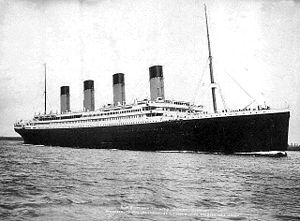
On April 15th, 1912, RMS Titanic struck an iceberg on her maiden voyage from Southampton, England to New York City and sank, taking over 1500 lives with her.
Posted in Because I Can, On This Day, Planes Trains and Automobiles
On April 14, 1865, John Wilkes Booth, an actor and Confederate sympathizer, fatally shoots President Abraham Lincoln at a play at Ford’s Theater in Washington, D.C. The attack came only five days after Confederate General Robert E. Lee surrendered his massive army at Appomattox Court House, Virginia, effectively ending the American Civil War.
Booth, a Maryland native born in 1838, who remained in the North during the war despite his Confederate sympathies, initially plotted to capture President Lincoln and take him to Richmond, the Confederate capital. However, on March 20, 1865, the day of the planned kidnapping, the president failed to appear at the spot where Booth and his six fellow conspirators lay in wait. Two weeks later, Richmond fell to Union forces. In April, with Confederate armies near collapse across the South, Booth hatched a desperate plan to save the Confederacy.
Learning that Lincoln was to attend a performance of “Our American Cousin” at Ford’s Theater on April 14, Booth masterminded the simultaneous assassination of Lincoln, Vice President Andrew Johnson and Secretary of State William H. Seward. By murdering the president and two of his possible successors, Booth and his conspirators hoped to throw the U.S. government into disarray.
On the evening of April 14, 1865, conspirator Lewis T. Powell burst into Secretary of State Seward’s home, seriously wounding him and three others, while George A. Atzerodt, assigned to Vice President Johnson, lost his nerve and fled. Meanwhile, just after 10 p.m., Booth entered Lincoln’s private theater box unnoticed and shot the president with a single bullet in the back of his head. Slashing an army officer who rushed at him, Booth leapt to the stage and shouted “Sic semper tyrannis! [Thus always to tyrants]–the South is avenged!” Although Booth broke his leg jumping from Lincoln’s box, he managed to escape Washington on horseback.
The president, mortally wounded, was carried to a lodging house opposite Ford’s Theater. About 7:22 a.m. the next morning, Lincoln, age 56, died–the first U.S. president to be assassinated. Booth, pursued by the army and other secret forces, was finally cornered in a barn near Bowling Green, Virginia, and died from a possibly self-inflicted bullet wound as the barn was burned to the ground. Of the eight other people eventually charged with the conspiracy, four were hanged and four were jailed.
Posted in Because I Can, Patriotic