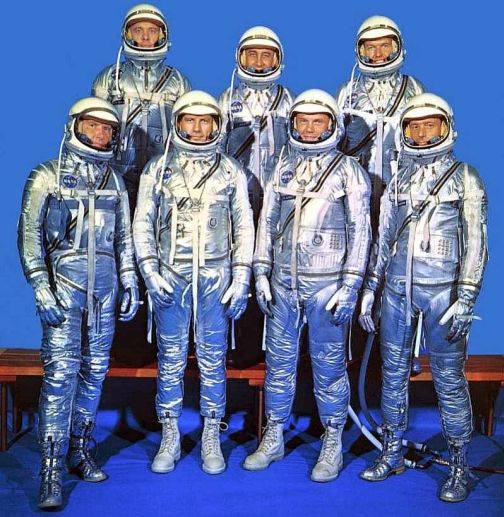
On April 8, 1959, NASA announced The Mercury Seven: the seven men to make up their first astronaut class.
The Mercury Seven were chosen in Washington, DC from a body of 69 candidates. The name comes from Mercury, a Roman mythological god who is seen as a symbol of speed. Because of the small space inside the Mercury capsule, candidates could be no taller than 5 feet 11 inches and weigh no more than 180 pounds. The initial flights took off throughout the early 1960s, though some astronauts were active in later decades. Here are the guys:
Malcolm Scott Carpenter (1925 – 2013) was a US Navy piolot aviation cadet who flew missions during the Korean War. He was on board the MA-7 (Aurora 7) and was the first American astronaut to eat solid food in space. He successfully overcame an overexpenditure of fuel due to hardware problems on his one and only mission. Carpenter was forced to retire from spaceflight after sustaining a motorbike accident. After retiring from the Navy, he founded Sea Sciences Inc., a corporation for developing programs for utilizing ocean resources and improving environmental health.
Leroy Gordon (Gordo) Cooper Jr. (1927 – 2004) was very active in the Boy Scouts of America and achieved the second highest rank of Life Scout. Prior to joining NASA, Cooper also served in the US Air Force and Marine Corps. He was on board the MA-9 (Faith 7) and Gemini 5, and developed a personal survival knife for astronauts to carry. Cooper was the first American to sleep in orbit. Interestingly, he took photos of and reported UFO sightings to the Pentagon, but they swept the incident under the rug.
John Herschel Glenn Jr. (1921 – 2016) began his career as a US Marine Corps fighter pilot. He was on board the MA-6 (Friendship 7) and STS-95. Noticed for his heroics in space, Glenn became friendly with the Kennedys and a prominent public figure. After retiring from NASA, he ran as a Democrat and represented the state of Ohio in the United States Senate from 1974 to 1999. Glenn returned to space on the Space Shuttle on October 29, 1998, as a Payload Specialist on Discovery‘s STS-95 mission, becoming, at age 77, the oldest person to go into space. According to The New York Times, Glenn “won his seat on the Shuttle flight by lobbying NASA for two years to fly as a human guinea pig for geriatric studies”, which were named as the main reasons for his participation in the mission.
Virgil Ivan (Gus) Grissom (1926 – 1967) was a US Air Force pilot before joining NASA. He was on board the MR-4 (Liberty Bell 7), Gemini 3, and Apollo 1. Grissom was tragically killed along with fellow astronauts Ed White and Roger Chaffee during a pre-launch test for the Apollo 1 mission. After death, his family was involved in a spacesuit controversy: NASA insisted Grissom got authorization to use his spacesuit for a show and tell at his son’s school and never returned it, but his family claimed the he had rescued the spacesuit from a scrap heap and that it rightfully belonged to them.
Walter Marty (Wally) Schirra Jr. (1923 – 2007)’s father was a pilot, and his mother performed wing walking stunts when he was on duty. Schirra served as an officer in the US Navy, and was later dispatched to South Korea as a pilot on loan to the US Air Force. On board the MA-8 (Sigma 7), Gemini 6A, and Apollo 7, he was the only person to fly in all of America’s first three space programs. Schirra gained notoriety for playing “Jingle Bells” on a harmonica he smuggled on board Gemini.
Alan Bartlett Shepard Jr. (1923 – 1998) began as a US Navy as test pilot. He was the first American in space, and flew on board the MR-3 (Freedom 7) and Apollo 14. It’s said that shortly before one launch, Shepard blurted out “Please, dear God, don’t let me fuck up.” This has since become known among aviators as “Shepard’s Prayer.” A successful businessman, Shepard was the first astronaut to become a millionaire while still in the program. His hometown of Derry, NH almost changed its name to “Spacetown” in honor of Schirra’s career.
Donald Kent (Deke) Slayton (1924 – 1993) was also a US Air Force pilot before joining NASA. He was grounded from space flight by a heart condition, but served as NASA’s Director of Flight Crew Operations. Slayton served as head of Astronaut selection. In 1972 he was granted medical clearance to fly as docking module pilot of the Apollo-Soyuz Test Project. At the time of the flight, he became the oldest person to fly into space.
Posted in Because I Can, Patriotic

Posted in Because I Can, Gadgets, The Little Screen (Television)
2023 Mid-America Trucking Show
Louisville, KY at the Kentucky Exposition Center
Posted in Because I Can, Planes Trains and Automobiles
2023 Mid-America Trucking Show
Louisville, KY at the Kentucky Exposition Center
Posted in Because I Can, Planes Trains and Automobiles
2023 Mid-America Trucking Show
Louisville, KY at the Kentucky Exposition Center
Posted in Because I Can, Planes Trains and Automobiles
Remember to SPRING forward your clock at 2:00 am tomorrow!

Posted in Because I Can
The series premiered on September 17, 1972, and ended on February 28, 1983, with the finale becoming the most-watched television episode in U.S. television history at the time.
“Goodbye, Farewell and Amen” was the final episode of M*A*S*H. Special television sets were placed in PX parking lots, auditoriums, and dayrooms of the US Army in Korea so that military personnel could watch that episode; this in spite of 14 hours’ time zone difference with the east coast of the US. The episode aired on February 28, 1983, and was 2½ hours long.
Posted in Because I Can, The Little Screen (Television)
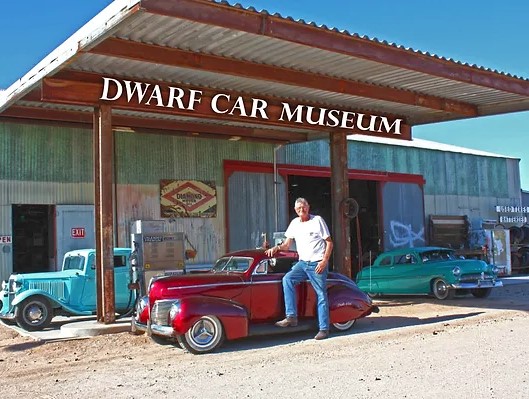
From the website:
First Dwarf Car
The first Dwarf Car came to life in 1965 as a 28 Chevy two-door sedan made out of nine old refrigerators. Ernie began gathering the materials for this little car in 1962. By 1965 he had enough materials and an 18 hp Wisconsin motor to begin construction. With a homemade hacksaw made from a chair frame, hammer and a chisel, Ernie began construction. He had no idea what this would be the beginning of. Because this is the first Dwarf Car ever built, it is known as “GRANDPA DWARF.” This first Dwarf Car is kept in running order and is still driven today.
Posted in Because I Can, Planes Trains and Automobiles
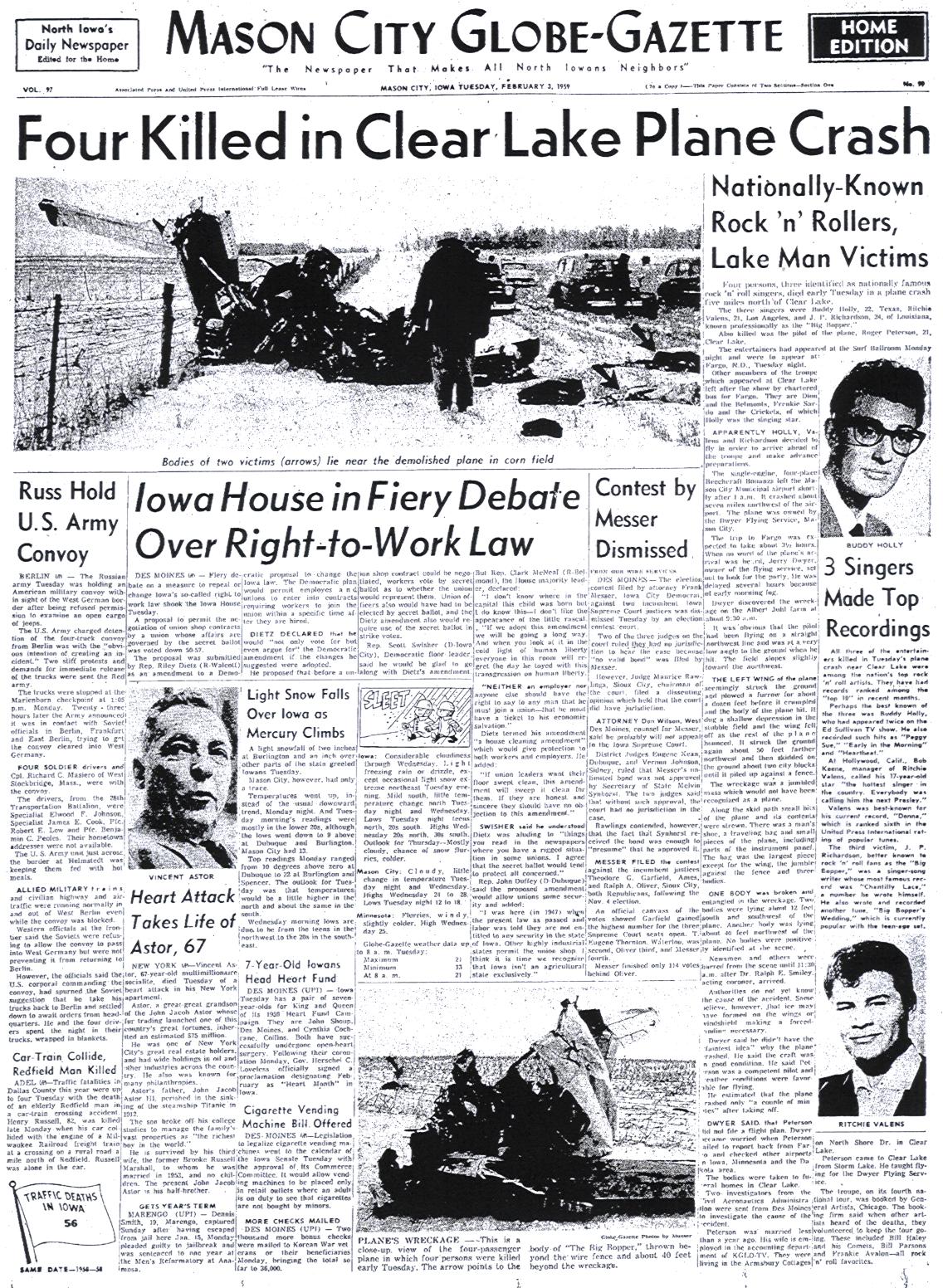
On February 3, 1959, rising American rock stars Buddy Holly, Ritchie Valens and J.P. “The Big Bopper” Richardson are killed when their chartered Beechcraft Bonanza plane crashes in Iowa a few minutes after takeoff from Mason City on a flight headed for Moorhead, Minnesota. Investigators blamed the crash on bad weather and pilot error. Holly and his band, the Crickets, had just scored a No. 1 hit with “That’ll Be the Day.”
After mechanical difficulties with the tour bus, Holly had chartered a plane for his band to fly between stops on the Winter Dance Party Tour. However, Richardson, who had the flu, convinced Holly’s band member Waylon Jennings to give up his seat, and Ritchie Valens won a coin toss for another seat on the plane.
Holly, born Charles Holley in Lubbock, Texas, and just 22 when he died, began singing country music with high school friends before switching to rock and roll after opening for various performers, including Elvis Presley. By the mid-1950s, Holly and his band had a regular radio show and toured internationally, playing hits like “Peggy Sue,” “Oh, Boy!,” “Maybe Baby” and “Early in the Morning.” Holly wrote all his own songs, many of which were released after his death and influenced such artists as Bob Dylan and Paul McCartney.
Another crash victim, J.P. “The Big Bopper” Richardson, 28, started out as a disk jockey in Texas and later began writing songs. Richardson’s most famous recording was the rockabilly “Chantilly Lace,” which made the Top 10. He developed a stage show based on his radio persona, “The Big Bopper.”
The third crash victim was Ritchie Valens, born Richard Valenzuela in a suburb of Los Angeles, who was only 17 when the plane went down but had already scored hits with “Come On, Let’s Go,” “Donna” and “La Bamba,” an upbeat number based on a traditional Mexican wedding song (though Valens barely spoke Spanish). In 1987, Valens’ life was portrayed in the movie La Bamba, and the title song, performed by Los Lobos, became a No. 1 hit. Valens was posthumously inducted into the Rock and Roll Hall of Fame in 2001.
Singer Don McLean memorialized Holly, Valens and Richardson in the 1972 No. 1 hit “American Pie,” which refers to February 3, 1959 as “the day the music died.”
Posted in Because I Can, Music
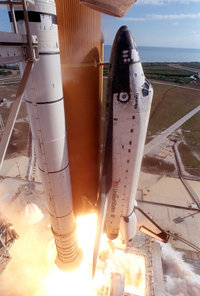
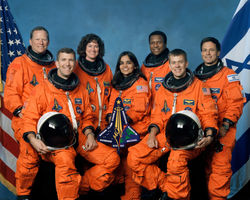
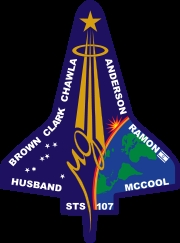
Today marks the 20th anniversary of the accident. On February 1, 2003, the Space Shuttle Columbia disintegrated during re-entry on its 28th mission; all seven crew members aboard perished.
Posted in Because I Can, On This Day, Patriotic, Planes Trains and Automobiles
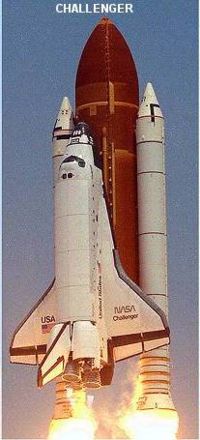
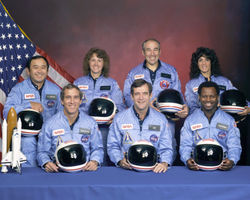
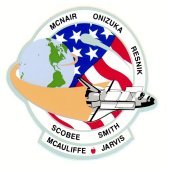
On January 28, 1986 at 11:39 EST, the Space Shuttle Challenger disintegrated 73 seconds into its flight after an O-ring seal in its right solid rocket booster (SRB) failed at liftoff. All seven astronauts on board were lost.
Posted in Because I Can, On This Day, Patriotic, Planes Trains and Automobiles
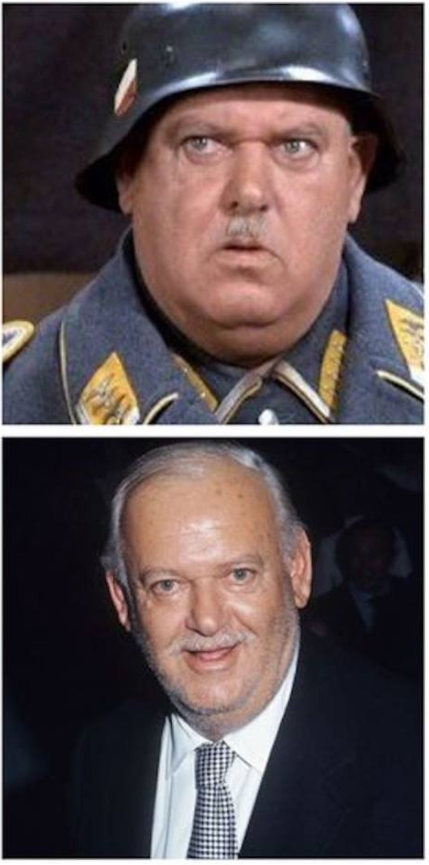
John Banner, born Johann Banner, was born on this date 112 years ago and died 49 years ago at the age of 63. He is best known for his role as Master Sergeant Schultz in the situation comedy Hogan’s Heroes (1965–1971). Schultz, constantly encountering evidence that the inmates of his stalag were planning mayhem, frequently feigned ignorance with the catchphrase, “I know nothing! I see nothing! I hear nothing!” (or, more commonly as the series went on, “I see nothing, nothing!”).
Thank you for years of entertainment!
Posted in Because I Can, Humor, The Little Screen (Television)

On this day in 1957, machines at the Wham-O toy company roll out the first batch of their aerodynamic plastic discs–now known to millions of fans all over the world as Frisbees.
Posted in Because I Can, On This Day