On this day (September 29) in 1966, the Camaro went on sale for the 1967 model year.
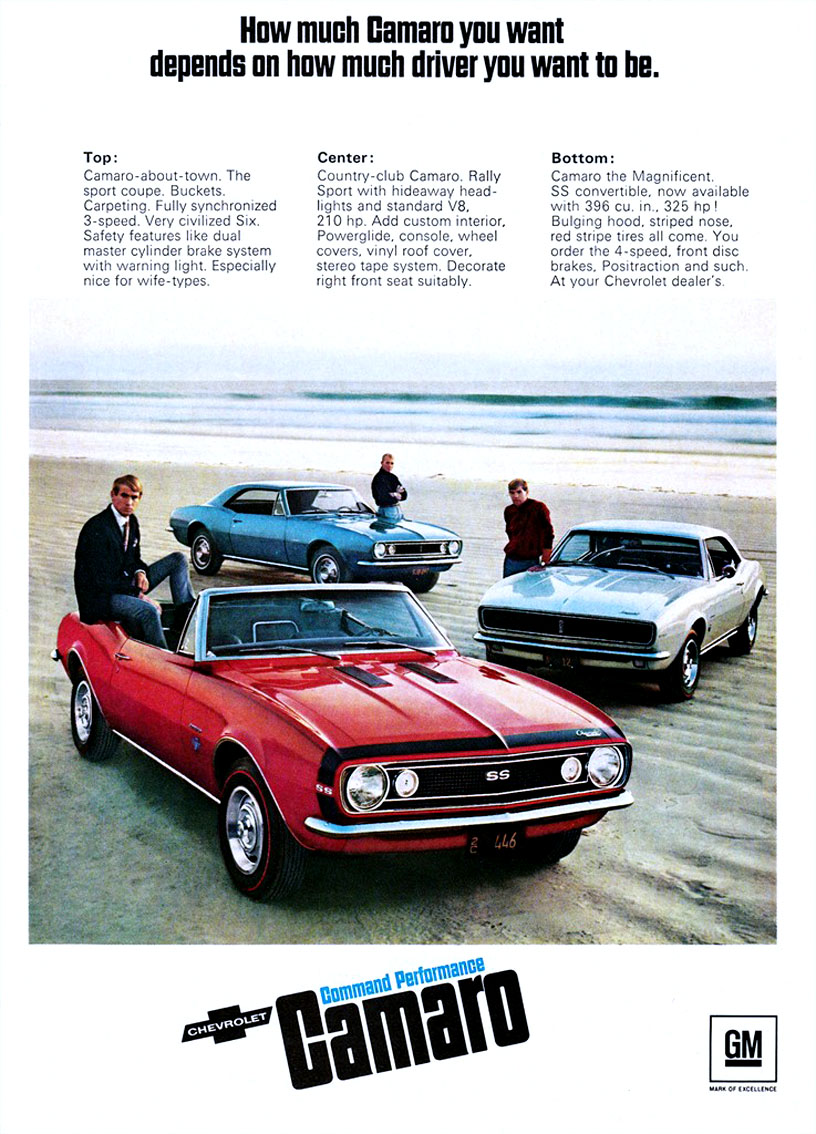
On this day (September 29) in 1966, the Camaro went on sale for the 1967 model year.
Posted in Because I Can, Planes Trains and Automobiles
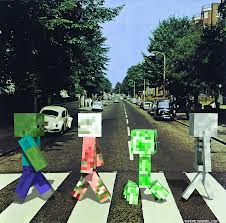
Minecraft Abbey Road
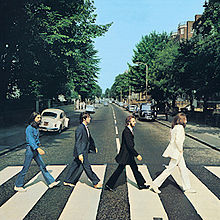
Beatles Abbey Road
Abbey Road is the eleventh studio album by the English rock band the Beatles, released on September 26, 1969 in the United Kingdom and on October 1, 1969 in the United States. The recording sessions for the album were the last in which all four Beatles participated. Although Let It Be was the final album that the Beatles completed before the band’s dissolution in April 1970, most of that album had been recorded before the Abbey Road sessions began.
Posted in Because I Can, Music
On September 23, 1962, the Jetsons premiered on ABC.
The Jetsons is a prime-time animated American sitcom that was produced by Hanna-Barbera, originally airing from 1962–63 and again from 1985–87. It was Hanna-Barbera’s Space Age counterpart to The Flintstones, a half-hour family sitcom projecting contemporary American culture and lifestyle into another time period. While the Flintstones live in a world with machines powered by birds and dinosaurs, the Jetsons live in a futuristic utopia in the year 2062 of elaborate robotic contraptions, aliens, holograms, and whimsical inventions.
The original incarnation of the series aired Sunday nights on ABC from September 23, 1962, to March 3, 1963. It comprised 24 episodes, and was re-run on Saturday morning for decades. At the time of its debut, it was the first program ever to be broadcast in color on ABC-TV (as The Flintstones, while always produced in color, was broadcast in black-and-white for its first two seasons). Its continuing popularity led to further episodes being produced for syndication between 1985 and 1987.
Posted in Because I Can, On This Day, The Little Screen (Television)
The Hobbit is a novel written by J. R. R. Tolkien in the tradition of the fairy tale. It was first published on September 21, 1937. While it also stands in its own right, it is often seen as a prelude to Tolkien’s monumental fantasy novel The Lord of the Rings (published in 1954 and 1955).
The story, subtitled There and Back Again, follows the adventures of the hobbit Bilbo Baggins as he travels across the lands of Middle-earth with a band of dwarves and a wizard named Gandalf on a quest to restore a dwarven kingdom and a great treasure stolen by the dragon, Smaug.
Posted in Because I Can, Literary, On This Day

An emoticon is a facial expression pictorially represented by punctuation and letters, usually to express a writer’s mood. Emoticons are often used to alert a responder to the tenor or temper of a statement, and can change and improve interpretation of plain text. The word is a portmanteau word of the English words emotion and icon. In web forums, instant messengers and online games, text emoticons are often automatically replaced with small corresponding images, which came to be called emoticons as well. Certain complex character combinations can only be accomplished in a double-byte language, giving rise to especially complex forms, sometimes known by their romanized Japanese name of kaomoji.
The use of emoticons can be traced back to the 19th century, and they were commonly used in casual and/or humorous writing. Digital forms of emoticons on the Internet were included in a proposal by Scott Fahlman of Carnegie Mellon University in Pittsburgh, Pennsylvania, in a message on September 19, 1982.
Posted in Because I Can, Humor, Literary, On This Day
The series premiered on September 17, 1972, and ended February 28, 1983, with the finale becoming the most-watched television episode in U.S. television history.
Posted in Because I Can, On This Day, The Little Screen (Television)

On September 17, 1967, the first Hot Wheels was released.
Hot Wheels is a brand of die cast toy car, introduced by American toymaker Mattel in 1968. It was the primary competitor of Matchbox until 1996, when Mattel acquired rights to the Matchbox brand as well.
Posted in Because I Can, Toys
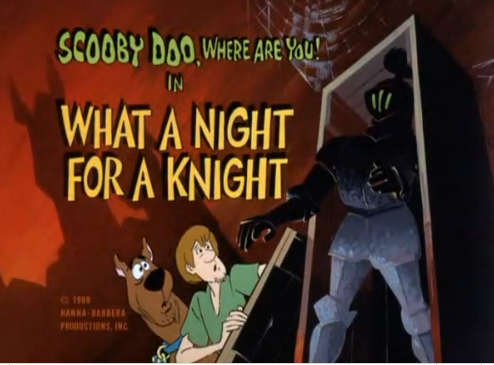
The first episode of Scooby-Doo, Where Are You! “What a Night for a Knight” debuted on the CBS network Saturday, September 13, 1969. The original voice cast featured veteran voice actor Don Messick as Scooby-Doo, radio DJ Casey Kasem (later host of radio’s syndicated American Top 40) as Shaggy, actor Frank Welker (later a veteran voice actor in his own right) as Fred, actress Nicole Jaffe as Velma, and musician Indira Stefanianna Christopherson as Daphne. Scooby’s speech patterns closely resembled an earlier cartoon dog, Astro from The Jetsons (1962–63), also voiced by Messick.
Posted in Because I Can, Critters, Humor, The Big Screen, The Little Screen (Television)
Today, the hard drive is found everywhere–from the PCs we use daily to MP3 players and memory keys so small you can toss them in your pocket and forget you’re carrying around a hard drive. But when the hard drive was first introduced on September 13, 1956, it required a humongous housing and 50 24-inch platters to store 1/2400 as much data as can be fit on today’s largest capacity 1-inch hard drives.
Read more
Posted in Because I Can, On This Day
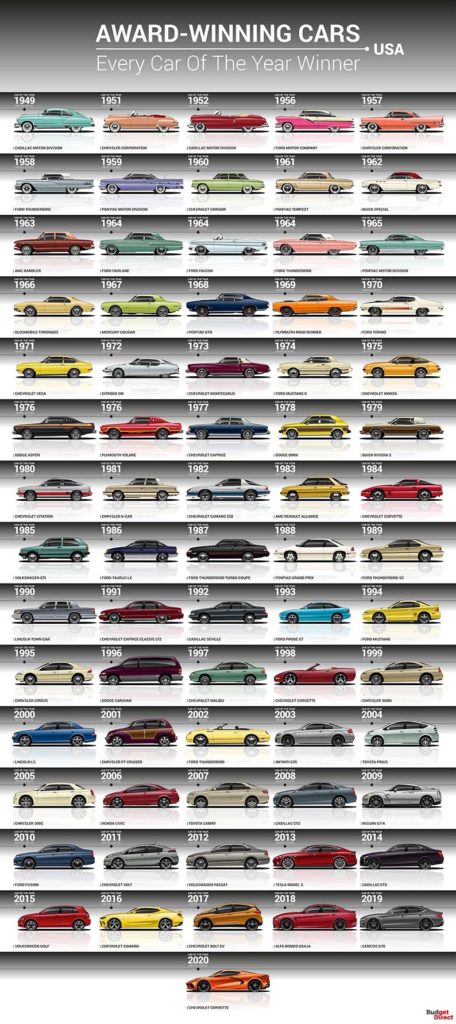
The Australian insurance company Budget Direct has put together a graphic/video of every Motor Trend Car of the Year winner from 1949 to 2020. Read the article over at BudgetDirect.com.au.
Posted in Because I Can, Planes Trains and Automobiles
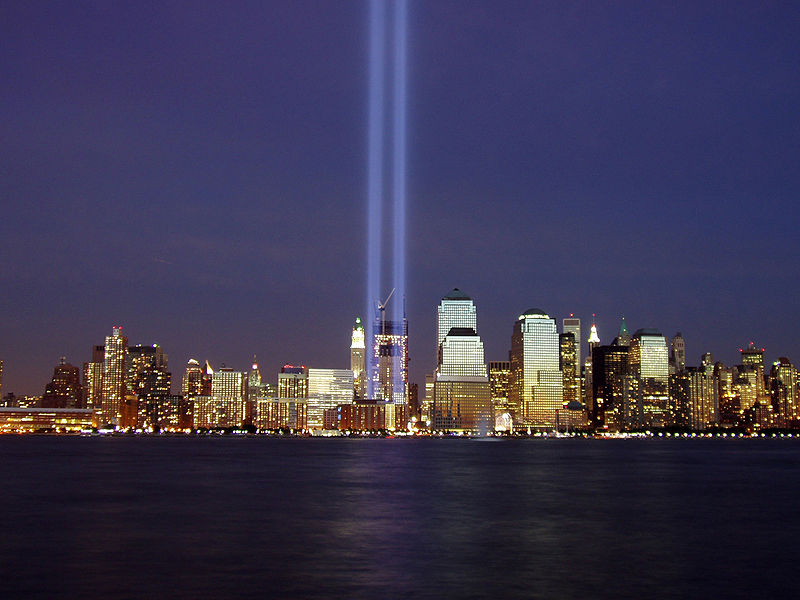
Please observe a moment of silence at 8:46 a.m. (1246 GMT) to mark the moment when American Airlines Flight 11 crashes into the North Tower of the World Trade Center, at 9:03 a.m. (1303 GMT) when United Airlines Flight 175 crashes into the South Tower of the World Trade Center, 9:37 (1337 GMT) when American Airlines Flight 77 crashes into the Pentagon, at 9:59 a.m. (1359 GMT) when the South Tower Collapses, at 10:03 (1403 GMT) when United Airlines Flight 93 crashes near Shanksville, Pennsylvania, and finally at 10:29 a.m. (1429 GMT) when the North Tower Collapses.
Posted in Because I Can, On This Day, Patriotic




This was at the 2018 Tokyo Auto Show… it would have to be PandemIC now!
Posted in Because I Can, Planes Trains and Automobiles
The King of Rock and Roll teams up with TV’s reigning variety program, as Elvis Presley appears on “The Ed Sullivan Show” for the first time on September 9, 1956.
After earning big ratings for “The Steve Allen Show,” the Dorsey Brothers “Stage Show” and “The Milton Berle Show,” Sullivan finally reneged on his Presley ban, signing the controversial singing star to an unprecedented $50,000 contract for three appearances.
With 60 million viewers—or 82.6 percent of TV viewers at the time—tuning in, the appearance garnered the show’s best ratings in two years and became the most-watched TV broadcast of the 1950s.
Although “The Ed Sullivan Show” was filmed in New York, Presley performed remotely from CBS’s Los Angeles studio (he was filming his first movie, “Love Me Tender,” in California). At the time, his first album, “Elvis Presley” had already debuted and “Heartbreak Hotel” was a hit single, but he wasn’t quite yet “The King.”
On the variety show, Presley, then 21, was introduced by British actor Charles Laughton, who was filling in for Sullivan that night, as the legendary host was at home recovering from a serious car accident. Presley performed “Don’t Be Cruel,” Little Richard’s “Ready Teddy” and “Hound Dog” and viewers got a full head-to-toe look at the singer despite fears of “vulgar” hip-shaking gyrations. He also sang “Love Me Tender” and, according to Variety, “For the first time in the history of the record business, a single record has achieved one million sales before being released to the public.”
Presley, clad in a plaid jacket, told the audience performing on the show was “probably the greatest honor I have ever had in my life,” before kicking things off with “Don’t Be Cruel.” He said, “Thank you, ladies,” to the screaming fans and then introduced “Love Me Tender” as “completely different from anything we’ve ever done.”
During his second segment, Presley sang “Ready Teddy” and “Hound Dog.” Laughton’s closing remarks that night? “Well, what did someone say? Music hath charms to soothe the savage beast?”
“When it was over, parents and critics, as usual, did a lot of futile grumbling at the vulgarity of this strange phenomenon that must somehow be reckoned with,” a reviewer for Time magazine wrote at the time.
Other guests that night included singers Dorothy Sarnoff and Amru Sani, a comedy act from novelty quartet The Vagabonds, a tap dancing duo and an acrobat act.
During his second performance on October 28, 1956, Presley once again performed “Don’t Be Cruel” and “Hound Dog” along with “Love Me Tender.” And during his third and final performance on “The Ed Sullivan Show” on January 6, 1957, he sang seven songs, including the gospel song “Peace in the Valley,” over three segments, but the episode is most famously remembered for TV censors refusing to show Elvis below the waist.
At the end of his performance, however, Sullivan called Presley “a real decent, fine boy. … We’ve never had a pleasanter experience on our show with a big name than we’ve had with you.”
Posted in Because I Can, Events, Music
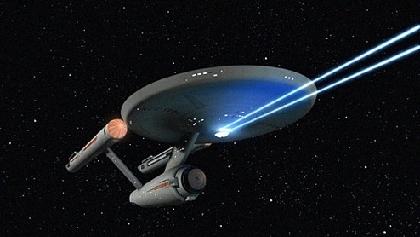
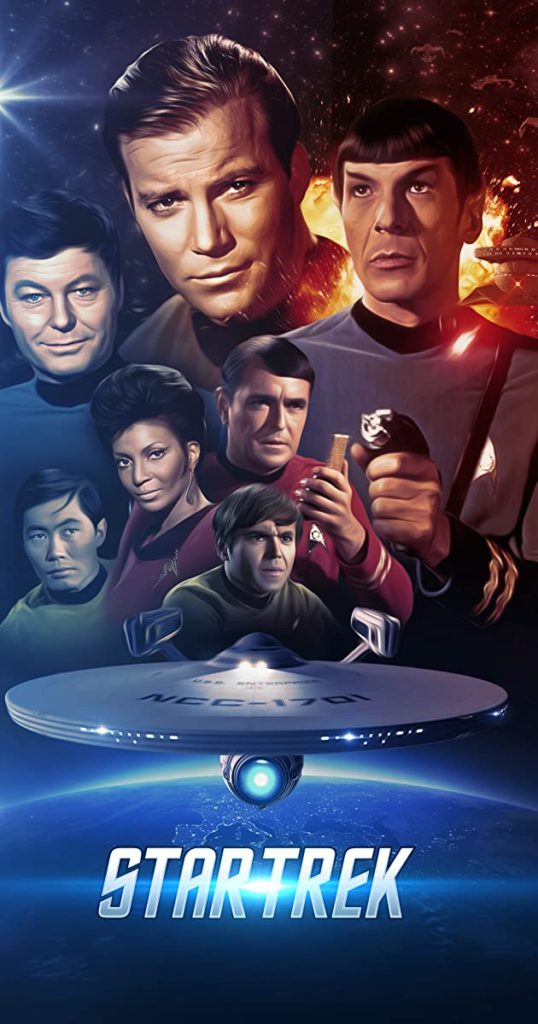
On September 8, 1966, “The Man Trap” was first released upon the world. This, the first episode of one of the most famous TV Shows in history, Star Trek.
Star Trek is an American media franchise originating from the 1960s science fiction television series Star Trek, created by Gene Roddenberry. That series, now often known as “The Original Series“, debuted on September 8, 1966, and aired for three seasons on NBC. It followed the voyages of the starship USS Enterprise, a space exploration vessel built by the United Federation of Planets in the 23rd century, on a mission “to explore strange new worlds, to seek out new life and new civilizations, to boldly go where no man has gone before”. In creating Star Trek, Roddenberry was inspired by C. S. Forester’s Horatio Hornblower series of novels, Jonathan Swift’s Gulliver’s Travels, and television westerns such as Wagon Train.
On September 7, 1813, the United States gets its nickname, Uncle Sam. The name is linked to Samuel Wilson, a meat packer from Troy, New York, who supplied barrels of beef to the United States Army during the War of 1812. Wilson (1766-1854) stamped the barrels with “U.S.” for United States, but soldiers began referring to the grub as “Uncle Sam’s.” The local newspaper picked up on the story and Uncle Sam eventually gained widespread acceptance as the nickname for the U.S. federal government.
In the late 1860s and 1870s, political cartoonist Thomas Nast (1840-1902) began popularizing the image of Uncle Sam. Nast continued to evolve the image, eventually giving Sam the white beard and stars-and-stripes suit that are associated with the character today. The German-born Nast was also credited with creating the modern image of Santa Claus as well as coming up with the donkey as a symbol for the Democratic Party and the elephant as a symbol for the Republicans. Nast also famously lampooned the corruption of New York City’s Tammany Hall in his editorial cartoons and was, in part, responsible for the downfall of Tammany leader William Tweed.
Perhaps the most famous image of Uncle Sam was created by artist James Montgomery Flagg (1877-1960). In Flagg’s version, Uncle Sam wears a tall top hat and blue jacket and is pointing straight ahead at the viewer. During World War I, this portrait of Sam with the words “I Want You For The U.S. Army” was used as a recruiting poster. The image, which became immensely popular, was first used on the cover of Leslie’s Weekly in July 1916 with the title “What Are You Doing for Preparedness?” The poster was widely distributed and has subsequently been re-used numerous times with different captions.
In September 1961, the U.S. Congress recognized Samuel Wilson as “the progenitor of America’s national symbol of Uncle Sam.” Wilson died at age 88 in 1854, and was buried next to his wife Betsey Mann in the Oakwood Cemetery in Troy, New York, the town that calls itself “The Home of Uncle Sam.”
Posted in Because I Can, On This Day, Patriotic