Category Archives: Because I Can

Memorial Day

Flag at Half Mast

Memorial Day

Memorial Day is a United States federal holiday observed on the last Monday of May. Formerly known as Decoration Day, it commemorates U.S. men and women who died while in the military service. First enacted to honor Union soldiers of the American Civil War (it is celebrated near the day of reunification after the civil war), it was expanded after World War I to include American casualties of any war or military action.

It Has Always Been The Soldier

Happy Birthday, Big Ben

The famous tower clock known as Big Ben, located at the top of the 320-foot-high St. Stephen’s Tower, rings out over the Houses of Parliament in Westminster, London, for the first time on this day, May 31st,  in 1859.

After a fire destroyed much of the Palace of Westminster–the headquarters of the British Parliament–in October 1834, a standout feature of the design for the new palace was a large clock atop a tower. The royal astronomer, Sir George Airy, wanted the clock to have pinpoint accuracy, including twice-a-day checks with the Royal Greenwich Observatory. While many clockmakers dismissed this goal as impossible, Airy counted on the help of Edmund Beckett Denison, a formidable barrister known for his expertise in horology, or the science of measuring time.

Denison’s design, built by the company E.J. Dent & Co., was completed in 1854; five years later, St. Stephen’s Tower itself was finished. Weighing in at more than 13 tons, its massive bell was dragged to the tower through the streets of London by a team of 16 horses, to the cheers of onlookers. Once it was installed, Big Ben struck its first chimes on May 31, 1859. Just two months later, however, the heavy striker designed by Denison cracked the bell. Three more years passed before a lighter hammer was added and the clock went into service again. The bell was rotated so that the hammer would strike another surface, but the crack was never repaired.

The name “Big Ben” originally just applied to the bell but later came to refer to the clock itself. Two main stories exist about how Big Ben got its name. Many claim it was named after the famously long-winded Sir Benjamin Hall, the London commissioner of works at the time it was built. Another famous story argues that the bell was named for the popular heavyweight boxer Benjamin Caunt, because it was the largest of its kind.

Even after an incendiary bomb destroyed the chamber of the House of Commons during the Second World War, St. Stephen’s Tower survived, and Big Ben continued to function. Its famously accurate timekeeping is regulated by a stack of coins placed on the clock’s huge pendulum, ensuring a steady movement of the clock hands at all times. At night, all four of the clock’s faces, each one 23 feet across, are illuminated. A light above Big Ben is also lit to let the public know when Parliament is in session.

And Poof!

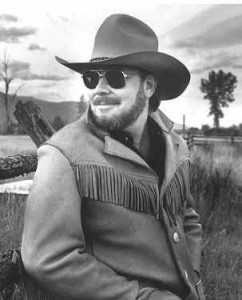
Happy Birthday, Bocephus!

Hank Williams, Jr. is an American country and southern rock artist, son of country music pioneer Hank Williams and father of Hank III and Holly Williams.

Known by the nickname Bocephus (a name given to him by his father because he thought his son as a baby resembled a TV ventriloquist dummy named Bocephus), he was raised by his mother Audrey after his father’s death in 1953. He was destined for fame, being taught how to play piano by Jerry Lee Lewis and guitar by Johnny Cash. He began performing when eight years old.

Hank Williams, Jr.

Hank Williams, Jr. (May 26, 1949 – )

Wikipedia Link

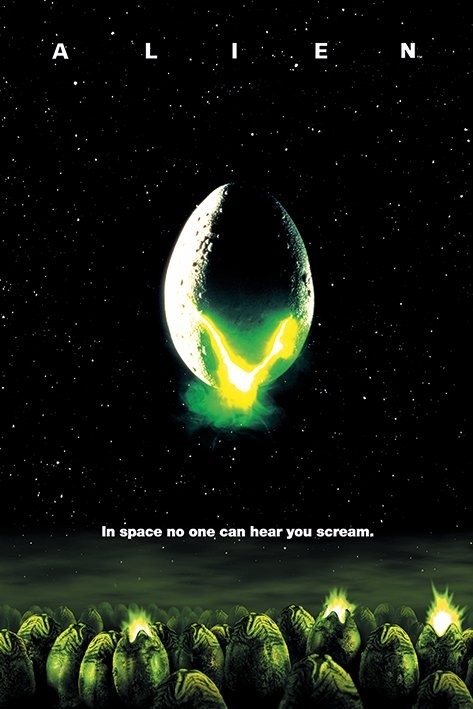
Anniversary of Alien!

Alien was released on May 25, 1979 in the United States and September 6 in the United Kingdom. It was met with critical acclaim and box office success, winning the Academy Award for Best Visual Effects, three Saturn Awards (Best Science Fiction Film, Best Direction for Scott, and Best Supporting Actress for Cartwright), and a Hugo Award for Best Dramatic Presentation, along with numerous other nominations. It has been consistently praised in the years since its release, and is considered one of the greatest films of all time. In 2002, Alien was deemed “culturally, historically or aesthetically significant” by the Library of Congress and was selected for preservation in the United States National Film Registry. In 2008, it was ranked by the American Film Institute as the seventh-best film in the science fiction genre, and as the thirty-third greatest film of all time by Empire magazine.

The success of Alien spawned a media franchise of films, novels, comic books, video games, and toys. It also launched Weaver’s acting career, providing her with her first lead role. The story of her character‘s encounters with the Alien creatures became the thematic and narrative core of the sequels Aliens (1986), Alien 3(1992) and Alien Resurrection (1997). A crossover with the Predator franchise produced the Alien vs. Predator films, which includes Alien vs. Predator (2004) and Aliens vs. Predator: Requiem (2007). A prequel series includes Prometheus (2012) and Alien: Covenant (2017).

Wikipedia Link

Anniversary of Star Wars

Star Wars

May 25, 1977, Memorial Day weekend opens with an intergalactic bang as the first of George Lucas’ blockbuster Star Wars movies hits American theaters.

Wikipedia Link

Towel Day

Towel Day

Today is Towel Day, a day of remembrance for Douglas Adams, author of the Hitchhikers’ Guide to the Galaxy. Observe it by carrying a towel all day.

Link

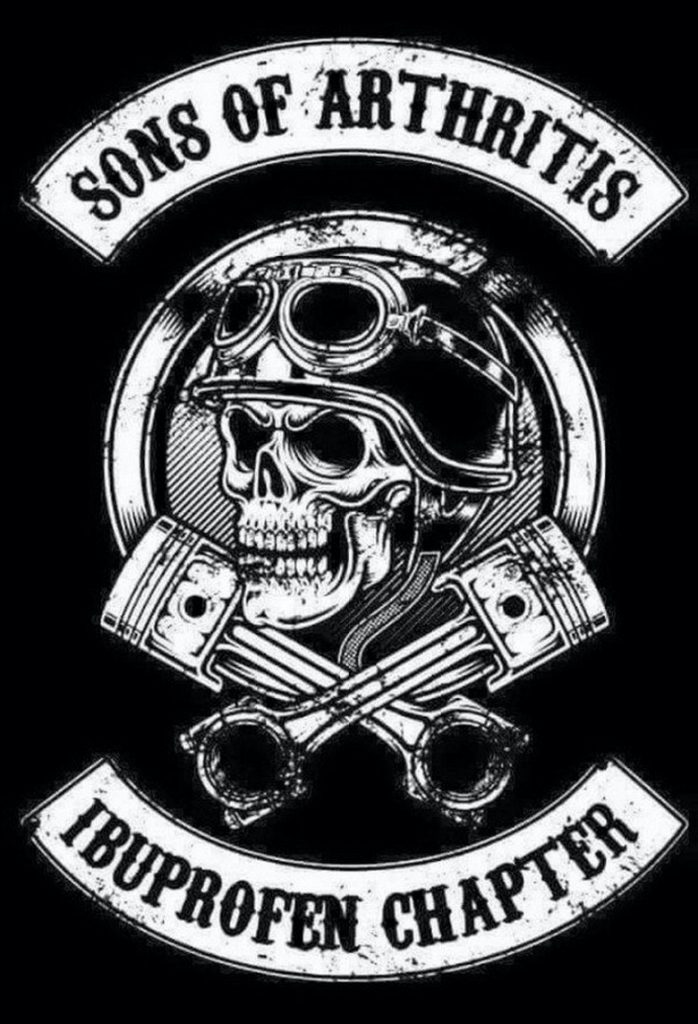
Sons of Arthritis

Close Range Tornado from Drone

1961 : The first American in space

From Cape Canaveral, Florida, Navy Commander Alan Bartlett Shepard Jr. is launched into space aboard the Freedom 7 space capsule, becoming the first American astronaut to travel into space. The suborbital flight, which lasted 15 minutes and reached a height of 116 miles into the atmosphere, was a major triumph for the National Aeronautics and Space Administration (NASA).

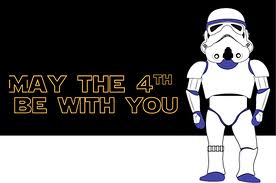
May the 4th Be With You

May the 4th

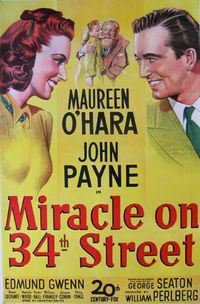
Anniversary of Miracle on 34th Street

Miracle on 34th Street (also titled The Big Heart in the UK) is a 1947 film which tells the story of a gentle old man, working as a Santa Claus at Macy’s department store in New York City, who contends that he is the real deal.

Miracle on 34th Street

Wikipedia Link

The film was released in theaters May 2, 1947.


Just in case

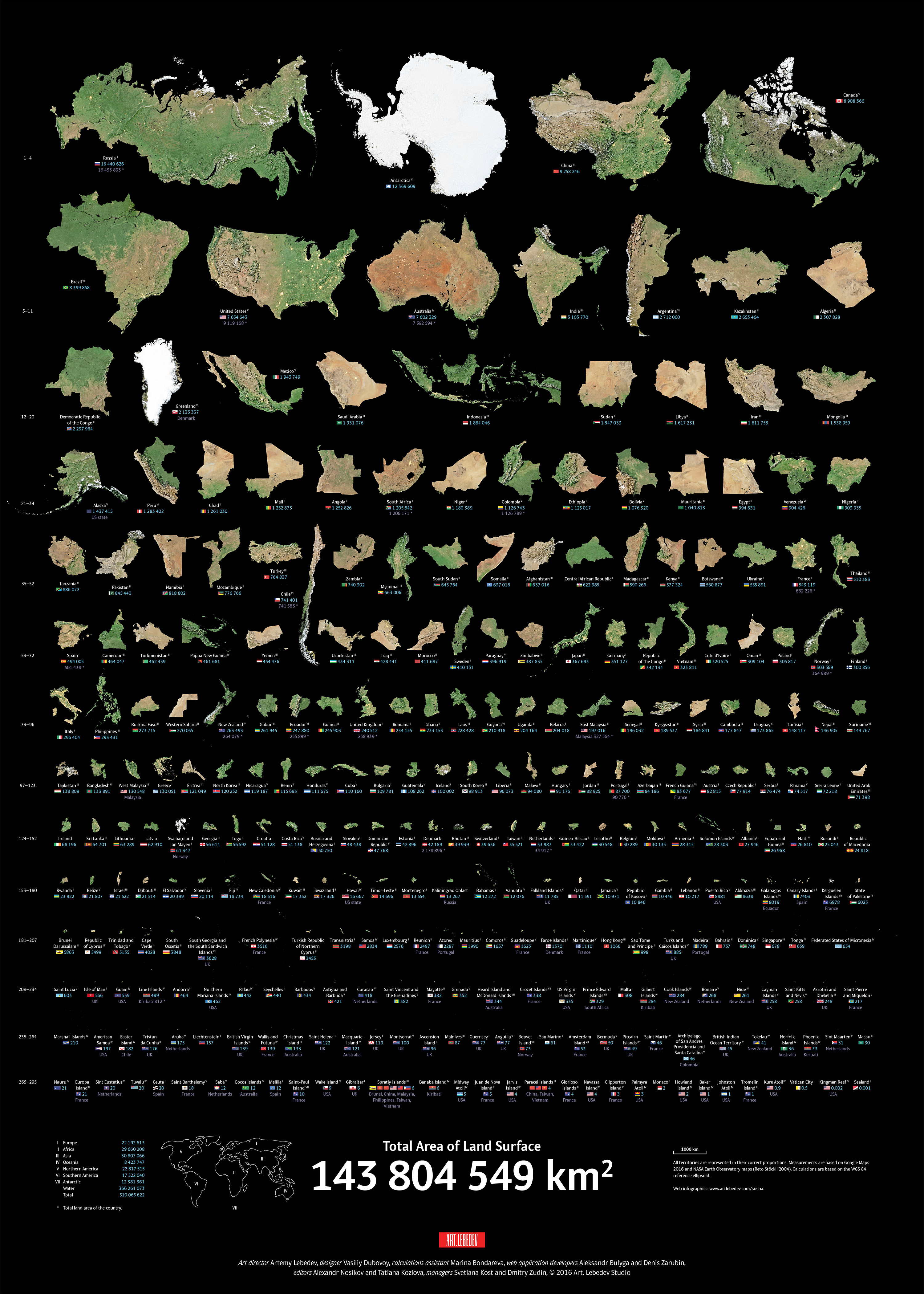
Real proportions of all land masses on Earth

Check it out at the source!

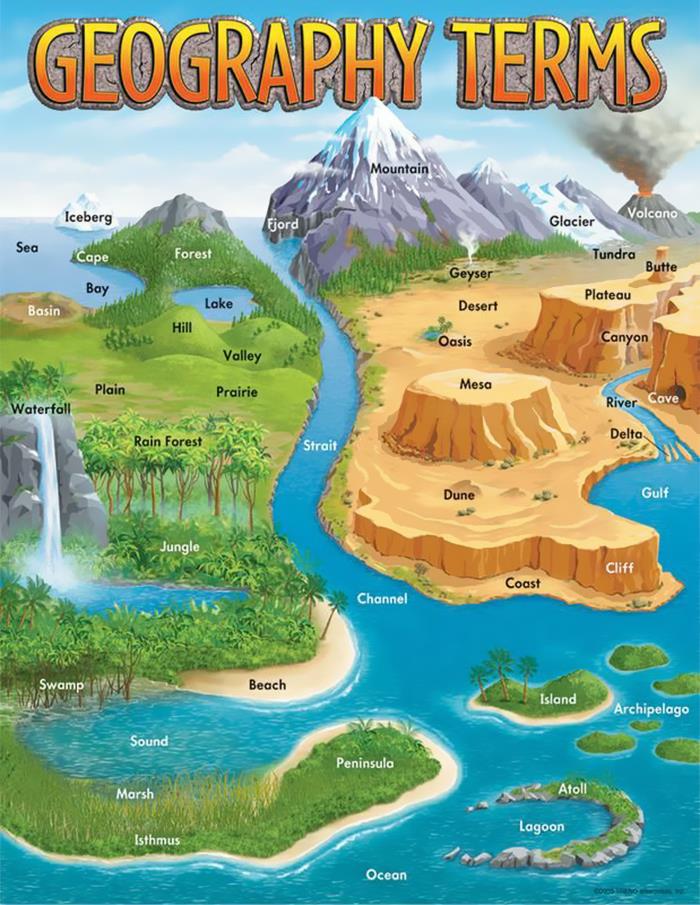
Geography Terms Illustrated

Michael Collins – best comment ever

Read this over on Jalopnik’s piece on Michael Collins. First commenter nailed it:

RIP Michael Collins

On July 16, 1969 three men, Buzz Aldrin, Neil Armstrong, and Michael Collins launched into the sky aboard Saturn V AS-506 to start the Apollo 11 mission.

Four days later, on July 20, 1969, Buzz and Neil entered the Eagle to begin preparations for lunar landing. Later, Eagle separated from Columbia to begin descent to the lunar surface.

Armstrong stepped off Eagle’s footpad and declared: “That’s one small step for [a] man, one giant leap for mankind.” The first human had stepped foot on the Moon.

Buzz joined Armstrong a few minutes later with the simple phrase: “Magnificent desolation.”

But, during the entire process, Michael Collins orbited the Moon. Alone. Forty eight minutes of each orbit he was out of radio contact with the Earth as Columbia passed the far side of the Moon. “Not since Adam has any human known such solitude as Mike Collins,” the mission log said.

Michael Collins passed away today at age 90.

And then there was one…

In Remembrance – Nuclear Disaster at Chernobyl

NUCLEAR DISASTER AT CHERNOBYL:

On April 26, 1986, the world’s worst nuclear power plant accident occurs at the Chernobyl nuclear power station in the Soviet Union. Thirty-two people died and dozens more suffered radiation burns in the opening days of the crisis, but only after Swedish authorities reported the fallout did Soviet authorities reluctantly admit that an accident had occurred.

The Chernobyl station was situated at the settlement of Pripyat, about 65 miles north of Kiev in the Ukraine. Built in the late 1970s on the banks of the Pripyat River, Chernobyl had four reactors, each capable of producing 1,000 megawatts of electric power. On the evening of April 25, 1986, a group of engineers began an electrical-engineering experiment on the Number 4 reactor. The engineers, who had little knowledge of reactor physics, wanted to see if the reactor’s turbine could run emergency water pumps on inertial power.

As part of their poorly designed experiment, the engineers disconnected the reactor’s emergency safety systems and its power-regulating system. Next, they compounded this recklessness with a series of mistakes: They ran the reactor at a power level so low that the reaction became unstable, and then removed too many of the reactor’s control rods in an attempt to power it up again. The reactor’s output rose to more than 200 megawatts but was proving increasingly difficult to control. Nevertheless, at 1:23 a.m. on April 26, the engineers continued with their experiment and shut down the turbine engine to see if its inertial spinning would power the reactor’s water pumps. In fact, it did not adequately power the water pumps, and without cooling water the power level in the reactor surged.

To prevent meltdown, the operators reinserted all the 200-some control rods into the reactor at once. The control rods were meant to reduce the reaction but had a design flaw: graphite tips. So, before the control rod’s five meters of absorbent material could penetrate the core, 200 graphite tips simultaneously entered, thus facilitating the reaction and causing an explosion that blew off the heavy steel and concrete lid of the reactor. It was not a nuclear explosion, as nuclear power plants are incapable of producing such a reaction, but was chemical, driven by the ignition of gases and steam that were generated by the runaway reaction. In the explosion and ensuing fire, more than 50 tons of radioactive material were released into the atmosphere, where it was carried by air currents.

On April 27, Soviet authorities began an evacuation of the 30,000 inhabitants of Pripyat. A cover-up was attempted, but on April 28 Swedish radiation monitoring stations, more than 800 miles to the northwest of Chernobyl, reported radiation levels 40 percent higher than normal. Later that day, the Soviet news agency acknowledged that a major nuclear accident had occurred at Chernobyl.

In the opening days of the crisis, 32 people died at Chernobyl and dozens more suffered radiation burns. The radiation that escaped into the atmosphere, which was several times that produced by the atomic bombs dropped on Hiroshima and Nagasaki, was spread by the wind over Northern and Eastern Europe, contaminating millions of acres of forest and farmland. An estimated 5,000 Soviet citizens eventually died from cancer and other radiation-induced illnesses caused by their exposure to the Chernobyl radiation, and millions more had their health adversely affected. In 2000, the last working reactors at Chernobyl were shut down and the plant was officially closed.


Industrial Empire

Kotobukiya teamed up with Lucasfilm to create this cool steampunk Darth Vader statue. It’s a 1:7 scale statue and it’s called Industrial Empire. The design of the statue was inspired by an illustration from world-renowned artist Adi Granov.

USS Johnston Is Now the Deepest Explored Wreck

The USS Johnston off the coast of Seattle on October 27, 1943.

The main section of the USS Johnston—sunk 77 years ago during the Battle of Leyte Gulf—has been discovered off the Philippine coast. Resting over 4 miles beneath the surface, it’s now the deepest shipwreck to ever be investigated.

With its gun turrets and torpedo racks still intact, the USS Johnston (DD-557)—a 376-foot-long (115-meter) Fletcher-class destroyer—was discovered in the Philippine Trench near Samar Island at a depth of 21,180 feet (6,456 meters). The ship sank on October 25, 1944, during the Battle of Leyte Gulf. Of the crew of 327, only 141 managed to survive.

The main section of the wreck, still resting upright, was discovered by Texas-based Caladan Oceanic, a private marine tech company. Caladan Oceanic surveyed the USS Johnston using the research vessel DSV Limiting Factor, according to its statement.

Evidence of battle damage can be seen on the wreck.
The hull with number 557, identifying the ship as the USS Johnston.

Read the rest of the story over on Gizmodo: here