- Beef on Weck
- Being a Mother
- Chili Cook-off
- Communication (Gazebo)
- CREAMI Vanilla Ice Cream
- Daddy
- Everyone has an Angel
- Family
- Gonna be a Bear
- Harrison Bergeron
- Mute and Alone
- Privacy Policy
- Rikki-tikki-tavi
- Scientists Study Grizzly Bears
- Ship vs. Lighthouse
- Slim To None
- Snowvember (Buffalo 2014)
- Somebody…
- The Present
- The Soldier
- The Star
- Winter
- 11foot8.com
- 365 Tomorrows
- 7 into 28
- A Tale of Two Brains
- Alien to Covenant – History of Alien
- Am I Unique
- AMARC
- American Muscle Car Museum
- Andre Rieu
- Antipodes Map
- Ark in Space
- Azure Status
- Bill Cosby – Revenge
- Blizzard of '77
- Broken Chains
- CDC – Flu
- Christmas Forever AZ
- Coldest City on Earth
- Creations for Charity (Lego)
- Cruise.com
- Curb Watching
- D&D Beyond
- D&D Beyond to FG Character Converter
- Daily Fuel Gauge Report
- Dinosaur Earth
- DMs Guild
- Dofo
- Dr. Demento
- DriveThru RPG
- Dungeon in a Box
- Dyson’s Dodecahedron
- Fantasy Name Generator
- Farmer's Donkey
- Fast Character
- Flight Aware
- Flight Radar 24
- Flixable
- Gaming Table
- Genius
- Geo Guesser!
- Hack The Menu
- Hackers for Charity
- Hadzy
- Have I been Pwned
- HexRoll
- How to remove a tick (properly)
- Identity Theft Resource Center
- Leak Lookup
- Line Rider – Hall of the Mountain King
- Make My Drive Fun
- Mapologies
- Marine Traffic
- MathPapa
- MechWarrior Online
- Medieval Murder Maps
- Meteor Shower Calendar
- Mini Building Materials
- Monterey Bay Aquarium
- MyAbandonware
- Nah! I just might be in there!
- National Do Not Call Registry
- No More Ransom
- NOAA – Louisville
- Nobody Live
- Norse Cyber Attack Map
- OCEARCH.org
- Omega Game Shrine
- Out of the Woods Forestry
- Overt
- PC Gaming Wiki
- Percheron
- Periodic Stats
- Periodic Videos (TED)
- Permethin Fact Sheet
- Pigeon Key Foundation
- Project 44
- pTable
- Pumpkin Pile
- Random Restaurant Generator
- Rankin/Bass – Wikipedia
- ReelGood
- RockAuto
- Roll20 Enhancement Suite
- Schimpff's
- Scuba Shooters
- Sinking of the Titanic
- Smoky Mountain Fall Foliage Map
- Speedsums
- SR-71 Speed Check
- Steam Status
- Still Tasty
- StreamSquid
- Sunken Ships of the Second World War
- Super Slice!
- Swedish Fish
- Tank America
- Taste Dive
- TBSP (TaBleSPoon)
- The Louvre
- The Oz Museum
- The Strong National Museum of Play
- They Can Talk
- This Beat Goes on/Switchin' to Glide
- Tick Removal (CDC)
- Trappistine Candy
- Vacation Rentals By Owner
- Vehicle Privacy Report
- VPNFilter Check
- War Puppets Rise to Heaven
- Weather Back Home
- WebGL Water
- Whalers on the Moon
- What's New on Netflix
- Who's On First
- Why are Jacks called Jacks?
- Wild Spirit
- Window Swap
- WKRP Turkey Drop
- Wordcount
- World's Hottest Chocolate Bar
- WWII Portraits of Honor
- March 2026
- February 2026
- January 2026
- December 2025
- November 2025
- October 2025
- September 2025
- August 2025
- July 2025
- June 2025
- May 2025
- April 2025
- March 2025
- February 2025
- January 2025
- December 2024
- November 2024
- October 2024
- September 2024
- August 2024
- July 2024
- June 2024
- May 2024
- April 2024
- March 2024
- February 2024
- January 2024
- December 2023
- November 2023
- October 2023
- September 2023
- August 2023
- July 2023
- June 2023
- May 2023
- April 2023
- March 2023
- February 2023
- January 2023
- December 2022
- November 2022
- October 2022
- September 2022
- August 2022
- July 2022
- June 2022
- May 2022
- April 2022
- March 2022
- February 2022
- January 2022
- December 2021
- November 2021
- October 2021
- September 2021
- August 2021
- July 2021
- June 2021
- May 2021
- April 2021
- March 2021
- February 2021
- January 2021
- December 2020
- November 2020
- October 2020
- September 2020
- August 2020
- July 2020
- June 2020
- May 2020
- April 2020
- March 2020
- February 2020
- January 2020
- December 2019
- November 2019
- October 2019
- September 2019
- August 2019
- July 2019
- June 2019
- May 2019
- April 2019
- March 2019
- February 2019
- January 2019
- December 2018
- November 2018
- October 2018
- September 2018
- August 2018
- July 2018
- June 2018
- May 2018
- April 2018
- March 2018
- February 2018
- January 2018
- December 2017
- November 2017
- October 2017
- September 2017
- August 2017
- July 2017
- June 2017
- May 2017
- April 2017
- March 2017
- February 2017
- January 2017
- December 2016
- November 2016
- October 2016
- September 2016
- August 2016
- July 2016
- June 2016
- May 2016
- April 2016
- March 2016
- February 2016
- January 2016
- December 2015
- November 2015
- October 2015
- September 2015
- August 2015
- July 2015
- June 2015
- May 2015
- April 2015
- March 2015
- February 2015
- January 2015
- December 2014
- November 2014
- October 2014
- September 2014
- August 2014
- July 2014
- June 2014
- May 2014
- April 2014
- March 2014
- February 2014
- January 2014
- December 2013
- November 2013
- October 2013
- September 2013
- August 2013
- July 2013
- June 2013
- May 2013
- April 2013
- March 2013
- February 2013
- January 2013
- December 2012
- November 2012
- October 2012
- September 2012
- August 2012
- July 2012
- June 2012
- May 2012
- April 2012
- March 2012
- February 2012
- January 2012
- December 2011
- November 2011
- October 2011
- September 2011
- August 2011
- July 2011
- June 2011
- May 2011
- April 2011
Category Archives: On This Day
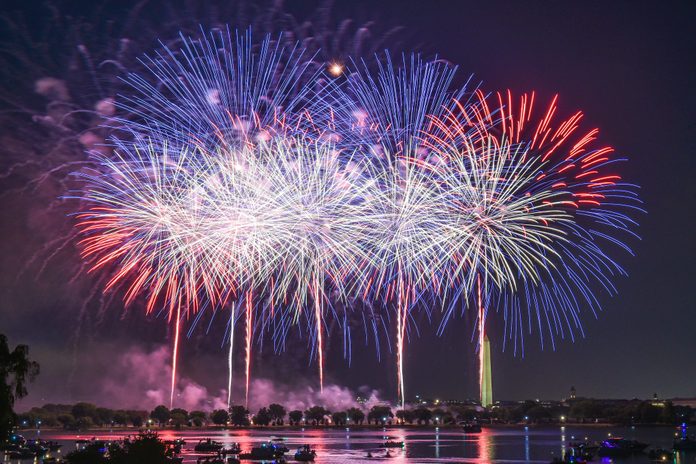
Happy 4th of July!
Posted in Because I Can, On This Day, Patriotic
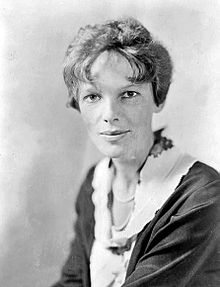
Anniversary of the Disappearance of Amelia Earhart


Amelia Mary Earhart (July 24, 1897 – disappeared 1937) was a noted American aviation pioneer and author.Earhart was the first woman to receive the U.S. Distinguished Flying Cross,awarded for becoming the first aviatrix to fly solo across the Atlantic Ocean. She set many other records, wrote best-selling books about her flying experiences and was instrumental in the formation of The Ninety-Nines, an organization for female pilots. Earhart joined the faculty of the Purdue University aviation department in 1935 as a visiting faculty member to counsel women on careers and help inspire others with her love for aviation. She was also a member of the National Woman’s Party, and an early supporter of the Equal Rights Amendment.
During an attempt to make a circumnavigational flight of the globe in 1937 in a Purdue-funded Lockheed Model 10 Electra, Earhart disappeared over the central Pacific Ocean near Howland Island. Fascination with her life, career and disappearance continues to this day.
Posted in On This Day, Planes Trains and Automobiles
First Motion Picture Theater
The first motion picture theater was called a nickelodeon because admission was a nickel.
It opened in McKeesport, PA on June 19, 1905.
Posted in On This Day, The Big Screen
First roller coaster in America opens
On June 16, 1884, the first roller coaster in America opens at Coney Island, in Brooklyn, New York. Known as a switchback railway, it was the brainchild of LaMarcus Thompson, traveled approximately six miles per hour and cost a nickel to ride. The new entertainment was an instant success and by the turn of the century there were hundreds of roller coasters around the country.
Coney Island, a name believed to have come from the Dutch Konijn Eilandt, or Rabbit Island, is a tract of land along the Atlantic Ocean discovered by explorer Henry Hudson in 1609. The first hotel opened at Coney Island in 1829 and by the post-Civil War years, the area was an established resort with theaters, restaurants and a race track. Between 1897 and 1904, three amusement parks sprang up at Coney Island–Dreamland, Luna Park and Steeplechase. By the 1920s, Coney Island was reachable by subway and summer crowds of a million people a day flocked there for rides, games, sideshows, the beach and the two-and-a-half-mile boardwalk, completed in 1923.
The hot dog is said to have been invented at Coney Island in 1867 by Charles Feltman. In 1916, a nickel hot dog stand called Nathan’s was opened by a former Feltman employee and went on to become a Coney Island institution and international franchise. Today, Nathan’s is famous not only for its hot dogs but its hot dog-eating contest, held each Fourth of July in Coney Island. In 2006, Takeru Kobayashi set a new record when he ate 53.75 hot dogs with buns in 12 minutes.
Roller coasters and amusement parks experienced a decline during the Great Depression and World War II, when Americans had less cash to spend on entertainment. Finally, in 1955, the opening of Disneyland in Anaheim, California, signaled the advent of the modern theme park and a rebirth of the roller coaster. Disneyland’s success sparked a wave of new parks and coasters. By the 1970s, parks were competing to create the most thrilling rides. In 2005, Six Flags Great Adventure in Jackson, New Jersey, introduced the Kingda Ka roller coaster, the world’s tallest (at 456 feet) and fastest (at 128 mph).
By the mid-1960s, the major amusement parks at Coney Island had shut down and the area acquired a seedy image. Nevertheless, Coney Island remains a tourist attraction and home to the Cyclone, a wooden coaster that made its debut there in 1927. Capable of speeds of 60 mph and with an 85-foot drop, the Cyclone is one of the country’s oldest coasters in operation today. Though a real-estate developer recently announced the building of a new .5 billion year-round resort at Coney Island that will include a 4,000-foot-long roller coaster, an indoor water park and a multi-level carousel, the Cyclone’s owners have said they plan to keep the historic coaster open for business.
Posted in On This Day
Congress adopts the Stars and Stripes
During the American Revolution, the Continental Congress adopts a resolution stating that “the flag of the United States be thirteen alternate stripes red and white” and that “the Union be thirteen stars, white in a blue field, representing a new Constellation.” The national flag, which became known as the “Stars and Stripes,” was based on the “Grand Union” flag, a banner carried by the Continental Army in 1776 that also consisted of 13 red and white stripes. According to legend, Philadelphia seamstress Betsy Ross designed the new canton for the Stars and Stripes, which consisted of a circle of 13 stars and a blue background, at the request of General George Washington. Historians have been unable to conclusively prove or disprove this legend.
With the entrance of new states into the United States after independence, new stripes and stars were added to represent new additions to the Union. In 1818, however, Congress enacted a law stipulating that the 13 original stripes be restored and that only stars be added to represent new states.
On June 14, 1877, the first Flag Day observance was held on the 100th anniversary of the adoption of the Stars and Stripes. As instructed by Congress, the U.S. flag was flown from all public buildings across the country. In the years after the first Flag Day, several states continued to observe the anniversary, and in 1949 Congress officially designated June 14 as Flag Day, a national day of observance.
Posted in On This Day, Patriotic
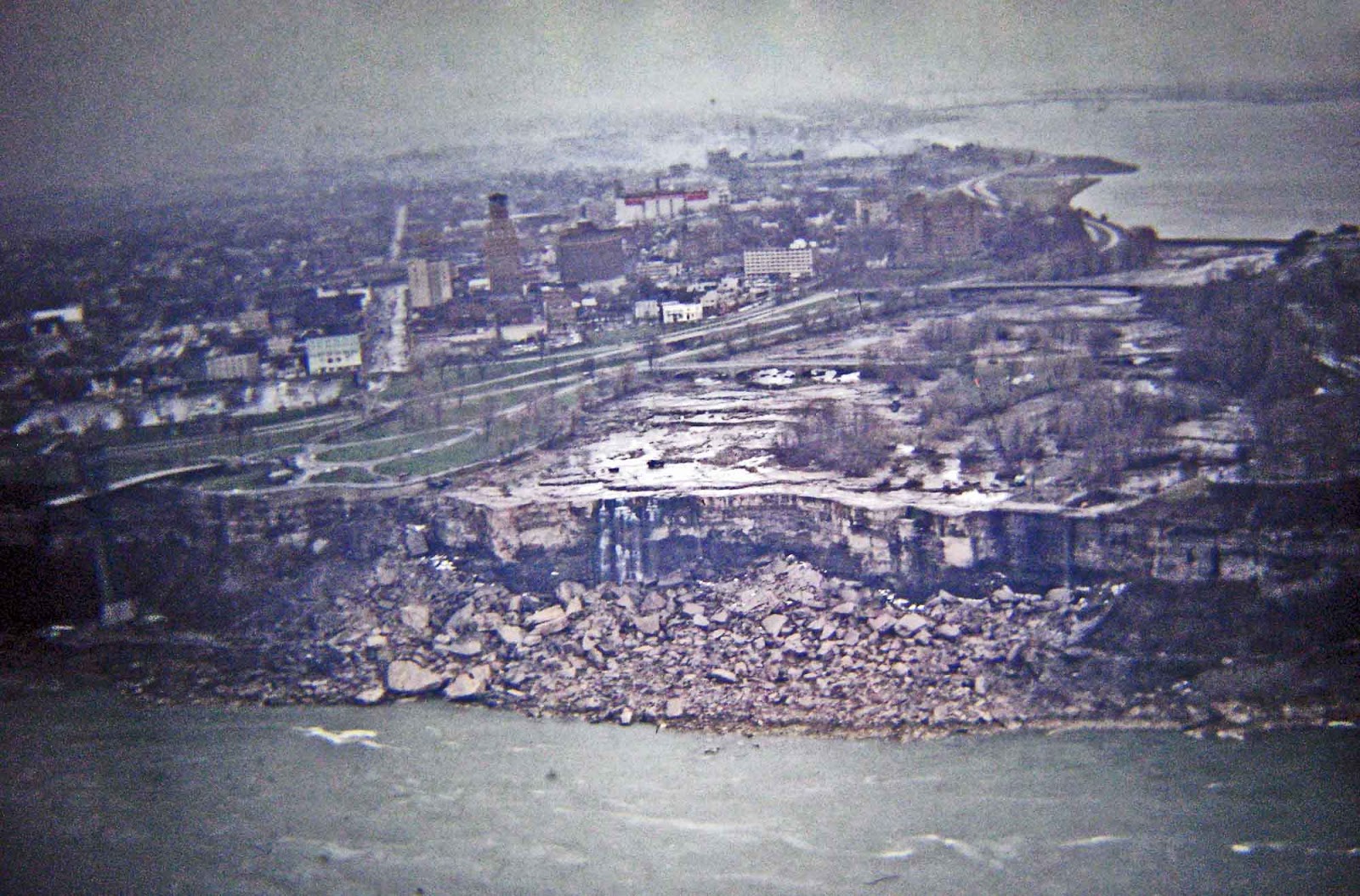
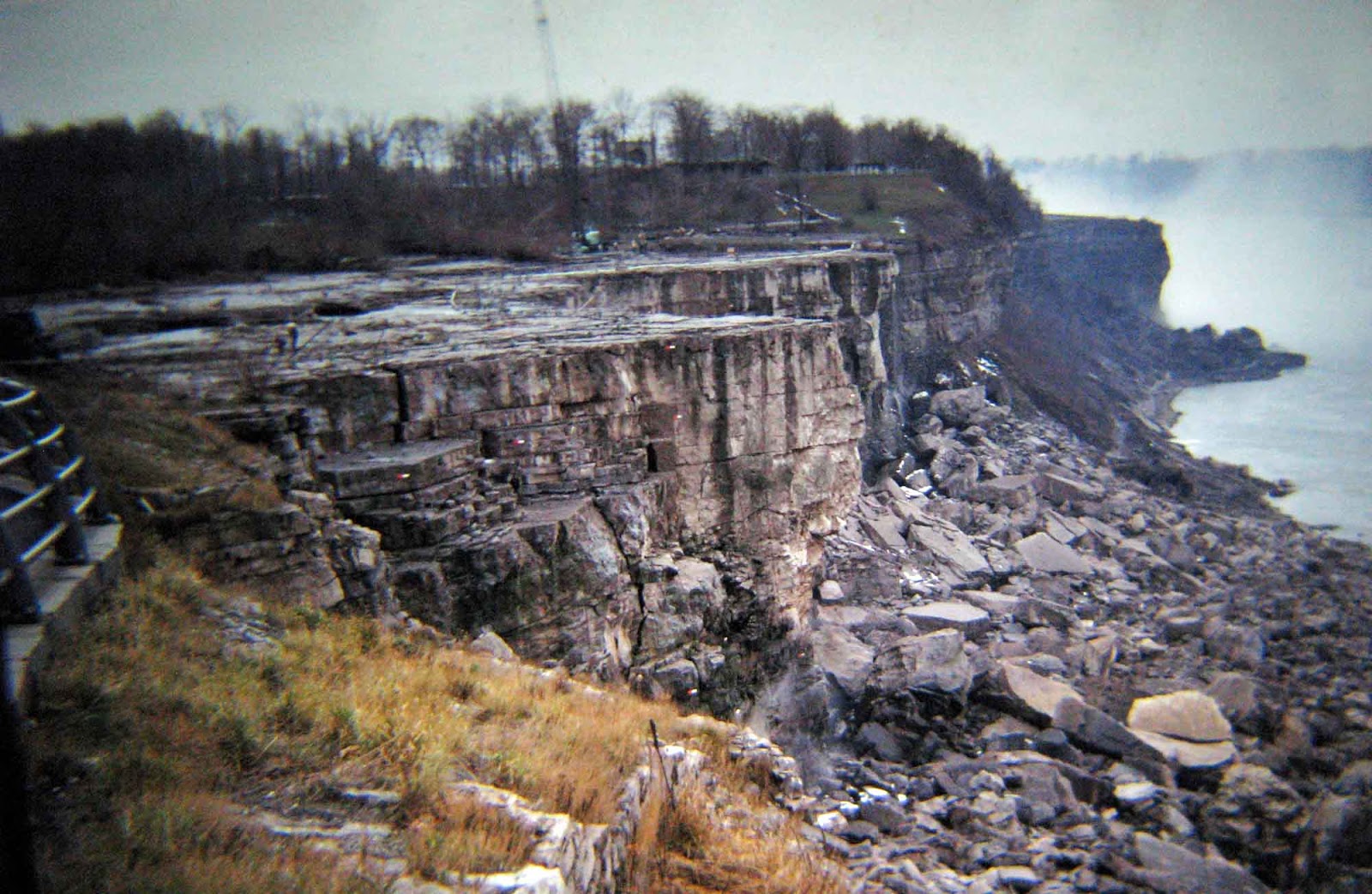
Niagara Falls Stopped Flowing
On June 12, 1969, after flowing continuously for over 12,000 years, the American Falls stopped.


Read the entire story at rarehistoricalphotos.com, it is amazing!
Posted in On This Day
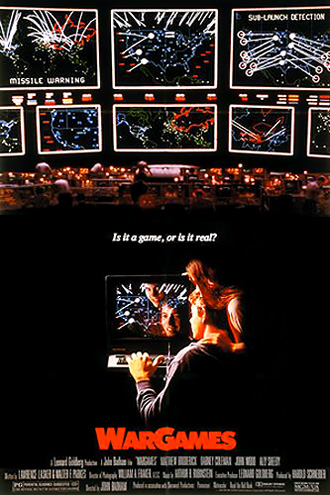
Anniversary of WarGames
Posted in On This Day, The Big Screen
Happy Birthday, Big Ben
The famous tower clock known as Big Ben, located at the top of the 320-foot-high St. Stephen’s Tower, rings out over the Houses of Parliament in Westminster, London, for the first time on this day, May 31st, in 1859.
After a fire destroyed much of the Palace of Westminster–the headquarters of the British Parliament–in October 1834, a standout feature of the design for the new palace was a large clock atop a tower. The royal astronomer, Sir George Airy, wanted the clock to have pinpoint accuracy, including twice-a-day checks with the Royal Greenwich Observatory. While many clockmakers dismissed this goal as impossible, Airy counted on the help of Edmund Beckett Denison, a formidable barrister known for his expertise in horology, or the science of measuring time.
Denison’s design, built by the company E.J. Dent & Co., was completed in 1854; five years later, St. Stephen’s Tower itself was finished. Weighing in at more than 13 tons, its massive bell was dragged to the tower through the streets of London by a team of 16 horses, to the cheers of onlookers. Once it was installed, Big Ben struck its first chimes on May 31, 1859. Just two months later, however, the heavy striker designed by Denison cracked the bell. Three more years passed before a lighter hammer was added and the clock went into service again. The bell was rotated so that the hammer would strike another surface, but the crack was never repaired.
The name “Big Ben” originally just applied to the bell but later came to refer to the clock itself. Two main stories exist about how Big Ben got its name. Many claim it was named after the famously long-winded Sir Benjamin Hall, the London commissioner of works at the time it was built. Another famous story argues that the bell was named for the popular heavyweight boxer Benjamin Caunt, because it was the largest of its kind.
Even after an incendiary bomb destroyed the chamber of the House of Commons during the Second World War, St. Stephen’s Tower survived, and Big Ben continued to function. Its famously accurate timekeeping is regulated by a stack of coins placed on the clock’s huge pendulum, ensuring a steady movement of the clock hands at all times. At night, all four of the clock’s faces, each one 23 feet across, are illuminated. A light above Big Ben is also lit to let the public know when Parliament is in session.
Posted in Because I Can, On This Day
Sinking of the Bismark
On May 27, 1941, the British navy sinks the German battleship Bismarck in the North Atlantic near France. The German death toll was more than 2,000.
On February 14, 1939, the 823-foot Bismarck was launched at Hamburg. Nazi leader Adolf Hitler hoped that the state-of-the-art battleship would herald the rebirth of the German surface battle fleet. However, after the outbreak of war, Britain closely guarded ocean routes from Germany to the Atlantic Ocean, and only U-boats moved freely through the war zone.
In May 1941, the order was given for the Bismarck to break out into the Atlantic. Once in the safety of the open ocean, the battleship would be almost impossible to track down, all the while wreaking havoc on Allied convoys to Britain. Learning of its movement, Britain sent almost the entire British Home Fleet in pursuit. On May 24, the British battle cruiser Hood and battleship Prince of Wales intercepted it near Iceland. In a ferocious battle, the Hood exploded and sank, and all but three of the 1,421 crewmen were killed. The Bismarck escaped, but because it was leaking fuel it fled for occupied France. On May 26, it was sighted and crippled by British aircraft, and on May 27 three British warships descended on the Bismarck and finished it off.
Posted in On This Day
45th Anniversary of Star Wars

May 25, 1977, Memorial Day weekend opens with an intergalactic bang as the first of George Lucas’ blockbuster Star Wars movies hits American theaters.
Posted in Because I Can, On This Day, The Big Screen
Peace Officers Memorial Day
Flags at half-staff today to honor fallen officers
Flags are to fly at half-staff today for Peace Officers Memorial Day. Gov. Rendell has ordered Pennsylvania flags at state facilities to be flown at half-staff, and President Obama directed the same for U.S. flags.
“On this day, we pay tribute to the local, state, and federal law enforcement officers who provide a vital public service and, too often, pay the ultimate sacrifice to safeguard the rights and freedoms of our citizens,” Rendell said in a statement. “We honor them for their character, leadership, and courage.”
In 1962, President John F. Kennedy and Congress designated May 15 as Peace Officers Memorial Day. The calendar week in which May 15 falls is National Police Week.
Posted in On This Day, Patriotic
Transcontinental Railroad
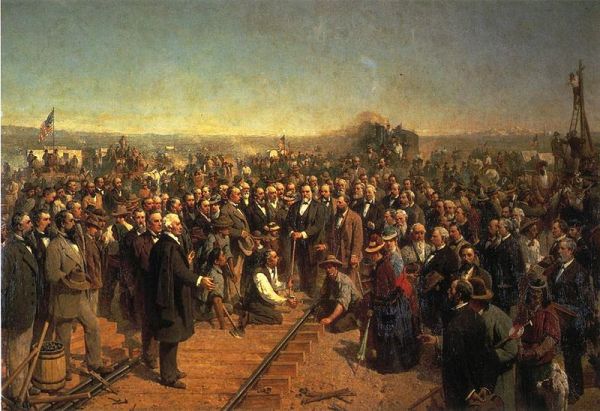
On May 10, 1869, the ceremonial spike (actually more than one) was driven into the meeting point of the Union Pacific Railroad and the Central Pacific Railroad. That’s when it became the transcontinental railroad, and traveling across the country no longer meant months in a wagon or on a ship sailing around South America.
Posted in On This Day
Lusitania sinks
On the afternoon of May 7, 1915, the British ocean liner Lusitania is torpedoed without warning by a German submarine off the south coast of Ireland. Within 20 minutes, the vessel sank into the Celtic Sea. Of 1,959 passengers and crew, 1,198 people were drowned, including 128 Americans. The attack aroused considerable indignation in the United States, but Germany defended the action, noting that it had issued warnings of its intent to attack all ships, neutral or otherwise, that entered the war zone around Britain.
Posted in On This Day, Planes Trains and Automobiles
The Hindenburg Disaster
On May 6,1937, the airship Hindenburg, the largest dirigible ever built and the pride of Nazi Germany, bursts into flames upon touching its mooring mast in Lakehurst, New Jersey, killing 36 passengers and crewmembers.
Posted in On This Day, Planes Trains and Automobiles
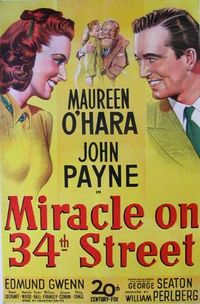
Anniversary of Miracle on 34th Street
Miracle on 34th Street (also titled The Big Heart in the UK) is a 1947 film which tells the story of a gentle old man, working as a Santa Claus at Macy’s department store in New York City, who contends that he is the real deal.

Posted in Because I Can, On This Day, The Big Screen
In Remembrance – Nuclear Disaster at Chernobyl
On April 26, 1986, the world’s worst nuclear power plant accident occurs at the Chernobyl nuclear power station in the Soviet Union. Thirty-two people died and dozens more suffered radiation burns in the opening days of the crisis, but only after Swedish authorities reported the fallout did Soviet authorities reluctantly admit that an accident had occurred.
The Chernobyl station was situated at the settlement of Pripyat, about 65 miles north of Kiev in the Ukraine. Built in the late 1970s on the banks of the Pripyat River, Chernobyl had four reactors, each capable of producing 1,000 megawatts of electric power. On the evening of April 25, 1986, a group of engineers began an electrical-engineering experiment on the Number 4 reactor. The engineers, who had little knowledge of reactor physics, wanted to see if the reactor’s turbine could run emergency water pumps on inertial power.
As part of their poorly designed experiment, the engineers disconnected the reactor’s emergency safety systems and its power-regulating system. Next, they compounded this recklessness with a series of mistakes: They ran the reactor at a power level so low that the reaction became unstable, and then removed too many of the reactor’s control rods in an attempt to power it up again. The reactor’s output rose to more than 200 megawatts but was proving increasingly difficult to control. Nevertheless, at 1:23 a.m. on April 26, the engineers continued with their experiment and shut down the turbine engine to see if its inertial spinning would power the reactor’s water pumps. In fact, it did not adequately power the water pumps, and without cooling water the power level in the reactor surged.
To prevent meltdown, the operators reinserted all the 200-some control rods into the reactor at once. The control rods were meant to reduce the reaction but had a design flaw: graphite tips. So, before the control rod’s five meters of absorbent material could penetrate the core, 200 graphite tips simultaneously entered, thus facilitating the reaction and causing an explosion that blew off the heavy steel and concrete lid of the reactor. It was not a nuclear explosion, as nuclear power plants are incapable of producing such a reaction, but was chemical, driven by the ignition of gases and steam that were generated by the runaway reaction. In the explosion and ensuing fire, more than 50 tons of radioactive material were released into the atmosphere, where it was carried by air currents.
On April 27, Soviet authorities began an evacuation of the 30,000 inhabitants of Pripyat. A cover-up was attempted, but on April 28 Swedish radiation monitoring stations, more than 800 miles to the northwest of Chernobyl, reported radiation levels 40 percent higher than normal. Later that day, the Soviet news agency acknowledged that a major nuclear accident had occurred at Chernobyl.
In the opening days of the crisis, 32 people died at Chernobyl and dozens more suffered radiation burns. The radiation that escaped into the atmosphere, which was several times that produced by the atomic bombs dropped on Hiroshima and Nagasaki, was spread by the wind over Northern and Eastern Europe, contaminating millions of acres of forest and farmland. An estimated 5,000 Soviet citizens eventually died from cancer and other radiation-induced illnesses caused by their exposure to the Chernobyl radiation, and millions more had their health adversely affected. In 2000, the last working reactors at Chernobyl were shut down and the plant was officially closed.

Posted in Because I Can, On This Day
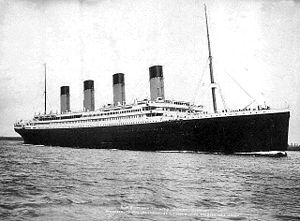
Anniversary of the sinking of the Titanic
On April 15th, 1912, RMS Titanic struck an iceberg on her maiden voyage from Southampton, England to New York City and sank, taking over 1500 lives with her.
Posted in Because I Can, On This Day, Planes Trains and Automobiles