Category Archives: Patriotic

Anniversary of Apollo 13

Apollo 13 was the seventh manned mission in the American Apollo space program and the third intended to land on the Moon. The craft was launched on April 11, 1970, at 13:13 CST from the Kennedy Space Center, Florida, but the lunar landing was aborted after an oxygen tank exploded two days later, crippling the Service Module (SM) upon which the Command Module (CM) depended. Despite great hardship caused by limited power, loss of cabin heat, shortage of potable water, and the critical need to jury-rig the carbon dioxide removal system, the crew returned safely to Earth on April 17.

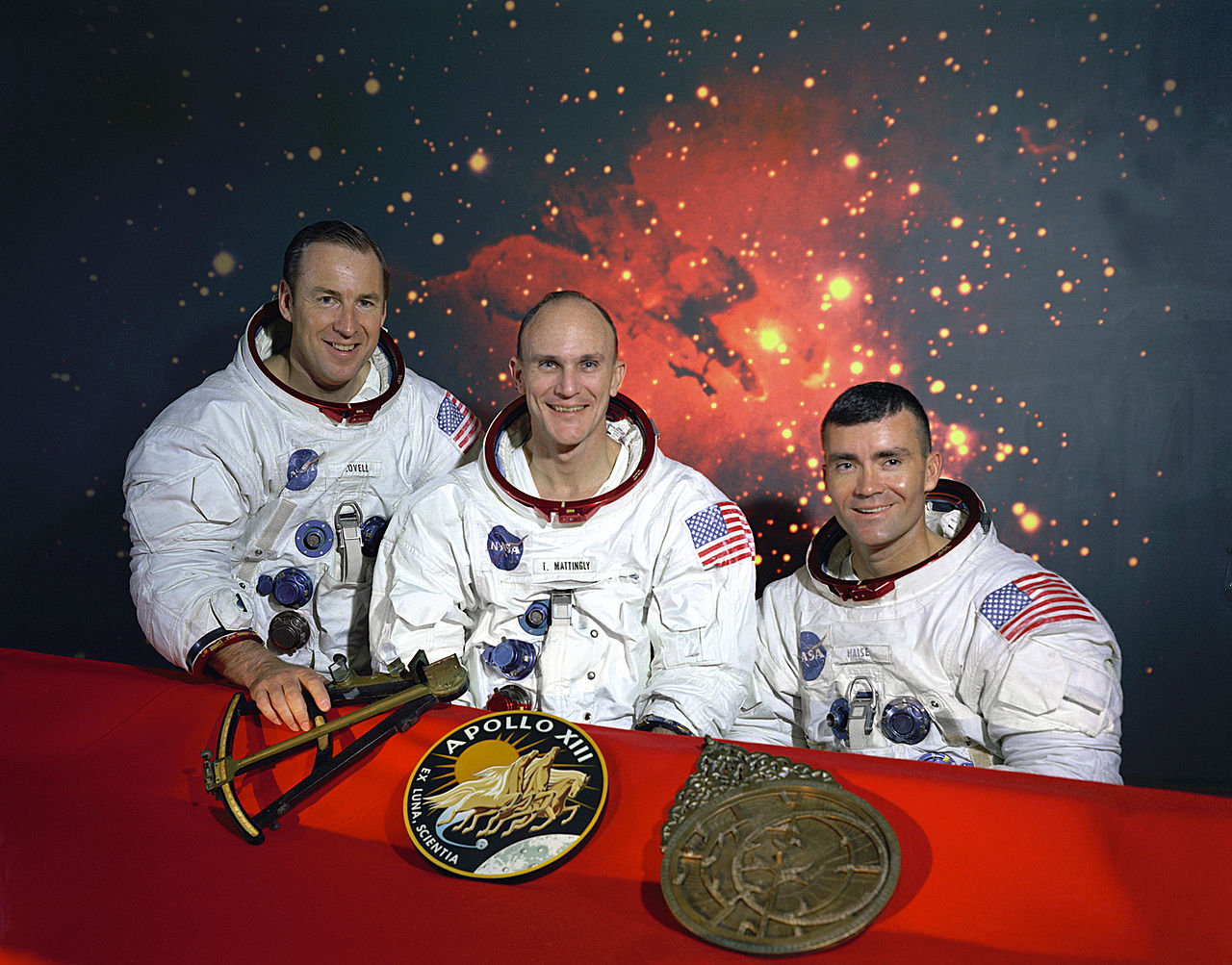
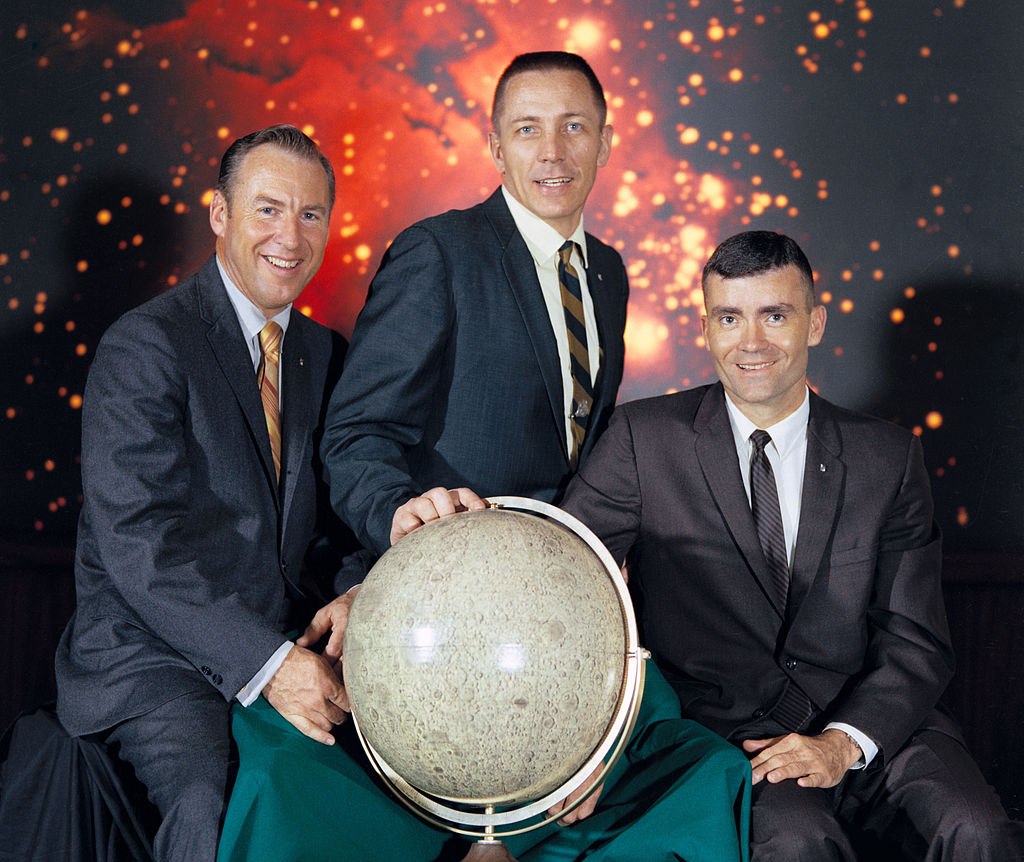
The flight was commanded by James A. Lovell with John L. “Jack” Swigert as Command Module Pilot and Fred W. Haise as Lunar Module Pilot. Swigert was a late replacement for the original CM pilot Ken Mattingly, who was grounded by the flight surgeon after exposure to German measles.

Apollo 13: Lovell, Swigert, Haise

Apollo 13: Lovell, Swigert, Haise

Original crew photo. Left to right: Lovell, Mattingly, Haise

Original crew photo. Left to right: Lovell, Mattingly, Haise

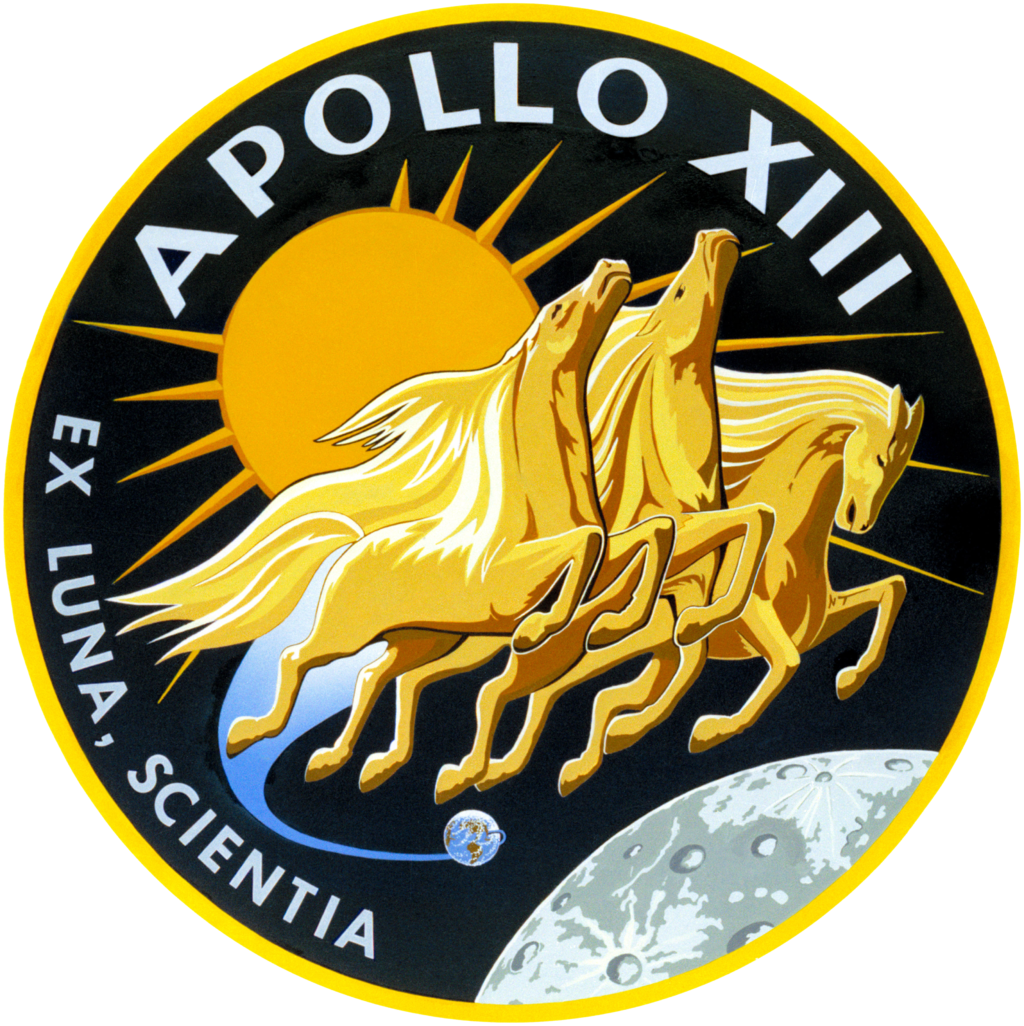
This is the insignia of the Apollo 13 lunar landing mission.

This is the insignia of the Apollo 13 lunar landing mission.

Mercury 7

Mercury 7

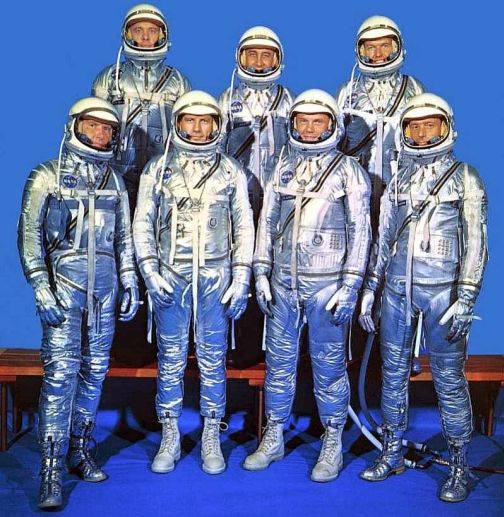
On this day in 1959, NASA announced The Mercury Seven: the seven men to make up their first astronaut class.

The Mercury Seven were chosen in Washington, DC from a body of 69 candidates. The name comes from Mercury, a Roman mythological god who is seen as a symbol of speed. Because of the small space inside the Mercury capsule, candidates could be no taller than 5 feet 11 inches and weigh no more than 180 pounds. The initial flights took off throughout the early 1960s, though some astronauts were active in later decades. Here are the guys:

Malcolm Scott Carpenter (born 1925) was a US Navy piolot aviation cadet who flew missions during the Korean War. He was on board the MA-7 (Aurora 7) and was the first American astronaut to eat solid food in space. He successfully overcame an overexpenditure of fuel due to hardware problems on his one and only mission. Carpenter was forced to retire from spaceflight after sustaining a motorbike accident. After retiring from the Navy, he founded Sea Sciences Inc., a corporation for developing programs for utilizing ocean resources and improving environmental health.

Leroy Gordon (Gordo) Cooper Jr. (1927 – 2004) was very active in the Boy Scouts of America and achieved the second highest rank of Life Scout. Prior to joining NASA, Cooper also served in the US Air Force and Marine Corps. He was on board the MA-9 (Faith 7) and Gemini 5, and developed a personal survival knife for astronauts to carry. Cooper was the first American to sleep in orbit. Interestingly, he took photos of and reported UFO sightings to the Pentagon, but they swept the incident under the rug.

John Herschel Glenn Jr. (born 1921) began his career as a US Marine Corps fighter pilot. He was on board the MA-6 (Friendship 7) and STS-95. Noticed for his heroics in space, Glenn became friendly with the Kennedys and a prominent public figure. After retiring from NASA, he ran as a Democrat and represented the state of Ohio in the United States Senate from 1974 to 1999.

Virgil Ivan (Gus) Grissom (1926 – 1967) was a US Air Force pilot before joining NASA. He was on board the MR-4 (Liberty Bell 7), Gemini 3, and Apollo 1. Grissom was tragically killed along with fellow astronauts Ed White and Roger Chaffee during a pre-launch test for the Apollo 1 mission. After death, his family was involved in a spacesuit controversy: NASA insisted Grissom got authorization to use his spacesuit for a show and tell at his son’s school and never returned it, but his family claimed the he had rescued the spacesuit from a scrap heap and that it rightfully belonged to them.

Walter Marty (Wally) Schirra Jr. (1923 – 2007)’s father was a pilot, and his mother performed wing walking stunts when he was on duty. Schirra served as an officer in the US Navy, and was later dispatched to South Korea as a pilot on loan to the US Air Force. On board the MA-8 (Sigma 7), Gemini 6A, and Apollo 7, he was the only person to fly in all of America’s first three space programs. Schirra gained notoriety for playing “Jingle Bells” on a harmonica he smuggled on board Gemini.

Alan Bartlett Shepard Jr. (1923 – 1998) began as a US Navy as test pilot. He was the first American in space, and flew on board the MR-3 (Freedom 7) and Apollo 14. It’s said that shortly before one launch, Shepard blurted out “Please, dear God, don’t let me fuck up.” This has since become known among aviators as “Shepard’s Prayer.” A successful businessman, Shepard was the first astronaut to become a millionaire while still in the program. His hometown of Derry, NH almost changed its name to “Spacetown” in honor of Schirra’s career.

Donald Kent (Deke) Slayton (1924 – 1993) was also a US Air Force pilot before joining NASA. He was grounded from space flight by a heart condition, but served as NASA’s Director of Flight Crew Operations. Slayton served as head of Astronaut selection. In 1972 he was granted medical clearance to fly as docking module pilot of the Apollo-Soyuz Test Project. At the time of the flight, he became the oldest person to fly into space.

The last surviving members of the Mercury Seven, as of April 7, 2012, are Glenn and Scott Carpenter.

Paul Harvey… Good Day (and goodbye)

Paul Harvey

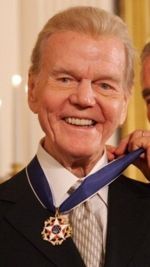
Paul Harvey Aurandt (September 4, 1918 – February 28, 2009)

Paul Harvey was an American radio broadcaster for the ABC Radio Networks. He broadcast News and Comment on weekday mornings and mid-days, and at noon on Saturdays, as well as his famous The Rest of the Story segments. His listening audience was estimated at 22 million people a week.

Harvey was known for catch phrases that he uses at the beginning of his programs, like “Hello Americans, I’m Paul Harvey. You know what the news is, in a minute, you’re going to hear … the rest of the story,” and, “Paul Harvey News and Commentary, and this is … (day of the week),” and at the end: “Paul Harvey … Good day.” At the end of a report about someone who had done something ridiculous or offensive, Harvey would say “He would want us to mention his name” (silence) then would start the next item.

Wikipedia Link

In Remembrance – Space Shuttle Columbia & Crew

On February 1, 2003, the Space Shuttle Columbia disintegrated during re-entry on its 28th mission; all seven crew members aboard perished.

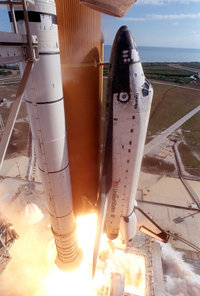
Columbia Launch STS-107

Columbia launches on its final mission, STS-107.

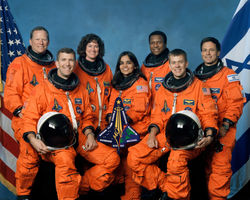
Columbia STS-107 Crew

The crew of STS-107. L to R: Brown, Husband, Clark, Chawla, Anderson, McCool, Ramon.

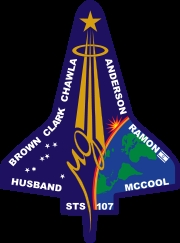
Columbia STS-107 Mission Patch

Columbia STS-107 Mission Patch.

Wikipedia Link

In Remembrance – Space Shuttle Challenger & Crew

On January 28, 1986, the Space Shuttle Challenger disintegrated 73 seconds into its flight after an O-ring seal in its right solid rocket booster (SRB) failed at liftoff.  All seven astronauts on board were lost.

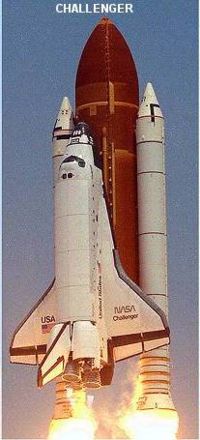
Challenger STS-51 at Launch

Challenger launches on its final mission, STS-51.

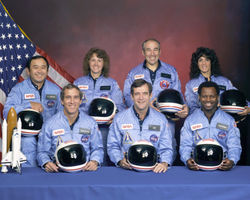
Challenger STS-51 Crew

The crew of STS-51. Front row, from left to right: Smith, Scobee, and McNair. Back row, from left to right: Onizuka, McAuliffe, Jarvis, and Resnik.

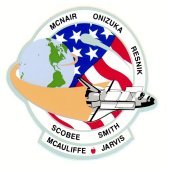
Challenger STS-51 Mission Patch

STS-51 mission patch.

Wikipedia Link

Pearl Harbor

Flag at half mast

My personal thanks for all of those who served, lived and died.

Read more »

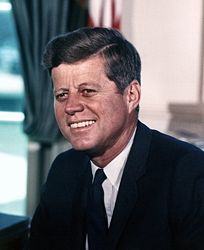
John F. Kennedy

John F. Kennedy

John Fitzgerald Kennedy (May 29, 1917–November 22, 1963)

The assassination of John F. Kennedy, the thirty-fifth President of the United States, took place on Friday, November 22, 1963, in Dallas, Texas, USA at 12:30 p.m. CST (18:30 UTC). John F. Kennedy was fatally wounded by gunshots while riding with his wife Jacqueline in a presidential motorcade through Dealey Plaza. Kennedy was assassinated by Lee Harvey Oswald, an employee of the Texas School Book Depository in Dealey Plaza, according to the conclusions of multiple government investigations, including the ten-month investigation of the Warren Commission of 1963-4 and the United States House Select Committee on Assassinations (HSCA) of 1976-9. This conclusion initially met with widespread support among the American public, but polls, since the original 1966 Gallup poll, show a majority of the public hold beliefs contrary to these findings. The assassination is still the subject of widespread speculation and has spawned numerous conspiracy theories (even the HSCA, based on disputed acoustical evidence, concluded that Oswald may have had unspecified co-conspirators), though these theories have not generally been accepted by mainstream historians and no single compelling alternative theory has emerged.

Happy Birthday, ISS

On November 20, 1998, the first segment of the ISS, the Zarya FGB, was launched into orbit on a Russian Proton rocket, and was followed two weeks later by the first of three ‘node’ modules, Unity, launched aboard STS-88.

Wikipedia Link

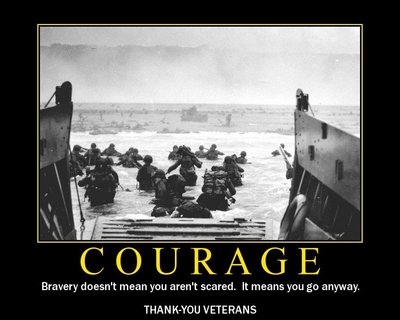
Veteran’s Day

Veteran's Day

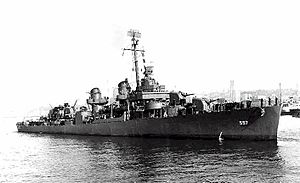
Anniversary of the sinking of the USS Johnston

USS Johnston (DD-557)

USS Johnston (DD-557) was a World War II-era Fletcher-class destroyer in the service of the United States Navy. She was the first Navy ship named after Lieutenant John V. Johnston. The ship was most famous for its bold action in the Battle off Samar. The small “tincan” destroyer armed with nothing larger than 5 inch (127mm) guns and torpedoes would lead the attack of a handful of light ships which had inadvertently been left unprotected in the path of a massive Japanese fleet led by battleships and cruisers. The sacrifices of Johnston and her little escort carrier task unit “Taffy 3” helped stop Admiral Kurita’s powerful Center Force from attacking vulnerable U.S. landing forces, and inflicted greater losses than they suffered.

Wikipedia Link

September 11

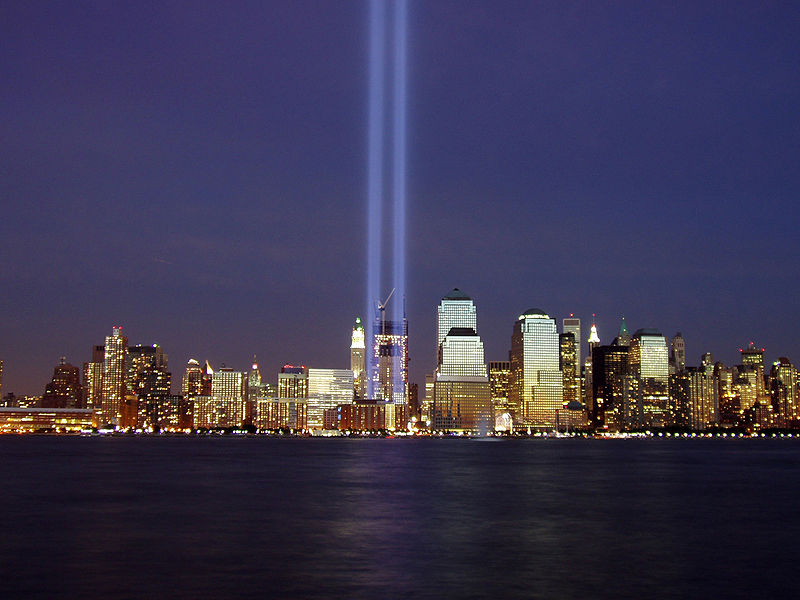
Tribute in LightClick for larger image

September 11, 2001

Please observe a moment of silence at 8:46 a.m. (1246 GMT) to mark the moment when American Airlines Flight 11 crashes into the North Tower of the World Trade Center, at 9:03 a.m. (1303 GMT) when United Airlines Flight 175 crashes into the South Tower of the World Trade Center, 9:37 (1337 GMT) when American Airlines Flight 77 crashes into the Pentagon,  at  9:59 a.m. (1359 GMT)  when the South Tower Collapses, at 10:03 (1403 GMT) when United Airlines Flight 93 crashes near Shanksville, Pennsylvania, and finally at 10:29 a.m. (1429 GMT) when the North Tower Collapses.

United States nicknamed ‘Uncle Sam’

On September 7, 1813, the United States gets its nickname, Uncle Sam. The name is linked to Samuel Wilson, a meat packer from Troy, New York, who supplied barrels of beef to the United States Army during the War of 1812. Wilson (1766-1854) stamped the barrels with “U.S.” for United States, but soldiers began referring to the grub as “Uncle Sam’s.” The local newspaper picked up on the story and Uncle Sam eventually gained widespread acceptance as the nickname for the U.S. federal government.

In the late 1860s and 1870s, political cartoonist Thomas Nast (1840-1902) began popularizing the image of Uncle Sam. Nast continued to evolve the image, eventually giving Sam the white beard and stars-and-stripes suit that are associated with the character today. The German-born Nast was also credited with creating the modern image of Santa Claus as well as coming up with the donkey as a symbol for the Democratic Party and the elephant as a symbol for the Republicans. Nast also famously lampooned the corruption of New York City’s Tammany Hall in his editorial cartoons and was, in part, responsible for the downfall of Tammany leader William Tweed.

Perhaps the most famous image of Uncle Sam was created by artist James Montgomery Flagg (1877-1960). In Flagg’s version, Uncle Sam wears a tall top hat and blue jacket and is pointing straight ahead at the viewer. During World War I, this portrait of Sam with the words “I Want You For The U.S. Army” was used as a recruiting poster. The image, which became immensely popular, was first used on the cover of Leslie’s Weekly in July 1916 with the title “What Are You Doing for Preparedness?” The poster was widely distributed and has subsequently been re-used numerous times with different captions.

In September 1961, the U.S. Congress recognized Samuel Wilson as “the progenitor of America’s national symbol of Uncle Sam.” Wilson died at age 88 in 1854, and was buried next to his wife Betsey Mann in the Oakwood Cemetery in Troy, New York, the town that calls itself “The Home of Uncle Sam.”

What inspires a man to play taps every day…

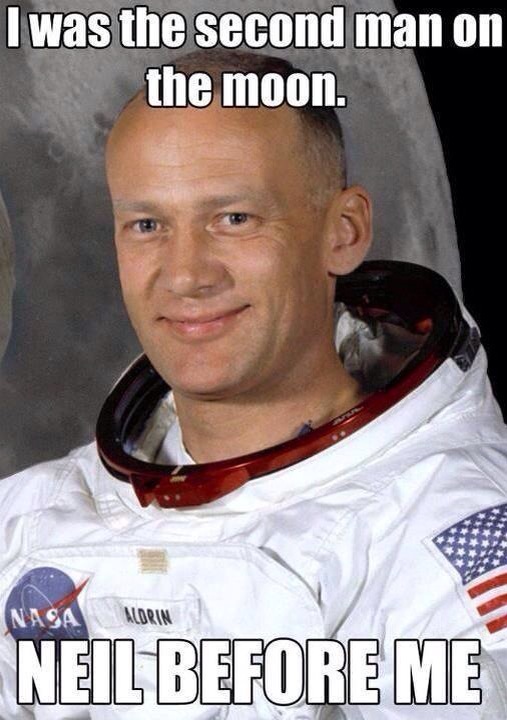
Second man on the moon…

Kneel Before Me– Buzz Aldrin


Sorry Buzz, but this was too funny not to repeat… 🙂


STS-135 lands

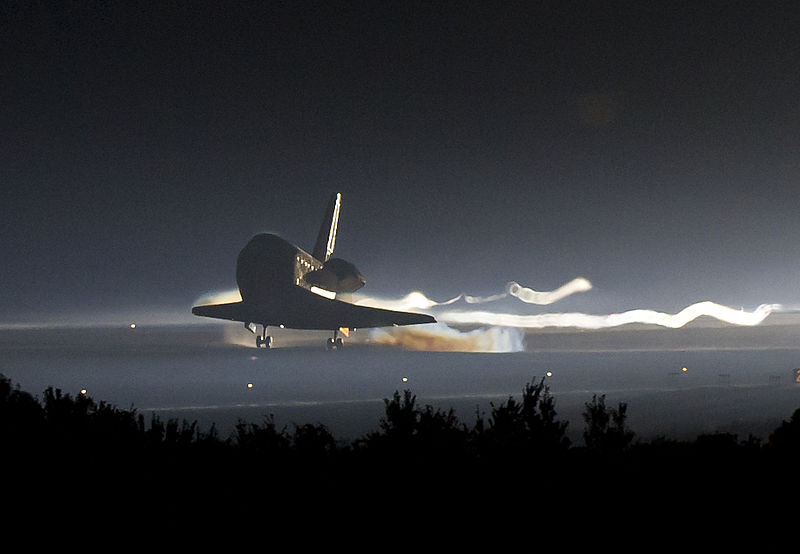
Space shuttle Atlantis lands for the STS-135 mission marking the final mission of the Space Shuttle Program at NASA’s Kennedy Space Center in Florida. Time of landing was 5:57 a.m. (EDT) on July 21, 2011.

The “just at dawn” landing was one of the most memorable landings ever, as shown in this picture:

STS-135 Landing


“The Eagle has landed.” Remembering Apollo 11: July 20, 1969


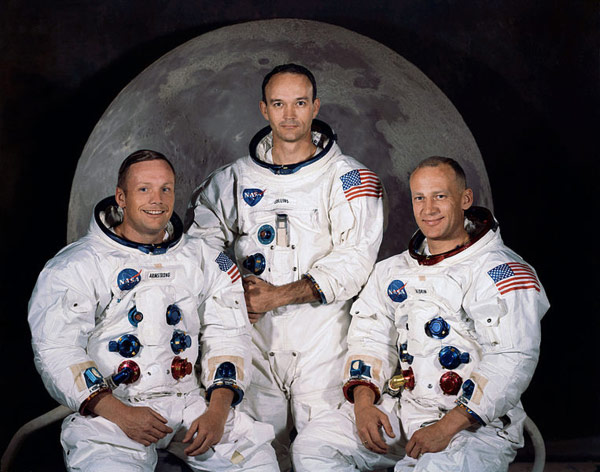
Apollo 11

Left to right: Neil Armstrong, Michael Collins, and Buzz Aldrin, the crew of Apollo 11. Photo: NASA.

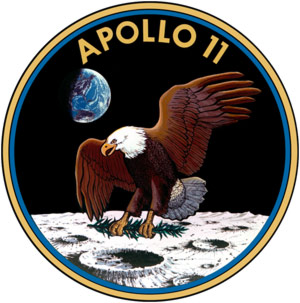
Apollo 11 Insignia

On this day in 1969, humans walked on the moon for the first time. The Apollo 11 spaceflight brought Americans Neil Armstrong and Buzz Aldrin to the lunar surface on July 20, 1969, at 20:18 UTC.

Michael Collins, the mission’s third member, remained in lunar orbit. All three men returned safely to Earth after an 8-day mission that began with a Saturn V rocket launch from Kennedy Space Center in Merritt Island, Florida on July 16.

This was the fifth manned mission of NASA’s Apollo program, which ran from 1963 to 1972 and included 6 missions that landed on the moon. These were the first and last times human beings set foot on another world.

NASA has a collection of restored HD videos well worth watching on this historic day.

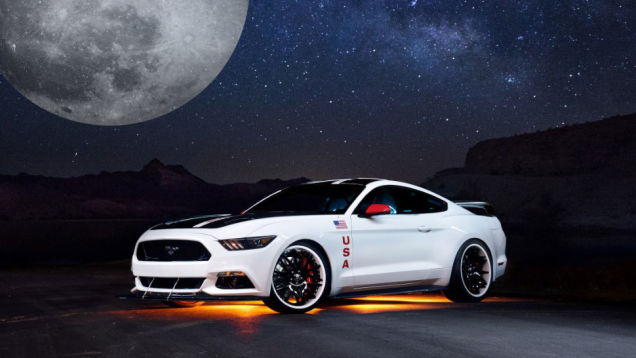
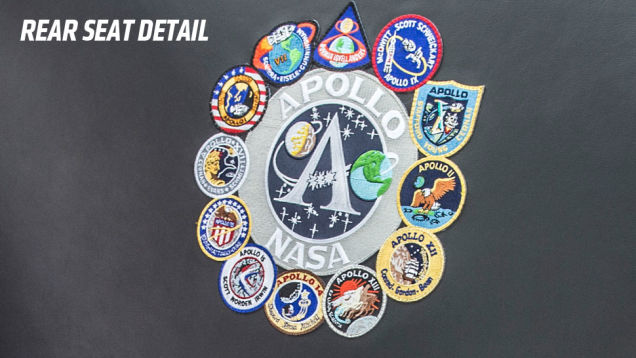
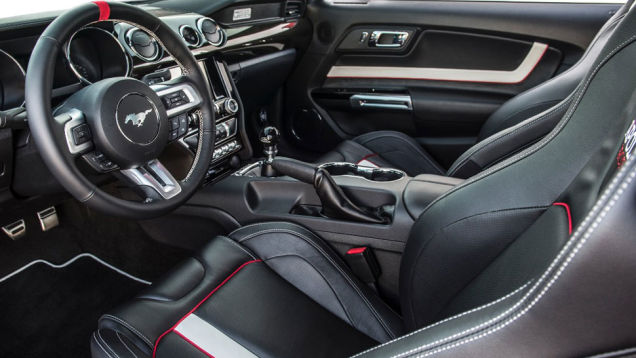
You Can Now Get An Apollo-Edition Mustang Because The World Is Great

apollo_mustang_1

Special edition cars are often just motorized platforms to test the limits of human eye-rolling. There’s something about those Harley Davidson-edition F150s or the Fiat 500 Gucci cars that just feels like shameless brand-whoring. But not this one. Not these Mustangs made to honor the Apollo moon missions. These are terrific.

apollo_mustang_2

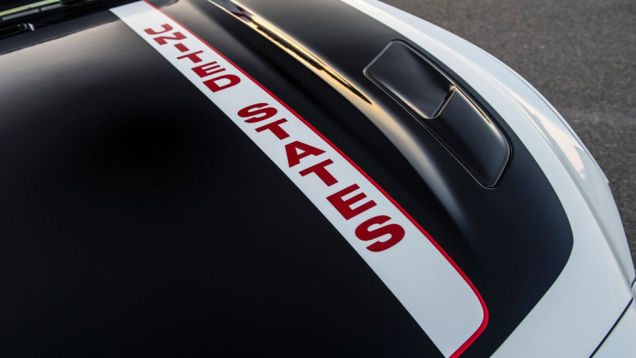
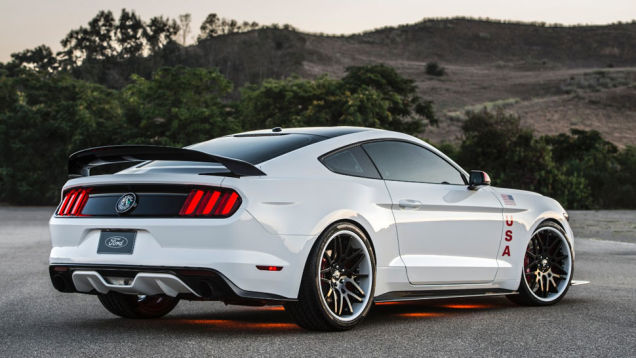
The car is pretty much exactly what you’d think it is: a Ford Mustang GT (with 627 HP here to make it at feel more rocket-like) done up to resemble a bit of hardware from the Apollo era. It’s got the black-and-white color scheme of a Saturn V, and has vertical USA decals and small American flags and hood stripes that read, again vertically, UNITED STATES in such a way that it’s impossible to look at them and not picture that same stock footage of the Saturn V launching in your head. You know, this sort of thing:

That’s a pretty good thing to pop into your head when you see a car.

The design scheme unquestionably suggests a NASA rocket. It’s stylized and simple and iconic, and they resisted all the temptations I would have had to stick a bunch of fake valves and vents and access panels and stuff on it. But they still manage to get a fun surprise in here, too, with some red-orange LED underbody lighting meant to suggest the heat of re-entry on the Apollo capsule.

apollo_mustang_3

I know many out there may find this silly or over-the-top, but I say fuck that, life’s too short. This is simply fun. The Mustang has long established itself as the premiere platform for non-essential accent lighting experiments, with sequential indicators, shaped puddle lights and all that, and this underbody lighting fits in perfectly.

apollo_mustang_4

I mean, look at the top image of the car there at night with those lights on. It’s dramatic and exuberant and fun. If that’s too much for you, why the hell would you even consider buying a car designed to look like a rocket? You wouldn’t. This car is an unashamed fantasy-appeasement tool for all of us (myself included) who, somewhere deep down, still want to be an astronaut.

apollo_mustang_5

You may have a shitty job, but how terrible would you feel everyday if you left work and walked out to your own personal rocketship? It may be faintly silly, sure, but in the best possible way.

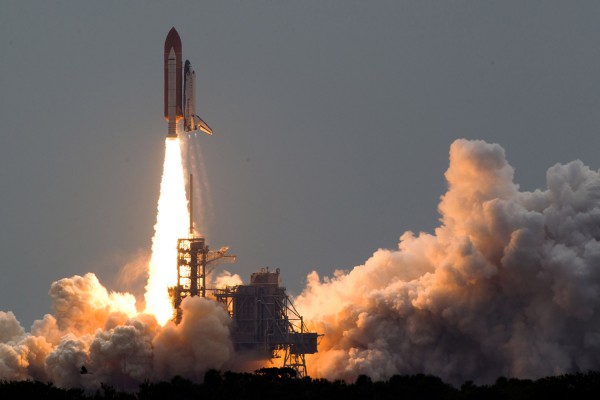
STS-135 launch

Space shuttle Atlantis launches for the STS-135 mission to the International Space Station in the final mission of the Space Shuttle Program at NASA’s Kennedy Space Center in Florida. Liftoff was at 11:29 a.m. (EDT) on July 8, 2011. Astronauts Chris Ferguson, STS-135 commander; Doug Hurley, pilot; Sandy Magnus and Rex Walheim, both mission specialists, were on board.

STS-135 launch


Star Spangled Banner played on Eight Floppy Drives

1812 Overture played with flaming bagpipes on tall unicycle – The Unipiper!