Category Archives: Patriotic

In Remembrance – Space Shuttle Challenger & Crew

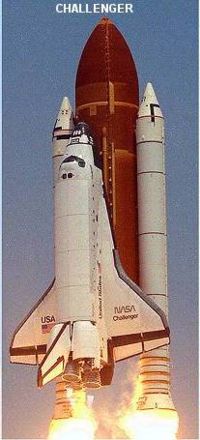
On January 28, 1986, the Space Shuttle Challenger disintegrated 73 seconds into its flight after an O-ring seal in its right solid rocket booster (SRB) failed at liftoff.  All seven astronauts on board were lost.

Challenger STS-51 at Launch

Challenger launches on its final mission, STS-51.

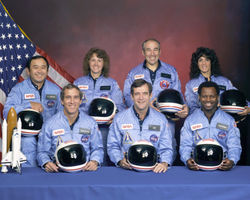
Challenger STS-51 Crew

The crew of STS-51. Front row, from left to right: Smith, Scobee, and McNair. Back row, from left to right: Onizuka, McAuliffe, Jarvis, and Resnik.

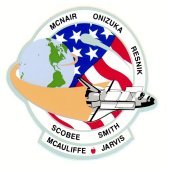
Challenger STS-51 Mission Patch

STS-51 mission patch.

Wikipedia Link

Pearl Harbor

Flag at half mast

My personal thanks for all of those who served, lived and died.

Read more »

John F. Kennedy (50 years)

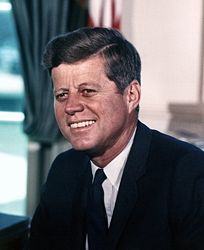
John F. Kennedy

John Fitzgerald Kennedy (May 29, 1917–November 22, 1963)

The assassination of John F. Kennedy, the thirty-fifth President of the United States, took place on Friday, November 22, 1963, in Dallas, Texas, USA at 12:30 p.m. CST (18:30 UTC). John F. Kennedy was fatally wounded by gunshots while riding with his wife Jacqueline in a presidential motorcade through Dealey Plaza. Kennedy was assassinated by Lee Harvey Oswald, an employee of the Texas School Book Depository in Dealey Plaza, according to the conclusions of multiple government investigations, including the ten-month investigation of the Warren Commission of 1963-4 and the United States House Select Committee on Assassinations (HSCA) of 1976-9. This conclusion initially met with widespread support among the American public, but polls, since the original 1966 Gallup poll, show a majority of the public hold beliefs contrary to these findings. The assassination is still the subject of widespread speculation and has spawned numerous conspiracy theories (even the HSCA, based on disputed acoustical evidence, concluded that Oswald may have had unspecified co-conspirators), though these theories have not generally been accepted by mainstream historians and no single compelling alternative theory has emerged.

Happy Birthday, ISS

On November 20, 1998, the first segment of the ISS, the Zarya FGB, was launched into orbit on a Russian Proton rocket, and was followed two weeks later by the first of three ‘node’ modules, Unity, launched aboard STS-88.

Wikipedia Link

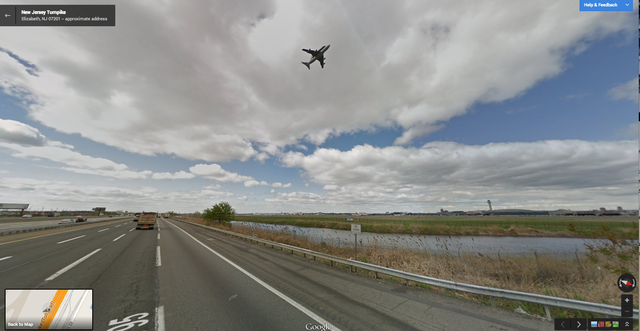
Google Street View captures Shuttle on 747

Google Street View Captures Shuttle

Space Shuttle Enterprise last flight towards New York was captured by Google Street View

Veteran’s Day

Veteran's Day

September 11

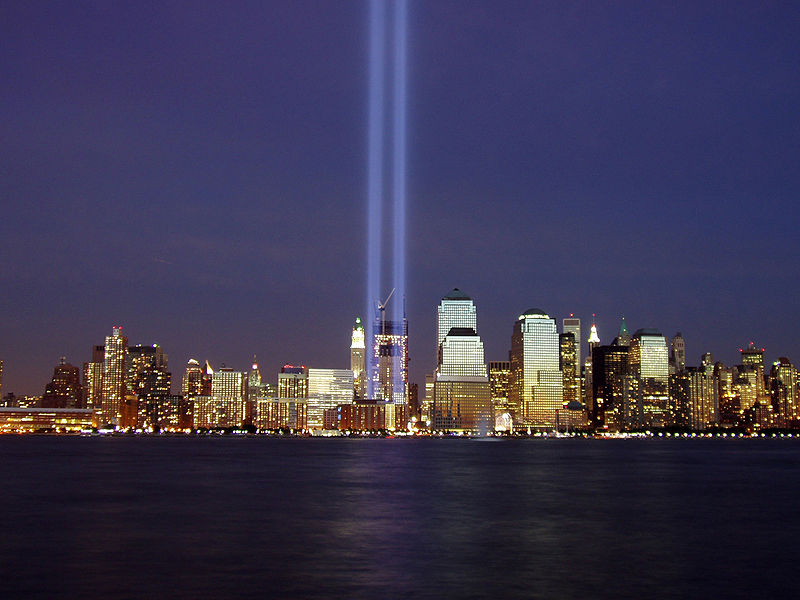
Tribute in LightClick for larger image

September 11, 2001

Please observe a moment of silence at 8:46 a.m. (1246 GMT) to mark the moment when the first plane hit one tower and at 9:03 a.m. (1303 GMT), when the second hijacked airliner crashed into the other tower, and again at 9:59 a.m. (1359 GMT) and 10:29 a.m. (1429 GMT) when each tower crumbled.

United States nicknamed ‘Uncle Sam’

On September 7, 1813, the United States gets its nickname, Uncle Sam. The name is linked to Samuel Wilson, a meat packer from Troy, New York, who supplied barrels of beef to the United States Army during the War of 1812. Wilson (1766-1854) stamped the barrels with “U.S.” for United States, but soldiers began referring to the grub as “Uncle Sam’s.” The local newspaper picked up on the story and Uncle Sam eventually gained widespread acceptance as the nickname for the U.S. federal government.

In the late 1860s and 1870s, political cartoonist Thomas Nast (1840-1902) began popularizing the image of Uncle Sam. Nast continued to evolve the image, eventually giving Sam the white beard and stars-and-stripes suit that are associated with the character today. The German-born Nast was also credited with creating the modern image of Santa Claus as well as coming up with the donkey as a symbol for the Democratic Party and the elephant as a symbol for the Republicans. Nast also famously lampooned the corruption of New York City’s Tammany Hall in his editorial cartoons and was, in part, responsible for the downfall of Tammany leader William Tweed.

Perhaps the most famous image of Uncle Sam was created by artist James Montgomery Flagg (1877-1960). In Flagg’s version, Uncle Sam wears a tall top hat and blue jacket and is pointing straight ahead at the viewer. During World War I, this portrait of Sam with the words “I Want You For The U.S. Army” was used as a recruiting poster. The image, which became immensely popular, was first used on the cover of Leslie’s Weekly in July 1916 with the title “What Are You Doing for Preparedness?” The poster was widely distributed and has subsequently been re-used numerous times with different captions.

In September 1961, the U.S. Congress recognized Samuel Wilson as “the progenitor of America’s national symbol of Uncle Sam.” Wilson died at age 88 in 1854, and was buried next to his wife Betsey Mann in the Oakwood Cemetery in Troy, New York, the town that calls itself “The Home of Uncle Sam.”

“The Eagle has landed.” Remembering Apollo 11: July 20, 1969


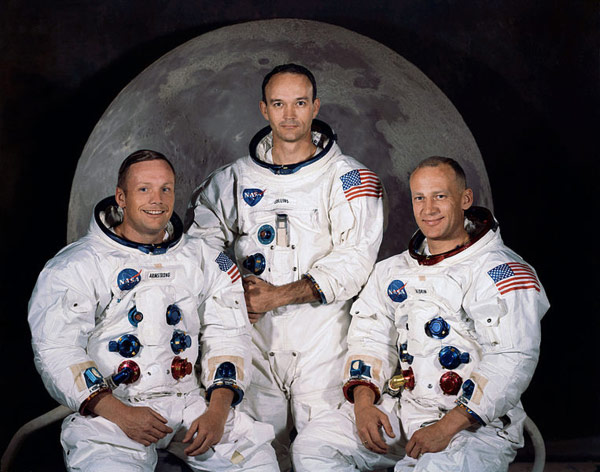
Apollo 11

Left to right: Neil Armstrong, Michael Collins, and Buzz Aldrin, the crew of Apollo 11. Photo: NASA.

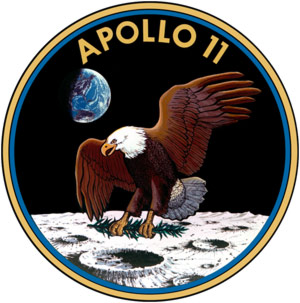
Apollo 11 Insignia

On this day in 1969, humans walked on the moon for the first time. The Apollo 11 spaceflight brought Americans Neil Armstrong and Buzz Aldrin to the lunar surface on July 20, 1969, at 20:18 UTC.

Michael Collins, the mission’s third member, remained in lunar orbit. All three men returned safely to Earth after an 8-day mission that began with a Saturn V rocket launch from Kennedy Space Center in Merritt Island, Florida on July 16.

This was the fifth manned mission of NASA’s Apollo program, which ran from 1963 to 1972 and included 6 missions that landed on the moon. These were the first and last times human beings set foot on another world.

NASA has a collection of restored HD videos well worth watching on this historic day.

Happy 4th of July!

4th of July

Congress adopts the Stars and Stripes

During the American Revolution, the Continental Congress adopts a resolution stating that “the flag of the United States be thirteen alternate stripes red and white” and that “the Union be thirteen stars, white in a blue field, representing a new Constellation.” The national flag, which became known as the “Stars and Stripes,” was based on the “Grand Union” flag, a banner carried by the Continental Army in 1776 that also consisted of 13 red and white stripes. According to legend, Philadelphia seamstress Betsy Ross designed the new canton for the Stars and Stripes, which consisted of a circle of 13 stars and a blue background, at the request of General George Washington. Historians have been unable to conclusively prove or disprove this legend.

With the entrance of new states into the United States after independence, new stripes and stars were added to represent new additions to the Union. In 1818, however, Congress enacted a law stipulating that the 13 original stripes be restored and that only stars be added to represent new states.

On June 14, 1877, the first Flag Day observance was held on the 100th anniversary of the adoption of the Stars and Stripes. As instructed by Congress, the U.S. flag was flown from all public buildings across the country. In the years after the first Flag Day, several states continued to observe the anniversary, and in 1949 Congress officially designated June 14 as Flag Day, a national day of observance.

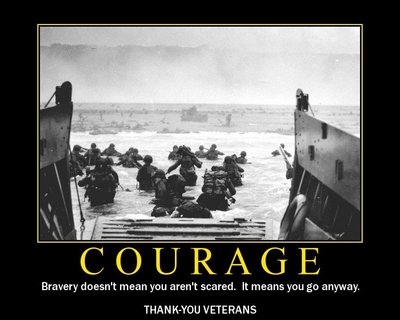
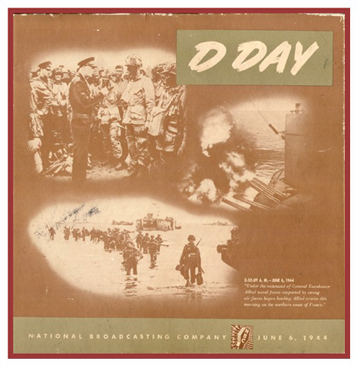
D-Day

D DayJune 6, 1944
Flag at Half Mast

Memorial Day

Flag at Half Mast

Memorial Day

Memorial Day is a United States federal holiday observed on the last Monday of May. Formerly known as Decoration Day, it commemorates U.S. men and women who died while in the military service. First enacted to honor Union soldiers of the American Civil War (it is celebrated near the day of reunification after the civil war), it was expanded after World War I to include American casualties of any war or military action.

It Has Always Been The Soldier

Veteran

A veteran is someone who, at one point in his life, wrote a blank check made payable to his country for an amount of ‘up to and including my life.’

Peace Officers Memorial Day

Flag at Half Mast

Flags at half-staff today to honor fallen officers

Flags are to fly at half-staff today for Peace Officers Memorial Day. Gov. Rendell has ordered Pennsylvania flags at state facilities to be flown at half-staff, and President Obama directed the same for U.S. flags.
“On this day, we pay tribute to the local, state, and federal law enforcement officers who provide a vital public service and, too often, pay the ultimate sacrifice to safeguard the rights and freedoms of our citizens,” Rendell said in a statement. “We honor them for their character, leadership, and courage.”

In 1962, President John F. Kennedy and Congress designated May 15 as Peace Officers Memorial Day. The calendar week in which May 15 falls is National Police Week.

First Allied Jet Flies

FIRST ALLIED JET FLIES:
May 15, 1941

On May 15, 1941, the jet-propelled Gloster-Whittle E 28/39 aircraft flies successfully over Cranwell, England, in the first test of an Allied aircraft using jet propulsion. The aircraft’s turbojet engine, which produced a powerful thrust of hot air, was devised by Frank Whittle, an English aviation engineer and pilot generally regarded as the father of the jet engine.

Whittle, born in Coventry in 1907, was the son of a mechanic. At the age of 16, he joined the Royal Air Force (RAF) as an aircraft apprentice at Cranwell and in 1926 passed a medical exam to become a pilot and joined the RAF College. He won a reputation as a daredevil flier and in 1928 wrote a senior thesis entitled Future Developments in Aircraft Design, which discussed the possibilities of rocket propulsion.

From the first Wright brothers flight in 1903 to the first jet flight in 1939, most airplanes were propeller driven. In 1910, the French inventor Henri Coanda built a jet-propelled bi-plane, but it crashed on its maiden flight and never flew again. Coanda’s aircraft attracted little notice, and engineers stuck with propeller technology; even though they realized early on that propellers would never overcome certain inherent limitations, especially in regard to speed.

After graduating from the RAF college, Whittle was posted to a fighter squadron, and in his spare time he worked out the essentials of the modern turbojet engine. A flying instructor, impressed with his propulsion ideas, introduced him to the Air Ministry and a private turbine engineering firm, but both ridiculed Whittle’s ideas as impractical. In 1930, he patented his jet engine concept and in 1936 formed the company Power Jets Ltd. to build and test his invention. In 1937, he tested his first jet engine on the ground. He still received only limited funding and support, and on August 27, 1939, the German Heinkel He 178, designed by Hans Joachim Pabst von Ohain, made the first jet flight in history. The German prototype jet was developed independently of Whittle’s efforts.

One week after the flight of the He 178, World War II broke out in Europe, and Whittle’s project got a further lease of life. The Air Ministry commissioned a new jet engine from Power Jets and asked the Gloster Aircraft Company to build an experimental aircraft to accommodate it, specified as E 28/39. On May 15, 1941, the jet-propelled Gloster-Whittle E 28/39 flew, beating out a jet prototype being developed by the same British turbine company that earlier balked at his ideas. In its initial tests, Whittle’s aircraft–flown by the test pilot Gerry Sayer–achieved a top speed of 370 mph at 25,000 feet, faster than the Spitfire or any other conventional propeller-driven machine.

As the Gloster Aircraft Company worked on an operational turbojet aircraft for combat, Whittle aided the Americans in their successful development of a jet prototype. With Whittle’s blessing, the British government took over Power Jets Ltd. in 1944. By this time, Britain’s Gloster Meteor jet aircraft were in service with the RAF, going up against Germany’s jet-powered Messerschmitt Me 262s in the skies over Europe.

Whittle retired from the RAF in 1948 with the rank of air commodore. That year, he was awarded 100,000 pounds by the Royal Commission on Awards to Inventors and was knighted. His book Jet: The Story of a Pioneer was published in 1953. In 1977, he became a research professor at the United States Naval Academy in Annapolis, Maryland. He died in Columbia, Maryland, in 1996.

Let’s Say Thanks

Let's Say Thanks

Click the Logo to send a card (a REAL card) to a Soldier.

RIP Wally Shirra

Walter Marty Schirra, Jr. (March 12, 1923 – May 3, 2007) was one of the original Mercury 7 astronauts chosen for the Project Mercury, America’s first effort to put men in space. He was the only man to fly in all of America’s first three space programs (Mercury, Gemini and Apollo).

He logged a total of 295 hours and 15 minutes in space.

Wikipedia Link

Founding of the Library of Congress

The Library of Congress was established on April 24, 1800, when President John Adams signed an Act of Congress providing for the transfer of the seat of government from Philadelphia to the new capital city of Washington. Part of the legislation appropriated ,000 “for the purchase of such books as may be necessary for the use of Congress …, and for fitting up a suitable apartment for containing them….” Books were ordered from London and the collection, consisting of 740 books and 30 maps, was housed in the new Capitol. Although the collection covered a variety of topics, the bulk of the materials were legal in nature, reflecting Congress’ role as a maker of laws.

Thomas Jefferson played an important role in the Library’s early formation, signing into law on January 26, 1802 the first law establishing the structure of the Library of Congress. The law established the presidentially appointed post of Librarian of Congress and a Joint Committee on the Library to regulate and oversee the Library, as well as giving the president and vice president the ability to borrow books. The Library of Congress was destroyed in August 1814, when invading British troops set fire to the Capitol building and the small library of 3,000 volumes within.

Within a month, former President Jefferson offered his personal library as a replacement. Jefferson had spent 50 years accumulating a wide variety of books, including ones in foreign languages and volumes of philosophy, science, literature, and other topics not normally viewed as part of a legislative library, such as cookbooks, writing that, “I do not know that it contains any branch of science which Congress would wish to exclude from their collection; there is, in fact, no subject to which a Member of Congress may not have occasion to refer.” In January 1815, Congress accepted Jefferson’s offer, appropriating $23,950 to purchase his 6,487 books.

Wikipedia Article

Houston, We’ve Had A Problem…

April 17th, 1970 the capsule from the Apollo 13 mission splashed down in the Pacific Ocean, and the whole world breathed a sigh of relief.

Quote


Apollo 13 launched from Cape Canaveral on April 11, intended to be the third manned lunar landing. The crew — James A. Lovell Jr., John L. Swigert Jr. and Fred W. Haise Jr. — experienced a slight vibration shortly after launch, but things were going normally until 55 hours, 55 minutes into the flight.

Oxygen tank No. 2 exploded, causing No. 1 to fail and start leaking rapidly. Warning lights started blinking. The astronaut’s supplies of air, water, light and electricity were imperiled … 200,000 miles from Earth.