H. L. Hunley was a submarine of the Confederate States of America that fought in the American Civil War. Hunley demonstrated the advantages and dangers of undersea warfare. She was the first combat submarine to sink a warship (USS Housatonic), although Hunley was not completely submerged and, following her attack, was lost along with her crew before she could return to base. Twenty-one crewmen died in the three sinkings of Hunley during her short career. She was named for her inventor, Horace Lawson Hunley, shortly after she was taken into government service under the control of the Confederate States Army at Charleston, South Carolina.
On 17 February 1864, Hunley attacked and sank the 1,240-ton United States Navy screw sloop-of-war Housatonic, which had been on Union blockade-duty in Charleston’s outer harbor. Hunley did not survive the attack and sank, taking all eight members of her third crew with her, and was lost.
Finally located in 1995, Hunley was raised in 2000 and is on display in North Charleston, South Carolina, at the Warren Lasch Conservation Center on the Cooper River. Examination in 2012 of recovered Hunley artifacts suggested that the submarine was as close as 20 ft (6.1 m) to her target, Housatonic, when her deployed torpedo exploded, which caused the submarine’s sinking.
Posted in Anniversary, Because I Can, Patriotic, Planes Trains and Automobiles
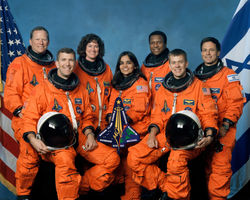
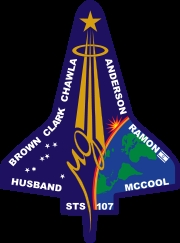
On February 1, 2003, the Space Shuttle Columbia disintegrated during re-entry on its 28th mission; all seven crew members aboard perished.
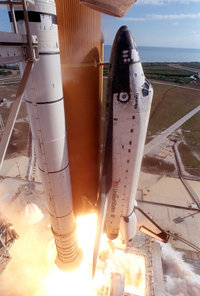
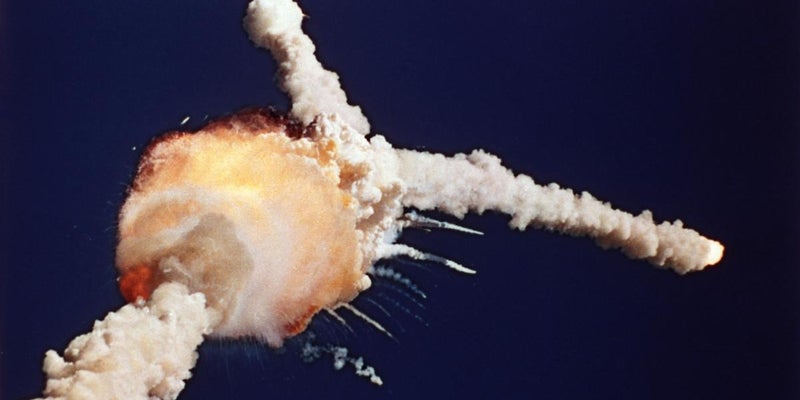
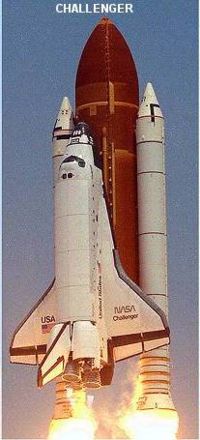
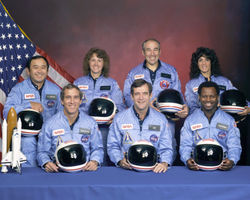
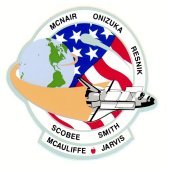
On January 28, 1986 at 11:39 EST, the Space Shuttle Challenger disintegrated 73 seconds into its flight after an O-ring seal in its right solid rocket booster (SRB) failed at liftoff. All seven astronauts on board were lost.
On December 21, 1988, Pan Am Flight 103 from London to New York explodes in midair over Lockerbie, Scotland, killing all 243 passengers and 16 crew members aboard, as well as 11 Lockerbie residents on the ground. A bomb hidden inside an audio cassette player detonated in the cargo area when the plane was at an altitude of 31,000 feet. The disaster, which became the subject of Britain’s largest criminal investigation, was believed to be an attack against the United States. One hundred eighty nine of the victims were American.
Posted in Anniversary, Because I Can, On This Day, Planes Trains and Automobiles
From Wikipedia:
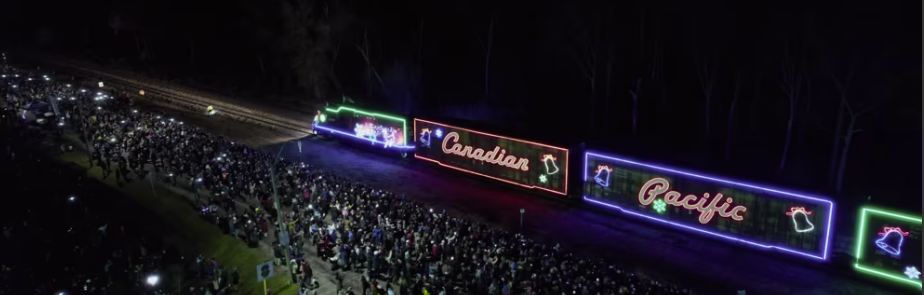
Starting in 1999, CP runs a Holiday Train along its main line during the months of November and December. The Holiday Train celebrates the holiday season and collects donations for community food banks and hunger issues. The Holiday Train also provides publicity for CP and a few of its customers. Each train has a box car stage for entertainers who are travelling along with the train.
The train is a freight train, but also pulls vintage passenger cars which are used as lodging/transportation for the crew and entertainers. Only entertainers and CP employees are allowed to board the train aside from a coach car that takes employees and their families from one stop to the next. All donations collected in a community remain in that community for distribution.
There are two Holiday Trains that cover 150 stops in Canada and the United States Northeast and Midwest. Each train is roughly 1,000 feet (300 m) in length with brightly decorated railway cars, including a modified box car that has been turned into a travelling stage for performers. They are each decorated with hundred of thousands of LED Christmas lights. In 2013 to celebrate the program’s 15th year, three signature events were held in Hamilton, Ontario, Calgary, Alberta, and Cottage Grove, Minnesota, to further raise awareness for hunger issues.
The 2025 CPKC Holiday Train will tour Canada and the U.S. Nov. 19 through Dec. 21, raising money, food and awareness to support food banks across our network. Professional musicians play free concerts from the brightly decorated train’s stage. CPKC donates to the local food bank at each stop and encourages all attendees to make a monetary or heart-healthy food donation.
Since its inaugural journey in 1999, the CPKC Holiday Train has raised more than $26 million and collected approximately 5.4 million pounds of food for community food banks in Canada and the U.S.
2025 Canadian Schedule
2025 American Schedule
Posted in Anniversary, Because I Can, Planes Trains and Automobiles
U.S. Air Force Captain Chuck Yeager becomes the first person to fly faster than the speed of sound.
Yeager, born in Myra, West Virginia, in 1923, was a combat fighter during World War II and flew 64 missions over Europe. He shot down 13 German planes and was himself shot down over France, but he escaped capture with the assistance of the French Underground. After the war, he was among several volunteers chosen to test-fly the experimental X-1 rocket plane, built by the Bell Aircraft Company to explore the possibility of supersonic flight.
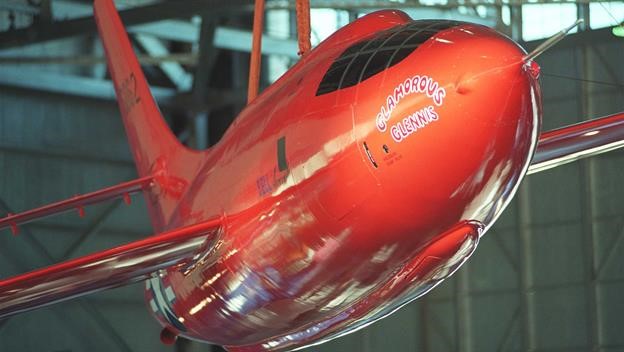
For years, many aviators believed that man was not meant to fly faster than the speed of sound, theorizing that transonic drag rise would tear any aircraft apart. All that changed on October 14, 1947, when Yeager flew the X-1 over Rogers Dry Lake in Southern California. The X-1 was lifted to an altitude of 25,000 feet by a B-29 aircraft and then released through the bomb bay, rocketing to 40,000 feet and exceeding 662 miles per hour (the sound barrier at that altitude). The rocket plane, nicknamed “Glamorous Glennis,” was designed with thin, unswept wings and a streamlined fuselage modeled after a .50-caliber bullet.
Because of the secrecy of the project, Bell and Yeager’s achievement was not announced until June 1948. Yeager continued to serve as a test pilot, and in 1953 he flew 1,650 miles per hour in an X-1A rocket plane. He retired from the U.S. Air Force in 1975 with the rank of brigadier general.
Posted in Anniversary, On This Day, Planes Trains and Automobiles