Category Archives: Planes Trains and Automobiles

The Vert-A-Pac Rail System

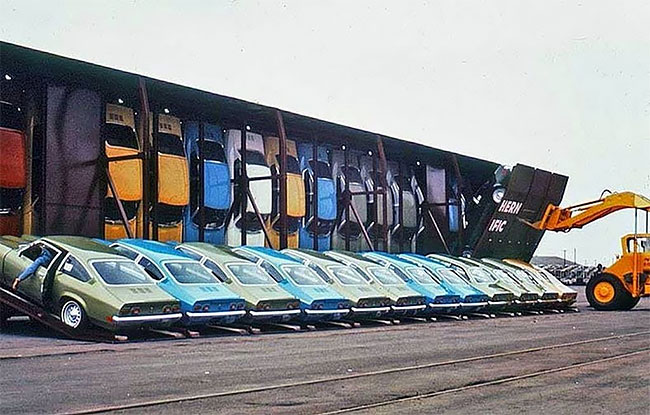
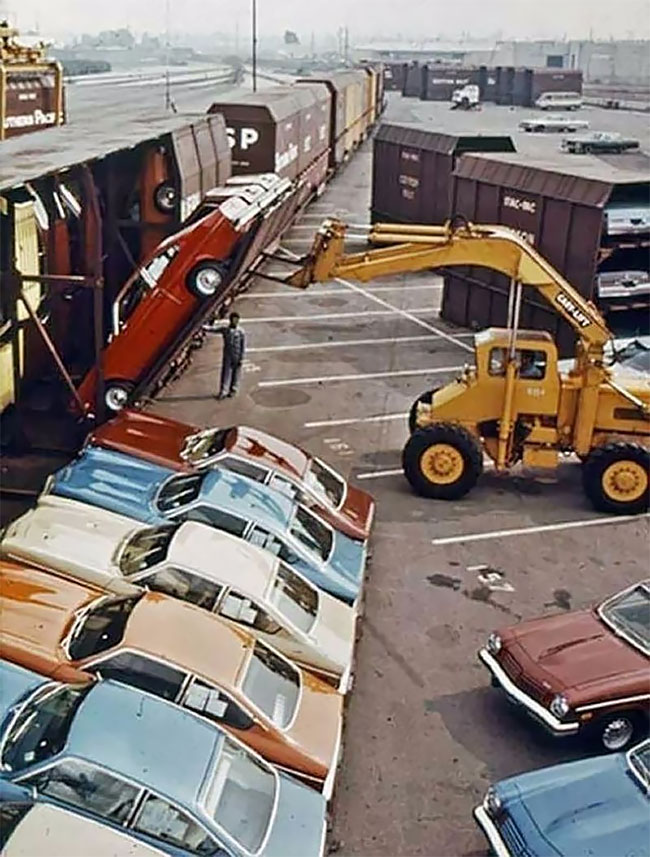
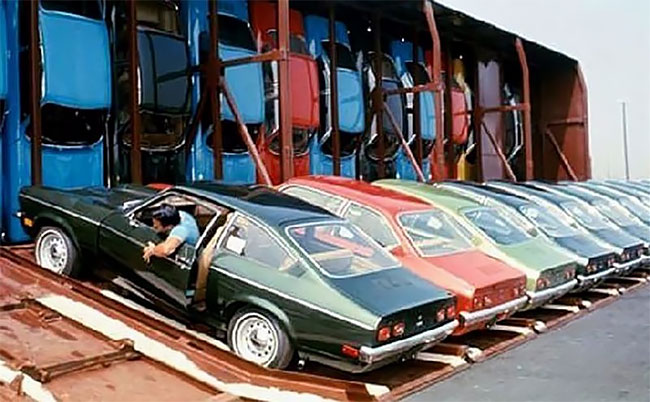
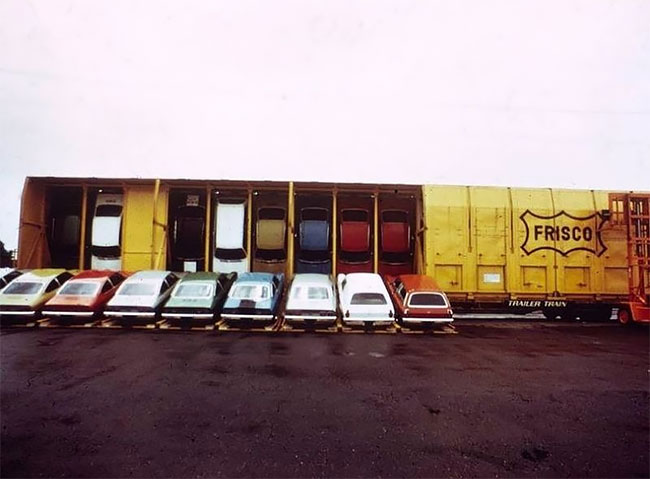
When Chevrolet started designing ‘Vega’ during the 1970s, one of the main objectives was to keep the cost of the car down around $2,000 in circa-1970 dollars.

At the time, the freight charge for moving a loaded railroad car from the Lordstown assembly plant to the Pacific coast – the longest distance that cars produced at Lordstown would need to travel – was around $4,800. Since the Vega was a subcompact, it was possible to squeeze three more cars on a railroad car for a total of eighteen, instead of the usual fifteen.

But that still worked out to around $300 per car – a substantial surcharge for a $2000 car. If only Chevrolet could get more Vegas on a railroad car, the cost per unit of hauling them would go down.

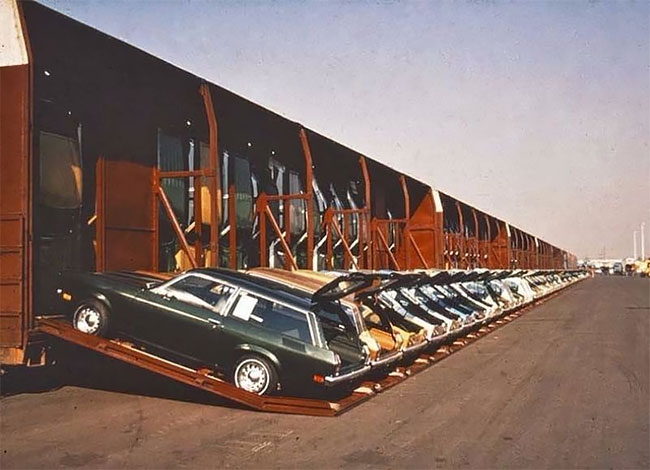
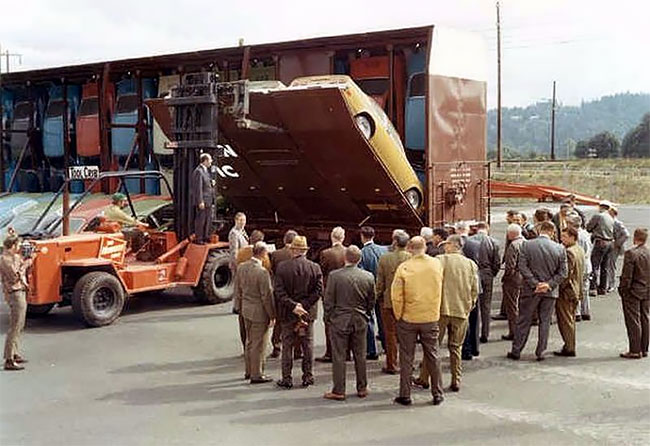
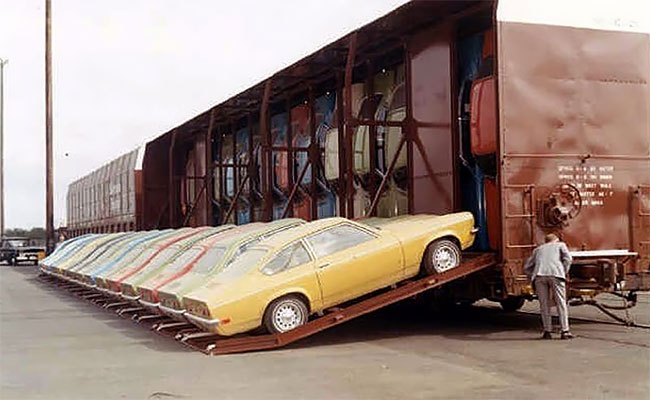
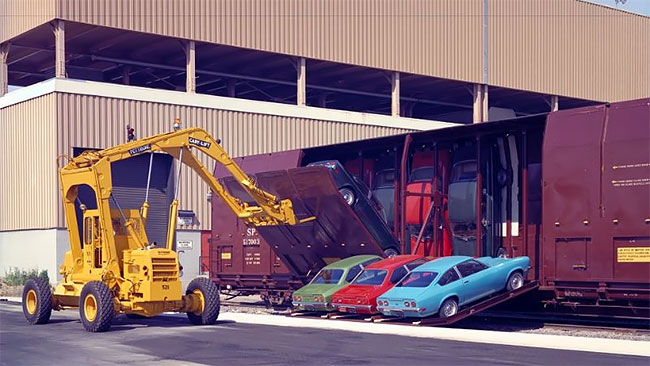
The engineers at GM and the Southern Pacific Railroad came up with a clever solution. Instead of loading the cars horizontally, the Vegas will be placed vertically on a specially designed auto-rack – the Vert-A-Pac. Within the same volume of an 89-foot car, the Vert-A-Pac could hold as many as 30 automobiles instead of 18.

The Vega was hugely popular when it was introduced in 1970 however it quickly earned a reputation for unreliability, rust, safety issues and lousy engine durability.

When the Vega was discontinued, the Vert-A-Pac cars had to be retired as they were too specialized to be used with anything else. The Vert-A-Pac racks were scrapped, and the underlying flatcars went on to other uses.

50th Annual Street Rod Nationals

August 1 – 4, 2019
Kentucky Exposition Center
Louisville, Kentucky

Official Site

Zombie 222

The Zombie 222, a 1968 Ford Mustang fastback that’s been converted to all electric. 1,000 horse power, 1,800 pound feet of torque, 0 to 60 in 1.79 seconds. They don’t call it a Hot Rod; they don’t call it a Rat Rod; they call it a Lightning Rod.

Bloodshed Motors

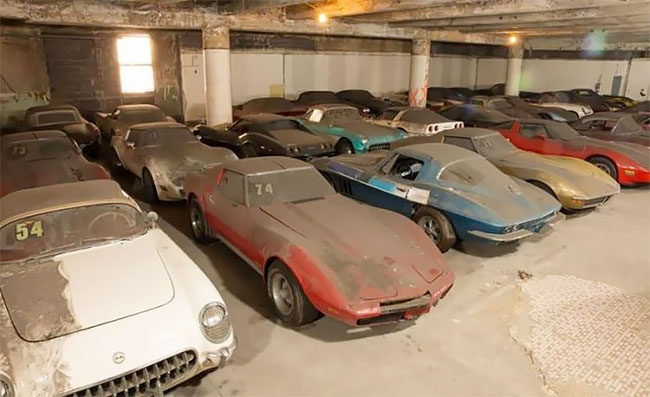
The Lost Corvettes

They’re the Corvettes that time forgot. And 30 years ago, they were the ultimate prize in one of the most outlandish sweepstakes ever. A rare armada of 36 Chevrolet Corvettes has once again seen the light of day. The incredible fleet, which originally cost cable music network VH1 $610,000 in 1989 for a sweepstakes, has sat nearly abandoned in a New York City storage lot for about 25 years.

Read the rest of the story over on DYT: here

Anniversary of STS-135 landing

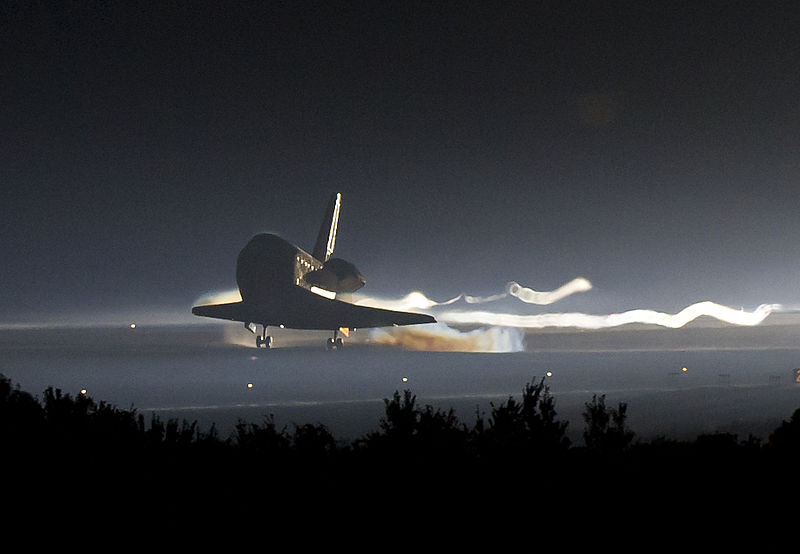
Space shuttle Atlantis lands for the STS-135 mission marking the final mission of the Space Shuttle Program at NASA’s Kennedy Space Center in Florida. Time of landing was 5:57 a.m. (EDT) on July 21, 2011.

The “just at dawn” landing was one of the most memorable landings ever, as shown in this picture:

STS-135 Landing


Anniversary of STS-135 launch

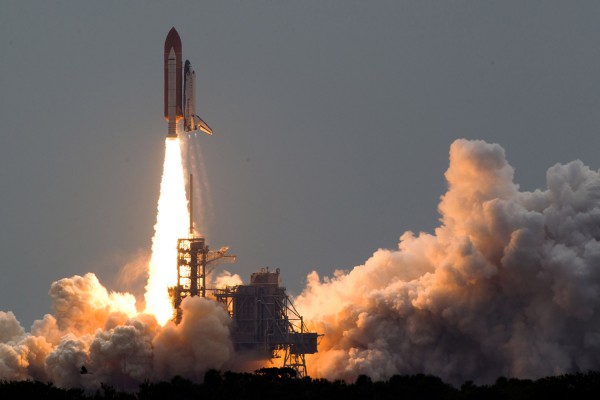
Space shuttle Atlantis launches for the STS-135 mission to the International Space Station in the final mission of the Space Shuttle Program at NASA’s Kennedy Space Center in Florida. Liftoff was at 11:29 a.m. (EDT) on July 8, 2011. Astronauts Chris Ferguson, STS-135 commander; Doug Hurley, pilot; Sandy Magnus and Rex Walheim, both mission specialists, were on board.

STS-135 launch


Anniversary of the Disappearance of Amelia Earhart

Amelia Earhart

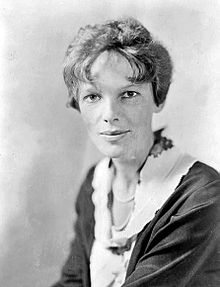
Amelia Earhart (July 24, 1897 – 1937?)

Amelia Earhart SignatureAmelia Mary Earhart (July 24, 1897 – disappeared 1937) was a noted American aviation pioneer and author.Earhart was the first woman to receive the U.S. Distinguished Flying Cross,awarded for becoming the first aviatrix to fly solo across the Atlantic Ocean. She set many other records, wrote best-selling books about her flying experiences and was instrumental in the formation of The Ninety-Nines, an organization for female pilots.  Earhart joined the faculty of the Purdue University aviation department in 1935 as a visiting faculty member to counsel women on careers and help inspire others with her love for aviation. She was also a member of the National Woman’s Party, and an early supporter of the Equal Rights Amendment.

During an attempt to make a circumnavigational flight of the globe in 1937 in a Purdue-funded Lockheed Model 10 Electra, Earhart disappeared over the central Pacific Ocean near Howland Island. Fascination with her life, career and disappearance continues to this day.

Wikipedia Link

Happy Birthday, Mr. “The King”

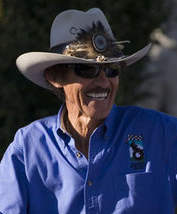
Richard Petty


Richard Lee Petty (born July 2, 1937) is a former NASCAR driver who raced in the Strictly Stock/Grand National Era and the NASCAR Winston Cup Series. “The King”, as he is nicknamed, is most well-known for winning the NASCAR Championship seven times, winning a record 200 races during his career, winning the Daytona 500 a record seven times, and winning a record 27 races (ten of them consecutively) in the 1967 season alone. (A 1972 rule change eliminated races under 250 miles (400 km) in length, reducing the schedule to 30 (now 36) races.) Petty is widely considered one of the greatest NASCAR drivers of all time. He also collected a record number of poles (127) and over 700 top-ten finishes in his 1,185 starts, including 513 consecutive starts from 1971–1989.

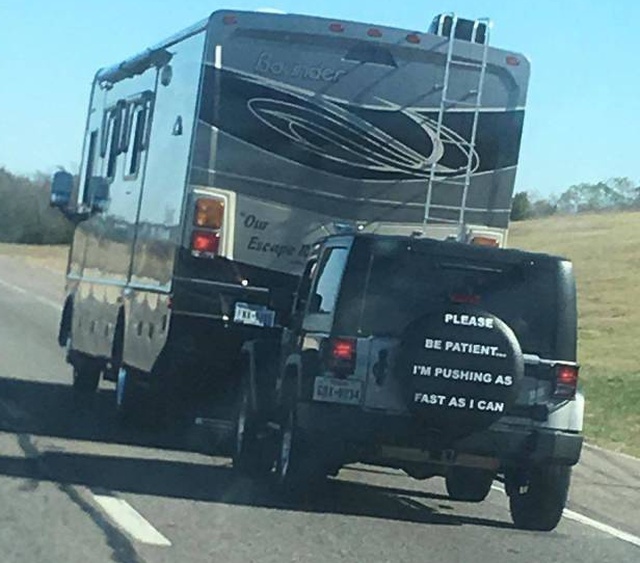
Patient

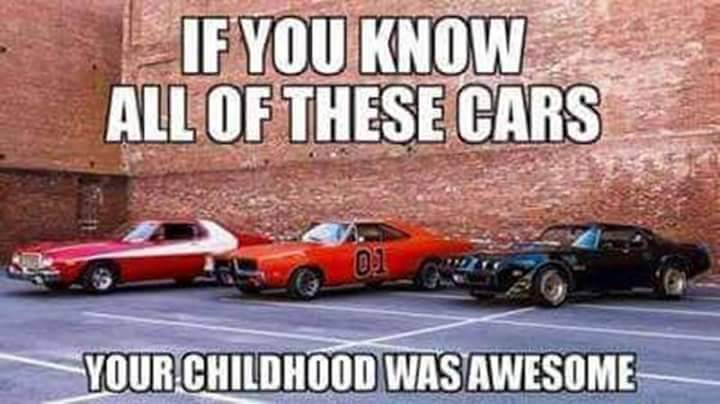
Awesome Childhood

First Allied Jet Flies

FIRST ALLIED JET FLIES:
May 15, 1941

On May 15, 1941, the jet-propelled Gloster-Whittle E 28/39 aircraft flies successfully over Cranwell, England, in the first test of an Allied aircraft using jet propulsion. The aircraft’s turbojet engine, which produced a powerful thrust of hot air, was devised by Frank Whittle, an English aviation engineer and pilot generally regarded as the father of the jet engine.

Whittle, born in Coventry in 1907, was the son of a mechanic. At the age of 16, he joined the Royal Air Force (RAF) as an aircraft apprentice at Cranwell and in 1926 passed a medical exam to become a pilot and joined the RAF College. He won a reputation as a daredevil flier and in 1928 wrote a senior thesis entitled Future Developments in Aircraft Design, which discussed the possibilities of rocket propulsion.

From the first Wright brothers flight in 1903 to the first jet flight in 1939, most airplanes were propeller driven. In 1910, the French inventor Henri Coanda built a jet-propelled bi-plane, but it crashed on its maiden flight and never flew again. Coanda’s aircraft attracted little notice, and engineers stuck with propeller technology; even though they realized early on that propellers would never overcome certain inherent limitations, especially in regard to speed.

After graduating from the RAF college, Whittle was posted to a fighter squadron, and in his spare time he worked out the essentials of the modern turbojet engine. A flying instructor, impressed with his propulsion ideas, introduced him to the Air Ministry and a private turbine engineering firm, but both ridiculed Whittle’s ideas as impractical. In 1930, he patented his jet engine concept and in 1936 formed the company Power Jets Ltd. to build and test his invention. In 1937, he tested his first jet engine on the ground. He still received only limited funding and support, and on August 27, 1939, the German Heinkel He 178, designed by Hans Joachim Pabst von Ohain, made the first jet flight in history. The German prototype jet was developed independently of Whittle’s efforts.

One week after the flight of the He 178, World War II broke out in Europe, and Whittle’s project got a further lease of life. The Air Ministry commissioned a new jet engine from Power Jets and asked the Gloster Aircraft Company to build an experimental aircraft to accommodate it, specified as E 28/39. On May 15, 1941, the jet-propelled Gloster-Whittle E 28/39 flew, beating out a jet prototype being developed by the same British turbine company that earlier balked at his ideas. In its initial tests, Whittle’s aircraft–flown by the test pilot Gerry Sayer–achieved a top speed of 370 mph at 25,000 feet, faster than the Spitfire or any other conventional propeller-driven machine.

As the Gloster Aircraft Company worked on an operational turbojet aircraft for combat, Whittle aided the Americans in their successful development of a jet prototype. With Whittle’s blessing, the British government took over Power Jets Ltd. in 1944. By this time, Britain’s Gloster Meteor jet aircraft were in service with the RAF, going up against Germany’s jet-powered Messerschmitt Me 262s in the skies over Europe.

Whittle retired from the RAF in 1948 with the rank of air commodore. That year, he was awarded 100,000 pounds by the Royal Commission on Awards to Inventors and was knighted. His book Jet: The Story of a Pioneer was published in 1953. In 1977, he became a research professor at the United States Naval Academy in Annapolis, Maryland. He died in Columbia, Maryland, in 1996.

Bugs are out!

Lusitania sinks

Lusitania sinks

On the afternoon of May 7, 1915, the British ocean liner Lusitania is torpedoed without warning by a German submarine off the south coast of Ireland. Within 20 minutes, the vessel sank into the Celtic Sea. Of 1,959 passengers and crew, 1,198 people were drowned, including 128 Americans. The attack aroused considerable indignation in the United States, but Germany defended the action, noting that it had issued warnings of its intent to attack all ships, neutral or otherwise, that entered the war zone around Britain.

The Hindenburg Disaster

The Hindenburg Disaster

On May 6,1937, the airship Hindenburg, the largest dirigible ever built and the pride of Nazi Germany, bursts into flames upon touching its mooring mast in Lakehurst, New Jersey, killing 36 passengers and crewmembers.

Kia HabaNiro

Read the article over on Jalopnik.

Read the press release from Kia

Birth of the Mustang (and the Pony Car)

April 17, 1964: Ford Mustang Starts Galloping

1964: Ford introduces the Mustang at the New York World’s Fair. It becomes an instant hit and an icon that alters the automotive landscape, giving rise to one of the most successful — and most uniquely American — automobile genres: the pony car.

The Ford Mustang was born of the simple idea that putting a back seat in a sports car would be a great idea.

The idea came to Lee Iacocca and Donald Frey in the early 1960s as the country was being overrun by European sports cars. Everywhere you looked you saw Alfa Romeos and MGs and Triumphs that dripped oil. Even French cars that would draw peals of laughter today were popular back then.

The two Ford execs saw a vast market literally rolling before their eyes, and, according to legend, the notion of a sports car with a back seat was one of those “ah-hah” moments. If Ford could dilute the European ethos just a bit by making the cars a bit more practical and a lot more affordable, Iacocca figured, the company would sell a few thousand.

He was right, but boy was he wrong. Ford didn’t sell thousands of them. It sold millions of them.

They sold 22,000 on the first day.

The Mustang was more than a success. It was a phenomenon. Ford sold 1 million in the first 18 months, making the Mustang its most successful launch since the Model A.

The pony car is easy to define. It was small by Detroit standards, with sporty styling. It had a back seat for your kids and a usable trunk for your stuff. And the rear wheels were driven by an engine — ideally a big V-8 — mounted up front where God and Henry Ford intended.

Pony cars may not have had the finesse of a European sports car, but they made up for it with brute force. A small-block V-8 can make up for a multitude of handling deficiencies.

The Mustang was successful like the Beatles were popular. Ford figured it would sell around 100,000 in the first 12 months of production. It sold 10 times that number in the first 18.

That success was not lost on the rest of Detroit, and everyone was cranking out pony cars by 1967. General Motors introduced the Chevrolet Camaro and its kissing cousin, the Pontiac Firebird. Ford offered the more upscale Mercury Cougar. Chrysler released the Challenger. Even AMC — google it, we’ll wait — got into the act with the Javelin.

Everyone had a favorite, and even now loyalists occasionally come to blows over which one was best. Countless bets have been made and races staged in displays of testosterone and bravado that would make Dr. Freud sit down for a cigar and a good long think.

And that was just in the parking lots and streets. Things really got wild when the automakers got in on the act, bringing in drivers like Dan Gurney and George Follmer and Mark Donohue to show who built the best car. The contest grew so heated it gave rise to a pony-car–specific racing series called Trans Am. (The car was named after the series, not the other way around.)

We’re inclined to give the award to the Mustang, if only because Steve McQueen drove a ’68 fastback in the most famous chase scene in cinematic history, that amazing dash through the streets of San Francisco in Bullitt.

The Mustang also gets the nod for sheer longevity. Oh sure, you can get a new Camaro that looks like a vintage Camaro, or a new Dodge Challenger that looks like a vintage Dodge Challenger.

But the Mustang is the only pony car to remain in continuous production since its introduction 45 years ago.

Ford has sold more than 9 million worldwide.

Anniversary of the sinking of the Titanic

Titanic

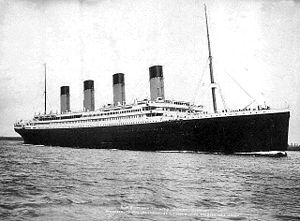
RMS Titanic departing Southampton on 10 April 1912

On April 15th, 1912, RMS Titanic struck an iceberg on her maiden voyage from Southampton, England to New York City and sank, taking over 1500 lives with her.

Wikipedia Link

SpaceX lands all 3 Falcon Heavy Boosters!

Feature Not a Bug!

Mid-America Truck Show!

2019 Mid-America Trucking Show  |MARCH 28-30, 2019 |  Louisville, KY at the Kentucky Exposition Center

Mid-America Truck Show

Official Site