Posted onJanuary 28, 2020byJames|Comments Off on In Remembrance – Space Shuttle Challenger & Crew
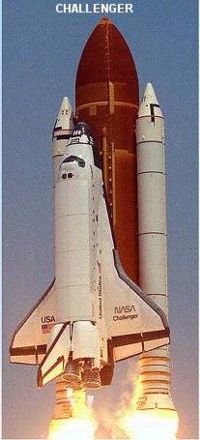
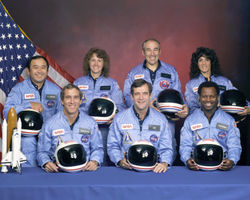
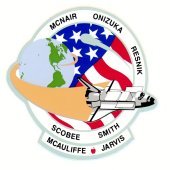
On January 28, 1986 at 11:39 EST, the Space Shuttle Challenger disintegrated 73 seconds into its flight after an O-ring seal in its right solid rocket booster (SRB) failed at liftoff. All seven astronauts on board were lost.
Challenger launches on its final mission, STS-51.
The crew of STS-51. Front row, from left to right: Smith, Scobee, and McNair. Back row, from left to right: Onizuka, McAuliffe, Jarvis, and Resnik.
Posted onDecember 11, 2019byJames|Comments Off on And thus began one of humanity’s greatest road trips.
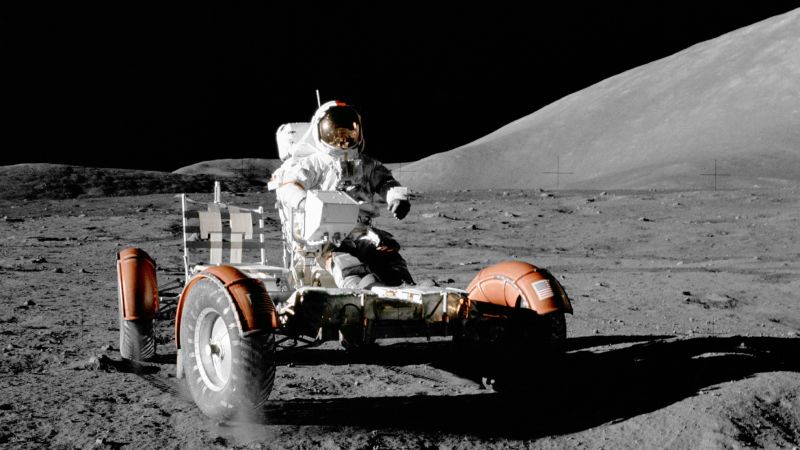
On December 11, 1972, astronauts Gene Cernan and Jack Schmitt had just stepped out of the lunar lander. And thus began one of humanity’s greatest road trips.
Sure, the definition of a “road trip” is a bit vague, but when you’re thousands of miles from Earth and the nearest professional mechanic, the series of trips the crew of Apollo 17 made in the Lunar Rover has to qualify as one. Especially when you consider that they drove more than 22 miles in the thing, a trip which took four hours and 26 minutes.
Posted onOctober 25, 2019byJames|Comments Off on Anniversary of the sinking of the USS Johnston
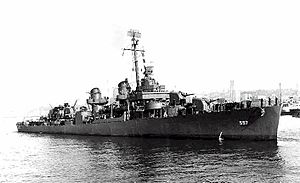
USS Johnston (DD-557) was a World War II-era Fletcher-class destroyer in the service of the United States Navy. She was the first Navy ship named after Lieutenant John V. Johnston. The ship was most famous for its bold action in the Battle off Samar. The small “tincan” destroyer armed with nothing larger than 5 inch (127mm) guns and torpedoes would lead the attack of a handful of light ships which had inadvertently been left unprotected in the path of a massive Japanese fleet led by battleships and cruisers. The sacrifices of Johnston and her little escort carrier task unit “Taffy 3” helped stop Admiral Kurita’s powerful Center Force from attacking vulnerable U.S. landing forces, and inflicted greater losses than they suffered.
Posted onOctober 14, 2019byJames|Comments Off on Anniversary of Yeager Breaking the Sound Barrier
U.S. Air Force Captain Chuck Yeager becomes the first person to fly faster than the speed of sound.
Yeager, born in Myra, West Virginia, in 1923, was a combat fighter during World War II and flew 64 missions over Europe. He shot down 13 German planes and was himself shot down over France, but he escaped capture with the assistance of the French Underground. After the war, he was among several volunteers chosen to test-fly the experimentalX-1rocket plane, built by the Bell Aircraft Company to explore the possibility of supersonic flight.
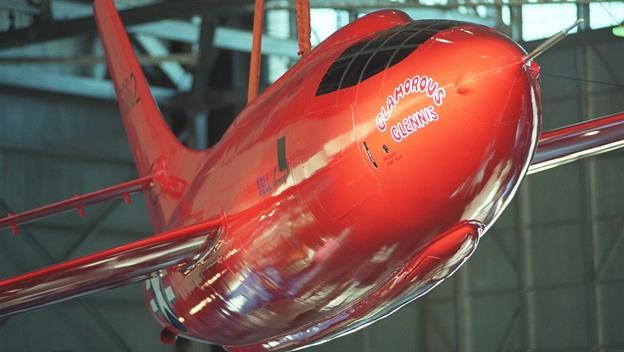
For years, many aviators believed that man was not meant to fly faster than the speed of sound, theorizing that transonic drag rise would tear any aircraft apart. All that changed on October 14, 1947, when Yeager flew theX-1over Rogers Dry Lake in Southern California. TheX-1was lifted to an altitude of 25,000 feet by a B-29 aircraft and then released through the bomb bay, rocketing to 40,000 feet and exceeding 662 miles per hour (the sound barrier at that altitude). The rocket plane, nicknamed “Glamorous Glennis,” was designed with thin, unswept wings and a streamlined fuselage modeled after a .50-caliber bullet.
Because of the secrecy of the project, Bell and Yeager’s achievement was not announced until June 1948. Yeager continued to serve as a test pilot, and in 1953 he flew 1,650 miles per hour in anX-1Arocket plane. He retired from the U.S. Air Force in 1975 with the rank of brigadier general.
Posted onSeptember 1, 2019byJames|Comments Off on SR-71 ‘Blackbird’ Sets ‘Speed Over a Recognized Course’ record
The SR-71 holds the “Speed Over a Recognized Course” record for flying from New York to London distance 3,508 miles (5,646 km), 1,435.587 miles per hour (2,310.353 km/h), and an elapsed time of 1 hour 54 minutes and 56.4 seconds, set on September 1, 1974 while flown by U.S. Air Force Pilot Maj. James V. Sullivan and Maj. Noel F. Widdifield, reconnaissance systems officer (RSO). This equates to an average velocity of about Mach 2.68, including deceleration for in-flight refueling. Peak speeds during this flight were probably closer to the declassified top speed of Mach 3.2+. For comparison, the best commercial Concorde flight time was 2 hours 52 minutes, and the Boeing 747 averages 6 hours 15 minutes.
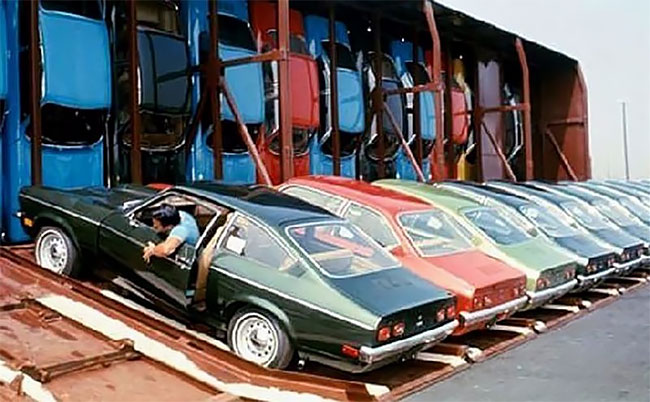
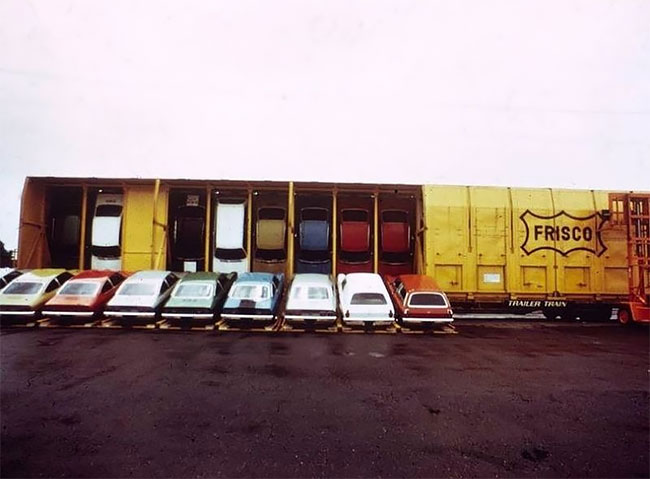
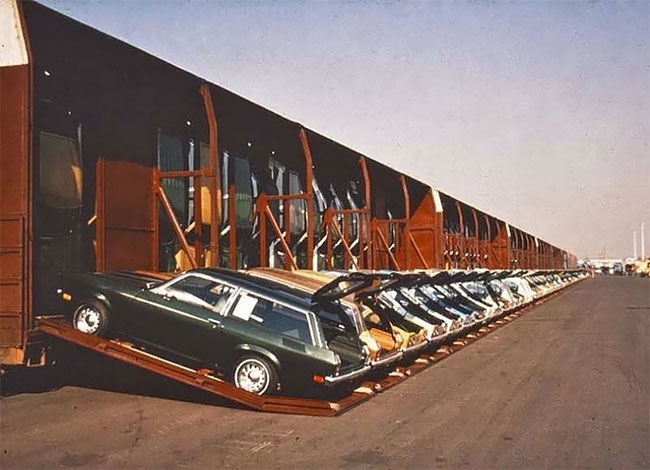
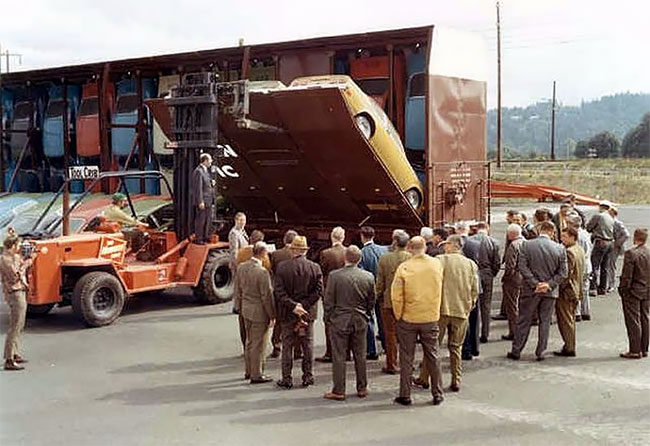
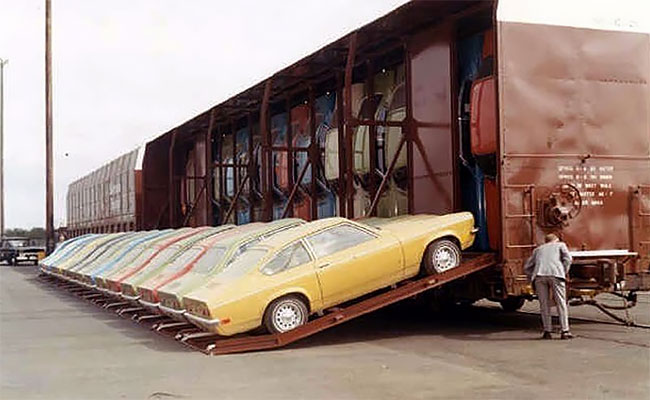
When Chevrolet started designing ‘Vega’ during the 1970s, one of the main objectives was to keep the cost of the car down around $2,000 in circa-1970 dollars.
At the time, the freight charge for moving a loaded railroad car from the Lordstown assembly plant to the Pacific coast – the longest distance that cars produced at Lordstown would need to travel – was around $4,800. Since the Vega was a subcompact, it was possible to squeeze three more cars on a railroad car for a total of eighteen, instead of the usual fifteen.
But that still worked out to around $300 per car – a substantial surcharge for a $2000 car. If only Chevrolet could get more Vegas on a railroad car, the cost per unit of hauling them would go down.
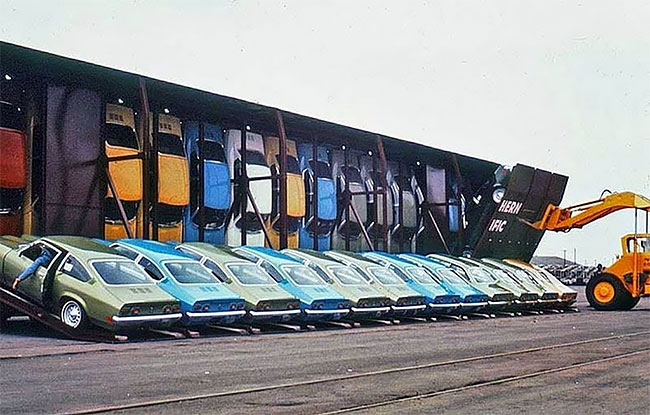
The engineers at GM and the Southern Pacific Railroad came up with a clever solution. Instead of loading the cars horizontally, the Vegas will be placed vertically on a specially designed auto-rack – the Vert-A-Pac. Within the same volume of an 89-foot car, the Vert-A-Pac could hold as many as 30 automobiles instead of 18.
The Vega was hugely popular when it was introduced in 1970 however it quickly earned a reputation for unreliability, rust, safety issues and lousy engine durability.
When the Vega was discontinued, the Vert-A-Pac cars had to be retired as they were too specialized to be used with anything else. The Vert-A-Pac racks were scrapped, and the underlying flatcars went on to other uses.
The Zombie 222, a 1968 Ford Mustang fastback that’s been converted to all electric. 1,000 horse power, 1,800 pound feet of torque, 0 to 60 in 1.79 seconds. They don’t call it a Hot Rod; they don’t call it a Rat Rod; they call it a Lightning Rod.
They’re the Corvettes that time forgot. And 30 years ago, they were the ultimate prize in one of the most outlandish sweepstakes ever. A rare armada of 36 Chevrolet Corvettes has once again seen the light of day. The incredible fleet, which originally cost cable music network VH1 $610,000 in 1989 for a sweepstakes, has sat nearly abandoned in a New York City storage lot for about 25 years.
Posted onJuly 21, 2019byJames|Comments Off on Anniversary of STS-135 landing
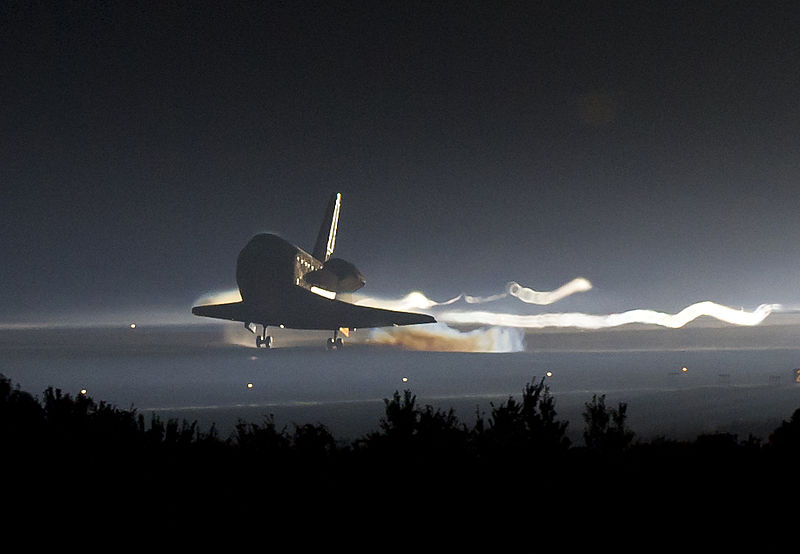
Space shuttle Atlantis lands for the STS-135 mission marking the final mission of the Space Shuttle Program at NASA’s Kennedy Space Center in Florida. Time of landing was 5:57 a.m. (EDT) on July 21, 2011.
The “just at dawn” landing was one of the most memorable landings ever, as shown in this picture:
Posted onJuly 8, 2019byJames|Comments Off on Anniversary of STS-135 launch
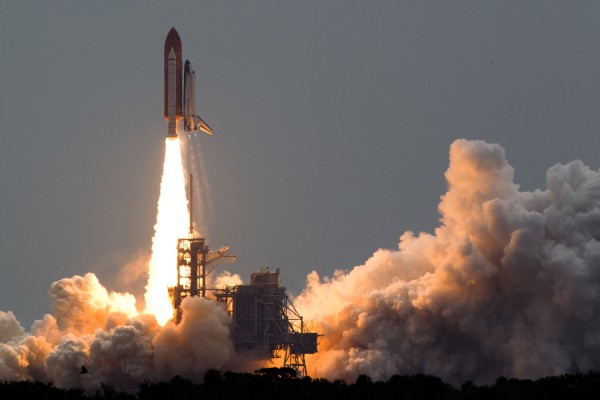
Space shuttle Atlantis launches for the STS-135 mission to the International Space Station in the final mission of the Space Shuttle Program at NASA’s Kennedy Space Center in Florida. Liftoff was at 11:29 a.m. (EDT) on July 8, 2011. Astronauts Chris Ferguson, STS-135 commander; Doug Hurley, pilot; Sandy Magnus and Rex Walheim, both mission specialists, were on board.
Posted onJuly 2, 2019byJames|Comments Off on Anniversary of the Disappearance of Amelia Earhart
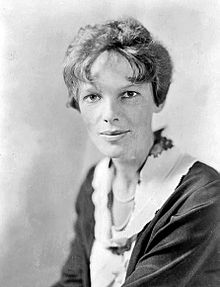
Amelia Earhart (July 24, 1897 – 1937?)
Amelia Mary Earhart (July 24, 1897 – disappeared 1937) was a noted American aviation pioneer and author.Earhart was the first woman to receive the U.S. Distinguished Flying Cross,awarded for becoming the first aviatrix to fly solo across the Atlantic Ocean. She set many other records, wrote best-selling books about her flying experiences and was instrumental in the formation of The Ninety-Nines, an organization for female pilots. Earhart joined the faculty of the Purdue University aviation department in 1935 as a visiting faculty member to counsel women on careers and help inspire others with her love for aviation. She was also a member of the National Woman’s Party, and an early supporter of the Equal Rights Amendment.
During an attempt to make a circumnavigational flight of the globe in 1937 in a Purdue-funded Lockheed Model 10 Electra, Earhart disappeared over the central Pacific Ocean near Howland Island. Fascination with her life, career and disappearance continues to this day.
Posted onJuly 2, 2019byJames|Comments Off on Happy Birthday, Mr. “The King”
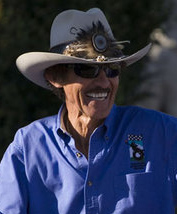
Richard Lee Petty (born July 2, 1937) is a former NASCAR driver who raced in the Strictly Stock/Grand National Era and the NASCAR Winston Cup Series. “The King”, as he is nicknamed, is most well-known for winning the NASCAR Championship seven times, winning a record 200 races during his career, winning the Daytona 500 a record seven times, and winning a record 27 races (ten of them consecutively) in the 1967 season alone. (A 1972 rule change eliminated races under 250 miles (400 km) in length, reducing the schedule to 30 (now 36) races.) Petty is widely considered one of the greatest NASCAR drivers of all time. He also collected a record number of poles (127) and over 700 top-ten finishes in his 1,185 starts, including 513 consecutive starts from 1971–1989.









 Amelia Mary Earhart (July 24, 1897 – disappeared 1937) was a noted American aviation pioneer and author.Earhart was the first woman to receive the U.S. Distinguished Flying Cross,awarded for becoming the first aviatrix to fly solo across the Atlantic Ocean. She set many other records, wrote best-selling books about her flying experiences and was instrumental in the formation of The Ninety-Nines, an organization for female pilots. Earhart joined the faculty of the Purdue University aviation department in 1935 as a visiting faculty member to counsel women on careers and help inspire others with her love for aviation. She was also a member of the National Woman’s Party, and an early supporter of the Equal Rights Amendment.