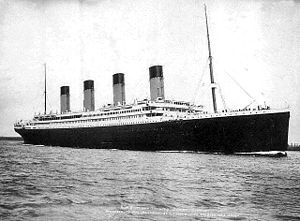
RMS Titanic departing Southampton on 10 April 1912
On April 15th, 1912, RMS Titanic struck an iceberg on her maiden voyage from Southampton, England to New York City and sank, taking over 1500 lives with her.
RMS Titanic departing Southampton on 10 April 1912
On April 15th, 1912, RMS Titanic struck an iceberg on her maiden voyage from Southampton, England to New York City and sank, taking over 1500 lives with her.
Posted in Because I Can, On This Day, Planes Trains and Automobiles
2012 Mid-America Trucking Show | March 22 – 24, 2012 | Louisville, KY at the Kentucky Exposition Center

Posted in Because I Can, Planes Trains and Automobiles
2012 Mid-America Trucking Show | March 22 – 24, 2012 | Louisville, KY at the Kentucky Exposition Center
Posted in Because I Can, Planes Trains and Automobiles
On February 1, 2003, the Space Shuttle Columbia disintegrated during re-entry on its 28th mission; all seven crew members aboard perished.
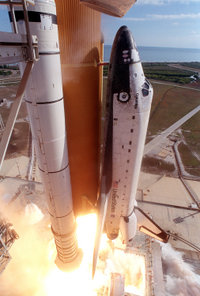
Columbia launches on its final mission, STS-107.

The crew of STS-107. L to R: Brown, Husband, Clark, Chawla, Anderson, McCool, Ramon.
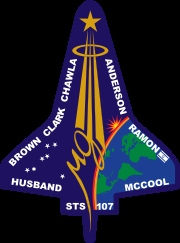
Columbia STS-107 Mission Patch.
Posted in Because I Can, On This Day, Patriotic, Planes Trains and Automobiles
On January 28, 1986, the Space Shuttle Challenger disintegrated 73 seconds into its flight after an O-ring seal in its right solid rocket booster (SRB) failed at liftoff.
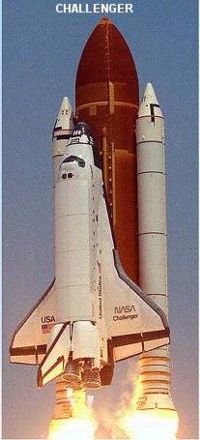
Challenger launches on its final mission, STS-51.
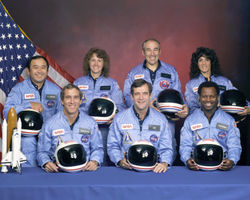
The crew of STS-51. Front row, from left to right: Smith, Scobee, and McNair. Back row, from left to right: Onizuka, McAuliffe, Jarvis, and Resnik.
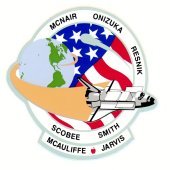
STS-51 mission patch.
Posted in Because I Can, On This Day, Patriotic, Planes Trains and Automobiles
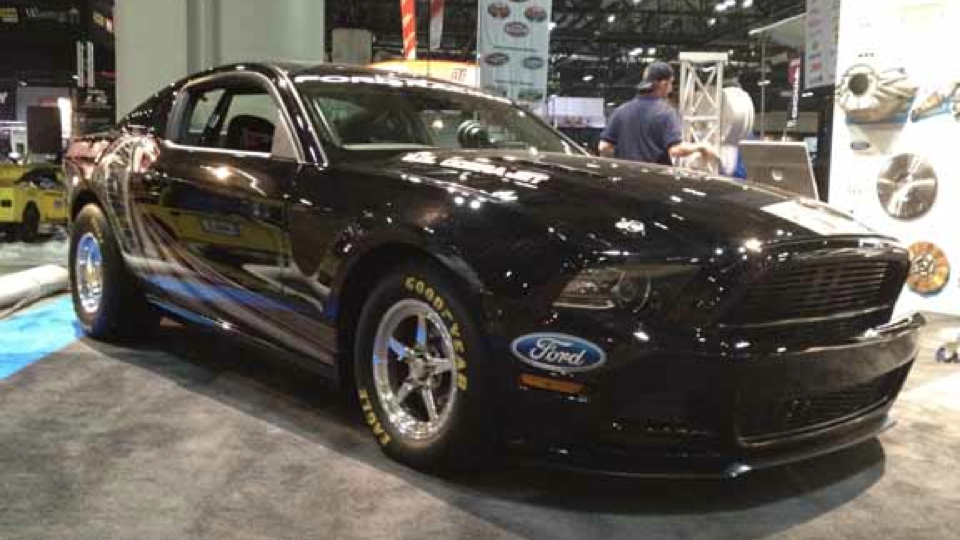
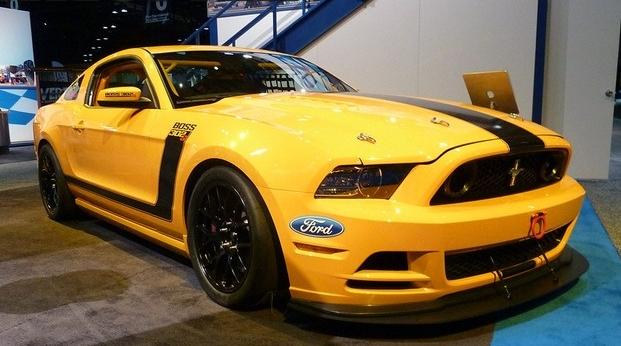
Today, Ford Racing unveiled the 2013 Cobra Jet Mustang at the Performance Racing Industry (PRI) show in Orlando, Fla. The new Cobra Jet, designed for NHRA Stock and Super Stock competition, features two new 5.0-liter TiVCT engine options.
Buyers of the snake-like-a-plane can choose either a naturally-aspirated engine with Cobra Jet induction system, CNC ported heads, high lift cams and low-drag accessory drive, or a 2.9-liter Whipple supercharged version with CNC port matched manifold and heads, and a proprietary 10-rib supercharger drive system for higher rpm use — and without a belt.
Elsewhere, the 2013 Cobra Jet gets modified with a better weight distribution and electric power steering for better drivability with less parasitic horsepower loss. It’s even got a new roll cage design designed to provide a higher level of chassis rigidity while the brake pedal ratio has been revised for more modulation and stopping power. Lastly, the rear suspension geometry delivers faster and more consistent 60-foot times.
Best news? The 2013 Cobra Jet gets an approximate MSRP of $86,000 with the naturally-aspirated engine option, and $93,000 with the supercharged engine. Additional options and pricing will be announced January 2012 — but for the moment, that’s almost $10,000 less than the last one.
Full sizeBut, like the last generation, the 2013 Cobra Jet production is limited to only fifty units and orders placed through Ford dealers will be filled on a first come first served basis. So get to it. Just remember to use part number M-FR500-CJ.
Posted in Because I Can, Planes Trains and Automobiles

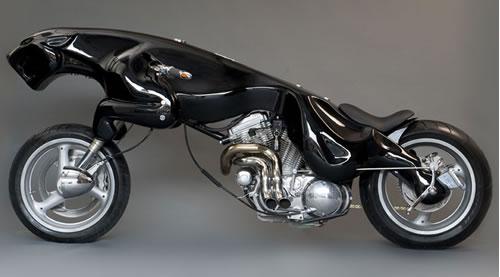
You can find this sculpture at the Minneapolis Institute of Arts.
Posted in Because I Can, Planes Trains and Automobiles
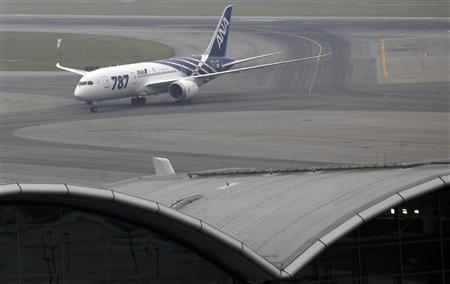
Boeing Dreamliner lands in Hong Kong after 1st commercial flight
The Boeing Co Dreamliner, the world’s first carbon-composite airliner, flew to Hong Kong from Tokyo carrying its first paying passengers today in a flight that could set a new benchmark in air travel.
Its takeoff into clear blue skies after a salute and shower by an airport fire truck came exactly 53 years after Boeing’s first ever jetliner, the 707, began commercial services in the Pan Am colors.
The Dreamliner does not fly any faster than that first aircraft, but it is not supposed to. Instead, it is designed to make the hours aloft more pleasant for passengers and cheaper to fly for owners battling for profit amid the rise of low cost carriers.
Posted in News, Planes Trains and Automobiles
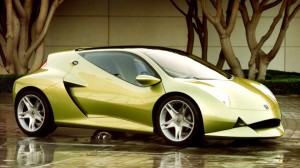
Click for larger image
Had it been built as designed, the Honda GRX concept would likely have been the true spiritual successor to the much-loved CRX. Created for the 2006 Michelin Challenge Design competition and shown at the Detroit auto show that year, the compact GRX was exceptionally light, and so its Honda Goldwing-derived 1,500cc six-cylinder, horizontally opposed engine was a viable powertrain.
Posted in Because I Can, Planes Trains and Automobiles
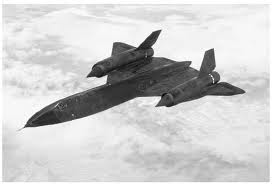
The SR-71 holds the “Speed Over a Recognized Course” record for flying from New York to London distance 3,508 miles (5,646 km), 1,435.587 miles per hour (2,310.353 km/h), and an elapsed time of 1 hour 54 minutes and 56.4 seconds, set on September 1, 1974 while flown by U.S. Air Force Pilot Maj. James V. Sullivan and Maj. Noel F. Widdifield, reconnaissance systems officer (RSO). This equates to an average velocity of about Mach 2.68, including deceleration for in-flight refueling. Peak speeds during this flight were probably closer to the declassified top speed of Mach 3.2+. For comparison, the best commercial Concorde flight time was 2 hours 52 minutes, and the Boeing 747 averages 6 hours 15 minutes.
Posted in Because I Can, Planes Trains and Automobiles
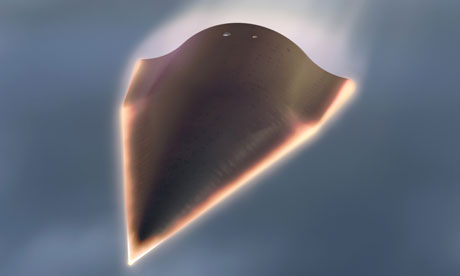
Artist’s rendition of the Falcon HTV-2, an unmanned, rocket-launched aircraft that flies at approximately 13,000 miles per hour. Photograph: AP/DARPA
By the time you finish reading this sentence, the Falcon HTV-2, the fastest plane ever built, could have flown 18 miles. It could travel from London to Sydney in less than an hour and cross the US mainland, from New York to Los Angeles, in 12 minutes.
Launched:
At 3pm BST on Thursday , the US Defence Advance Research Projects Agency launched the Falcon Hypersonic Technology Vehicle 2 on the back of a rocket from the Vandenberg Air Force Base in California. If all goes according to plan, engineers will launch the Falcon HTV-2 to the edge of space, before detaching the plane and guiding it on a hypersonic flight that will reach speeds of 13,000mph (about 20 times the speed of sound) on its return to Earth.
The plane has been tested in computer models and wind tunnels, but they can only simulate speeds up to Mach 15 (11,400mph). A real test is the only way to determine if the plane will remain flying at high speeds.
Thursday’s flight will also test the carbon composite materials designed to withstand the extreme temperatures the plane will experience on its skin and also the navigation systems that will control its trajectory as it moves at almost four miles per second.
The design and flight pattern of the plane has been tweaked since an aborted test flight in April last year. Nine minutes into that mission, which succeeded in flying for 139 seconds at Mach 22 (16,700mph), the onboard computer detected an anomaly and ordered the plane to ditch into the ocean for safety reasons.
Lost:
After separating from the rocket at the edge of space and beginning its return to Earth, the aircraft went silent during the gliding stage of the test flight, when it was due to perform a series of manoeuvres as it hurtled through the atmosphere.
Officials at the US Defence Advance Research Projects Agency (Darpa) announced they had lost communication with the speeding craft at 4.21pm BST, 36 minutes into the flight.
The plane was born from a Darpa plan called Prompt Global Strike, which sought to give military commanders the ability to strike targets anywhere in the world within an hour. Had the project worked, the Falcon HTV might have replaced intercontinental ballistic missiles.
The loss of the hypersonic aircraft is a serious setback for engineers trying to perfect the art of flying at such spectacular speeds.
Darpa only built two Falcon prototypes and has no plans to manufacture any more. This test flight was their last shot at success before the project is considered for closure.
Had the latest test flight gone to plan, the Falcon HTV-2 would have separated from its rocket high above the atmosphere and entered a steep dive before levelling out and performing a series of subtle manoeuvres to test its aerodynamic performance. At the end of the flight the plane would have rolled upside down and steered a graceful arc into the ocean.
Engineers had hoped the flight would provide crucial information on the plane’s performance, including the resilience of its carbon composite body and navigation systems supposed to keep it on course as it moved at almost four miles per second.
Posted in News, Planes Trains and Automobiles
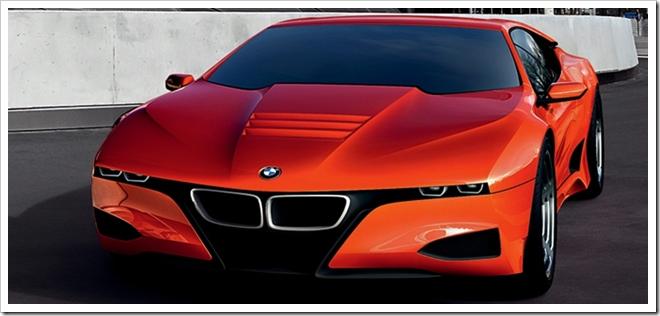
In April 2008, BMW unveiled the M1 Homage concept, to commemorate the 30th anniversary of the M1. The concept vehicle uses a mid-engine layout that borrows styling cues from both the original M1 and the BMW Turbo show car.[5]
BMW has confirmed that the M1 Homage will not be produced.
Posted in Planes Trains and Automobiles