Author Archives: James

RIP Carroll Shelby

Carroll Shelby

Carroll Hall Shelby (January 11, 1923 – May 10, 2012)

Carroll Shelby, the legendary auto racer and car designer who built the fabled Shelby Cobra sports car and injected testosterone into Ford’s Mustang and Chrysler’s Viper, has died. He was 89.

Shelby was an American automotive designer and racing driver. He was most well known for making the AC Motors-based Shelby American Cobra and later the Mustang-based performance cars for Ford Motor Company known as Mustang Cobras which he has done since 1965. His company, Shelby American Inc., founded in 1962, currently sells modified Ford vehicles, as well as performance parts.

The one-time chicken farmer had more than a half-dozen successful careers during his long life. Among them: champion race car driver, racing team owner, automobile manufacturer, automotive consultant, safari tour operator, raconteur, chili entrepreneur and philanthropist.

“He’s an icon in the medical world and an icon in the automotive world,” his longtime friend, Dick Messer, executive director of Los Angeles’ Petersen Automotive Museum, once said of Shelby.

“His legacy is the diversity of his life,” Messer said. “He’s incredibly innovative. His life has always been the reinvention of Carroll Shelby.”

Shelby first made his name behind the wheel of a car, winning France’s grueling 24 Hours of Le Mans sports car race with teammate Ray Salvadori in 1959. He already was suffering serious heart problems and ran the race “with nitroglycerin pills under his tongue,” Messer once noted.

He had turned to the race-car circuit in the 1950s after his chicken ranch failed. He won dozens of races in various classes throughout the 1950s and was twice named Sports Illustrated’s Driver of the Year.

Soon after his win at Le Mans, he gave up racing and turned his attention to designing high-powered “muscle cars” that eventually became the Shelby Cobra and the Mustang Shelby GT500.

The Cobra, which used Ford engines and a British sport car chassis, was the fastest production model ever made when it was displayed at the New York Auto Show in 1962.

A year later, Cobras were winning races over Corvettes, and in 1964 the Rip Chords had a Top 5 hit on the Billboard pop chart with “Hey, Little Cobra.” (“Spring, little Cobra, getting ready to strike, spring, little Cobra, with all of your might. Hey, little Cobra, don’t you know you’re gonna shut ’em down?”)

In 2007, an 800-horsepower model of the Cobra made in 1966, once Shelby’s personal car, sold for $5.5 million at auction, a record for an American car.

“It’s a special car. It would do just over three seconds to 60 (mph), 40 years ago,” Shelby told the crowd before the sale, held in Scottsdale, Ariz.

It was Lee Iacocca, then head of Ford Motor Co., who had assigned Shelby the task of designing a fastback model of Ford’s Mustang that could compete against the Corvette for young male buyers.

Turning a vehicle he had once dismissed as “a secretary car” into a rumbling, high-performance model was “the hardest thing I’ve done in my life,” Shelby recalled in a 2000 interview with The Associated Press.

That car and the Shelby Cobra made his name a household word in the 1960s.
Read more »

So Long, and Thanks for All the Fish!

Douglas Adams

Douglas Noël Adams (March 11, 1952 – May 11, 2001)

Douglas Adams was an English author, comic radio dramatist, and musician. He is best known as author of the Hitchhiker’s Guide to the Galaxy series. Hitchhiker’s began on radio, and developed into a “trilogy” of five books (which sold more than fifteen million copies during his lifetime) as well as a television series, a towel, a live theater show, a drink, a comic book series, a computer game and a feature film that was completed after Adams’ death. He was known to some fans as Bop Ad (after his illegible signature), or by his initials “DNA”.

So Long, and Thanks for All the Fish is the fourth book of the Hitchhiker’s Guide to the Galaxy “trilogy”. Its title is the message left by the dolphins when they departed Planet Earth just before it was demolished to make way for a hyperspace bypass, as described in The Hitchhiker’s Guide to the Galaxy. The phrase has since been adopted by some science fiction fans as a humorous way to say “goodbye.”

Wikipedia Link

One Giant Crustacean

Tasmanian Crab

Click for larger image

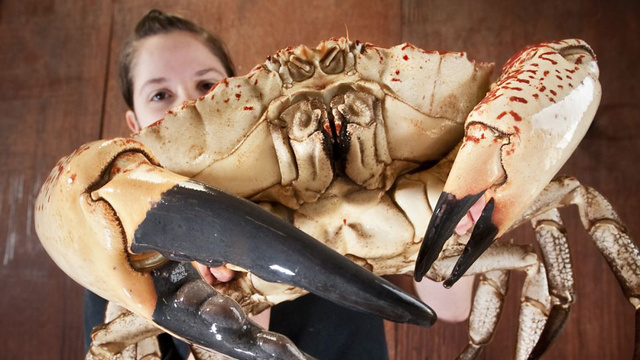
Say hello to Claude, the Tasmanian Monster Crab, who was recently caught off the coast of Tasmania. Originally destined to become crab cakes (approx 162 of them), a British aquarium bought his freedom for $4,800 and transported him to the UK, where he is expected to grow much, much larger.

Claude already weighs 15 pounds with a 15-inch-wide carapace and claws both large and strong enough to literally take your arm off. But he’s not full-size yet—staff at the Sea Life aquarium figure he’ll grow 3 inches wider and double his weight before reaching maturity. That’s right, he’s going to be a 30-pound crab with a three-foot wingspan if he continues on his diet of diced mackerel and squid. That puts him in the running to one day be the largest ever of his kind.

“They are such impressive creatures,” said Rob Hicks, head marine biologist for Sea Life, “we thought that it was worth the cost and effort of flying them halfway round the world so they can flourish in an aquarium display.” Tasmanian Monster Crabs are among the world’s largest species of crab and reside on the continental shelf off the coast of the island they’re named after.

Read more »

RIP Robert A. Heinlein

Robert Anson Heinlein ( July 7, 1907 – May 8, 1988 ) was one of the most popular, influential, and controversial authors of “hard” science fiction. He set a high standard for science and engineering plausibility, and helped to raise the genre’s standards of literary quality. He was the first writer to break into mainstream general magazines such as The Saturday Evening Post in the late 1940s with unvarnished science fiction. He was among the first authors of bestselling novel-length science fiction in the modern mass-market era. For many years, Heinlein, Isaac Asimov, and Arthur C. Clarke were known as the “Big Three” of science fiction.

Lusitania sinks

Lusitania sinks

On the afternoon of May 7, 1915, the British ocean liner Lusitania is torpedoed without warning by a German submarine off the south coast of Ireland. Within 20 minutes, the vessel sank into the Celtic Sea. Of 1,959 passengers and crew, 1,198 people were drowned, including 128 Americans. The attack aroused considerable indignation in the United States, but Germany defended the action, noting that it had issued warnings of its intent to attack all ships, neutral or otherwise, that entered the war zone around Britain.

The Hindenburg Disaster

The Hindenburg Disaster

On this day in 1937, the airship Hindenburg, the largest dirigible ever built and the pride of Nazi Germany, bursts into flames upon touching its mooring mast in Lakehurst, New Jersey, killing 36 passengers and crewmembers.

A Panda Tree

A Panda Tree

Rip Dom DeLuise

Dom DeLuise

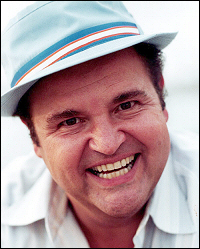
Dominick "Dom" DeLuise (August 1, 1933 – May 4, 2009)

Dominick “Dom” DeLuise (August 1, 1933 – May 4, 2009) was an American actor, comedian, film director, television producer, chef, and author.

May the 4th Be With You

May the 4th

RIP Wally Shirra

Walter Marty Schirra, Jr. (March 12, 1923 – May 3, 2007) was one of the original Mercury 7 astronauts chosen for the Project Mercury, America’s first effort to put men in space. He was the only man to fly in all of America’s first three space programs (Mercury, Gemini and Apollo).

He logged a total of 295 hours and 15 minutes in space.

Wikipedia Link

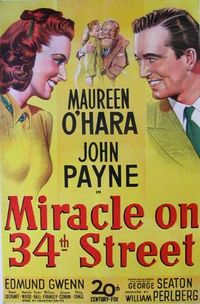
Anniversary of Miracle on 34th Street

Miracle on 34th Street (also titled The Big Heart in the UK) is a 1947 film which tells the story of a gentle old man, working as a Santa Claus at Macy’s department store in New York City, who contends that he is the real deal.

Miracle on 34th Street

Wikipedia Link

The film was released in theaters May 2, 1947.


RIP Pontiac

Pontiac

Pontiac (1926 - 2010)


In Remembrance – Nuclear Disaster at Chernobyl

NUCLEAR DISASTER AT CHERNOBYL:

On April 26, 1986, the world’s worst nuclear power plant accident occurs at the Chernobyl nuclear power station in the Soviet Union. Thirty-two people died and dozens more suffered radiation burns in the opening days of the crisis, but only after Swedish authorities reported the fallout did Soviet authorities reluctantly admit that an accident had occurred.

The Chernobyl station was situated at the settlement of Pripyat, about 65 miles north of Kiev in the Ukraine. Built in the late 1970s on the banks of the Pripyat River, Chernobyl had four reactors, each capable of producing 1,000 megawatts of electric power. On the evening of April 25, 1986, a group of engineers began an electrical-engineering experiment on the Number 4 reactor. The engineers, who had little knowledge of reactor physics, wanted to see if the reactor’s turbine could run emergency water pumps on inertial power.

As part of their poorly designed experiment, the engineers disconnected the reactor’s emergency safety systems and its power-regulating system. Next, they compounded this recklessness with a series of mistakes: They ran the reactor at a power level so low that the reaction became unstable, and then removed too many of the reactor’s control rods in an attempt to power it up again. The reactor’s output rose to more than 200 megawatts but was proving increasingly difficult to control. Nevertheless, at 1:23 a.m. on April 26, the engineers continued with their experiment and shut down the turbine engine to see if its inertial spinning would power the reactor’s water pumps. In fact, it did not adequately power the water pumps, and without cooling water the power level in the reactor surged.

To prevent meltdown, the operators reinserted all the 200-some control rods into the reactor at once. The control rods were meant to reduce the reaction but had a design flaw: graphite tips. So, before the control rod’s five meters of absorbent material could penetrate the core, 200 graphite tips simultaneously entered, thus facilitating the reaction and causing an explosion that blew off the heavy steel and concrete lid of the reactor. It was not a nuclear explosion, as nuclear power plants are incapable of producing such a reaction, but was chemical, driven by the ignition of gases and steam that were generated by the runaway reaction. In the explosion and ensuing fire, more than 50 tons of radioactive material were released into the atmosphere, where it was carried by air currents.

On April 27, Soviet authorities began an evacuation of the 30,000 inhabitants of Pripyat. A cover-up was attempted, but on April 28 Swedish radiation monitoring stations, more than 800 miles to the northwest of Chernobyl, reported radiation levels 40 percent higher than normal. Later that day, the Soviet news agency acknowledged that a major nuclear accident had occurred at Chernobyl.

In the opening days of the crisis, 32 people died at Chernobyl and dozens more suffered radiation burns. The radiation that escaped into the atmosphere, which was several times that produced by the atomic bombs dropped on Hiroshima and Nagasaki, was spread by the wind over Northern and Eastern Europe, contaminating millions of acres of forest and farmland. An estimated 5,000 Soviet citizens eventually died from cancer and other radiation-induced illnesses caused by their exposure to the Chernobyl radiation, and millions more had their health adversely affected. In 2000, the last working reactors at Chernobyl were shut down and the plant was officially closed.

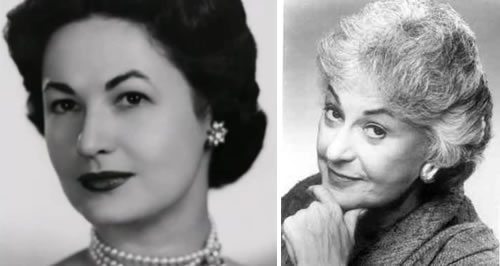
RIP Bea Arthur

Bea Arthur

Beatrice "Bea" Arthur (May 13, 1922 – April 25, 2009)

Beatrice “Bea” Arthur (May 13, 1922 – April 25, 2009) was an American comedienne, actress, and singer. In a career spanning seven decades, Arthur achieved success as the title character, Maude Findlay, on the 1970s sitcom Maude, and as Dorothy Zbornak on the 1980s sitcom The Golden Girls; she won Emmys for both roles.

Wikipedia Link

RIP Bobby “Boris” Picket

Robert George Pickett (February 11, 1938 – April 25, 2007), best known as one-hit wonder musician Bobby “Boris” Pickett. He was best known for co-writing and singing the 1962 hit novelty song, “Monster Mash”.

Wikipedia Link

Founding of the Library of Congress

The Library of Congress was established on April 24, 1800, when President John Adams signed an Act of Congress providing for the transfer of the seat of government from Philadelphia to the new capital city of Washington. Part of the legislation appropriated ,000 “for the purchase of such books as may be necessary for the use of Congress …, and for fitting up a suitable apartment for containing them….” Books were ordered from London and the collection, consisting of 740 books and 30 maps, was housed in the new Capitol. Although the collection covered a variety of topics, the bulk of the materials were legal in nature, reflecting Congress’ role as a maker of laws.

Thomas Jefferson played an important role in the Library’s early formation, signing into law on January 26, 1802 the first law establishing the structure of the Library of Congress. The law established the presidentially appointed post of Librarian of Congress and a Joint Committee on the Library to regulate and oversee the Library, as well as giving the president and vice president the ability to borrow books. The Library of Congress was destroyed in August 1814, when invading British troops set fire to the Capitol building and the small library of 3,000 volumes within.

Within a month, former President Jefferson offered his personal library as a replacement. Jefferson had spent 50 years accumulating a wide variety of books, including ones in foreign languages and volumes of philosophy, science, literature, and other topics not normally viewed as part of a legislative library, such as cookbooks, writing that, “I do not know that it contains any branch of science which Congress would wish to exclude from their collection; there is, in fact, no subject to which a Member of Congress may not have occasion to refer.” In January 1815, Congress accepted Jefferson’s offer, appropriating $23,950 to purchase his 6,487 books.

Wikipedia Article

Happy Birthday, Shirley Temple

Shirley Jane Temple (born April 23, 1928), later known as Shirley Temple Black, is an American diplomat and former film child actress. She starred in over 40 films during the 1930s.

Shirley Temple
Shirley Temple (April 23, 1928 – )

Wikipedia Link 

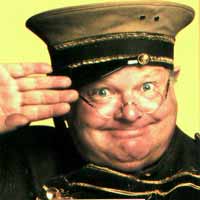
RIP Benny Hill

Alfred Hawthorn Hill, better known as Benny Hill, was a prolific English comic, actor & singer, best known for his television program, The Benny Hill Show. Since its debut in 1955 his television show has been sold to over 140 countries worldwide, with viewership in the billions.

Benny Hill

Alfred Hawthorn Hill (January 21, 1924 – April 20, 1992)

Wikipedia Link

Farewell, Dick Clark… America’s Oldest Teenager.

Bandstand in the 50s, New Year’s Rockin’ Eves for the past 30 years, Dick Clark has been around and seen (and introduced) it all… he has passed away as the “World’s Oldest Teenager” at the age of 82.


Birth of the Mustang (and the Pony Car)

April 17, 1964: Ford Mustang Starts Galloping

1964: Ford introduces the Mustang at the New York World’s Fair. It becomes an instant hit and an icon that alters the automotive landscape, giving rise to one of the most successful — and most uniquely American — automobile genres: the pony car.

The Ford Mustang was born of the simple idea that putting a back seat in a sports car would be a great idea.

The idea came to Lee Iacocca and Donald Frey in the early 1960s as the country was being overrun by European sports cars. Everywhere you looked you saw Alfa Romeos and MGs and Triumphs that dripped oil. Even French cars that would draw peals of laughter today were popular back then.

The two Ford execs saw a vast market literally rolling before their eyes, and, according to legend, the notion of a sports car with a back seat was one of those “ah-hah” moments. If Ford could dilute the European ethos just a bit by making the cars a bit more practical and a lot more affordable, Iacocca figured, the company would sell a few thousand.

He was right, but boy was he wrong. Ford didn’t sell thousands of them. It sold millions of them.

They sold 22,000 on the first day.

The Mustang was more than a success. It was a phenomenon. Ford sold 1 million in the first 18 months, making the Mustang its most successful launch since the Model A.

The pony car is easy to define. It was small by Detroit standards, with sporty styling. It had a back seat for your kids and a usable trunk for your stuff. And the rear wheels were driven by an engine — ideally a big V-8 — mounted up front where God and Henry Ford intended.

Pony cars may not have had the finesse of a European sports car, but they made up for it with brute force. A small-block V-8 can make up for a multitude of handling deficiencies.

The Mustang was successful like the Beatles were popular. Ford figured it would sell around 100,000 in the first 12 months of production. It sold 10 times that number in the first 18.

That success was not lost on the rest of Detroit, and everyone was cranking out pony cars by 1967. General Motors introduced the Chevrolet Camaro and its kissing cousin, the Pontiac Firebird. Ford offered the more upscale Mercury Cougar. Chrysler released the Challenger. Even AMC — google it, we’ll wait — got into the act with the Javelin.

Everyone had a favorite, and even now loyalists occasionally come to blows over which one was best. Countless bets have been made and races staged in displays of testosterone and bravado that would make Dr. Freud sit down for a cigar and a good long think.

And that was just in the parking lots and streets. Things really got wild when the automakers got in on the act, bringing in drivers like Dan Gurney and George Follmer and Mark Donohue to show who built the best car. The contest grew so heated it gave rise to a pony-car–specific racing series called Trans Am. (The car was named after the series, not the other way around.)

We’re inclined to give the award to the Mustang, if only because Steve McQueen drove a ’68 fastback in the most famous chase scene in cinematic history, that amazing dash through the streets of San Francisco in Bullitt.

The Mustang also gets the nod for sheer longevity. Oh sure, you can get a new Camaro that looks like a vintage Camaro, or a new Dodge Challenger that looks like a vintage Dodge Challenger.

But the Mustang is the only pony car to remain in continuous production since its introduction 45 years ago.

Ford has sold more than 9 million worldwide.