Author Archives: James

Special Spot

special_spot

First roller coaster in America opens

On June 16, 1884, the first roller coaster in America opens at Coney Island, in Brooklyn, New York. Known as a switchback railway, it was the brainchild of LaMarcus Thompson, traveled approximately six miles per hour and cost a nickel to ride. The new entertainment was an instant success and by the turn of the century there were hundreds of roller coasters around the country.

Coney Island, a name believed to have come from the Dutch Konijn Eilandt, or Rabbit Island, is a tract of land along the Atlantic Ocean discovered by explorer Henry Hudson in 1609. The first hotel opened at Coney Island in 1829 and by the post-Civil War years, the area was an established resort with theaters, restaurants and a race track. Between 1897 and 1904, three amusement parks sprang up at Coney Island–Dreamland, Luna Park and Steeplechase. By the 1920s, Coney Island was reachable by subway and summer crowds of a million people a day flocked there for rides, games, sideshows, the beach and the two-and-a-half-mile boardwalk, completed in 1923.

The hot dog is said to have been invented at Coney Island in 1867 by Charles Feltman. In 1916, a nickel hot dog stand called Nathan’s was opened by a former Feltman employee and went on to become a Coney Island institution and international franchise. Today, Nathan’s is famous not only for its hot dogs but its hot dog-eating contest, held each Fourth of July in Coney Island. In 2006, Takeru Kobayashi set a new record when he ate 53.75 hot dogs with buns in 12 minutes.

Roller coasters and amusement parks experienced a decline during the Great Depression and World War II, when Americans had less cash to spend on entertainment. Finally, in 1955, the opening of Disneyland in Anaheim, California, signaled the advent of the modern theme park and a rebirth of the roller coaster. Disneyland’s success sparked a wave of new parks and coasters. By the 1970s, parks were competing to create the most thrilling rides. In 2005, Six Flags Great Adventure in Jackson, New Jersey, introduced the Kingda Ka roller coaster, the world’s tallest (at 456 feet) and fastest (at 128 mph).

By the mid-1960s, the major amusement parks at Coney Island had shut down and the area acquired a seedy image. Nevertheless, Coney Island remains a tourist attraction and home to the Cyclone, a wooden coaster that made its debut there in 1927. Capable of speeds of 60 mph and with an 85-foot drop, the Cyclone is one of the country’s oldest coasters in operation today. Though a real-estate developer recently announced the building of a new .5 billion year-round resort at Coney Island that will include a 4,000-foot-long roller coaster, an indoor water park and a multi-level carousel, the Cyclone’s owners have said they plan to keep the historic coaster open for business.


RIP Daniel Keyes


Daniel Keyes (August 9, 1927 – June 15, 2014) was an American author best known for his Hugo award-winning short story and Nebula award-winning novel Flowers for Algernon. Keyes was given the Author Emeritus honor by the Science Fiction and Fantasy Writers of America in 2000.

Blowing bubbles

Congress adopts the Stars and Stripes

During the American Revolution, the Continental Congress adopts a resolution stating that “the flag of the United States be thirteen alternate stripes red and white” and that “the Union be thirteen stars, white in a blue field, representing a new Constellation.” The national flag, which became known as the “Stars and Stripes,” was based on the “Grand Union” flag, a banner carried by the Continental Army in 1776 that also consisted of 13 red and white stripes. According to legend, Philadelphia seamstress Betsy Ross designed the new canton for the Stars and Stripes, which consisted of a circle of 13 stars and a blue background, at the request of General George Washington. Historians have been unable to conclusively prove or disprove this legend.

With the entrance of new states into the United States after independence, new stripes and stars were added to represent new additions to the Union. In 1818, however, Congress enacted a law stipulating that the 13 original stripes be restored and that only stars be added to represent new states.

On June 14, 1877, the first Flag Day observance was held on the 100th anniversary of the adoption of the Stars and Stripes. As instructed by Congress, the U.S. flag was flown from all public buildings across the country. In the years after the first Flag Day, several states continued to observe the anniversary, and in 1949 Congress officially designated June 14 as Flag Day, a national day of observance.

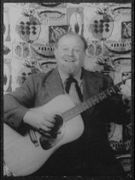
Happy Birthday, Burle Ives

Burl Icle Ivanhoe Ives was an acclaimed American folk music singer, author and actor.

Possibly his most remembered role today is as narrator Sam the Snowman in the Rankin-Bass animated television special, Rudolph the Red-Nosed Reindeer (1964).

Ives’ “A Holly Jolly Christmas” is a very popular tune during the Christmas season, as it’s frequently played on the radio and was featured in the Rudolph the Red-Nosed Reindeer special.

Burl Ives

Burl Icle Ivanhoe Ives (June 14, 1909 – April 14, 1995)

Trekini

trekini

Like anyone that would recognize this as a “Star Trek” thing would know what those things are that are wearing them…

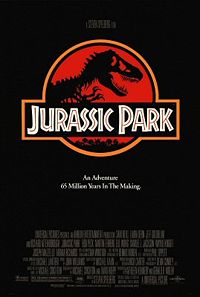
Anniversary of Jurassic Park

Jurassic Park Poster

June 11, 1993

Wikipedia Link

Vacuum

I bought a vacuum cleaner six months ago, and so far, all it’s been doing is gathering dust.  🙂

Nun

A nun, badly needing to use the restroom, walked into a local Hooters.

The place was hopping with music and loud conversation and every once in a while “the lights would turn off.”

Each time the lights would go out, the place would erupt into cheers.

However, when the revelers saw the nun, the room went dead silent.

She walked up to the bartender, and asked, “May I please use the restroom?”

The bartender replied, “OK, but I should warn you that there is a statue of a naked man in there wearing only a fig leaf.”

“Well, in that case, I’ll just look the other way,” said the nun.

So the bartender showed the nun to the back of the restaurant.

After a few minutes, she came back out, and the whole place stopped just long enough to give the nun a loud round of applause.

She went to the bartender and said, “Sir, I don’t understand. Why did they applaud for me just because I went to the restroom?”

“Well, now they know you’re one of us,” said the bartender. “Would you like a drink?”

“No thank you, but, I still don’t understand,” said the puzzled nun.

“You see,” laughed the bartender, “every time someone lifts the fig leaf on that statue, the lights go out.” 

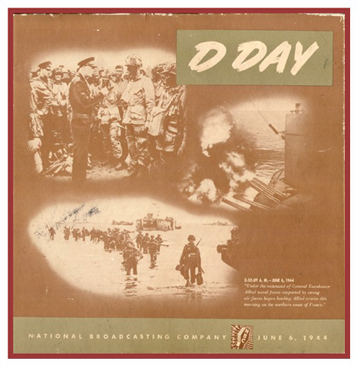
D-Day

D DayJune 6, 1944
Flag at Half Mast

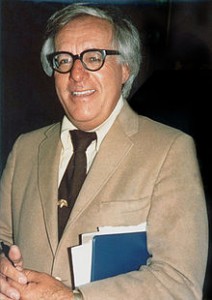
RIP Ray Bradbury

Ray Bradbury

Ray Bradbury (August 22, 1920–June 5, 2012)


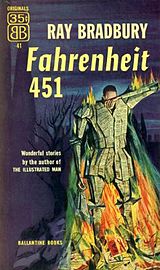
Ray Douglas Bradbury was an American fantasy, horror, science fiction, and mystery writer. Best known for his dystopian novel Fahrenheit 451 (1953) and for the science fiction stories gathered together as The Martian Chronicles (1950) and The Illustrated Man (1951), Bradbury was one of the most celebrated among 20th century American writers of speculative fiction. Many of Bradbury’s works have been adapted into television shows or films.

Once described as a “Midwest surrealist”, he is generally labeled a science fiction writer. Bradbury resists that categorization, however:

First of all, I don’t write science fiction. I’ve only done one science fiction book and that’s Fahrenheit 451, based on reality. It was named so to represent the temperature at which paper ignites. Science fiction is a depiction of the real. Fantasy is a depiction of the unreal. So Martian Chronicles is not science fiction, it’s fantasy. It couldn’t happen, you see? That’s the reason it’s going to be around a long time — because it’s a Greek myth, and myths have staying power.Fahrenheit 451

On another occasion, Bradbury observed that the novel touches on the alienation of people by media:

In writing the short novel Fahrenheit 451 I thought I was describing a world that might evolve in four or five decades. But only a few weeks ago, in Beverly Hills one night, a husband and wife passed me, walking their dog. I stood staring after them, absolutely stunned. The woman held in one hand a small cigarette-package-sized radio, its antenna quivering. From this sprang tiny copper wires which ended in a dainty cone plugged into her right ear. There she was, oblivious to man and dog, listening to far winds and whispers and soap-opera cries, sleep-walking, helped up and down curbs by a husband who might just as well not have been there. This was not fiction.

Anniversary of WarGames

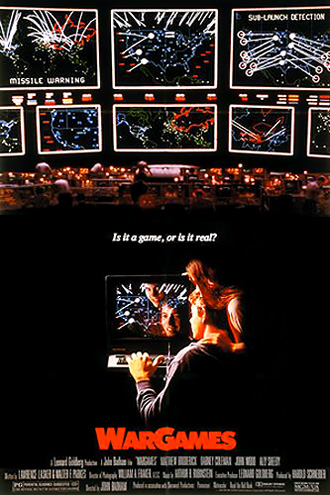
In 1983,

A Computerized Voice Asked You…

Would You Like To Play A Game?

Wikipedia Link

RIP David Carradine

David Carradine

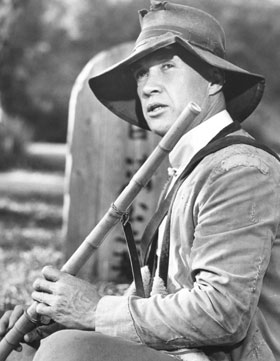
David Carradine in “Kung Fu”

David Carradine (December 8, 1936 – June 3, 2009), born John Arthur Carradine, was an American character actor, best known for his role as Kwai Chang Caine in the 1970s television series, Kung Fu and its 1990s sequel series, Kung Fu: The Legend Continues. He was a member of a productive acting family dynasty that began with his father, John Carradine. His acting career, which included major and minor roles on stage, television and cinema, spanned over four decades. A prolific “B” movie actor, he appeared in more than 100 feature films and was nominated four times for a Golden Globe Award. The last nomination was for his title role in Quentin Tarantino’s Kill Bill.

Wikipedia Link

Carving a chain using only power tools…

RIP Jean Stapleton

To quote Linda Carter’s Tweet upon her passing:

“Those Were The Days…Rest In Peace Jean Stapleton”

Jean Stapleton (born Jeanne Murray; January 19, 1923 – May 31, 2013)

Jean Stapleton (born Jeanne Murray; January 19, 1923 – May 31, 2013)

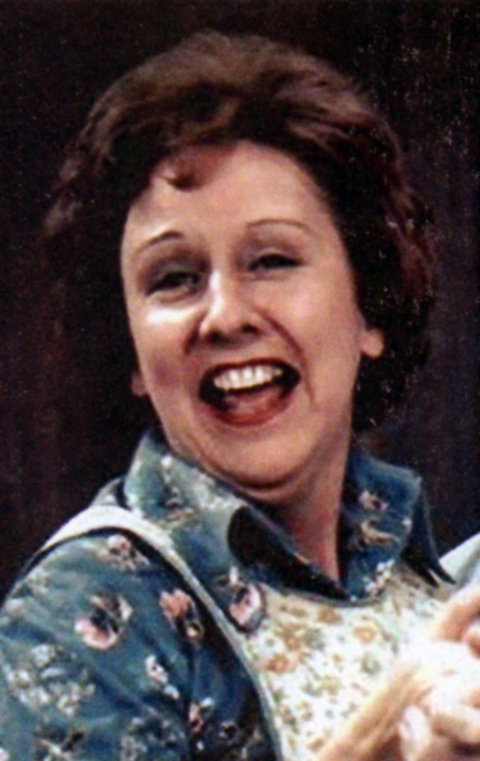
Jean Stapleton was an American character actress of stage, television and film.

She was best known for her portrayal of Edith Bunker, the long-suffering, yet devoted wife of Archie Bunker (played by Carroll O’Connor) and mother of Gloria Stivic (played by Sally Struthers), on the 1970s situation comedy All in the Family.

Wikipedia Link

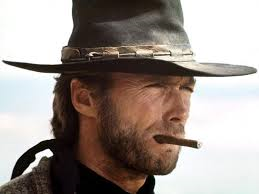
Happy Birthday, Clint Eastwood!

Clinton "Clint" Eastwood, Jr. (May 31, 1930 - )

Clinton “Clint” Eastwood, Jr. (May 31, 1930 – )

Clint Eastwood is an American film actor, director, producer, composer, pianist, businessman, investor, and politician. Eastwood first came to prominence as a supporting cast member in the TV series Rawhide.

Wikipedia Link

Read more »

Happy Birthday, Big Ben

The famous tower clock known as Big Ben, located at the top of the 320-foot-high St. Stephen’s Tower, rings out over the Houses of Parliament in Westminster, London, for the first time on this day, May 31st,  in 1859.

After a fire destroyed much of the Palace of Westminster–the headquarters of the British Parliament–in October 1834, a standout feature of the design for the new palace was a large clock atop a tower. The royal astronomer, Sir George Airy, wanted the clock to have pinpoint accuracy, including twice-a-day checks with the Royal Greenwich Observatory. While many clockmakers dismissed this goal as impossible, Airy counted on the help of Edmund Beckett Denison, a formidable barrister known for his expertise in horology, or the science of measuring time.

Denison’s design, built by the company E.J. Dent & Co., was completed in 1854; five years later, St. Stephen’s Tower itself was finished. Weighing in at more than 13 tons, its massive bell was dragged to the tower through the streets of London by a team of 16 horses, to the cheers of onlookers. Once it was installed, Big Ben struck its first chimes on May 31, 1859. Just two months later, however, the heavy striker designed by Denison cracked the bell. Three more years passed before a lighter hammer was added and the clock went into service again. The bell was rotated so that the hammer would strike another surface, but the crack was never repaired.

The name “Big Ben” originally just applied to the bell but later came to refer to the clock itself. Two main stories exist about how Big Ben got its name. Many claim it was named after the famously long-winded Sir Benjamin Hall, the London commissioner of works at the time it was built. Another famous story argues that the bell was named for the popular heavyweight boxer Benjamin Caunt, because it was the largest of its kind.

Even after an incendiary bomb destroyed the chamber of the House of Commons during the Second World War, St. Stephen’s Tower survived, and Big Ben continued to function. Its famously accurate timekeeping is regulated by a stack of coins placed on the clock’s huge pendulum, ensuring a steady movement of the clock hands at all times. At night, all four of the clock’s faces, each one 23 feet across, are illuminated. A light above Big Ben is also lit to let the public know when Parliament is in session.

Memorial Day

Flag at Half Mast

Memorial Day

Memorial Day is a United States federal holiday observed on the last Monday of May. Formerly known as Decoration Day, it commemorates U.S. men and women who died while in the military service. First enacted to honor Union soldiers of the American Civil War (it is celebrated near the day of reunification after the civil war), it was expanded after World War I to include American casualties of any war or military action.

It Has Always Been The Soldier

Darth Vader

errr, I mean Fader!

darth_fader