Category Archives: Anniversary

Mole Day

October 23rd is Mole Day—you know, because 10/23 is like 1023.

THE EARLY HISTORY of chemistry has many interesting stories. Just consider the problems scientists had 200 years ago as they tried to figure out some of the most basic ideas of chemistry. It was clear that there were different substances—for instance, water is different than coal. But it wasn’t so clear what these substances were made of. You could take something like nitrogen gas (N2) and oxygen gas (O2) and combine them together to make another gas (in this case NO2). It thus seemed reasonable to suppose that stuff (molecular gas) was made of smaller stuff (atoms). But the evidence isn’t so easy to see. The primary difficulty is that humans can’t see molecules or atoms. All the scientific ideas have to be built on indirect evidence.

This is where Amedeo Avogadro comes into the picture (of course his real name is Lorenzo Romano Amedeo Carlo Avogadro di Quaregna e di Cerreto—but everyone just calls him Avogadro for obvious reasons). Avogadro developed the following idea:

Avogadro’s Law: If you have two gasses at the same temperature and pressure, they will occupy the same volume only if they contain the same number of molecules.

If you are thinking this is just a version of the Ideal Gas Law, you are correct—but let’s move on to a useful example. Suppose you take water (which is H2O) and run an electric curent through it—called electrolysis. This can break the water molecules into hydrogen gas and oxygen gas (which you could collect). If you had these two gases at the same temperature and pressure, the hydrogen gas would take up twice the volume compared to the oxygen gas. Why? Well, when you break up the water molecule, you get twice as much hydrogen as oxygen. Yes, hydrogen doesn’t just float around as a single atom. Instead it forms a bond with another hydrogen to make H2—but oxygen does the same thing (O2).

In the end, you would know that water is made of both hydrogen and oxygen and that there is twice as much hydrogen as oxygen. That’s a pretty big piece to the whole elements puzzle and you need an idea like Avogadro’s Law to figure it out.

Avogadro’s Number

But what about this number of Avogadro? Why is it important and why didn’t Amedeo know what it was? Let’s start with a definition. If I have 12 grams of carbon-12 (not any other isotopes of carbon) then it would have exactly Avogadro’s number of atoms in it. We can write this number as (approximately):

avagadro

So we would call this number of carbon atoms, one mole (sort of like 12 eggs is one dozen).

Why is important? Avogadro’s number is sort of like a bridge. It bridges chemistry and atomic physics. In chemistry we measure things based on their bulk properties. Things like mass (total mass), pressure, volume, temperature. However, when we consider these things from an atomic perspective we look at individual atoms and the momentum, velocity of these particles. Avogadro’s number connects these two ideas and allows us to explore atomic-level things by measuring macroscopic level quantities. It’s a big deal.

But why didn’t Avogadro know this number? Because he didn’t directly come up with the idea. Chemists named the number after Avogadro to honor his contributions to chemistry.

Determining a Value for Avogadro’s Number

If you had a carton with a dozen eggs, you could open up the package and count the number of eggs to find out that one dozen equals twelve. You can’t really do the same thing with a mole of carbon. Carbon atoms are too tiny to see and there are too many to count. We have to find another way to get a value for Avogadro’s number. There are quite a few ways to determine this magic number, but let me go over a simple method.

Start with two pieces of copper placed in a solution of copper-sulfate. When you run an electric current through the system, copper is removed from one plate and deposited on the other plate. This means that one of the plates gains mass and the other loses mass (should be by the same amount).

When the copper atom is removed from one plate, it acts as a charge carrier in the complete circuit (battery, wires, copper, solution). If I measure the current in this circuit and record the time, I can use the definition of current to find the total transfer of charge (which would be the transfer of copper ions).

avagadro2

Let’s put this all together.

  • Run current through the copper and copper sulfate.
  • Positive copper ions are transferred from one plate to the other making a change in mass (which I can measure).
  • I can measure the current and time and calculate the total transfer of charge from one plate to another.
  • Since a copper ion has a positive charge of 1 e (charge of an electron), I can get the number of ions transferred.
  • Knowing that 1 mole of copper is 63.546 grams, I should be able to get a relationship between the change in mass and the number of moles—which will give me Avogadro’s number.

In my rough experiment, I had an electric current of 0.42 Amps for 10 minutes. This gives a total change in charge of 252 Coulombs. Dividing this by the charge of one ion (1.6 x 10⁻¹⁹ C) I get 5.575 x 10²¹ ions. The change in mass of one plate is 0.344 grams. That’s all I need. Now I can write:

avagadro3

That’s not a terrible value for Avogadro’s number. Really, it’s not. If you take the accepted value of 6.022 x 10²³, then my estimate is just off by less than a factor of 2. I call that close enough. The idea works even if my method was a little bit sloppy. Still, my value is better than no value.

Anniversary of the Alaska Purchase

On this day, October 18th, in 1867, the U.S. formally takes possession of Alaska after purchasing the territory from Russia for $7.2 million, or less than two cents an acre. The Alaska purchase comprised 586,412 square miles, about twice the size of Texas

Stay in Your Lane!

The Headless Horseman

The 1949 original by Bing Crosby.
Thurl Ravencroft’s version.
Geoff Castellucci’s version.

Anniversary of Yeager Breaking the Sound Barrier

yeager_glamorous_glennis

U.S. Air Force Captain Chuck Yeager becomes the first person to fly faster than the speed of sound.

Yeager, born in Myra, West Virginia, in 1923, was a combat fighter during World War II and flew 64 missions over Europe. He shot down 13 German planes and was himself shot down over France, but he escaped capture with the assistance of the French Underground. After the war, he was among several volunteers chosen to test-fly the experimental X-1 rocket plane, built by the Bell Aircraft Company to explore the possibility of supersonic flight.

For years, many aviators believed that man was not meant to fly faster than the speed of sound, theorizing that transonic drag rise would tear any aircraft apart. All that changed on October 14, 1947, when Yeager flew the X-1 over Rogers Dry Lake in Southern California. The X-1 was lifted to an altitude of 25,000 feet by a B-29 aircraft and then released through the bomb bay, rocketing to 40,000 feet and exceeding 662 miles per hour (the sound barrier at that altitude). The rocket plane, nicknamed “Glamorous Glennis,” was designed with thin, unswept wings and a streamlined fuselage modeled after a .50-caliber bullet.

Because of the secrecy of the project, Bell and Yeager’s achievement was not announced until June 1948. Yeager continued to serve as a test pilot, and in 1953 he flew 1,650 miles per hour in an X-1A rocket plane. He retired from the U.S. Air Force in 1975 with the rank of brigadier general.

Anniversary of White Christmas

White Christmas
The film was released in theaters October 14, 1954.

White Christmas is a 1954 movie starring Bing Crosby and Danny Kaye that featured the songs of Irving Berlin, including the titular White Christmas.

Wikipedia Link

The Monster Mash

From American Bandstand. October 13, 1964. Bobby “Boris” Pickett.

Halloween Humor

Happy Halloween!

Jack-O-Lanterns

BEST Pumpkin Ever!

Is it October Yet?

Vincent Price Performs Thriller!

On Friday the 13th in February in 1987, the legendary Vincent Price showed up as a guest on the Late Show starring Joan Rivers. While on the show, Price performed his classic segment from Michael Jackson’s “Thriller”.

October 06, 1866: First U.S. train robbery

On this day in 1866, the Reno gang carries out the first robbery of a moving train in the U.S., making off with over $10,000 from an Ohio & Mississippi train in Jackson County, Indiana. Prior to this innovation in crime, holdups had taken place only on trains sitting at stations or freight yards.

Anniversary of Dr. No

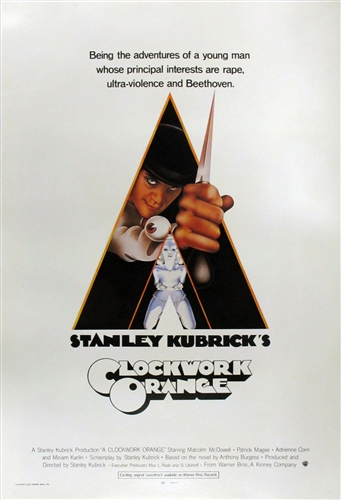
On October 5, 1962, the 1st James Bond film, Dr. No, premiered in London (it would arrive in the US the 8th of May of 1963).

Dr. No poster

Propane Pumpkins

70th Anniversary of The Mickey Mouse Club

70 years ago today, October 3, 1955, The Mickey Mouse Club premiered. It was an American variety television show that aired intermittently from 1955 to 1996 and returned to social media in 2017. Created by the late Walt Disney and produced by Walt Disney Productions, the program was first televised for four seasons, from 1955 to 1959, by ABC. This original run featured a regular, but ever-changing cast of mostly teen performers. ABC broadcast reruns weekday afternoons during the 1958–1959 season, airing right after American Bandstand. The show was revived three times after its initial 1955–1959 run on ABC, first from 1977 to 1979 for first-run syndication as The New Mickey Mouse Club, then from 1989 to 1996 as The All-New Mickey Mouse Club (also known to fans as MMC from 1993 to 1996) airing exclusively on cable television’s The Disney Channel, and again in 2017 with the moniker Club Mickey Mouse airing exclusively on internet social media. It ended in 2018.

The character of Mickey Mouse appeared in every show, not only in vintage cartoons originally made for theatrical release, but also in the opening, interstitial, and closing segments made especially for the show. In both the vintage cartoons and new animated segments, Mickey was voiced by his creator Walt Disney (Disney had previously voiced the character theatrically from 1928 to 1947 before being replaced by sound effects artist Jimmy MacDonald).

Good Morning, Captain (Kangaroo) – 70th Anniversary

Captain Kangaroo ran from October 3, 1955 – December 8, 1984.

From Wikipedia:

Captain Kangaroo was an American children’s television series that aired weekday mornings on the American television network CBS for 29 years, from 1955 to 1984, making it the longest-running nationally broadcast children’s television program of its day. In 1986, the American Program Service (now American Public Television, Boston) integrated some newly produced segments into reruns of past episodes, distributing the newer version of the series to PBS and independent public stations until 1993.

The show was conceived by Bob Keeshan, who also played the title character “Captain Kangaroo”, and who based the show on “the warm relationship between grandparents and children”. Keeshan had portrayed the original Clarabell the Clown on NBC’s The Howdy Doody Show during the network’s early years.

Captain Kangaroo had a loose structure, built around life in the “Treasure House” where the Captain (the name “kangaroo” came from the big pockets in his coat) would tell stories, meet guests, and indulge in silly stunts with regular characters, both humans and puppets. Keeshan performed as the Captain more than 9,000 times over the nearly 30-year run of the show.

Wikipedia Article

The Andy Griffith show premiered – 65th Anniversary

The Andy Griffith Show is an American sitcom television series that was aired on CBS from October 3, 1960, to April 1, 1968, with a total of 249 half-hour episodes spanning eight seasons—159 in black and white and 90 in color.

10th Anniversary of The Martian

October 2, 2015

75th Anniversary of Peanuts

From Wikipedia (article here):

Peanuts (briefly subtitled featuring Good ol’ Charlie Brown) is a syndicated daily and Sunday American comic strip written and illustrated by Charles M. Schulz. The strip’s original run extended from 1950 to 2000, continuing in reruns afterward. Peanuts is among the most popular and influential in the history of comic strips, with 17,897 strips published in all,[1] making it “arguably the longest story ever told by one human being”.[2] At the time of Schulz’s death in 2000, Peanuts ran in over 2,600 newspapers, with a readership of roughly 355 million across 75 countries, and had been translated into 21 languages.[3] It helped to cement the four-panel gag strip[4] as the standard in the United States,[5] and together with its merchandise earned Schulz more than $1 billion.[1] Following successful TV and theatrical adaptations over the years, a movie adaptation was released by Blue Sky Studios in 2015.[6]

Peanuts focuses on a social circle of young children, where adults exist but are rarely seen or heard. The main character, Charlie Brown, is meek, nervous, and lacks self-confidence. He is unable to fly a kite, win a baseball game, or kick a football held by his irascible friend Lucy, who always pulls it away at the last instant.[7] Peanuts is a literate strip with philosophical, psychological, and sociological overtones, which was innovative in the 1950s.[4] Its humor is psychologically complex and driven by the characters’ interactions and relationships. The comic strip has been adapted in animation and theater.

Schulz drew every strip, through nearly 50 years, with no assistants, including the lettering and coloring process.[8][9]