Category Archives: Planes Trains and Automobiles

The Plane That Flew Itself

In 1970, a plane got fed up with its pilot so it hatched an audacious plan. First, get rid of the pilot. Second: land. Third: enter history. The result was amazing.

On February 2, 1970 four pilots of the 71st Fighter-Interceptor Squadron were to take off from the Malmstrom Air Force Base in Montana. They were to do so on Convair F-106A-100-CO Delta Darts and engage in mock combat.

But one plane had ideas of its own. Just as it was about to take off, its drag chute deployed – forcing its pilot to abort.

So then there were three. Major Tom Curtis was to “fight” Major Jim Lowe and Captain Gary Faust. No problem – they’d been through this before. Or so they thought.

The three split up to begin their dogfight. Once they were 20 miles apart, ground controllers gave them all different vectors to ensure that each had a fair chance. From that point on, they could do whatever they felt was necessary to win.

Curtis went after Faust first, so he accelerated to Mach 1.90. The plan was to force Faust into a vertical engagement that would put him at a disadvantage.

The three planes zoomed toward each other and overshot. Curtis climbed, forcing the other two to try and catch up. Having entered the climb faster, he had the advantage, but it couldn’t last.

So he switched to vertical scissors – using his speed to climb and dive in a spiral while doing a barrel roll. He then took it a step further by widening his spirals, forcing the other two to break out of their own climb.

Once past 38,000 feet, Curtis did a high-G rudder reversal – turning and rolling to reduce his thrust, thereby forcing his “enemy” to overshoot him. It worked… sort of. Faust took the bait, which probably annoyed his plane.

Tail number 58-0787 shuddered, then went into an accelerated stall – meaning it suddenly plunked its nose downward. Then it made a beeline toward the ground.

Curtis saw it all. From his angle, it looked as if the plane’s tail was doing a slow circuit around its wobbling nose – disaster! It’s called a flat spin. And once an F-106A does that, it’s almost as good as dead.

Fortunately, the men were seasoned, professional pilots. Lowe’s calm voice came over Faust’s radio – carefully going over spin recovery procedures step-by-step. Faust followed them all faithfully, trying to maneuver the plane’s nose at an angle that would break its spin.

He set the plane’s trim to the take-off position, but 58-0787 refused to respond. Trimming frees the pilot from having to exert constant pressure on the controls, but it did no good. Nothing worked.

There was only one thing left to do – activate the drag chute. This wasn’t meant to be used in flight, however. It’s only for extra braking when a plane lands. The hope was that it would slow the plane down enough so Faust could get it at the angle needed to break its spin.

So he deployed it, and off it went… wrapping itself around 58-0787’s vertical stabilizer. Perhaps even more annoyed by that, the F-106A continued its downward spiral of doom. Faust had exhausted all of his options.

And having fallen below the 15,000 feet mark, he had also run out of time. If he was to survive, he had to bail – so he did.

It was the signal that 58-0787 was waiting for. The blast that catapulted Faust out was exactly what was needed to push its nose straight down.

The plane broke out of its spin, leveled off, and resumed flying in a straight line – albeit with a slight left and right wobbling. Even better, Faust had set the trim to take-off, which was similar to the landing trim position. And best of all, he had moved the throttle to “idle” – putting the plane into a steady gliding descent.

Except that he was no longer in it. Lowe saw it all and couldn’t help laughing, “Gary? You better get back into that thing!”

But 58-0787 was having none of it. Freed of its human, at last, it flew off into the vast blue skies above northern Montana. Faust, meanwhile, could only watch in awe as his plane continued to fly on without him as he slowly parachuted down into the snow-covered Bear Paw Mountains.

Curtis and Lowe radioed his position and headed back to base. All three hoped that wherever 58-0787 crashed, it wouldn’t be on anyone below. As for Faust, he was rescued shortly after landing by a group of Native Americans on snowmobiles.

But 58-0787 had no intention of crashing. Traveling at about 175 knots, it reveled in its new-found freedom till it reached the town of Big Sandy (population: 598 in 2010) in Chouteau County. Seeing a lovely snow-covered alfalfa field, it made a slow, steady downward glide till it touched ground.

Delighted by the snow, it continued to slide, making sure to stay steady and avoid letting either wing touch the earth. But there was trouble ahead. Cutting across the field at an angle to its approach lay a low, stone wall with only a narrow gap in the middle.

So 58-0787 slid to the right, did a 20° turn, slipped through the opening, and continued on into the next field where it finally stopped before an astonished farmer. The man called the sheriff, of course, who called the base.

They asked him to assess the damage, but each time he tried to get close, 58-0787 would jiggle and dance, trying to get away. Finally, the authorities told him to just let the thing be – it would run out of fuel, eventually.

By the time the military got there, it had done just that – almost two hours later. So they took off its wings and hauled it back to base. To their surprise, except for some superficial scratches on its underside, it was still flight-worthy and later put back in active service.

They called Faust the “Cornfield Bomber” after that, but he was not a bomber. Nor did 58-0787 land in a cornfield. It now rests at the National Museum of the US Air Force, restored to its former glory, and no doubt reminiscing about its Montana adventure.
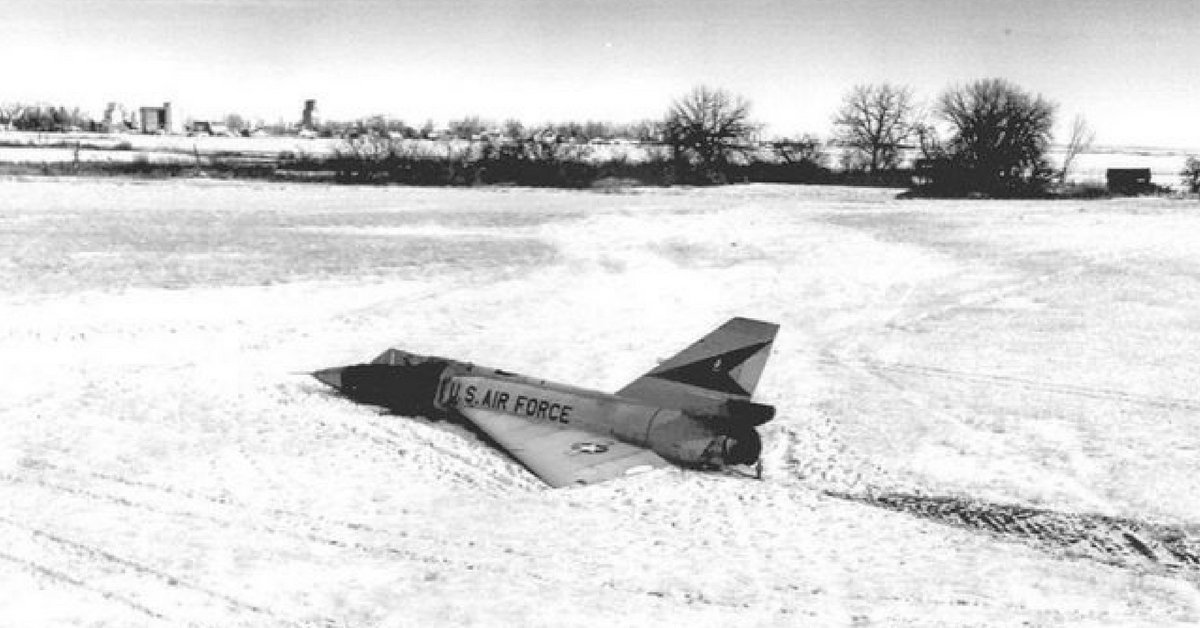
58-0787 resting on an alfalfa field in Montana
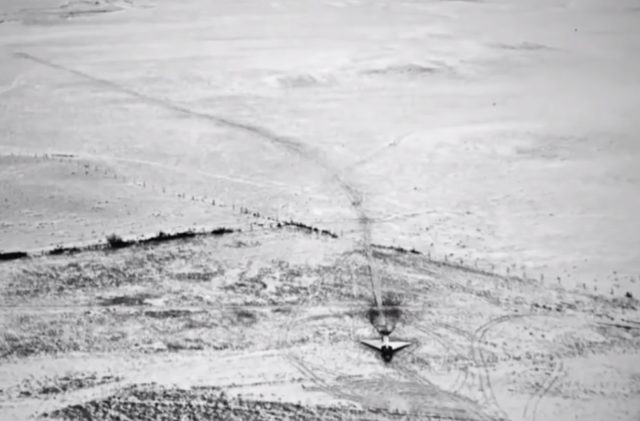
58-0787 after making a right turn to avoid the stone wall

Major Gary Foust (retired) with 58-0787 (also retired) behind him


Wile E. Coyote

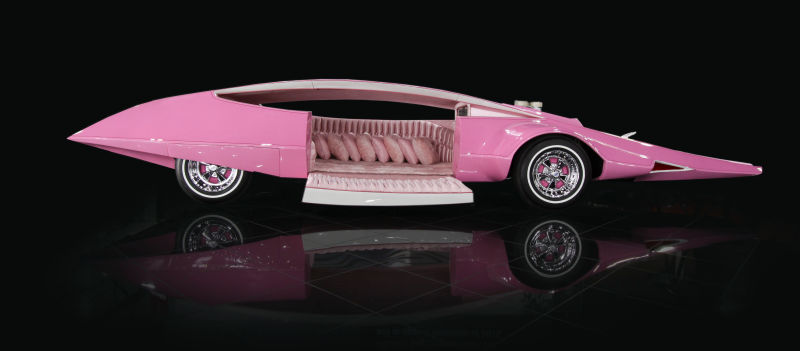
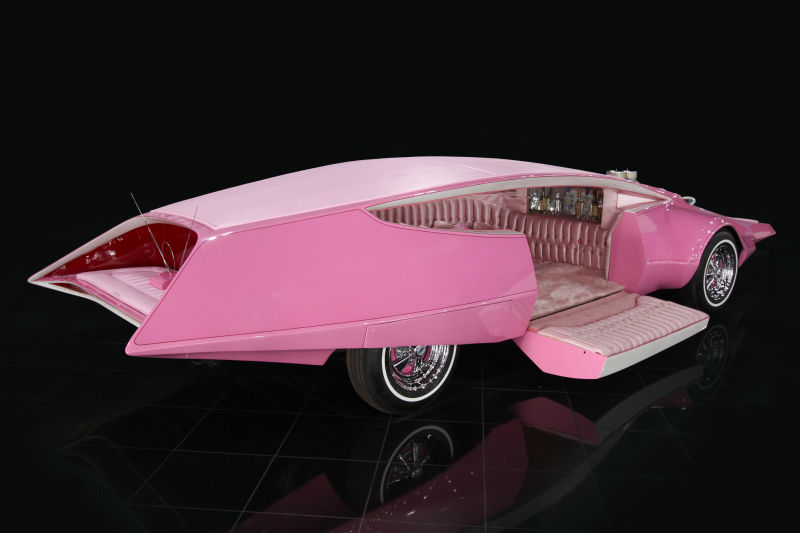
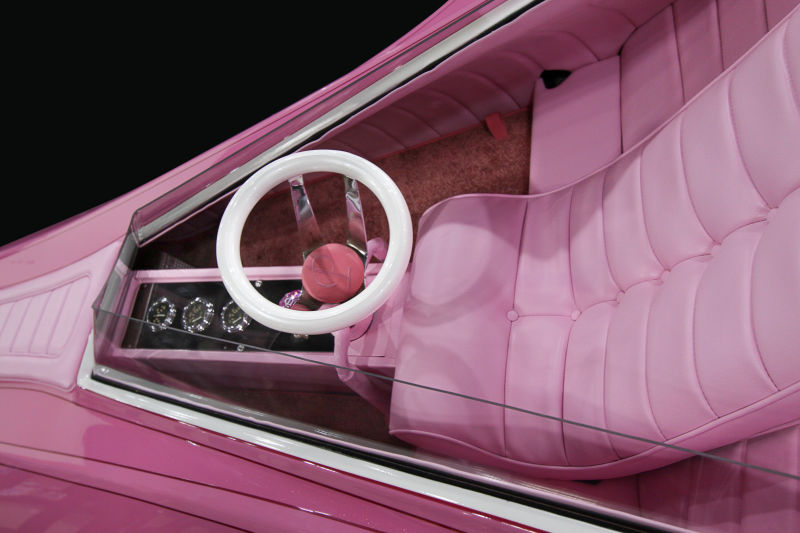
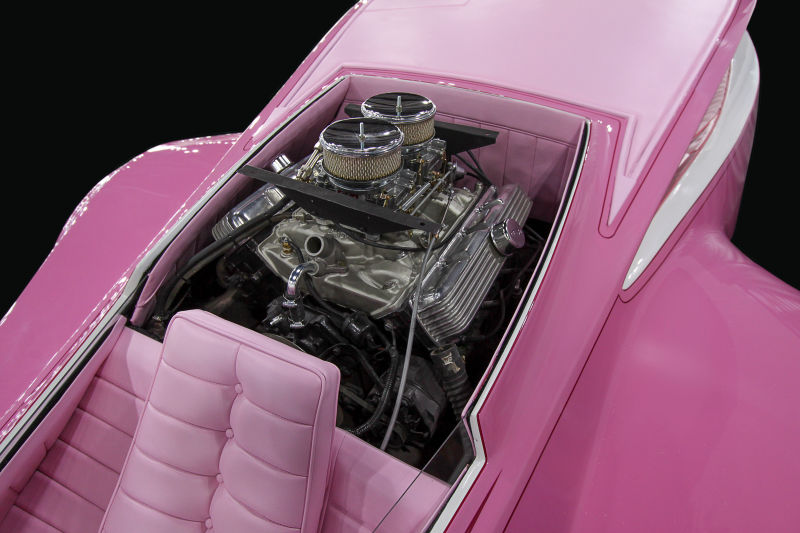
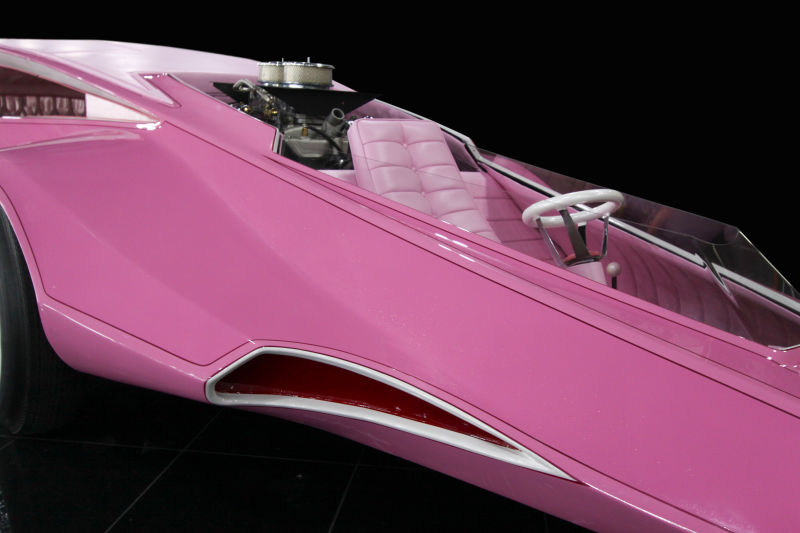
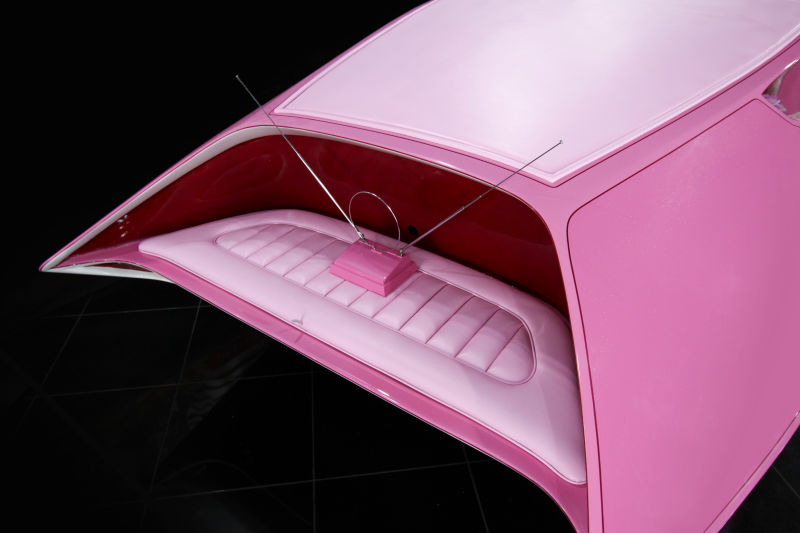
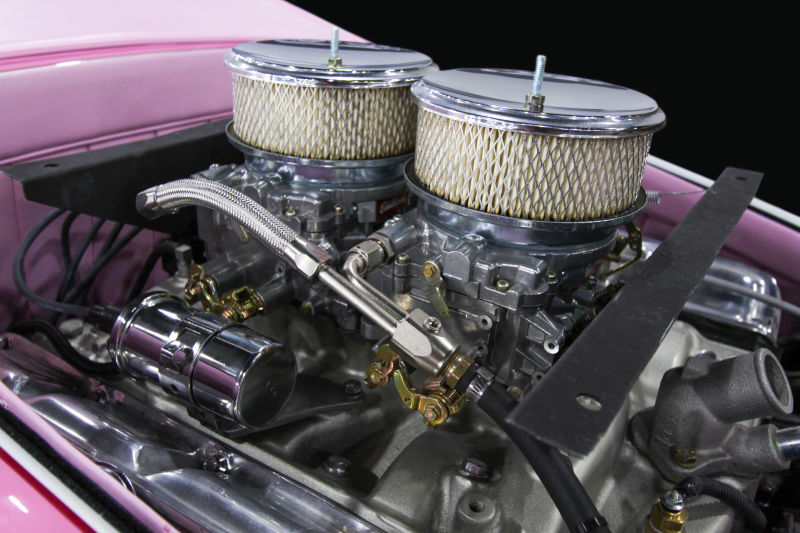
Pink Panther Mobile restored

Oooops

https://youtu.be/sO_OFfoxmgU

Renault Trezor

Anniversary of the sinking of the USS Johnston

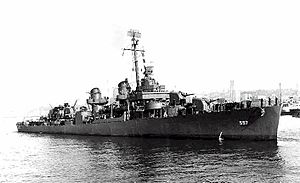
USS Johnston (DD-557)

USS Johnston (DD-557) was a World War II-era Fletcher-class destroyer in the service of the United States Navy. She was the first Navy ship named after Lieutenant John V. Johnston. The ship was most famous for its bold action in the Battle off Samar. The small “tincan” destroyer armed with nothing larger than 5 inch (127mm) guns and torpedoes would lead the attack of a handful of light ships which had inadvertently been left unprotected in the path of a massive Japanese fleet led by battleships and cruisers. The sacrifices of Johnston and her little escort carrier task unit “Taffy 3” helped stop Admiral Kurita’s powerful Center Force from attacking vulnerable U.S. landing forces, and inflicted greater losses than they suffered.

Wikipedia Link

Yeager Breaks Sound Barrier

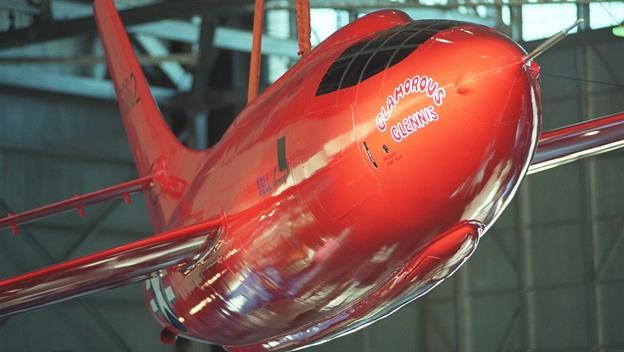
yeager_glamorous_glennis

U.S. Air Force Captain Chuck Yeager becomes the first person to fly faster than the speed of sound.

Yeager, born in Myra, West Virginia, in 1923, was a combat fighter during World War II and flew 64 missions over Europe. He shot down 13 German planes and was himself shot down over France, but he escaped capture with the assistance of the French Underground. After the war, he was among several volunteers chosen to test-fly the experimental X-1 rocket plane, built by the Bell Aircraft Company to explore the possibility of supersonic flight.

For years, many aviators believed that man was not meant to fly faster than the speed of sound, theorizing that transonic drag rise would tear any aircraft apart. All that changed on October 14, 1947, when Yeager flew the X-1 over Rogers Dry Lake in Southern California. The X-1 was lifted to an altitude of 25,000 feet by a B-29 aircraft and then released through the bomb bay, rocketing to 40,000 feet and exceeding 662 miles per hour (the sound barrier at that altitude). The rocket plane, nicknamed “Glamorous Glennis,” was designed with thin, unswept wings and a streamlined fuselage modeled after a .50-caliber bullet.

Because of the secrecy of the project, Bell and Yeager’s achievement was not announced until June 1948. Yeager continued to serve as a test pilot, and in 1953 he flew 1,650 miles per hour in an X-1A rocket plane. He retired from the U.S. Air Force in 1975 with the rank of brigadier general.

Up Close

VW Ball

vwball vwball2

Big vs Little

big_vs_little

SR-71 ‘Blackbird’ Sets ‘Speed Over a Recognized Course’ record

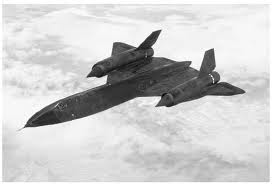
SR-71

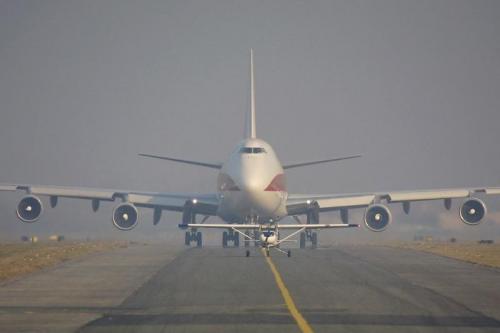
The SR-71 holds the “Speed Over a Recognized Course” record for flying from New York to London distance 3,508 miles (5,646 km), 1,435.587 miles per hour (2,310.353 km/h), and an elapsed time of 1 hour 54 minutes and 56.4 seconds, set on September 1, 1974 while flown by U.S. Air Force Pilot Maj. James V. Sullivan and Maj. Noel F. Widdifield, reconnaissance systems officer (RSO). This equates to an average velocity of about Mach 2.68, including deceleration for in-flight refueling. Peak speeds during this flight were probably closer to the declassified top speed of Mach 3.2+. For comparison, the best commercial Concorde flight time was 2 hours 52 minutes, and the Boeing 747 averages 6 hours 15 minutes.

Wikipedia Link

Street Rod Nationals

NSRA Street Rod Nationals

August 4 – 7, 2016
Kentucky Exposition Center
Louisville, Kentucky

Official Site

Slashed Tires

slashed_tires

STS-135 lands

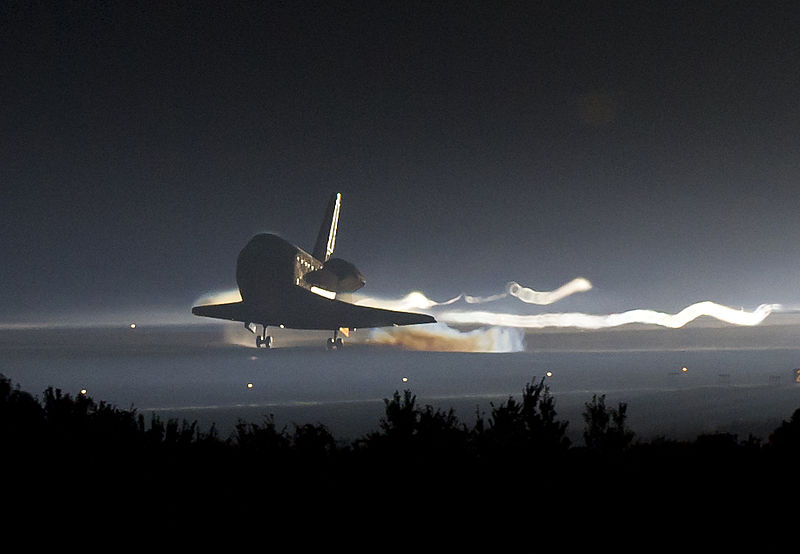
Space shuttle Atlantis lands for the STS-135 mission marking the final mission of the Space Shuttle Program at NASA’s Kennedy Space Center in Florida. Time of landing was 5:57 a.m. (EDT) on July 21, 2011.

The “just at dawn” landing was one of the most memorable landings ever, as shown in this picture:

STS-135 Landing


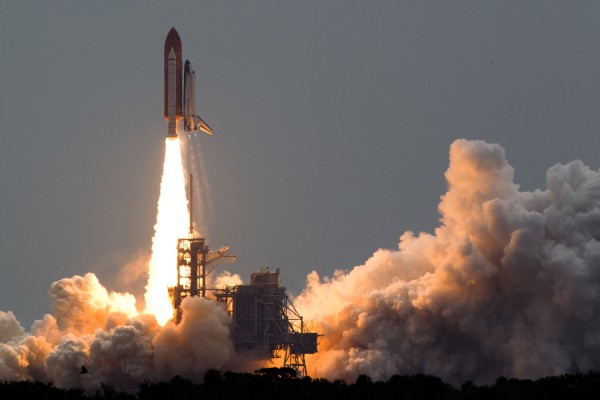
STS-135 launch

Space shuttle Atlantis launches for the STS-135 mission to the International Space Station in the final mission of the Space Shuttle Program at NASA’s Kennedy Space Center in Florida. Liftoff was at 11:29 a.m. (EDT) on July 8, 2011. Astronauts Chris Ferguson, STS-135 commander; Doug Hurley, pilot; Sandy Magnus and Rex Walheim, both mission specialists, were on board.

STS-135 launch


Anniversary of the Disappearance of Amelia Earhart

Amelia Earhart

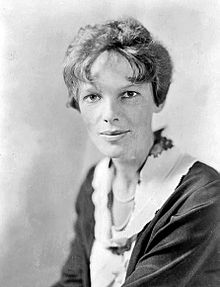
Amelia Earhart (July 24, 1897 – 1937?)

Amelia Earhart SignatureAmelia Mary Earhart (July 24, 1897 – disappeared 1937) was a noted American aviation pioneer and author.Earhart was the first woman to receive the U.S. Distinguished Flying Cross,awarded for becoming the first aviatrix to fly solo across the Atlantic Ocean. She set many other records, wrote best-selling books about her flying experiences and was instrumental in the formation of The Ninety-Nines, an organization for female pilots.  Earhart joined the faculty of the Purdue University aviation department in 1935 as a visiting faculty member to counsel women on careers and help inspire others with her love for aviation. She was also a member of the National Woman’s Party, and an early supporter of the Equal Rights Amendment.

During an attempt to make a circumnavigational flight of the globe in 1937 in a Purdue-funded Lockheed Model 10 Electra, Earhart disappeared over the central Pacific Ocean near Howland Island. Fascination with her life, career and disappearance continues to this day.

Wikipedia Link

Happy Birthday, Mr. “The King”

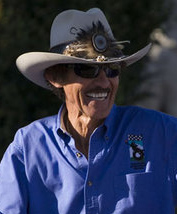
Richard Petty

Richard Lee Petty (born July 2, 1937) is a former NASCAR driver who raced in the Strictly Stock/Grand National Era and the NASCAR Winston Cup Series. “The King”, as he is nicknamed, is most well-known for winning the NASCAR Championship seven times, winning a record 200 races during his career, winning the Daytona 500 a record seven times, and winning a record 27 races (ten of them consecutively) in the 1967 season alone. (A 1972 rule change eliminated races under 250 miles (400 km) in length, reducing the schedule to 30 (now 36) races.) Petty is widely considered one of the greatest NASCAR drivers of all time. He also collected a record number of poles (127) and over 700 top-ten finishes in his 1,185 starts, including 513 consecutive starts from 1971–1989.

Special Spot

special_spot

First Allied Jet Flies

FIRST ALLIED JET FLIES:
May 15, 1941

On May 15, 1941, the jet-propelled Gloster-Whittle E 28/39 aircraft flies successfully over Cranwell, England, in the first test of an Allied aircraft using jet propulsion. The aircraft’s turbojet engine, which produced a powerful thrust of hot air, was devised by Frank Whittle, an English aviation engineer and pilot generally regarded as the father of the jet engine.

Whittle, born in Coventry in 1907, was the son of a mechanic. At the age of 16, he joined the Royal Air Force (RAF) as an aircraft apprentice at Cranwell and in 1926 passed a medical exam to become a pilot and joined the RAF College. He won a reputation as a daredevil flier and in 1928 wrote a senior thesis entitled Future Developments in Aircraft Design, which discussed the possibilities of rocket propulsion.

From the first Wright brothers flight in 1903 to the first jet flight in 1939, most airplanes were propeller driven. In 1910, the French inventor Henri Coanda built a jet-propelled bi-plane, but it crashed on its maiden flight and never flew again. Coanda’s aircraft attracted little notice, and engineers stuck with propeller technology; even though they realized early on that propellers would never overcome certain inherent limitations, especially in regard to speed.

After graduating from the RAF college, Whittle was posted to a fighter squadron, and in his spare time he worked out the essentials of the modern turbojet engine. A flying instructor, impressed with his propulsion ideas, introduced him to the Air Ministry and a private turbine engineering firm, but both ridiculed Whittle’s ideas as impractical. In 1930, he patented his jet engine concept and in 1936 formed the company Power Jets Ltd. to build and test his invention. In 1937, he tested his first jet engine on the ground. He still received only limited funding and support, and on August 27, 1939, the German Heinkel He 178, designed by Hans Joachim Pabst von Ohain, made the first jet flight in history. The German prototype jet was developed independently of Whittle’s efforts.

One week after the flight of the He 178, World War II broke out in Europe, and Whittle’s project got a further lease of life. The Air Ministry commissioned a new jet engine from Power Jets and asked the Gloster Aircraft Company to build an experimental aircraft to accommodate it, specified as E 28/39. On May 15, 1941, the jet-propelled Gloster-Whittle E 28/39 flew, beating out a jet prototype being developed by the same British turbine company that earlier balked at his ideas. In its initial tests, Whittle’s aircraft–flown by the test pilot Gerry Sayer–achieved a top speed of 370 mph at 25,000 feet, faster than the Spitfire or any other conventional propeller-driven machine.

As the Gloster Aircraft Company worked on an operational turbojet aircraft for combat, Whittle aided the Americans in their successful development of a jet prototype. With Whittle’s blessing, the British government took over Power Jets Ltd. in 1944. By this time, Britain’s Gloster Meteor jet aircraft were in service with the RAF, going up against Germany’s jet-powered Messerschmitt Me 262s in the skies over Europe.

Whittle retired from the RAF in 1948 with the rank of air commodore. That year, he was awarded 100,000 pounds by the Royal Commission on Awards to Inventors and was knighted. His book Jet: The Story of a Pioneer was published in 1953. In 1977, he became a research professor at the United States Naval Academy in Annapolis, Maryland. He died in Columbia, Maryland, in 1996.

Mini vs. Mustang