2014 Mid-America Trucking Show | March 27 – 29, 2013 | Louisville, KY at the Kentucky Exposition Center
THURSDAY GENERAL 1PM – 6PM | FRIDAY 10AM – 6PM | SATURDAY 9AM – 4PM

2014 Mid-America Trucking Show | March 27 – 29, 2013 | Louisville, KY at the Kentucky Exposition Center
Posted in Because I Can, Planes Trains and Automobiles
2014 Mid-America Trucking Show | March 27 – 29, 2013 | Louisville, KY at the Kentucky Exposition Center
Posted in Because I Can, Planes Trains and Automobiles
2014 Mid-America Trucking Show | March 27 – 29, 2013 | Louisville, KY at the Kentucky Exposition Center
Posted in Because I Can, Planes Trains and Automobiles

Hahn HFP160 Firewood Pro Skidsteer Firewood Processor
Posted in Planes Trains and Automobiles, Toys
On February 1, 2003, the Space Shuttle Columbia disintegrated during re-entry on its 28th mission; all seven crew members aboard perished.
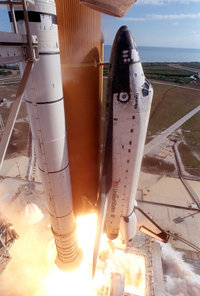
Columbia launches on its final mission, STS-107.
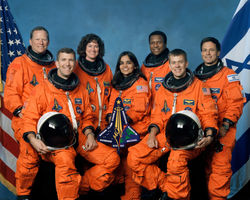
The crew of STS-107. L to R: Brown, Husband, Clark, Chawla, Anderson, McCool, Ramon.
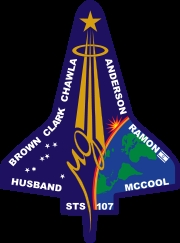
Columbia STS-107 Mission Patch.
Posted in Because I Can, On This Day, Patriotic, Planes Trains and Automobiles
On January 28, 1986, the Space Shuttle Challenger disintegrated 73 seconds into its flight after an O-ring seal in its right solid rocket booster (SRB) failed at liftoff. All seven astronauts on board were lost.
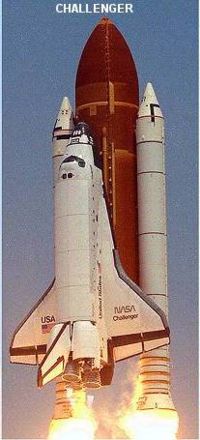
Challenger launches on its final mission, STS-51.
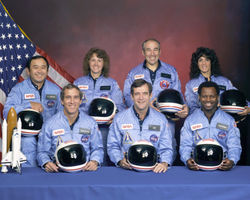
The crew of STS-51. Front row, from left to right: Smith, Scobee, and McNair. Back row, from left to right: Onizuka, McAuliffe, Jarvis, and Resnik.
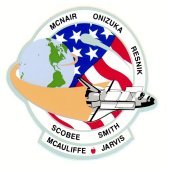
STS-51 mission patch.
Posted in Because I Can, On This Day, Patriotic, Planes Trains and Automobiles
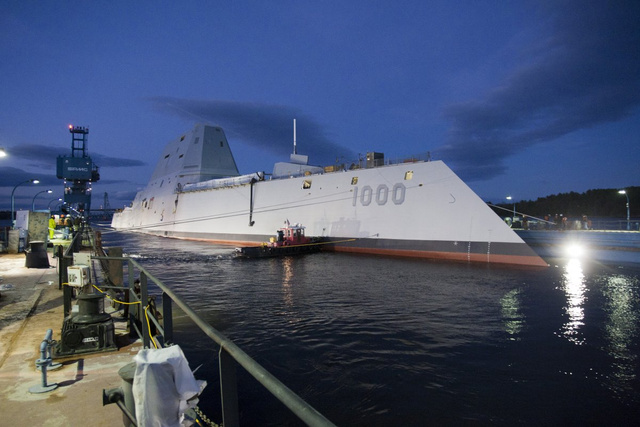
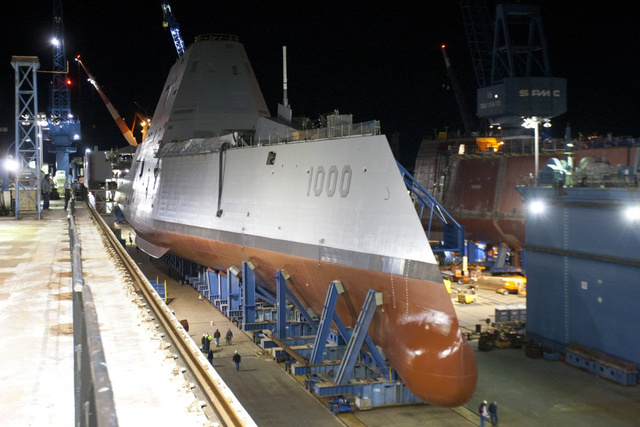
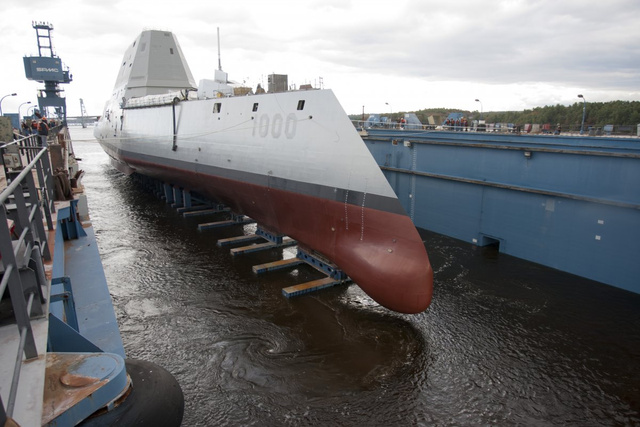
Reports of the USS Zumwalt’s christening being delayed until next spring have been greatly exaggerated. In a surprise move, the US Navy instead launched the next-generation destroyer from its berth in Bath, Maine early the morning of October 29th.
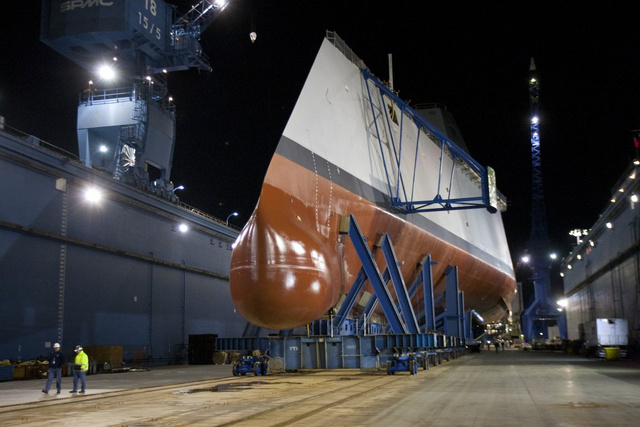
“This is the largest ship Bath Iron Works has ever constructed and the Navy’s largest destroyer. The launch was unprecedented in both its size and complexity,” said Capt. Jim Downey, the Zumwalt-class program manager for the Navy’s Program Executive Office, Ships in a press release disseminated this morning. “Due to meticulous planning and execution, the operation went very smoothly. I’m extremely pleased with the results and applaud the combined efforts of the Navy-industry team.”
The ship is expected to reach operational capacity—that is, acquire a full crew compliment, teach them the ins and outs of the vessel, and prepare them for combat operations—by early 2016.
And given that the Zumwalt can produce power on the magnitude of 78 MW, there’s a solid chance that this littoral Destroyer could also play test bed to the Navy’s top secret railgun prototype system—capable of firing a projectile at seven times the speed of sound—which has been undergoing feverish development over the past few years.
Posted in Because I Can, Planes Trains and Automobiles
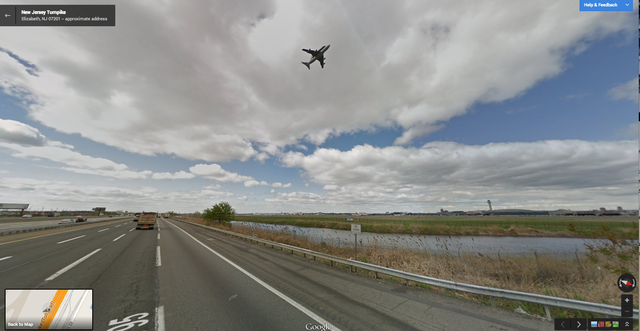
Space Shuttle Enterprise last flight towards New York was captured by Google Street View
Posted in Because I Can, Events, Patriotic, Planes Trains and Automobiles
On Tuesday morning Milan residents were greeted with the unlikely sight of a submarine emerging out of the street in the city center. The submarine, its dazed crew, and a hectic crowd of emergency personnel were all part of an elaborate marketing stunt for Europ Assistance, an insurance company. The stunt was orchestrated by ad agency M&C Saatchi Milano.
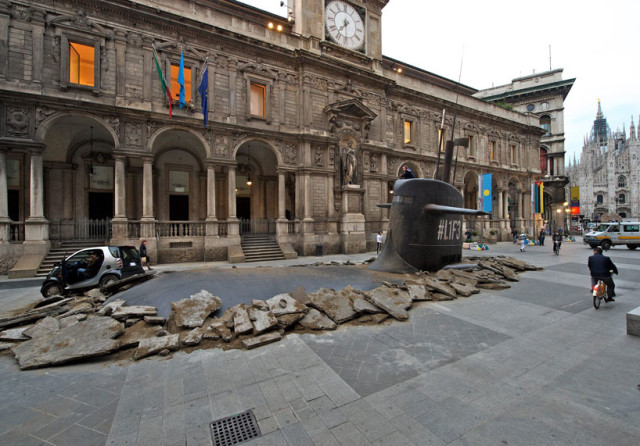
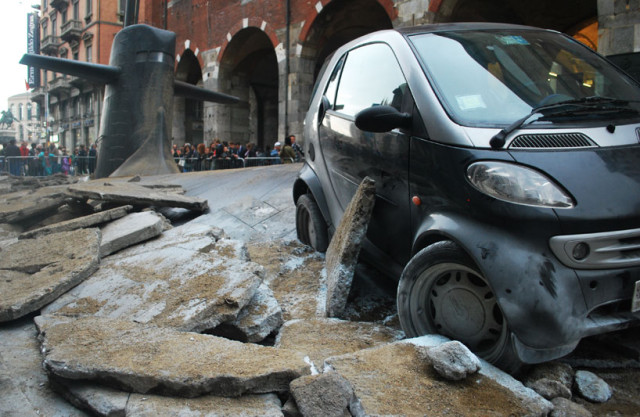
Posted in Planes Trains and Automobiles
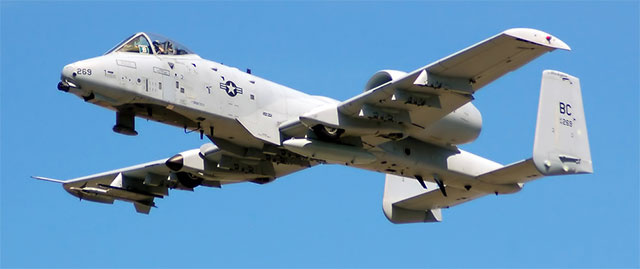
Anyone who grew up watching cartoons, or playing video games, or just taking an interest in large, expensive vehicles will be saddened to hear today that the US military has indicated the end is nigh for the fabled A-10 Warthog.
Incorrectly labeled “ugly” by some detractors, the fact is the A-10 is the coolest damn aircraft to have ever served in the United States armed forces. Sure, the F-14 was sexy in Top Gun, and other fighters have captured the public’s imagination at some point or another, but know this:
The A-10 was designed to be a pair of wings built around the GAU-8 Avenger, the biggest gun to have ever been put in an aircraft.
That, plus the fact it looked like nothing else on this planet, was more than enough to earn it a special place in the hearts of generations of kids growing up since the 70s, who have seen the A-10 star in everything from Transformers to GI Joe to Ace Combat to Saints Row.
Designed in the early 70s and first entering active service in 1977, the A-10 has served with distinction in a number of conflicts and roles, from the Gulf War (where A-10s destroyed around 900 Iraqi tanks) through to Afghanistan, where its ability to not just hunt enemy armor (it’s why the thing was designed, and has the huge freakin’ gun) but to also provide close support for infantry has seen it adored by not just the Air Force, but troops on the ground as well.
While the ridiculous Avenger cannon – which can fire enormous 30mm rounds at a rate of 4200 per minute – was the main reason for the Warthog’s design, the A-10 was also famous for its rugged construction, able to withstand a ton of punishment.
Below is an image of the Avenger.
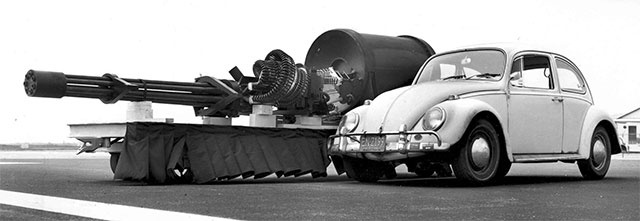
So when people say the Warthog was literally built around the gun, they’re not kidding. Another fun Avenger/Warthog fact: the gun fires its rounds so fast, and so powerfully, that if you were close enough to a target you’d hear the rounds hitting the ground before you’d hear them leaving the A-10.
Originally pegged for a gradual retirement by 2028, recent budget cuts – and the looming arrival of the F-35 – have seen the Air Force declare that the entire A-10 fleet is now on the chopping block.
It’ll be a sad day to see the Warthog mothballed, but it might be for the best. When the machines rise up and take over, we’re going to need them fresh and well-rested.
Posted in News, Planes Trains and Automobiles
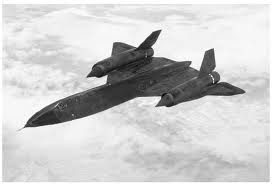
The SR-71 holds the “Speed Over a Recognized Course” record for flying from New York to London distance 3,508 miles (5,646 km), 1,435.587 miles per hour (2,310.353 km/h), and an elapsed time of 1 hour 54 minutes and 56.4 seconds, set on September 1, 1974 while flown by U.S. Air Force Pilot Maj. James V. Sullivan and Maj. Noel F. Widdifield, reconnaissance systems officer (RSO). This equates to an average velocity of about Mach 2.68, including deceleration for in-flight refueling. Peak speeds during this flight were probably closer to the declassified top speed of Mach 3.2+. For comparison, the best commercial Concorde flight time was 2 hours 52 minutes, and the Boeing 747 averages 6 hours 15 minutes.
Posted in Because I Can, Planes Trains and Automobiles
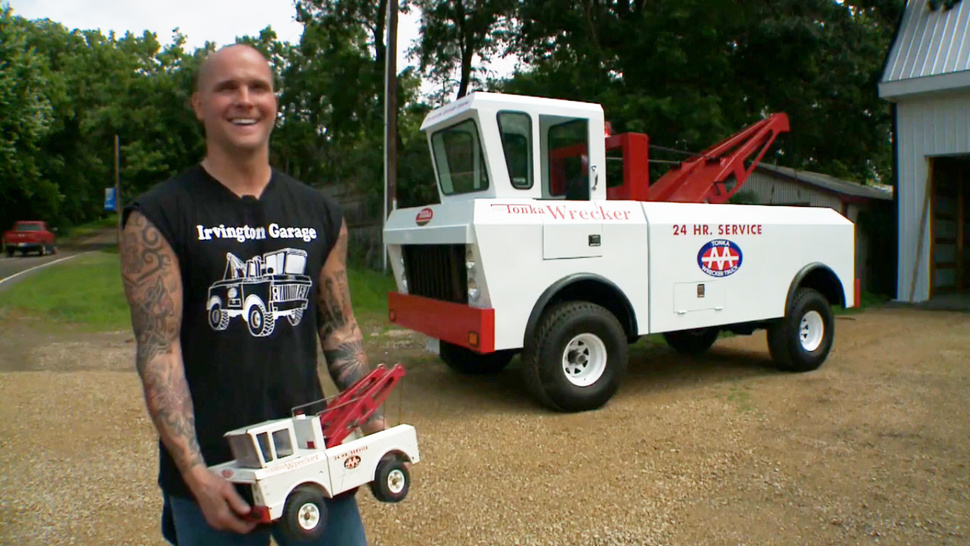
It started out as a $700 Chevy Brad Doane bought off of the side of the road and now it’s a life-size, two-ton Tonka Truck. He isn’t just living his childhood dream, he’s driving it. Brad’s family has been in the tow truck business for 66 years, KARE 11 News reports, but only now is Irvington Garage Towing in Menomonie, Wisconsin adding this giant toy to their fleet. 40-year-old Brad works at the family business and his mother wasn’t surprised when he said he wanted to build a Tonka Mighty Wrecker in full size.
“He had every Tonka there ever was,” Lonna Doane told KARE 11 News. Only recently did she bring home a Mighty Wrecker from a charity auction. “He said, ‘Mom, I want to build the Tonka.”
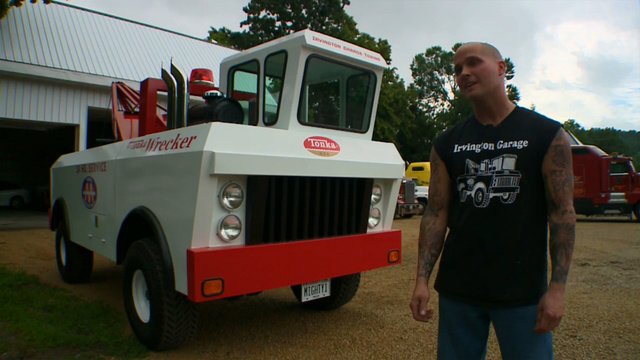
It took Brad a year to turn a $700 1984 Chevy pickup he found on the side of the road into the finished creation he drives now. He’s the one who cut and welded and lengthened and shaped the Chevy into the Tonka. It now stands 20 feet long and ten feet tall, weighing two tons.

Amazingly, Brad didn’t go for a mechanical winch, keeping a hand crank instead. “I had to keep it true to the little guy you know,” he told KARE 11.
The Tonka is therefore resigned to parade duty, but it still does work impressing everyone who sees it.
“When you’re driving down the road and you meet people, it’s not like they give a double take; it’s like a triple take,” Brad said to KARE.
This Sunday, Brad plans to drive the truck to the Spirit of the Lakes parade in Mound, where Tonka was founded.
Posted in Planes Trains and Automobiles
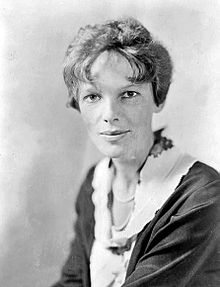
Amelia Earhart (July 24, 1897 – 1937?)
 Amelia Mary Earhart (July 24, 1897 – disappeared 1937) was a noted American aviation pioneer and author.Earhart was the first woman to receive the U.S. Distinguished Flying Cross,awarded for becoming the first aviatrix to fly solo across the Atlantic Ocean. She set many other records, wrote best-selling books about her flying experiences and was instrumental in the formation of The Ninety-Nines, an organization for female pilots. Earhart joined the faculty of the Purdue University aviation department in 1935 as a visiting faculty member to counsel women on careers and help inspire others with her love for aviation. She was also a member of the National Woman’s Party, and an early supporter of the Equal Rights Amendment.
During an attempt to make a circumnavigational flight of the globe in 1937 in a Purdue-funded Lockheed Model 10 Electra, Earhart disappeared over the central Pacific Ocean near Howland Island. Fascination with her life, career and disappearance continues to this day.
Posted in Because I Can, On This Day, Planes Trains and Automobiles
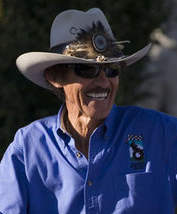
Richard Lee Petty (born July 2, 1937) is a former NASCAR driver who raced in the Strictly Stock/Grand National Era and the NASCAR Winston Cup Series. “The King”, as he is nicknamed, is most well-known for winning the NASCAR Championship seven times, winning a record 200 races during his career, winning the Daytona 500 a record seven times, and winning a record 27 races (ten of them consecutively) in the 1967 season alone. (A 1972 rule change eliminated races under 250 miles (400 km) in length, reducing the schedule to 30 (now 36) races.) Petty is widely considered one of the greatest NASCAR drivers of all time. He also collected a record number of poles (127) and over 700 top-ten finishes in his 1,185 starts, including 513 consecutive starts from 1971–1989.
Posted in Because I Can, Planes Trains and Automobiles
On May 15, 1941, the jet-propelled Gloster-Whittle E 28/39 aircraft flies successfully over Cranwell, England, in the first test of an Allied aircraft using jet propulsion. The aircraft’s turbojet engine, which produced a powerful thrust of hot air, was devised by Frank Whittle, an English aviation engineer and pilot generally regarded as the father of the jet engine.
Whittle, born in Coventry in 1907, was the son of a mechanic. At the age of 16, he joined the Royal Air Force (RAF) as an aircraft apprentice at Cranwell and in 1926 passed a medical exam to become a pilot and joined the RAF College. He won a reputation as a daredevil flier and in 1928 wrote a senior thesis entitled Future Developments in Aircraft Design, which discussed the possibilities of rocket propulsion.
From the first Wright brothers flight in 1903 to the first jet flight in 1939, most airplanes were propeller driven. In 1910, the French inventor Henri Coanda built a jet-propelled bi-plane, but it crashed on its maiden flight and never flew again. Coanda’s aircraft attracted little notice, and engineers stuck with propeller technology; even though they realized early on that propellers would never overcome certain inherent limitations, especially in regard to speed.
After graduating from the RAF college, Whittle was posted to a fighter squadron, and in his spare time he worked out the essentials of the modern turbojet engine. A flying instructor, impressed with his propulsion ideas, introduced him to the Air Ministry and a private turbine engineering firm, but both ridiculed Whittle’s ideas as impractical. In 1930, he patented his jet engine concept and in 1936 formed the company Power Jets Ltd. to build and test his invention. In 1937, he tested his first jet engine on the ground. He still received only limited funding and support, and on August 27, 1939, the German Heinkel He 178, designed by Hans Joachim Pabst von Ohain, made the first jet flight in history. The German prototype jet was developed independently of Whittle’s efforts.
One week after the flight of the He 178, World War II broke out in Europe, and Whittle’s project got a further lease of life. The Air Ministry commissioned a new jet engine from Power Jets and asked the Gloster Aircraft Company to build an experimental aircraft to accommodate it, specified as E 28/39. On May 15, 1941, the jet-propelled Gloster-Whittle E 28/39 flew, beating out a jet prototype being developed by the same British turbine company that earlier balked at his ideas. In its initial tests, Whittle’s aircraft–flown by the test pilot Gerry Sayer–achieved a top speed of 370 mph at 25,000 feet, faster than the Spitfire or any other conventional propeller-driven machine.
As the Gloster Aircraft Company worked on an operational turbojet aircraft for combat, Whittle aided the Americans in their successful development of a jet prototype. With Whittle’s blessing, the British government took over Power Jets Ltd. in 1944. By this time, Britain’s Gloster Meteor jet aircraft were in service with the RAF, going up against Germany’s jet-powered Messerschmitt Me 262s in the skies over Europe.
Whittle retired from the RAF in 1948 with the rank of air commodore. That year, he was awarded 100,000 pounds by the Royal Commission on Awards to Inventors and was knighted. His book Jet: The Story of a Pioneer was published in 1953. In 1977, he became a research professor at the United States Naval Academy in Annapolis, Maryland. He died in Columbia, Maryland, in 1996.
Posted in Patriotic, Planes Trains and Automobiles
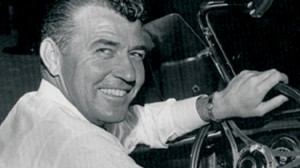
Carroll Hall Shelby (January 11, 1923 – May 10, 2012)
Shelby was an American automotive designer and racing driver. He was most well known for making the AC Motors-based Shelby American Cobra and later the Mustang-based performance cars for Ford Motor Company known as Mustang Cobras which he has done since 1965. His company, Shelby American Inc., founded in 1962, currently sells modified Ford vehicles, as well as performance parts.
The one-time chicken farmer had more than a half-dozen successful careers during his long life. Among them: champion race car driver, racing team owner, automobile manufacturer, automotive consultant, safari tour operator, raconteur, chili entrepreneur and philanthropist.
“He’s an icon in the medical world and an icon in the automotive world,” his longtime friend, Dick Messer, executive director of Los Angeles’ Petersen Automotive Museum, once said of Shelby.
“His legacy is the diversity of his life,” Messer said. “He’s incredibly innovative. His life has always been the reinvention of Carroll Shelby.”
Shelby first made his name behind the wheel of a car, winning France’s grueling 24 Hours of Le Mans sports car race with teammate Ray Salvadori in 1959. He already was suffering serious heart problems and ran the race “with nitroglycerin pills under his tongue,” Messer once noted.
He had turned to the race-car circuit in the 1950s after his chicken ranch failed. He won dozens of races in various classes throughout the 1950s and was twice named Sports Illustrated’s Driver of the Year.
Soon after his win at Le Mans, he gave up racing and turned his attention to designing high-powered “muscle cars” that eventually became the Shelby Cobra and the Mustang Shelby GT500.
The Cobra, which used Ford engines and a British sport car chassis, was the fastest production model ever made when it was displayed at the New York Auto Show in 1962.
A year later, Cobras were winning races over Corvettes, and in 1964 the Rip Chords had a Top 5 hit on the Billboard pop chart with “Hey, Little Cobra.” (“Spring, little Cobra, getting ready to strike, spring, little Cobra, with all of your might. Hey, little Cobra, don’t you know you’re gonna shut ’em down?”)
In 2007, an 800-horsepower model of the Cobra made in 1966, once Shelby’s personal car, sold for $5.5 million at auction, a record for an American car.
“It’s a special car. It would do just over three seconds to 60 (mph), 40 years ago,” Shelby told the crowd before the sale, held in Scottsdale, Ariz.
It was Lee Iacocca, then head of Ford Motor Co., who had assigned Shelby the task of designing a fastback model of Ford’s Mustang that could compete against the Corvette for young male buyers.
Turning a vehicle he had once dismissed as “a secretary car” into a rumbling, high-performance model was “the hardest thing I’ve done in my life,” Shelby recalled in a 2000 interview with The Associated Press.
That car and the Shelby Cobra made his name a household word in the 1960s.
Posted in Because I Can, News, Planes Trains and Automobiles